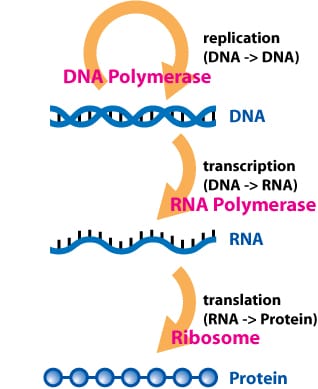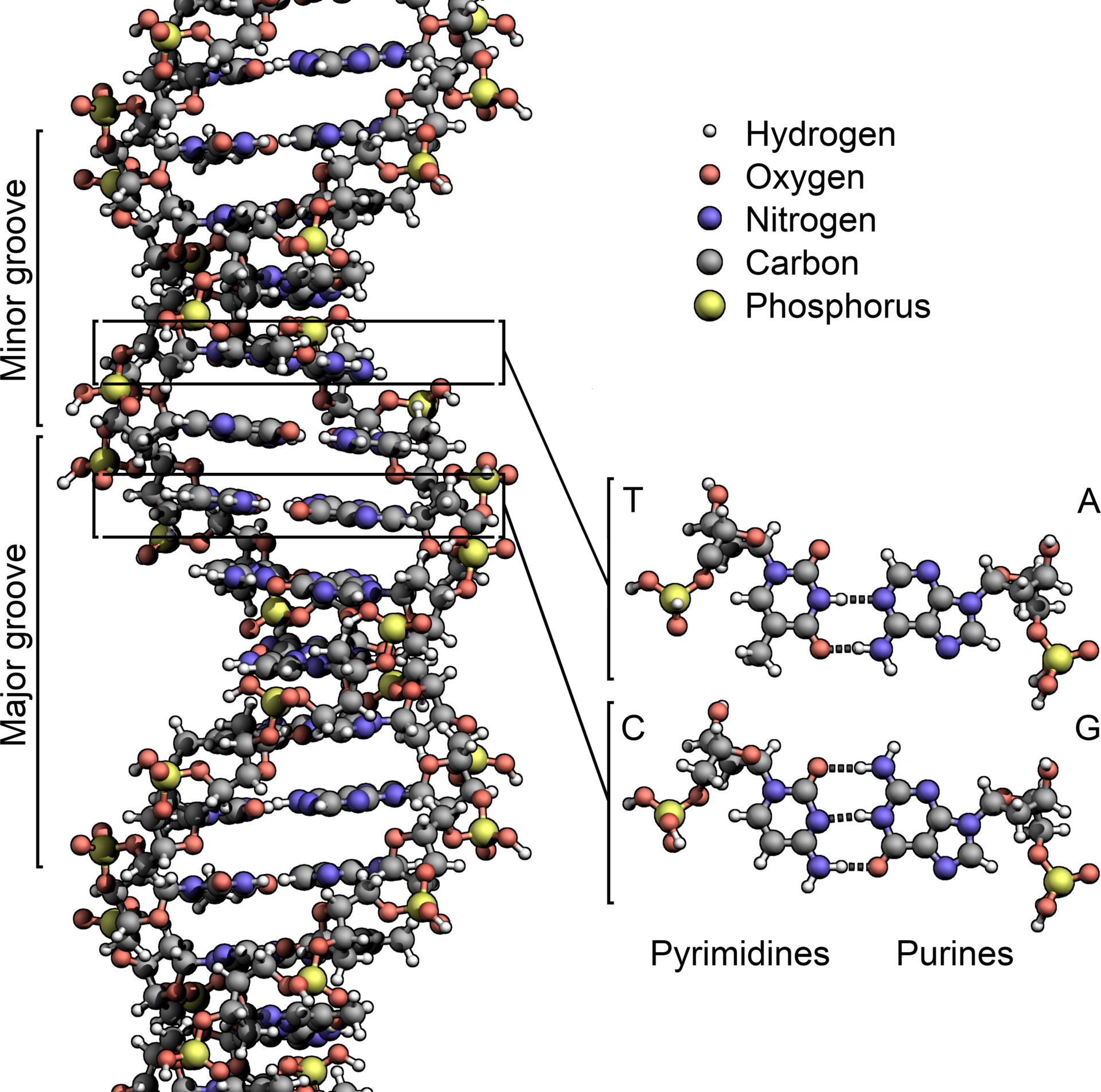
The double helix is the elegant twisted-ladder shape of the DNA molecule, the chemical that carries the genetic instructions of every living thing. Worked out in 1953, the structure is one of the most important discoveries in the history of biology, because the shape itself revealed how life stores and copies its information. It has since been confirmed in exhaustive detail and is established beyond any doubt.
In the early 1950s several teams were closing in on the shape of DNA. The decisive clue came from X-ray images made by Rosalind Franklin and Maurice Wilkins at King's College London, in particular a strikingly clear pattern known as Photograph 51, which pointed to a helix. Using that evidence together with the chemical rules of how the building blocks fit, James Watson and Francis Crick built the correct model at Cambridge in 1953.
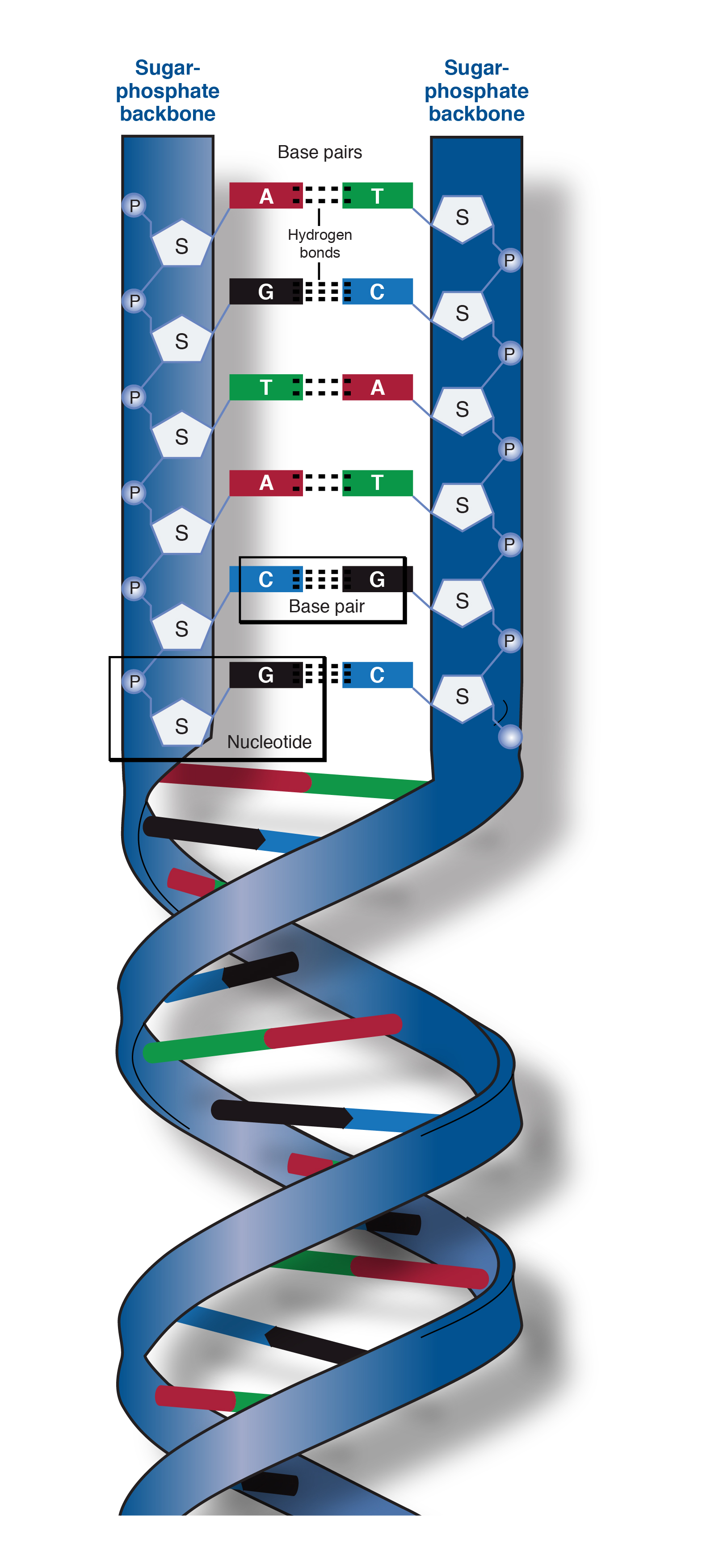
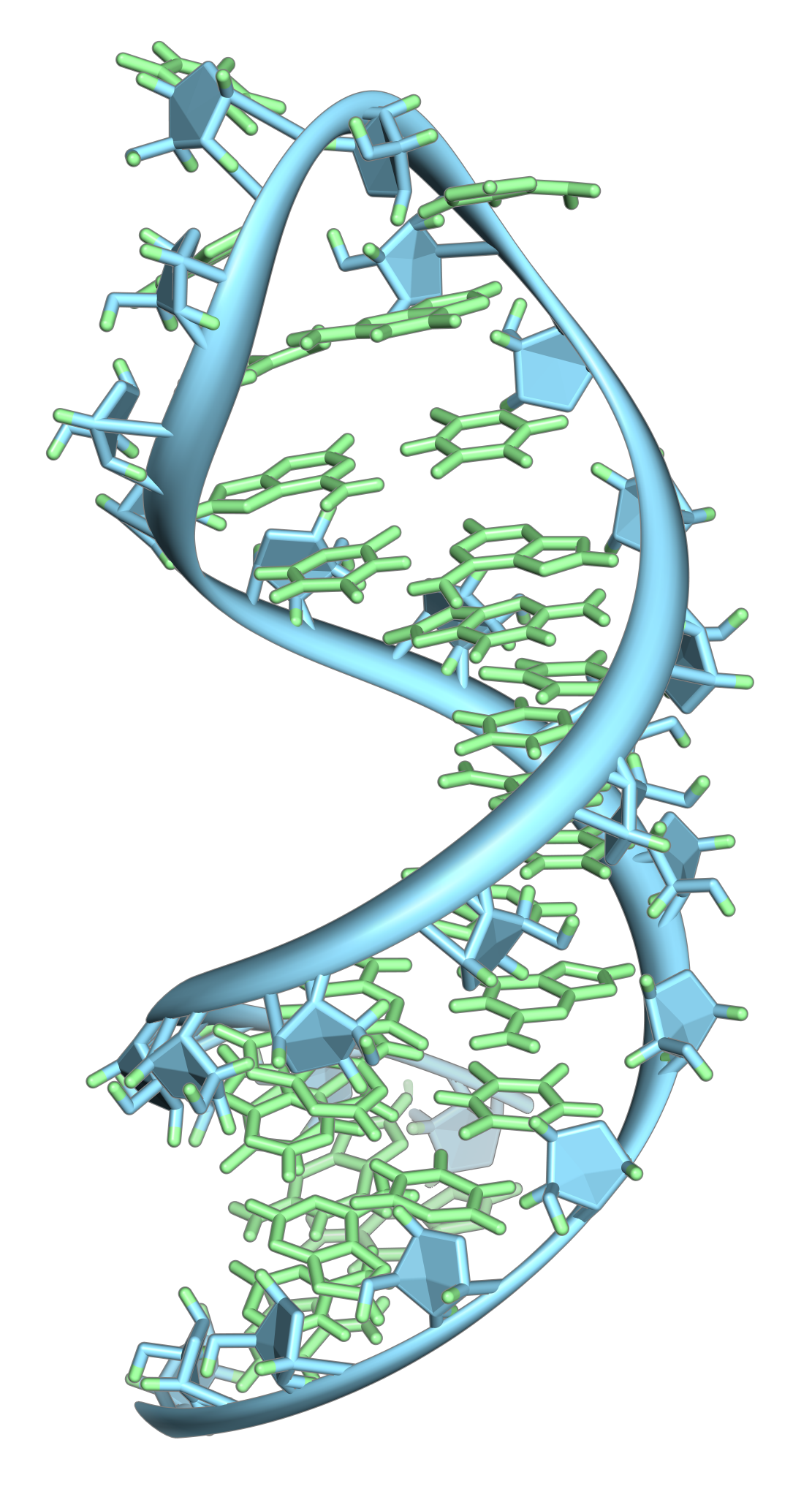
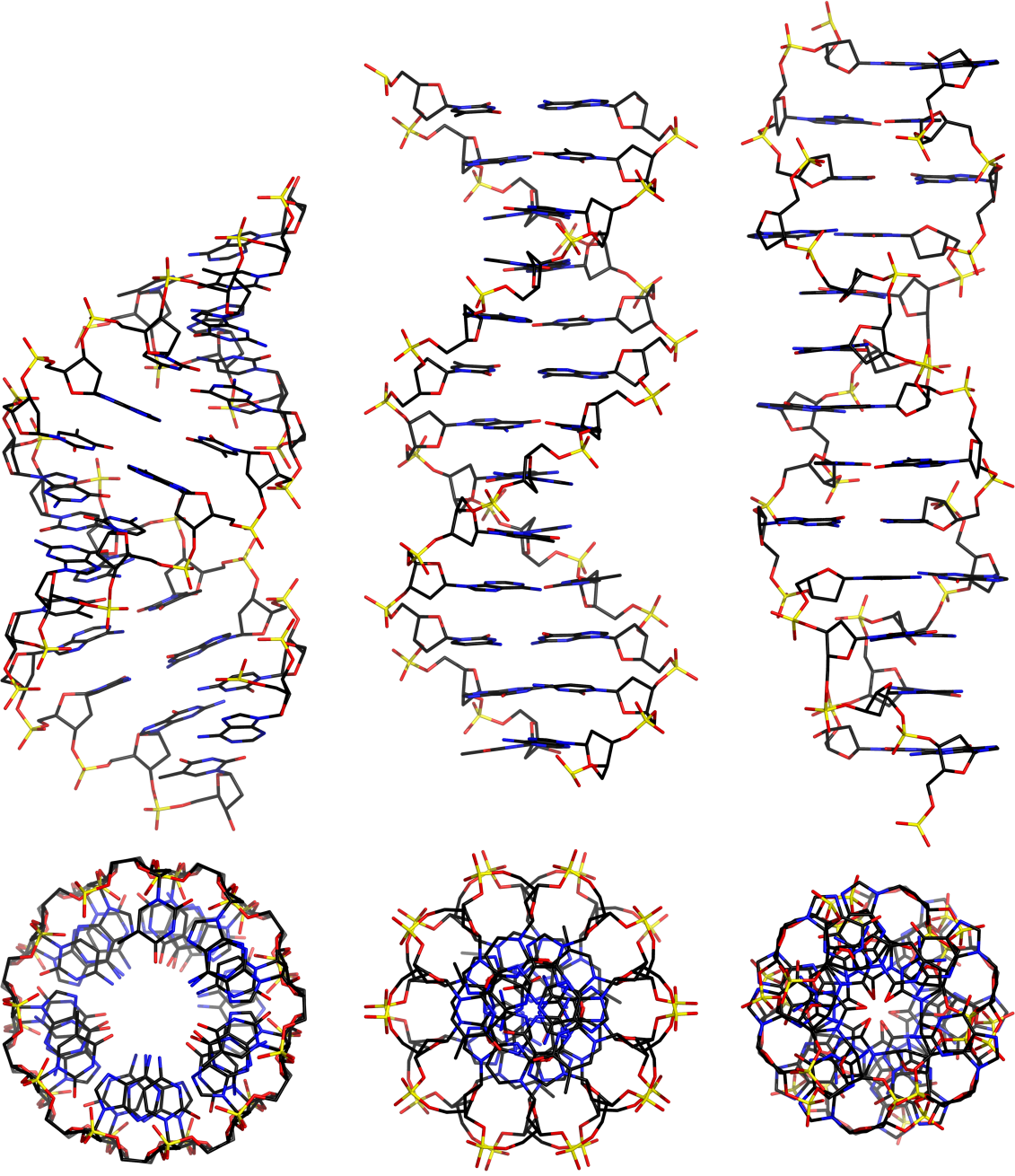
DNA consists of two long strands wound around each other into a spiral. Each strand is a backbone of sugar and phosphate, and from it project four chemical letters, the bases, known by their initials A, T, G, and C. The two strands are held together where the bases meet in the middle, and they pair in a strict way: A always joins with T, and G always joins with C. This precise pairing is the key to everything that follows.
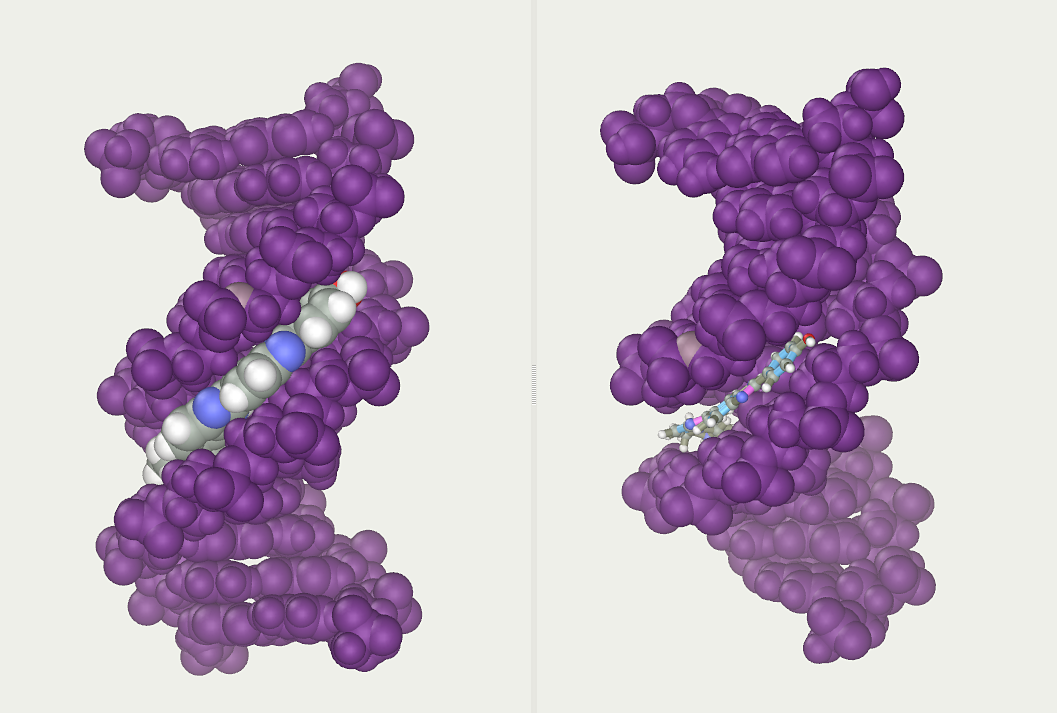
The structure was so illuminating because it immediately suggested how genes are copied. Since each base pairs with only one partner, each strand carries a perfect template for rebuilding the other. When a cell divides, the two strands separate and each serves as a guide to assemble a new partner, producing two identical copies. As Watson and Crick noted with famous understatement, the pairing they had found suggested a possible copying mechanism for the genetic material.
The double helix is not merely a clever idea but a structure verified in overwhelming detail. Improved X-ray methods have mapped DNA down to the position of individual atoms, the copying mechanism it predicted has been watched directly, and the entire human genome and those of countless other species have been read letter by letter. The molecule can take a few alternative forms under different conditions, but the basic double helix worked out in 1953 has been confirmed countless times over.
The double helix turned heredity from a mystery into a readable chemical code, and launched the age of molecular biology, genetic engineering, and genome sequencing. Few discoveries have so completely reshaped a science, and the twisted ladder has become one of the most recognizable symbols in all of science.