Predicting atmospheric conditions from measurements of the present state. It became genuinely accurate only in the past few decades, and its improvement is one of the least remarked scientific achievements of the period.
A forecast begins with observation. Surface stations, weather balloons, aircraft, ships, buoys, radar and satellites produce a picture of the current atmosphere, and satellites now supply the great majority of the data by volume.
Data assimilation combines those observations with a recent model forecast to produce the best estimate of the current state, which matters because observations are uneven and the model must be initialised everywhere.
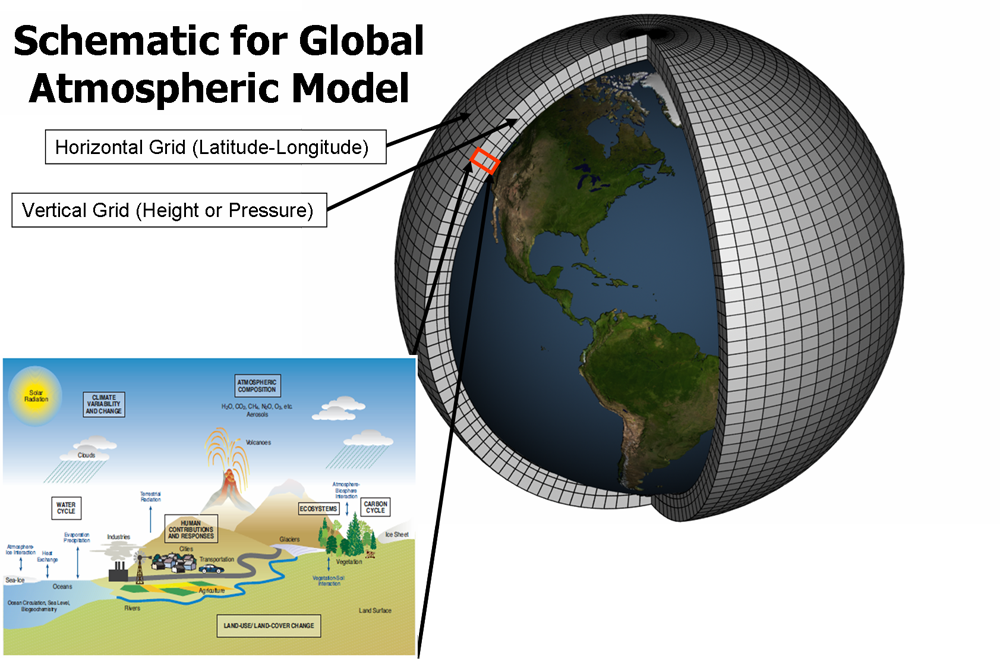
The model then integrates the equations of atmospheric physics forward in time, on a three-dimensional grid, in the manner the climate models capsule describes.
Output is post-processed, since raw model output is systematically biased in known ways, and statistical correction improves it.
Weather lore is ancient and useless beyond a few hours. Systematic forecasting required simultaneous observations from many places, which required the telegraph.
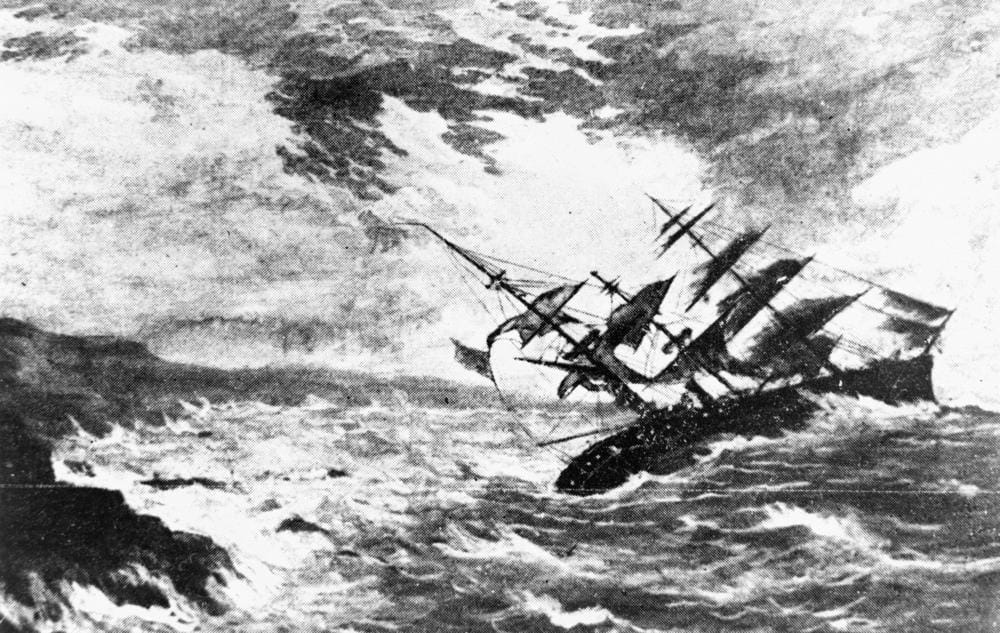
Robert FitzRoy, having captained the Beagle, established a storm warning service in Britain after the Royal Charter sank in 1859 with heavy loss of life. He coined the word forecast, deliberately avoiding prediction, to signal that the result was an inference rather than a certainty.
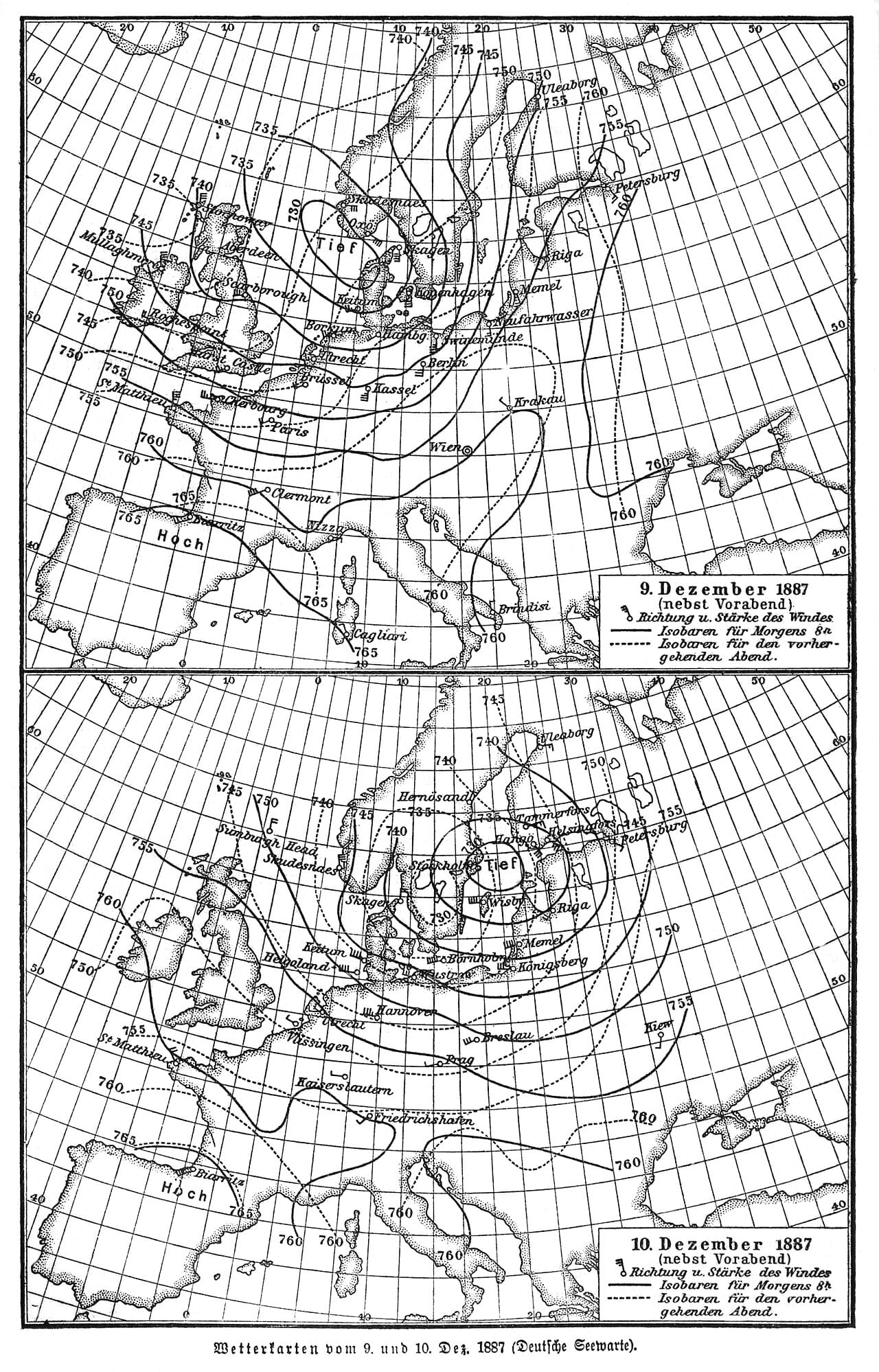
Synoptic maps, plotting simultaneous observations, revealed the pressure systems and fronts that organise mid-latitude weather. The Norwegian school in the 1920s developed the frontal model that remains the basis of how weather systems are described.
Lewis Fry Richardson attempted the first numerical forecast around 1916, calculating by hand from the physical equations. It took six weeks to produce a six-hour forecast and the result was badly wrong, for reasons later understood as a data initialisation problem. His conclusion, that the method was sound but required computation far beyond what was available, was correct.
The first successful numerical forecast was produced on the ENIAC computer in 1950. Operational numerical forecasting began in the 1950s and has improved continuously since.
Edward Lorenz discovered in 1961 that a numerical weather model produced entirely different results from initial conditions differing in the sixth decimal place.
The atmosphere is a chaotic system: small differences grow exponentially, so any error in the initial state eventually dominates the forecast. Since the initial state can never be known exactly, forecast skill has a horizon.
That horizon is estimated at around two weeks for the large-scale flow, and it is a property of the atmosphere rather than of the models. No improvement in computing or observation removes it, though better initialisation pushes the practical limit toward the theoretical one.
Lorenz's work founded chaos theory, treated in its own capsule, and the butterfly metaphor comes from the title of a talk he gave on this result.
The response to chaos is to run many forecasts rather than one.
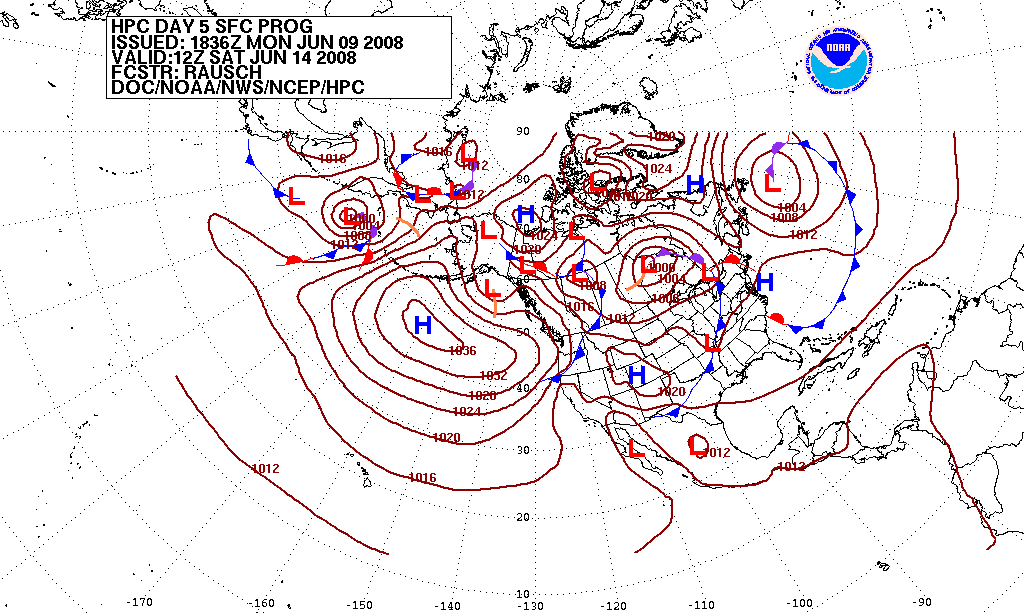
An ensemble runs the model repeatedly from slightly different initial conditions and with slightly different model configurations. Where the members agree, confidence is high; where they diverge, it is low.
This converts forecasting from a single prediction into a probability distribution, which is why forecasts are stated as a percentage chance of rain rather than as a statement that it will rain.
A thirty per cent chance of rain means that in situations like this one, rain occurs about three times in ten. Forecast probabilities from major services are well calibrated, meaning that events forecast at thirty per cent occur close to thirty per cent of the time, which is measurable and is measured.
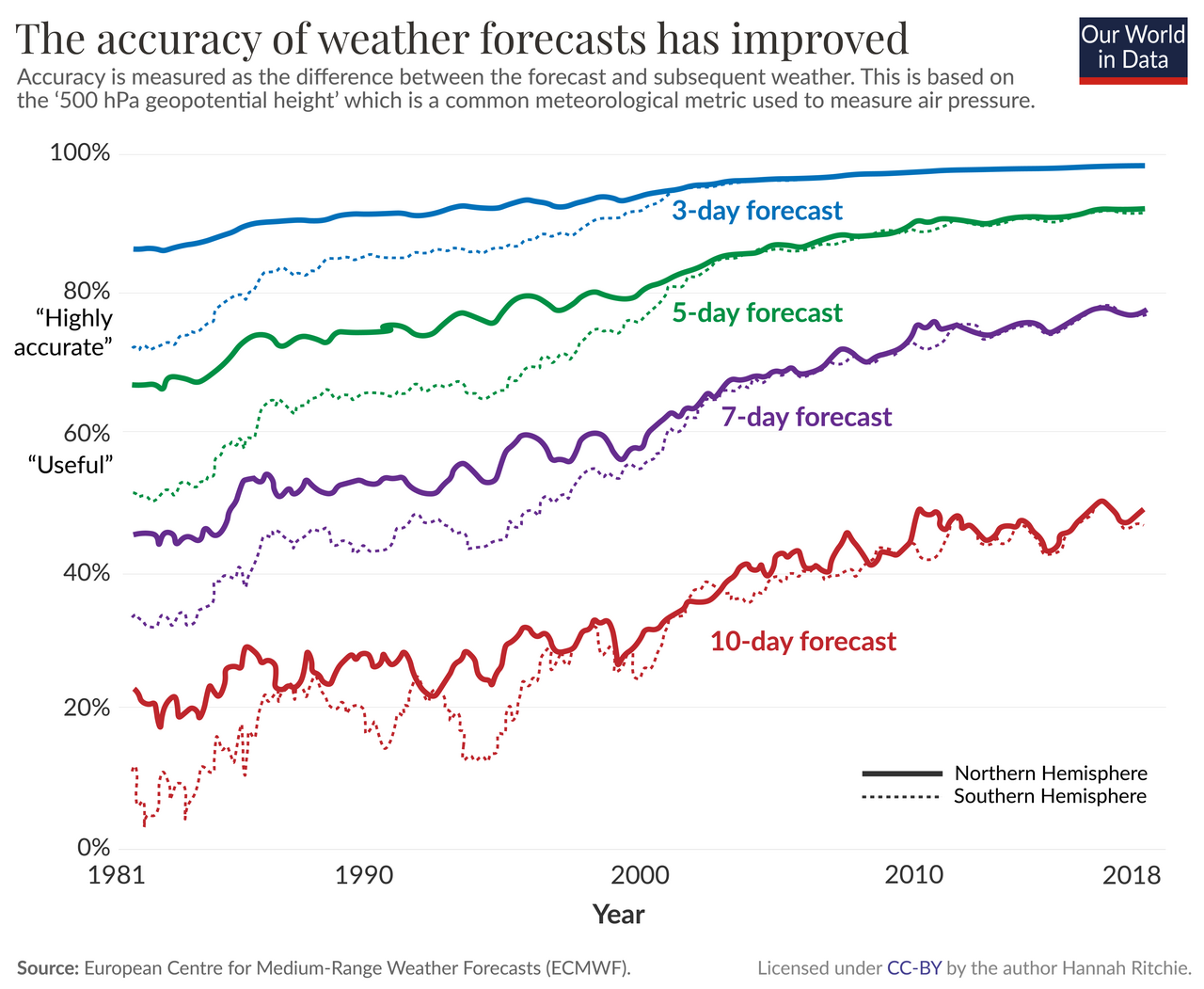
The improvement is substantial and is documented by consistent verification.
A five-day forecast today is about as accurate as a one-day forecast was in 1980. Forecast skill has gained roughly one day of lead time per decade, sustained over forty years.
The improvement comes from more observations, particularly satellites, better data assimilation, higher resolution, better representation of small-scale processes, and greater computing power, with no single factor dominant.
Hurricane track forecasting has improved dramatically; intensity forecasting has improved far less, since it depends on small-scale structure that models resolve poorly.
Machine learning models trained on historical reanalysis data have recently matched or exceeded conventional physics-based models on several measures at a fraction of the computational cost, which is a significant development whose limits, particularly for unprecedented conditions, are still being established.
Weather forecasting saves lives directly. Warning times for tropical cyclones, tornadoes and floods have lengthened substantially, and deaths from weather events have fallen in regions where warnings reach people, even as exposure has risen.
It is also the working demonstration that a chaotic system can be predicted usefully without being predicted exactly. The forecast is probabilistic by necessity, and the discipline of stating uncertainty honestly, and being held to account for calibration, is unusual among prediction enterprises.