The transfer of pollen from the male part of a flower to the female part, allowing fertilisation. Most flowering plants depend on animals to do it, and the relationship is among the most consequential mutualisms on Earth.
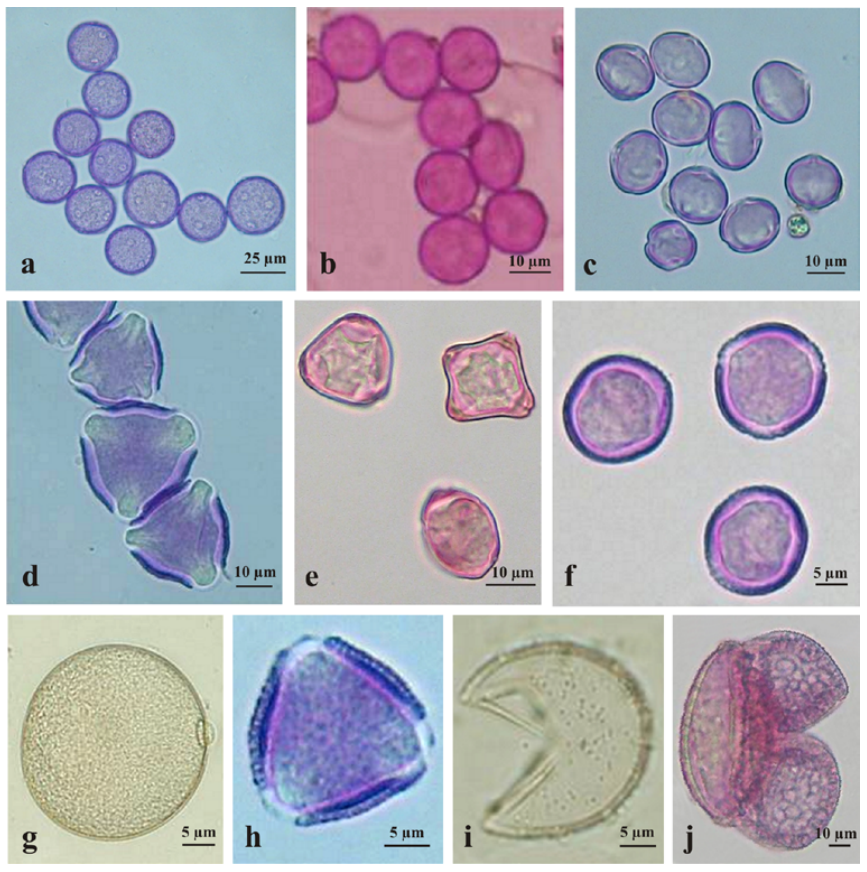
Pollen contains the male gametes. For fertilisation, it must reach the stigma of a flower of the same species, after which a tube grows down to the ovule.
Plants cannot move, which makes transfer the central problem of sexual reproduction for them.
Self-pollination is possible in many species and produces offspring with reduced genetic variation. Most plants have mechanisms discouraging it, including physical separation of male and female parts, different maturation timing, and genetic self-incompatibility.
Cross-pollination therefore requires a vector, and the two options are wind or water on one hand and animals on the other.
Wind pollination is used by grasses, most cereals, and many trees including conifers, oaks and birches.
It requires enormous quantities of pollen, since most is wasted, which is why wind-pollinated plants are the principal cause of hay fever. Their flowers are small, green and unscented, since there is nothing to attract.
Animal pollination is used by the large majority of flowering plant species, commonly estimated at around ninety per cent.
It requires far less pollen because delivery is targeted, and it requires investment in attraction instead: petals, colour, scent and a reward, generally nectar or surplus pollen.
The economics differ sharply. Wind pollination spends on gametes; animal pollination spends on advertising and payment.
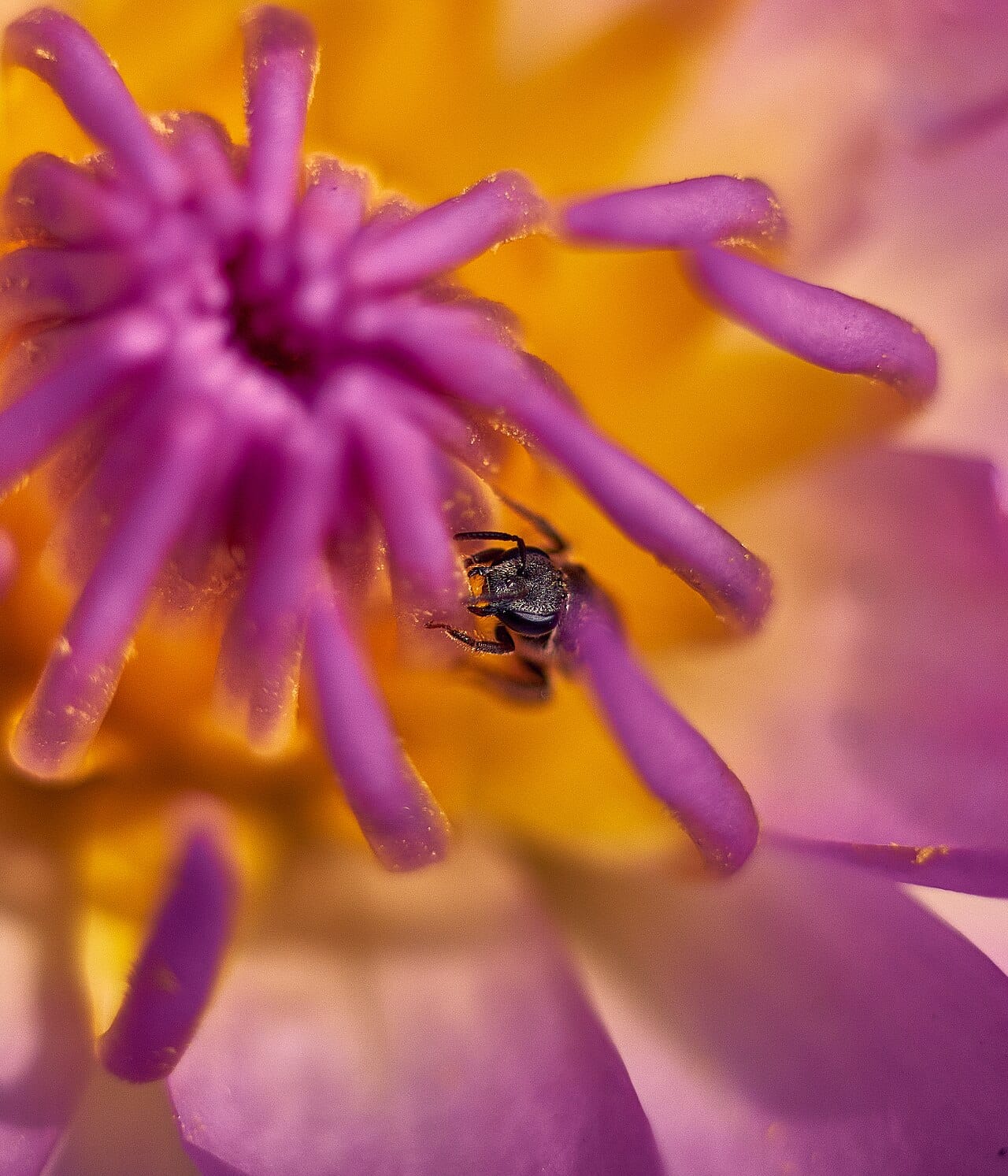
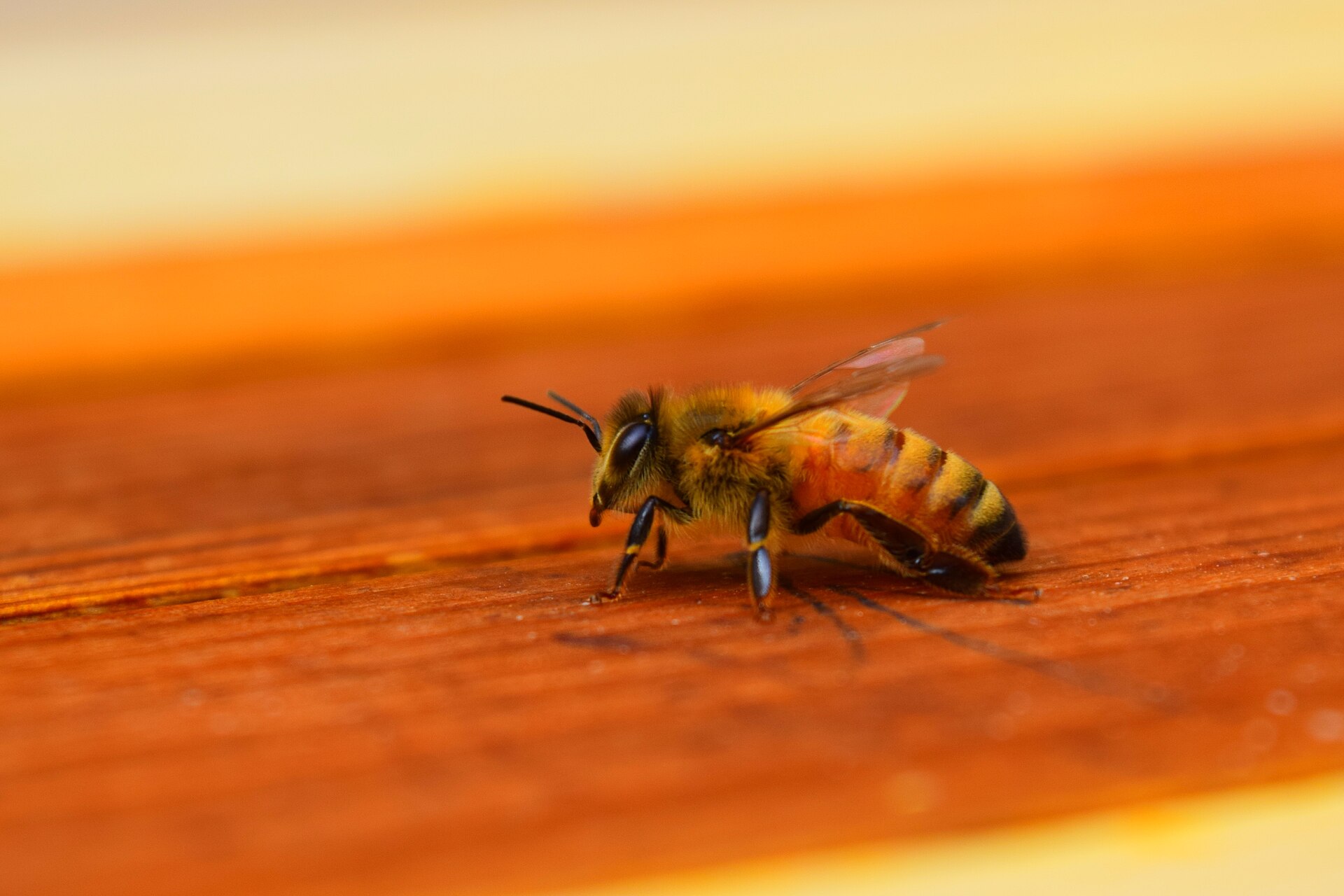
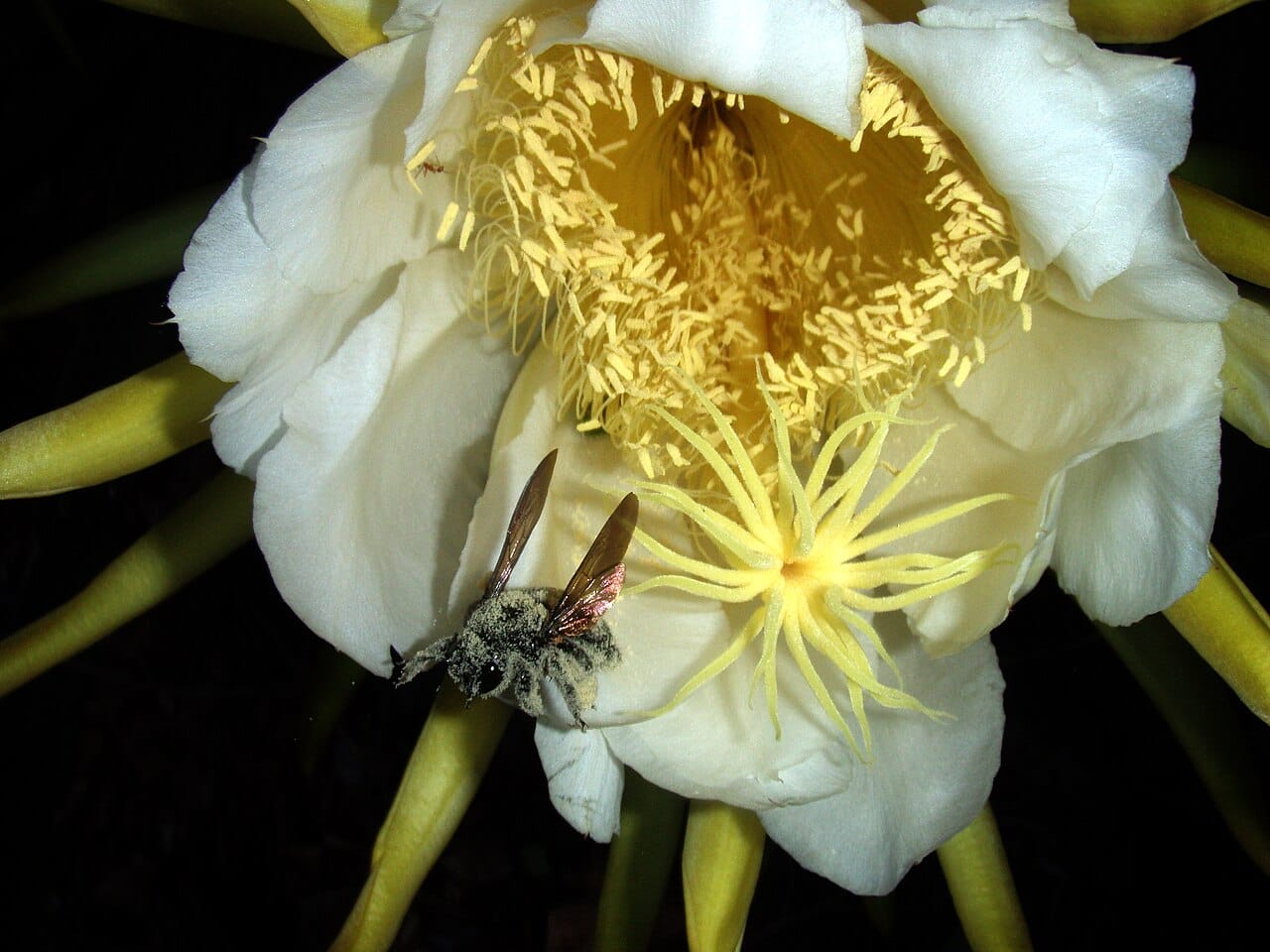
Bees are the most important group, because they gather pollen deliberately as food for their larvae rather than contacting it incidentally. There are around twenty thousand species, the great majority solitary rather than social.
Other insects contribute substantially: flies, beetles, butterflies, moths and wasps. Beetles are thought to have been among the earliest pollinators and remain important for some plant groups.
Vertebrates pollinate a minority of species, including birds such as hummingbirds and sunbirds, and bats, which pollinate agave, durian and many tropical trees.
Some relationships are extremely specific. Fig species and fig wasps depend on one another almost exclusively, with each fig species generally pollinated by its own wasp, and yucca and yucca moths have a comparable arrangement.
Darwin famously predicted from the length of a Madagascan orchid's nectar spur that a moth with a proboscis of matching length must exist. One was identified forty one years after his death.
Around three quarters of leading global food crops benefit to some degree from animal pollination, and around a third of global crop production by volume comes from crops that do.
The dependence is uneven. Staple cereals including wheat, rice and maize are wind pollinated or self-pollinating and would be unaffected. The crops most dependent are fruits, nuts, vegetables and oilseeds, which supply a disproportionate share of dietary micronutrients.
The consequence is that pollinator loss would not primarily cause caloric shortage; it would cause a nutritional one, by removing the crops richest in vitamins and minerals.
Managed honeybee colonies are transported to crops at flowering, and almond production in California is the largest such operation, requiring the majority of managed colonies in the United States within a few weeks.
Wild pollinators contribute substantially, and studies have found that visits by wild insects improve fruit set more consistently than honeybee visits alone, so managed colonies do not straightforwardly substitute for wild diversity.
Declines in pollinator populations have been reported widely and the picture is more differentiated than headlines suggest.
Managed honeybee colony numbers globally have risen, since beekeepers replace losses, though colony mortality rates in some regions are high and costly.
Wild bee and insect declines are better established as a conservation concern, with documented range contractions and local extinctions for a number of species, and evidence of overall insect biomass declines in some monitored areas.
The causes identified are habitat loss, pesticide exposure particularly to neonicotinoids, pathogens and parasites including the varroa mite, climate change shifting flowering times relative to emergence, and reduced floral diversity in agricultural landscapes.
No single cause accounts for the pattern, and interaction between stressors is the general finding.
Pollination is a service performed by wild organisms on which agriculture depends and which no one manages or pays for directly, which makes it the standard example in discussions of ecosystem services.
It is also among the clearest cases of coevolution. Flowers exist in their present form because of animals, and a large number of insect and bird lineages exist in their present form because of flowers, and neither would be recognisable without the other.