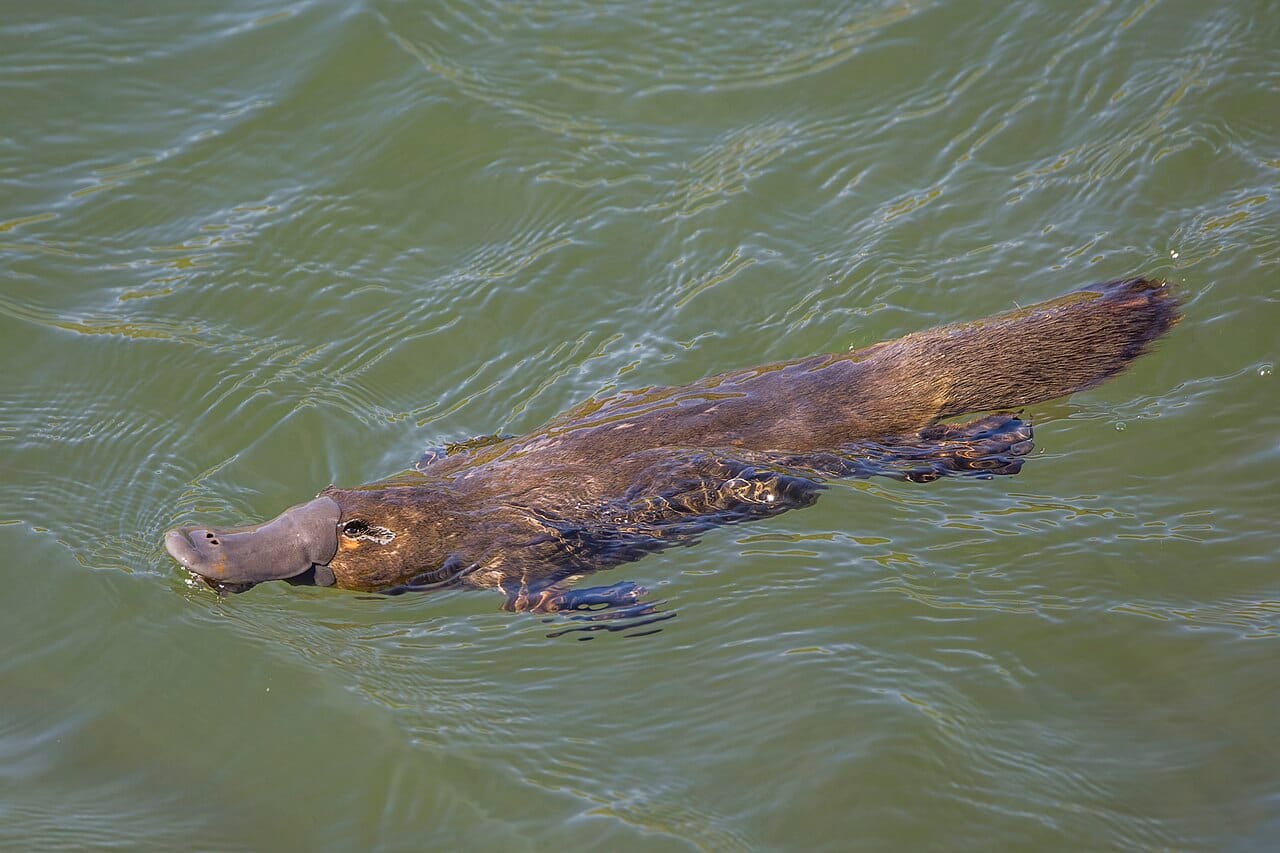
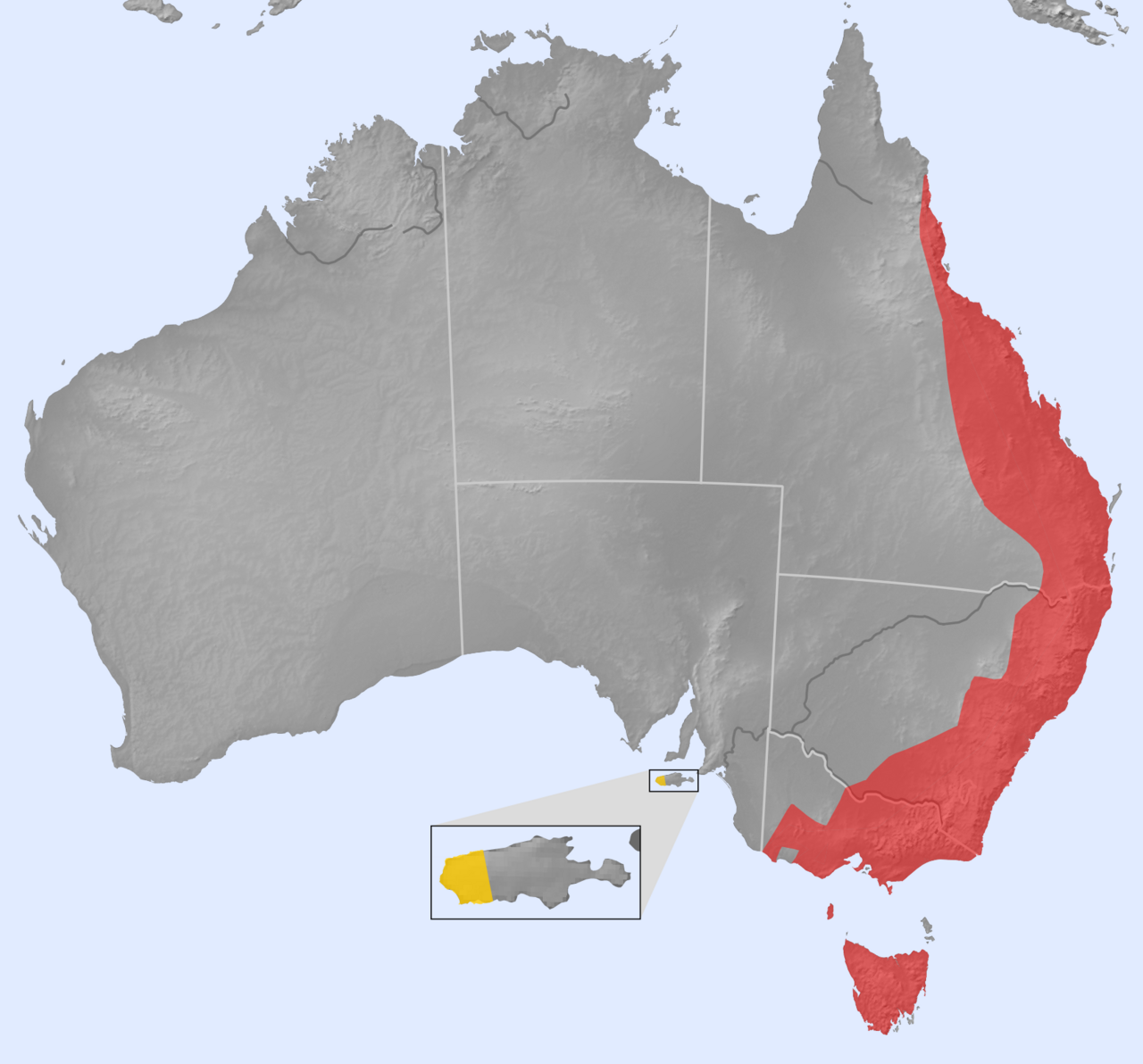
The platypus, Ornithorhynchus anatinus, is a semiaquatic egg-laying mammal of eastern Australia. It lays eggs, produces milk without nipples, detects prey by electric field, and the males carry venom. It is not a transitional form or a primitive mammal; it is a highly specialised animal from a lineage that separated from ours before any of the features we treat as normal for mammals were fixed.
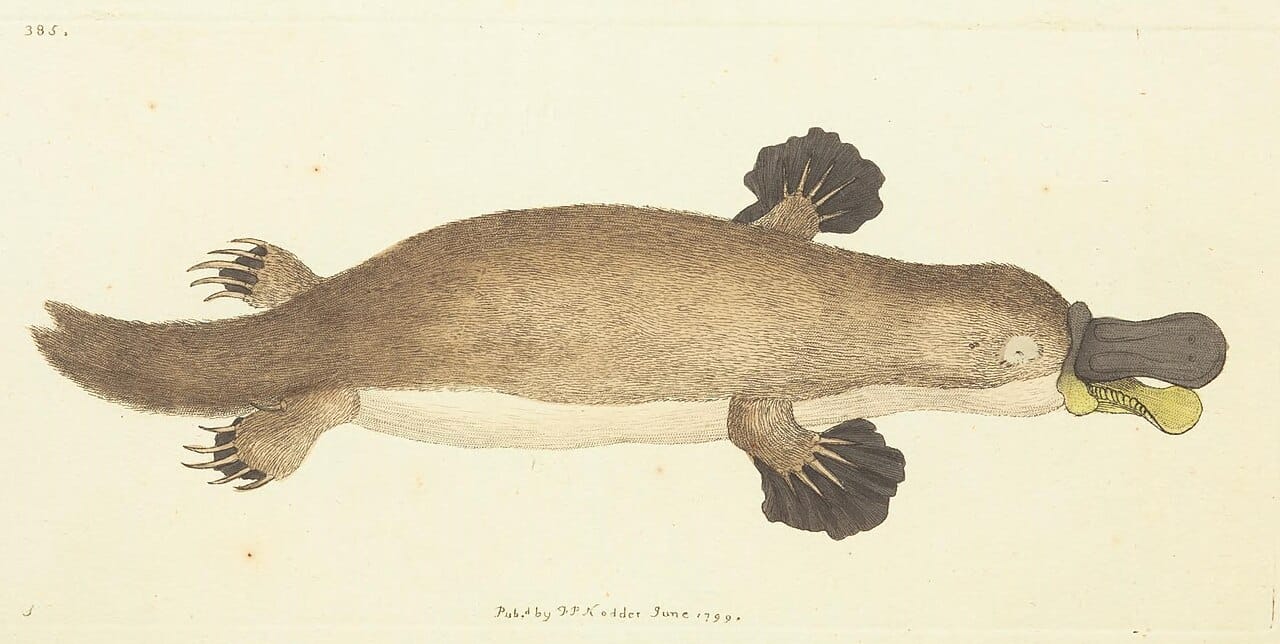
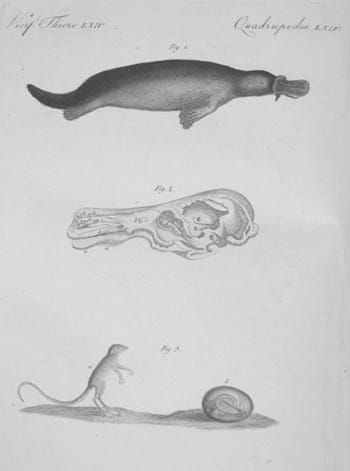
The first specimen reached London in 1799. George Shaw, describing it for the Naturalist's Miscellany, went over the skin looking for the seams of a fraud, and said so in print. Assembling chimeras from parts of real animals was an established trade, and a beaked, web-footed, fur-bearing quadruped was exactly what a good forger would produce.
The doubt persisted for decades, and the question of whether the animal laid eggs was not settled until 1884, when William Caldwell confirmed it in Queensland and sent the famous telegram to the British Association at Montreal reporting that monotremes are oviparous.
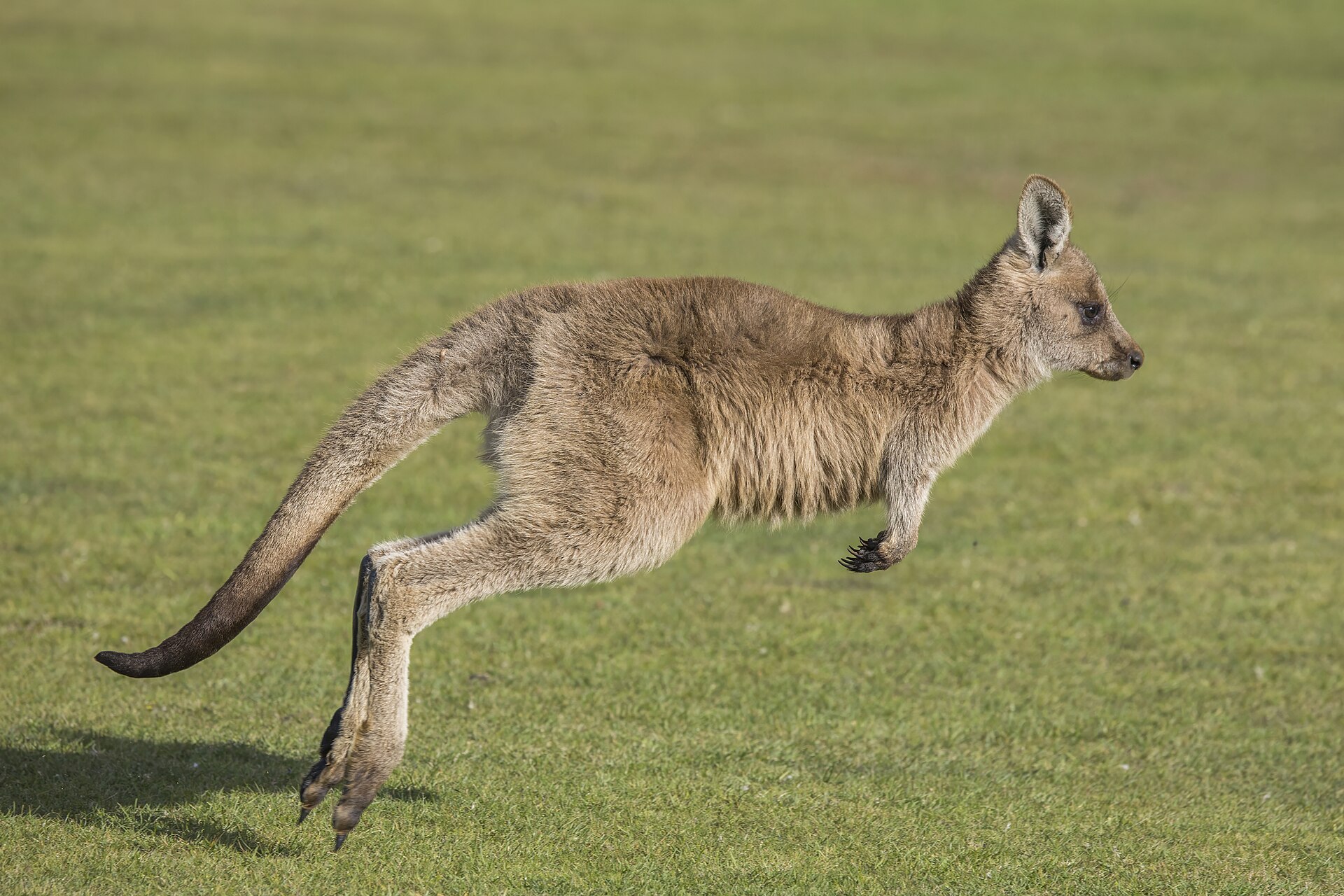
The platypus is a monotreme, one of only five living species in the order, the others being four species of echidna. Monotremes split from the lineage leading to marsupials and placentals around 180 million years ago, which makes the platypus roughly as distant from a kangaroo as a kangaroo is from a human.
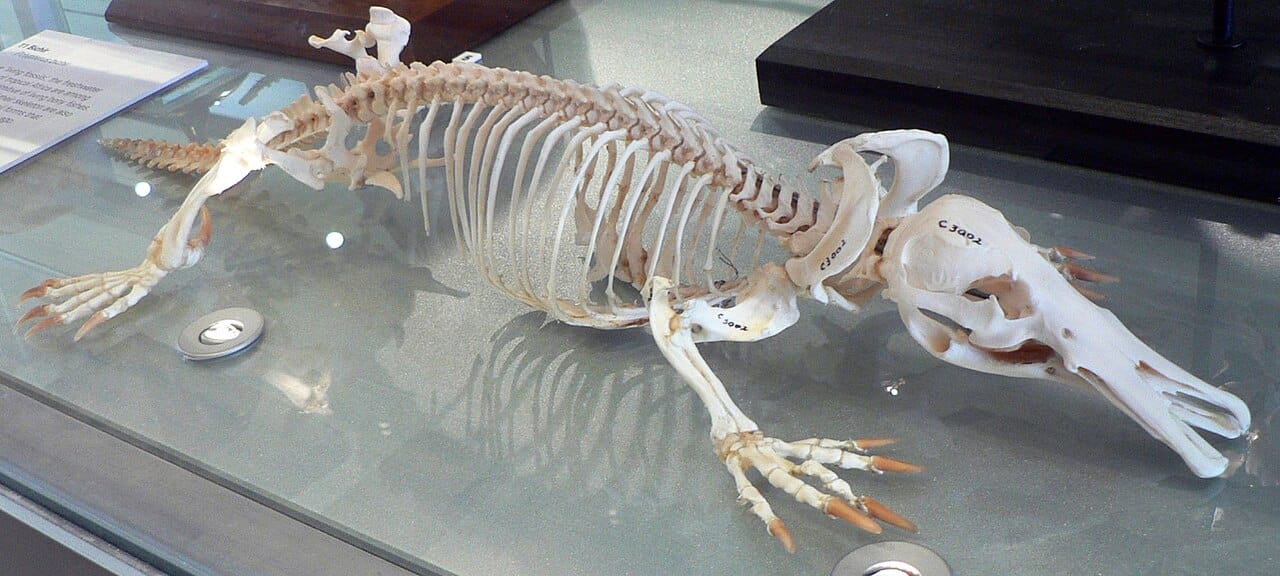
It is small, around 40 to 50 centimetres including the tail and typically one to two and a half kilograms, with dense waterproof fur of about 800 hairs per square millimetre, a broad flat tail used for fat storage, and webbed forefeet with the webbing folded back on land to expose claws for digging.
It lays one to three leathery eggs in a burrow and incubates them against the belly. Hatchlings are tiny and helpless. The mother has no nipples: milk is secreted through patches of skin and the young lap it from the fur.
The bill is not a beak. It is soft, flexible, richly innervated skin over a supporting structure, and it is the animal's primary sense organ.
Platypuses hunt with eyes, ears and nostrils sealed shut underwater. They locate prey entirely by two senses in the bill: mechanoreception, detecting water movement, and electroreception, detecting the tiny electric fields generated by the muscle contractions of invertebrates in the sediment. Around 40,000 electroreceptors are distributed in stripes across the bill.
The two senses work together with a timing trick. An electrical signal travels through water faster than a mechanical one, so the delay between the electrical and mechanical arrival of the same event gives distance, in the way that the gap between lightning and thunder does.
Adult males carry a keratinous spur on each hind ankle connected to a crural gland that enlarges during the breeding season. The venom is not lethal to humans but causes pain out of all proportion, described in case reports as excruciating and morphine-resistant, sometimes persisting as hyperalgesia for weeks or months.
Because the gland is seasonal and only males are armed, the venom is generally read as a weapon for male competition over mates rather than for defence or prey capture.
The genome, first sequenced in 2008 and produced at chromosome level in 2021, is a mixture that follows the animal's history rather than any tidy scheme.
The platypus has ten sex chromosomes, five X and five Y in males, which form a chain during meiosis. They are unrelated to the XY system of other mammals and are more closely related to the ZW system of birds, which means the mammalian sex chromosome system evolved after monotremes split off.
The genome carries genes for egg yolk protein, still functional though reduced, alongside genes for casein milk proteins. It has lost the genes for functional stomach enzymes entirely: the platypus has no true stomach, the oesophagus joining directly to the intestine.
The platypus is listed as Near Threatened. It is affected by river regulation, drought, land clearing along watercourses, and drowning in illegal enclosed yabby traps, which are a significant and entirely avoidable cause of death.
Australian bushfires and prolonged drought have caused local losses, and modelling has projected substantial contraction of range under continued water extraction and warming. It has already disappeared from South Australia outside a reintroduced population on Kangaroo Island.
The platypus was for a century the standing rebuke to neat classification, and it remains useful for the same reason. The features we treat as defining mammals are not a package that arrives together, and an animal that has fur and milk but also eggs, a cloaca and bird-like sex chromosomes shows that the package was assembled piece by piece over a very long time.