The proposal that the inner solar system was struck by a sudden surge of impacts around 3.9 billion years ago, hundreds of millions of years after the planets formed. It rests on rocks from a small region of the Moon, and samples returned from the far side in 2024 do not support it.
The Apollo missions returned rocks that had been melted by impacts, and those rocks can be dated by radiometric methods.
The ages clustered. A large proportion fell between about 3.8 and 4.0 billion years, with relatively few older, which is not what a steadily declining bombardment would produce. A declining flux should leave more old impact melt than young.
The hypothesis, proposed in the 1970s, is that a discrete spike occurred: a cataclysm rather than a tail.
A spike requires a cause, and the leading one is the Nice model, developed from 2005.
It proposes that the giant planets formed in a more compact configuration and later migrated. Jupiter and Saturn crossed a resonance in which one completed two orbits for each of the other's, and the resulting gravitational disturbance destabilised the system, scattering Uranus and Neptune outward and flinging enormous numbers of small bodies from the outer belt and the Kuiper belt into the inner solar system.
The model explains several independent features of the outer solar system: the orbits of the giant planets, the structure of the Kuiper belt, and the captured populations of Trojan asteroids. That it also produced a bombardment spike at roughly the right time was taken as strong support for both.
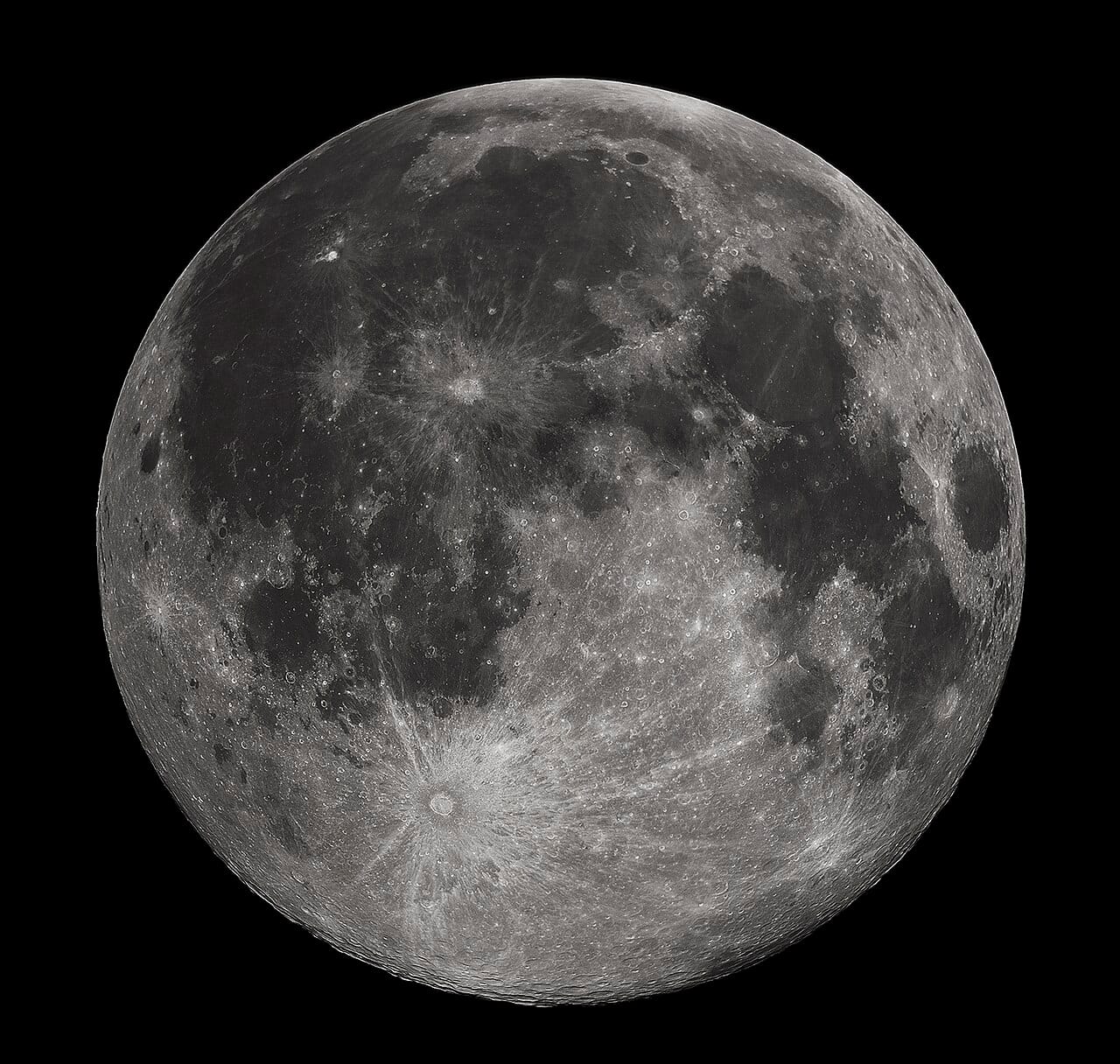
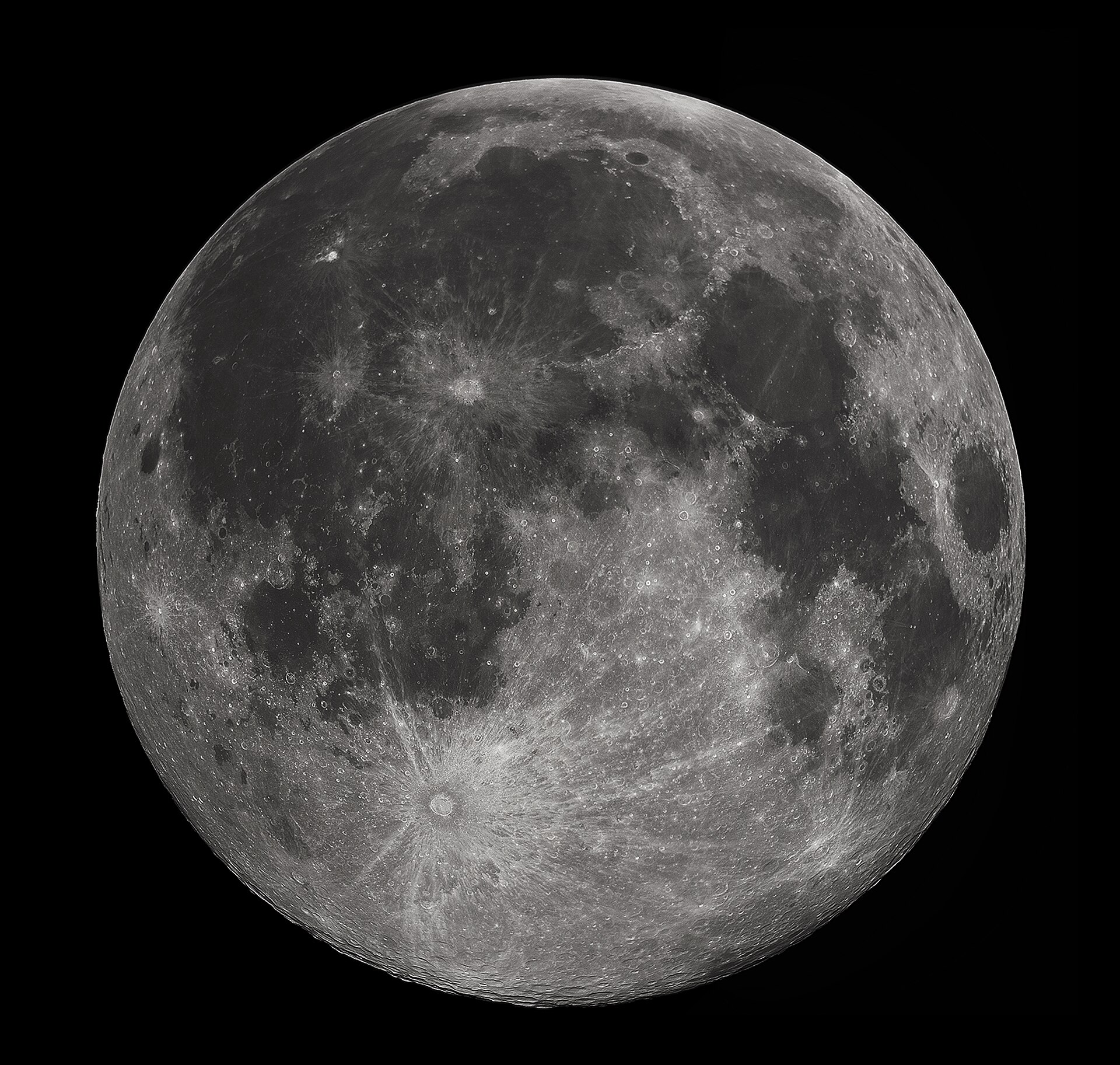
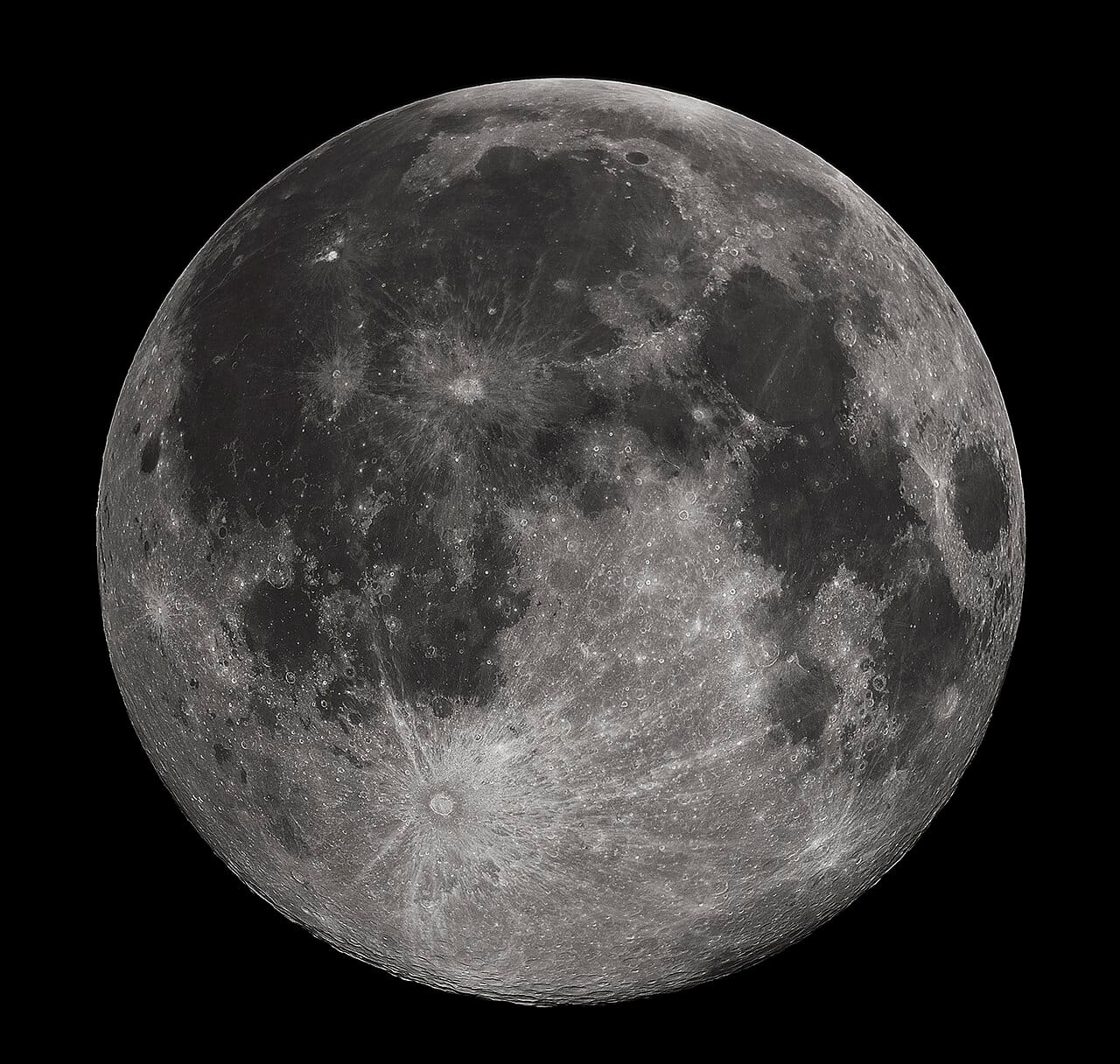
The difficulty is that the Apollo sites are all on the lunar near side, within a limited region, and several are close to the Imbrium basin.
If one very large impact scattered melt across that region, then many of the dated rocks record a single event rather than many. The apparent cluster would be an artefact of where the samples were collected.
Lunar meteorites, which arrive from random locations on the Moon and are collected in Antarctica, provide a less biased sample. Their impact melt ages are more spread out in time than the Apollo rocks, which weakens the case for a tight cluster.
Statistical work by Patrick Boehnke and Mark Harrison argued that an apparent peak near 3.9 billion years can be produced by sampling bias combined with the resetting of radiometric ages by later heating, without any cataclysm being required.
Zircon crystals from the Moon and from Earth show impact-related ages spread across a longer interval than the hypothesis predicts.
The strongest new evidence comes from outside the Apollo region for the first time.
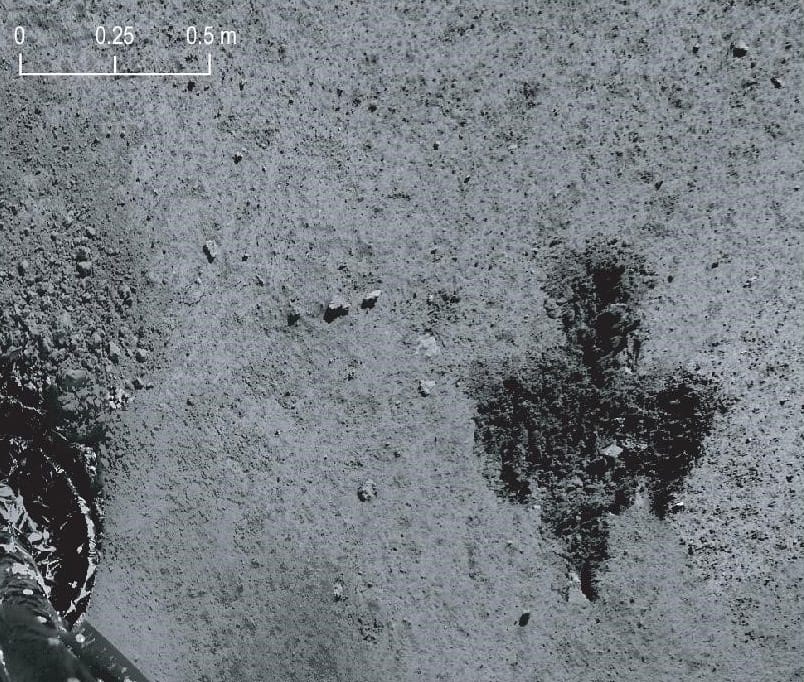
The Chinese Chang'e 6 mission returned samples from the far side in June 2024. Dating of impact melt rocks from them indicates a bombardment history that was not dominated by a cataclysmic spike, with impacts spread over a longer period at lower frequency.
That is the first direct test using material from a different part of the Moon, and it goes against the hypothesis rather than for it.
Broader syntheses combining lunar glass, basin ages and meteorite data now tend to favour a prolonged bombardment from roughly 4.2 to 3.5 billion years, with several peaks rather than one spike.
The Moon and the inner planets were heavily bombarded during the first several hundred million years. The cratered highlands are the record of it and nobody disputes that.
Giant planet migration also has substantial independent support from the structure of the outer solar system, and the Nice model does not stand or fall with the bombardment spike. Later versions place the instability much earlier, within the first hundred million years, which removes the connection entirely.
The timing bears directly on the origin of life. The oldest evidence for life on Earth is close to 3.8 billion years, immediately after the proposed cataclysm, and a sterilising bombardment would mean life arose extremely quickly once conditions allowed.
If instead the bombardment declined steadily, there is no sharp start line, and life may have begun earlier and survived through a less severe period. Modelling of impact effects suggests even large impacts may not sterilise a planet entirely, since subsurface and deep-ocean organisms could survive.
The hypothesis is classified here rather than as a theory because its central claim, a discrete spike, rests on a sample set now known to be geographically biased and is contradicted by the first samples taken from elsewhere. More far-side and deep-interior material would settle it, which is a straightforward scientific case for continued lunar sample return.