The proposal that the Moon formed from debris thrown off when a Mars-sized body struck the early Earth. It is the standard account, it explains most of what needs explaining, and its central prediction is contradicted by the most precise measurements available.
The Moon is peculiar and any account must handle several facts at once.
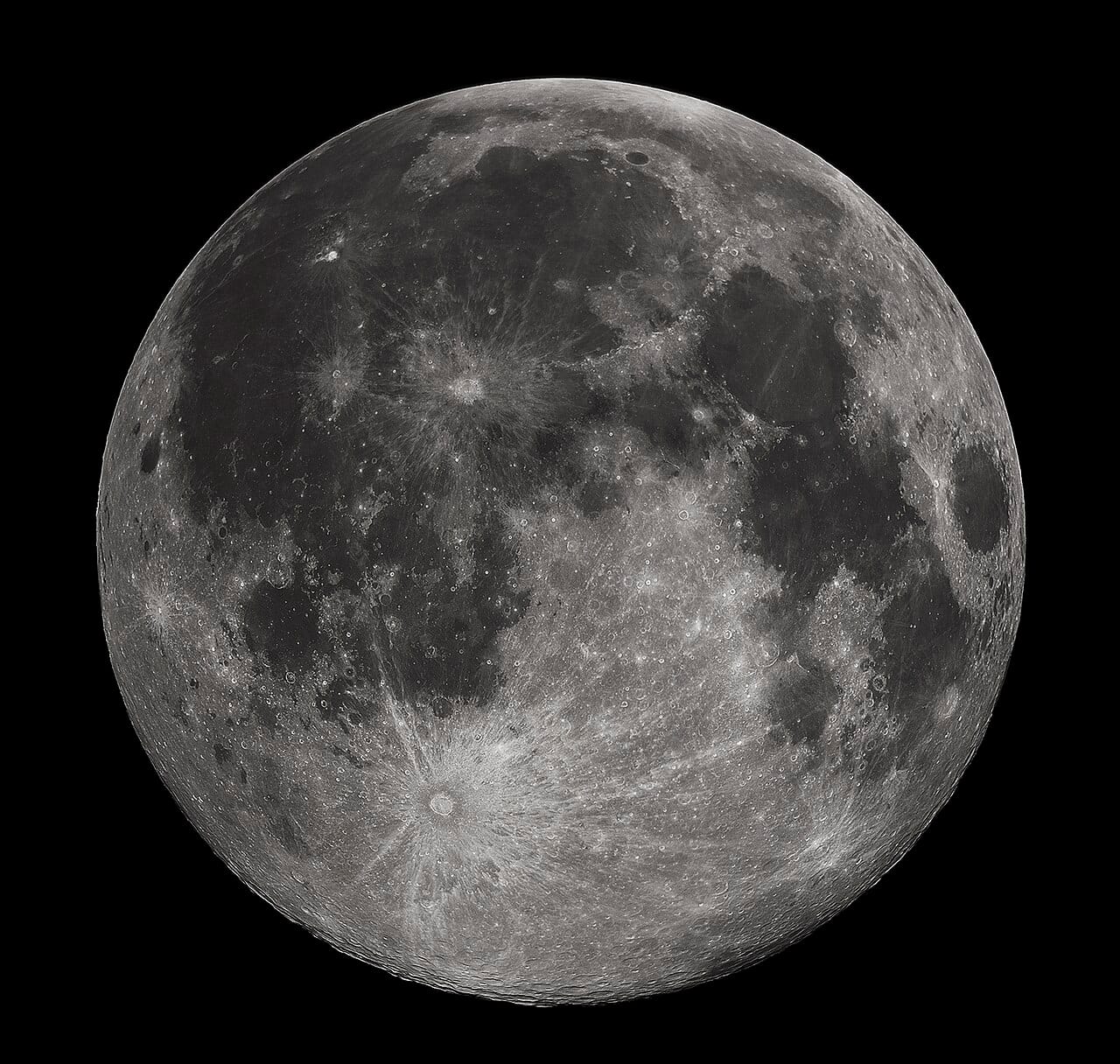
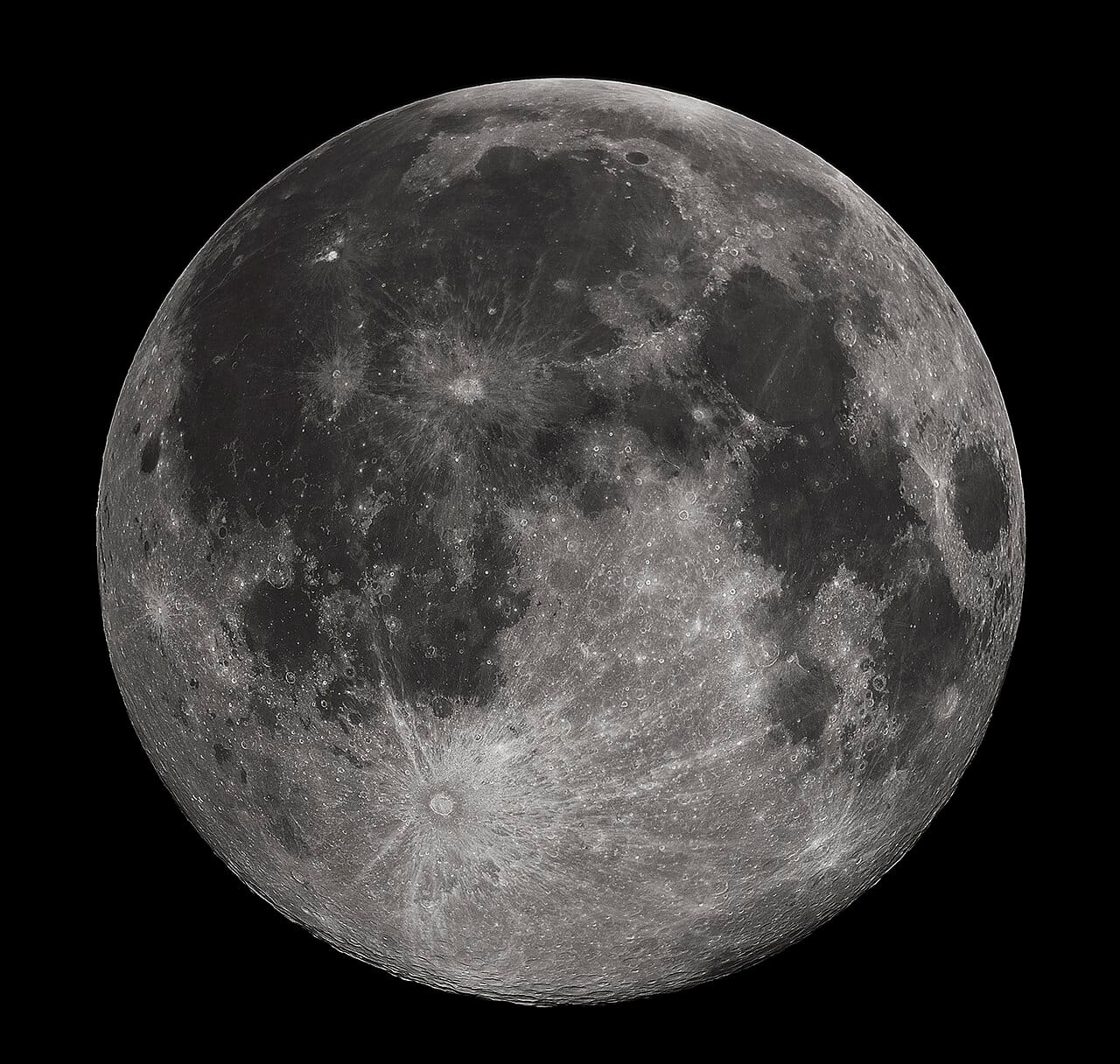
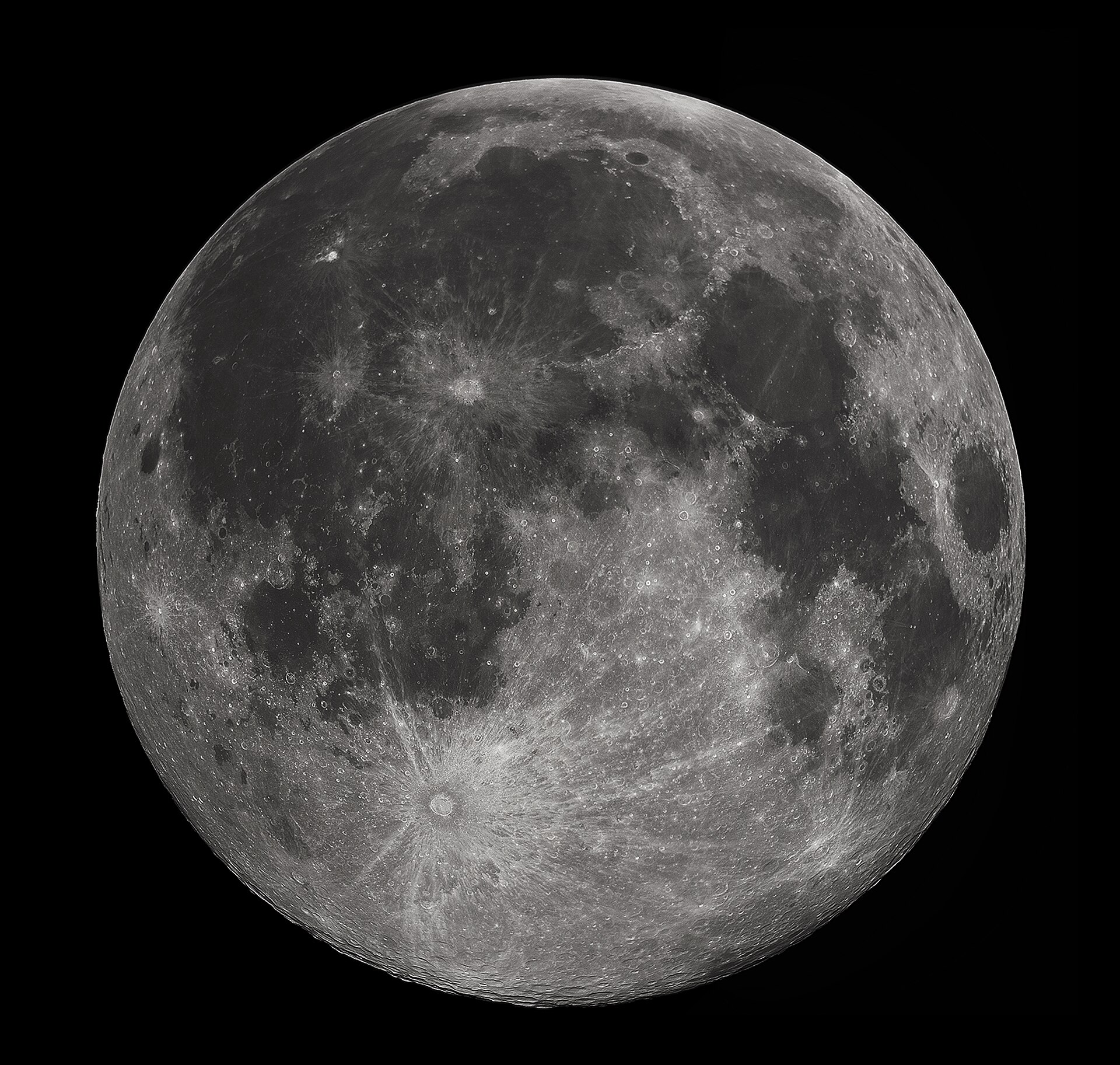
It is very large relative to Earth, over a quarter of Earth's diameter, which is exceptional among moons of rocky planets.
It has almost no iron core, around one to two percent of its mass against Earth's thirty. Its overall density resembles Earth's mantle rather than the whole Earth.
It is depleted in volatile elements: water, potassium, sodium and others are scarce compared with Earth, indicating the material was heated severely.
The Earth-Moon system has a large angular momentum, more than a simple capture or co-formation would produce.
And evidence exists for a lunar magma ocean, meaning the Moon was largely molten early on.
The impact hypothesis was suggested by William Hartmann and Donald Davis, and independently by Alastair Cameron and William Ward, in the mid 1970s, and gained general acceptance at a conference in Kona in 1984 after the alternatives had failed.
A body roughly the size of Mars, named Theia, struck the proto-Earth obliquely around 4.5 billion years ago. The impactor's iron core merged with Earth's, while mantle material from both bodies was thrown into orbit and coalesced.
This accounts for the list. The Moon lacks iron because it formed from mantle material after the cores merged. It is depleted in volatiles because the material was vaporised. The angular momentum comes from the impact geometry. The magma ocean follows from the energy involved.
The problem is the isotopes, and it is severe enough to have its own name.
Simulations of a giant impact consistently find that a large fraction of the orbiting debris, typically more than forty percent, comes from the impactor rather than from Earth. Theia formed elsewhere in the solar system and should therefore have a different isotopic composition, as Mars and the various meteorite classes all do.
The Moon should therefore be measurably different from Earth. It is not.
Oxygen isotope ratios in lunar samples match Earth's to within parts per million. Titanium, chromium, silicon, tungsten and several other systems show the same near-identity. Across the solar system, isotopic composition varies with formation distance, so two bodies forming in different places matching this closely is not what the model predicts.
Several are under active development and none commands agreement.
The synestia model, from Simon Lock and Sarah Stewart, proposes a much higher-energy impact producing not a debris disk but a vaporised, rapidly rotating doughnut of rock in which Earth and Moon material mixed thoroughly before the Moon condensed out. Complete mixing would explain the isotopic identity directly. A 2025 analysis of refractory element abundances in lunar and terrestrial rocks reported the near-identical ratios such thorough mixing predicts, which supports it.
High angular momentum variants produce more mixing at the cost of leaving the system spinning far too fast, requiring a later mechanism to remove the excess.
A 2026 proposal takes a different route, arguing that if Theia had a much higher viscosity than the proto-Earth, the impact would produce a disk composed predominantly of Earth material without violating the angular momentum constraint.
Another line proposes that Theia formed at almost exactly Earth's orbital distance and therefore happened to have nearly identical composition. This is possible and requires a coincidence the model was not designed to need.
And a 2025 paper argues part of the apparent identity arises from how a stratified lunar magma ocean solidified, meaning the sampled lunar surface may not represent the Moon's bulk composition.
No competitor survives. Capture requires a mechanism to shed the energy of a passing body and does not explain the composition. Co-formation does not explain the missing iron or the angular momentum. Fission from a rapidly spinning Earth, proposed by George Darwin in the nineteenth century, requires an implausible spin rate and does not work dynamically.
The impact hypothesis explains everything except the isotopes, and the isotopes are a quantitative problem within the model rather than a reason to abandon it.
It is classified as a hypothesis rather than a theory because its central mechanism makes a prediction, that the Moon should be isotopically distinguishable from Earth, which measurement contradicts. Several repairs exist, they are not mutually consistent, and no observation currently distinguishes between them. Samples from the lunar far side and from the deep interior would help, which is part of the scientific case for returning.