The proposal that natural selection can act on groups as well as individuals, favouring traits that benefit the group at the individual's expense. It was rejected decisively in the 1960s, returned in a reformulated version, and the argument since has been about whether the reformulation says anything the alternatives do not.
Altruism is difficult for evolutionary theory. A behaviour reducing an individual's reproduction while increasing another's should be eliminated, because those doing less of it leave more descendants.
It is nonetheless everywhere. Alarm calls attract predators to the caller. Sterile worker insects never reproduce at all. Blood-sharing in vampire bats costs the donor. Human cooperation with strangers is extensive and frequently costly.
The intuitive answer is that such behaviour benefits the species, and it was widely assumed rather than argued through the mid twentieth century.
V. C. Wynne-Edwards made it explicit in 1962, proposing that animals restrain their reproduction to avoid exhausting resources, for the good of the group.
George Williams demolished it in 1966. The objection is decisive and simple: a group of restrained individuals is invaded by any individual that does not restrain, because that individual leaves more offspring, and its descendants inherit the tendency. Selection within a group is generally far stronger and faster than selection between groups, because individuals turn over much faster than groups form and die.
For group selection to work, between-group selection must outweigh within-group selection, and Williams argued the required conditions, small isolated groups with low migration and high extinction rates, are rarely met.
The rejection was thorough. For two decades, invoking group selection marked a biologist as not having understood the argument.
Two frameworks explained the same phenomena without group selection, and both are well supported.
Kin selection, from W. D. Hamilton in 1964, notes that helping a relative propagates shared genes. Hamilton's rule states that altruism is favoured when the benefit to the recipient, multiplied by the relatedness between the two, exceeds the cost to the actor.
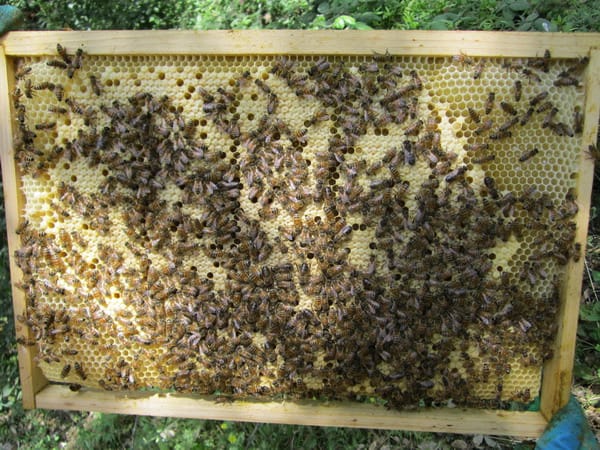
This solved the sterile worker problem. In haplodiploid insects, sisters share an unusually large proportion of their genes, so raising sisters can propagate an individual's genes more effectively than raising daughters. J. B. S. Haldane's remark that he would lay down his life for two brothers or eight cousins is the same arithmetic.
Reciprocal altruism, from Robert Trivers in 1971, explains cooperation between non-relatives through returned favours over repeated interaction, and requires memory and the ability to detect cheats.
Together these account for most observed altruism, and they do so with individual-level or gene-level selection alone.
The reformulated version, developed by David Sloan Wilson and Elliott Sober from the 1970s, is not the naive one.
Multilevel selection theory holds that selection operates simultaneously at several levels, and that the outcome is the sum. Within groups, selfish individuals outcompete altruists. Between groups, groups containing more altruists outcompete groups containing fewer. Which effect dominates depends on the variance between groups relative to the variance within them.
This is mathematically defensible, and the conditions under which it favours altruism are specifiable rather than hand-waved.
The critical response is that it is mathematically equivalent to kin selection rather than an alternative. Groups containing more altruists are usually groups of relatives, and the two frameworks partition the same total selection differently. The Price equation can be written either way and gives the same answer.
If that is right, the choice is one of accounting convenience rather than substance, and several prominent biologists have argued exactly that.
Human cooperation is where the argument remains live, because it does not fit the standard explanations well.
Humans cooperate extensively with unrelated strangers, in one-off interactions, and punish defectors at personal cost with no expectation of return. Kin selection does not cover it and reciprocity struggles with anonymous single encounters.
Cultural group selection is the proposal advanced for this, principally by Robert Boyd and Peter Richerson. Human groups differ culturally, cultural variants are transmitted by learning rather than by descent, conformity keeps within-group variation low and between-group variation high, and groups compete and are displaced.
Those conditions are much more favourable to between-group selection than genetic ones, because culture can sustain differences between groups that gene flow would erase.
Evidence includes the historical spread of institutions and norms, the rapidity of cultural change relative to genetic change, and cross-cultural experimental work finding that cooperation levels in economic games vary with the market integration and religious institutions of the society.
Critics respond that cultural transmission can be modelled without group selection, and that the historical evidence for group extinction rates sufficient to drive the process is thin.
Naive group selection, for the good of the species, is refuted and should not be revived.
Multilevel selection is mathematically coherent, is not the naive version, and is disputed principally over whether it is distinct from kin selection or a relabelling of it.
Cultural group selection has the strongest claim to describing something the alternatives do not, and it concerns cultural rather than genetic evolution, which changes the conditions substantially.
It is filed as a hypothesis because the central question, whether group-level selection is a distinct causal process or an alternative bookkeeping for individual-level selection, has been argued for sixty years by people who agree on all the underlying mathematics.