The proposal that evolutionary theory needs restructuring to give causal roles to development, inheritance beyond genes, and organisms shaping their own environments. Its advocates say the standard framework is incomplete. Its critics say everything it describes was already accounted for.
The modern synthesis, assembled between the 1930s and 1950s, combined Darwinian selection with Mendelian genetics and population genetics.
Its core commitments are that variation arises from random mutation, that selection acts on that variation through differential reproduction, that inheritance is genetic, and that evolution is change in gene frequencies within populations.
That framework is enormously successful and nothing in the extended synthesis disputes it. The argument is about whether it is complete.
Advocates, principally Kevin Laland, Gerd Muller, Massimo Pigliucci and Eva Jablonka, propose four elements they say require causal status rather than treatment as detail.
Developmental bias. Variation is not random with respect to form. Developmental processes make some variants easy to produce and others nearly impossible, so the supply of variation is structured before selection acts on it. Selection can only choose among what development offers, and what it offers is not uniform in all directions.
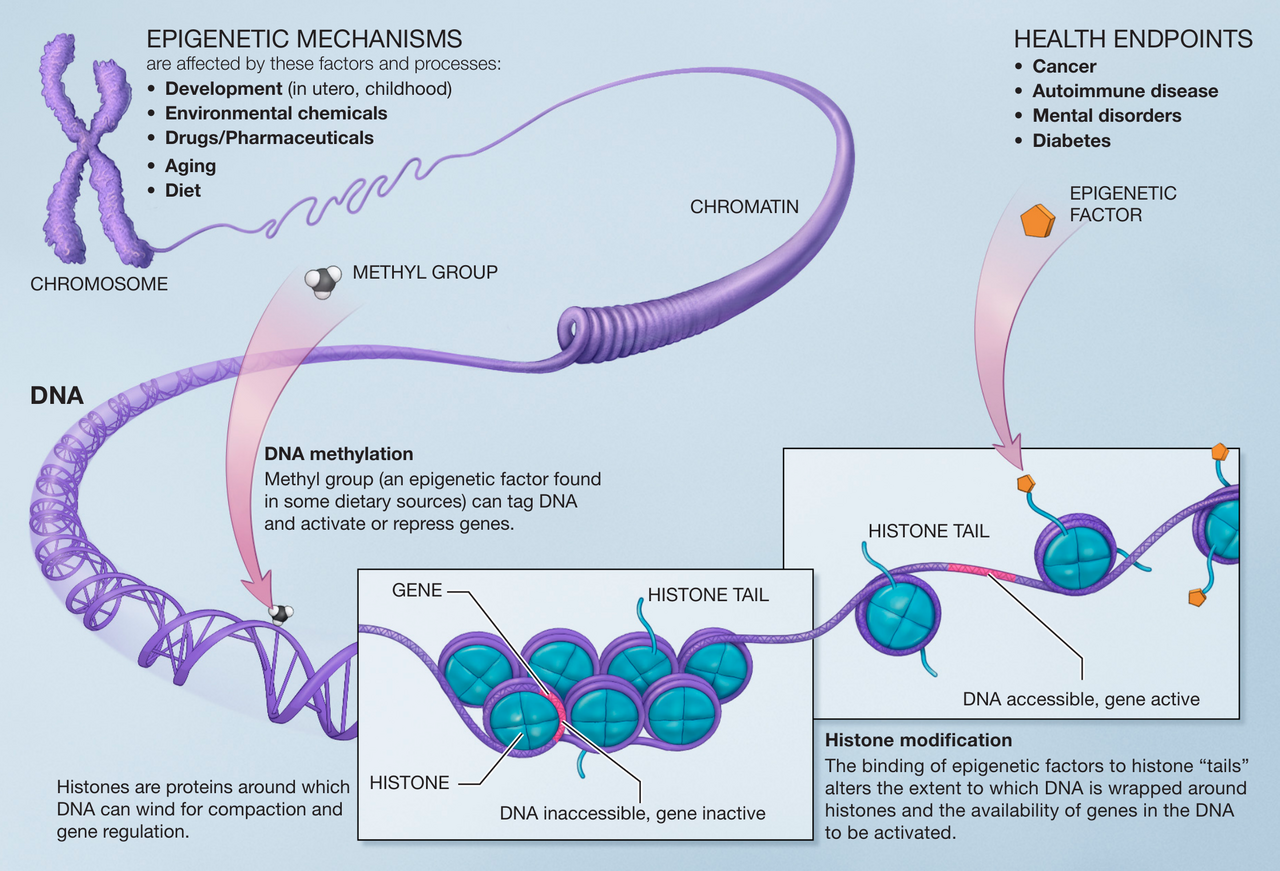
Inclusive inheritance. Offspring inherit more than genes: epigenetic marks, cytoplasmic contents, microbiomes, ecological conditions modified by parents, and in some species learned behaviour. Some of these are transmitted across generations and affect fitness.
Niche construction. Organisms modify their environments, and those modifications alter the selection pressures acting on descendants. Treated separately in its own capsule.
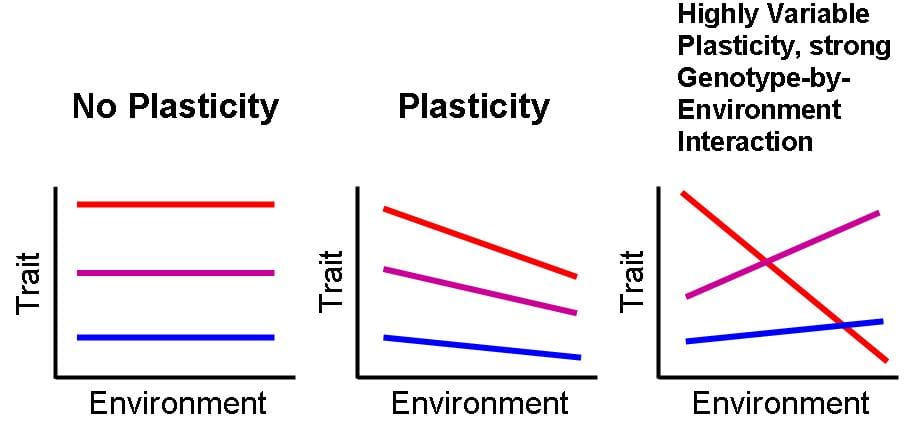
Phenotypic plasticity. An organism's form responds to its environment, and plasticity can precede genetic change: a plastic response appears first and is later stabilised genetically, which reverses the usual order of variation then selection.
Critics, including Douglas Futuyma, Jerry Coyne and Brian Charlesworth, argue that none of this requires restructuring.
Their case is that the phenomena are real and already accommodated. Developmental constraint has been studied within evolutionary biology for decades. Epigenetic inheritance exists and, in most animals, is largely reset between generations and rarely persists long enough to matter evolutionarily. Niche construction is a form of feedback that standard models handle. Plasticity is itself a genetically encoded trait subject to selection.
The stronger version of the objection is that the extended synthesis mistakes proximate for ultimate causation. Development explains how a phenotype is produced; selection explains why one phenotype rather than another became common. Adding developmental detail enriches the first without changing the second.
Futuyma has argued the practical point directly: if the extension were doing work, it should generate research programmes producing findings the standard framework could not, and he does not see them.
The empirical claims vary considerably in strength.
Developmental bias has good support. Repeated evolution of the same forms in unrelated lineages, examined closely, often reflects the same developmental route being available. Digit reduction in vertebrates follows predictable sequences, and colour pattern variation in butterflies is constrained by how wing patterning works.
Transgenerational epigenetic inheritance is well demonstrated in plants and in some invertebrates. In mammals it is much more limited, since most marks are erased twice during development, and the striking rodent examples remain contested and have replication difficulties.
Plasticity-led evolution has supporting cases, including in spadefoot toads and in threespine sticklebacks, and the number of clean examples is modest.
Niche construction is undisputed as a phenomenon and disputed as a distinct evolutionary cause.
Much of it is about emphasis and framing rather than fact, which both sides occasionally acknowledge.
Nobody disputes that development shapes variation, that non-genetic inheritance exists, or that organisms modify environments. What is disputed is whether these belong in the causal core of the theory or in the surrounding detail, and that is partly a question about how to organise a field rather than about what is true.
It also has an institutional dimension. The extended synthesis has been promoted through funded programmes and conferences, which critics regard as advocacy outrunning results and advocates regard as necessary to get unconventional work funded at all.
It is classified as a hypothesis because it makes a testable claim, that giving these factors causal status will produce explanations the standard framework cannot, and that claim is currently supported by a set of individually interesting cases rather than by a demonstrated general need.