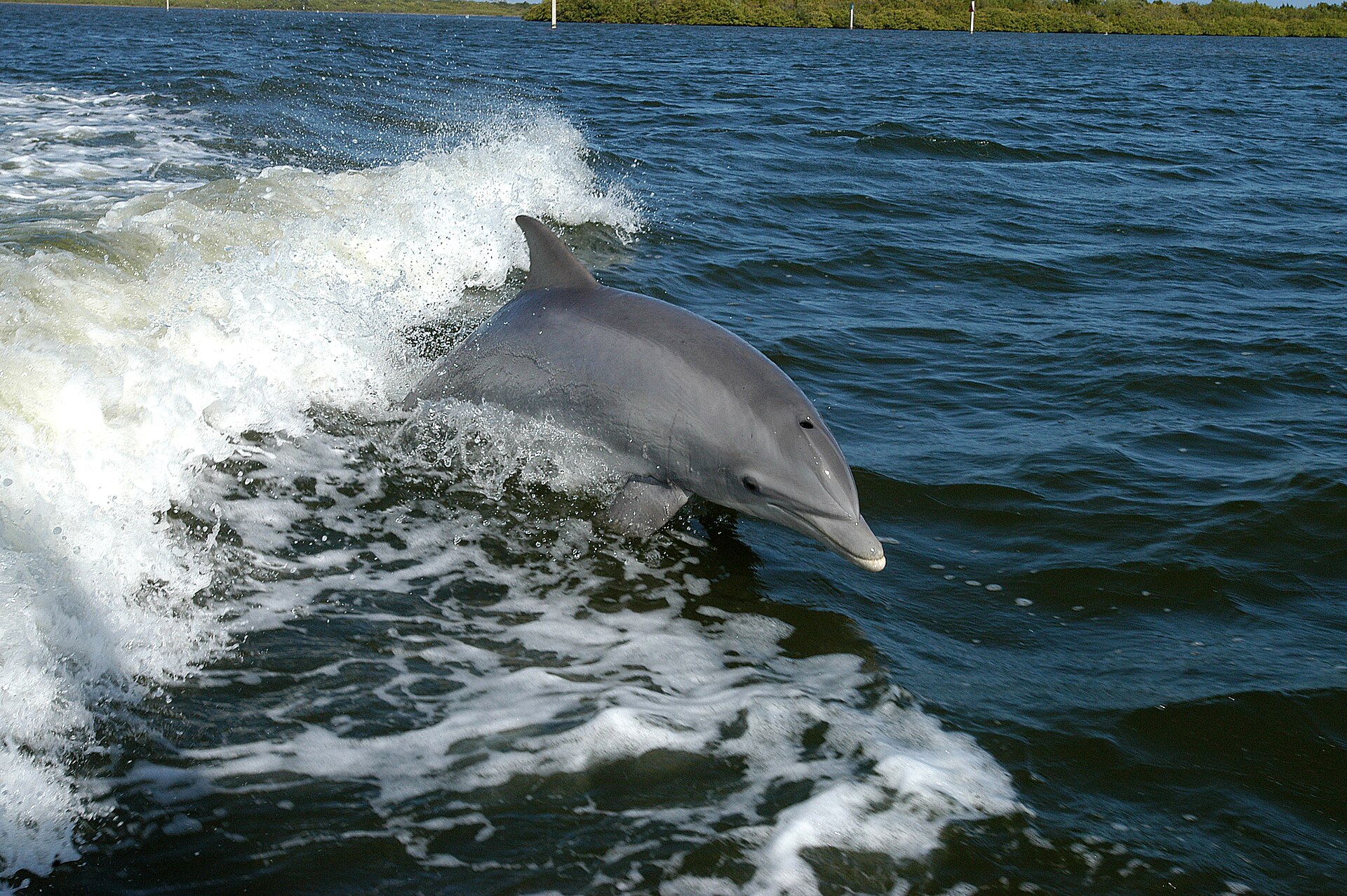
Dolphins are toothed whales of the family Delphinidae and several river families, around forty species. They echolocate, they call each other by name in a literal sense, they sleep one half of the brain at a time, and they are the animal most reliably over-interpreted by people writing about animal minds. One of them was the first cetacean driven to extinction by humans.
Dolphins are cetaceans, descended from land mammals that returned to the water around fifty million years ago, with the hippopotamus as their closest living land relative. They breathe air through a blowhole that is a migrated nostril, are born tail-first so the calf does not drown during delivery, and nurse underwater.
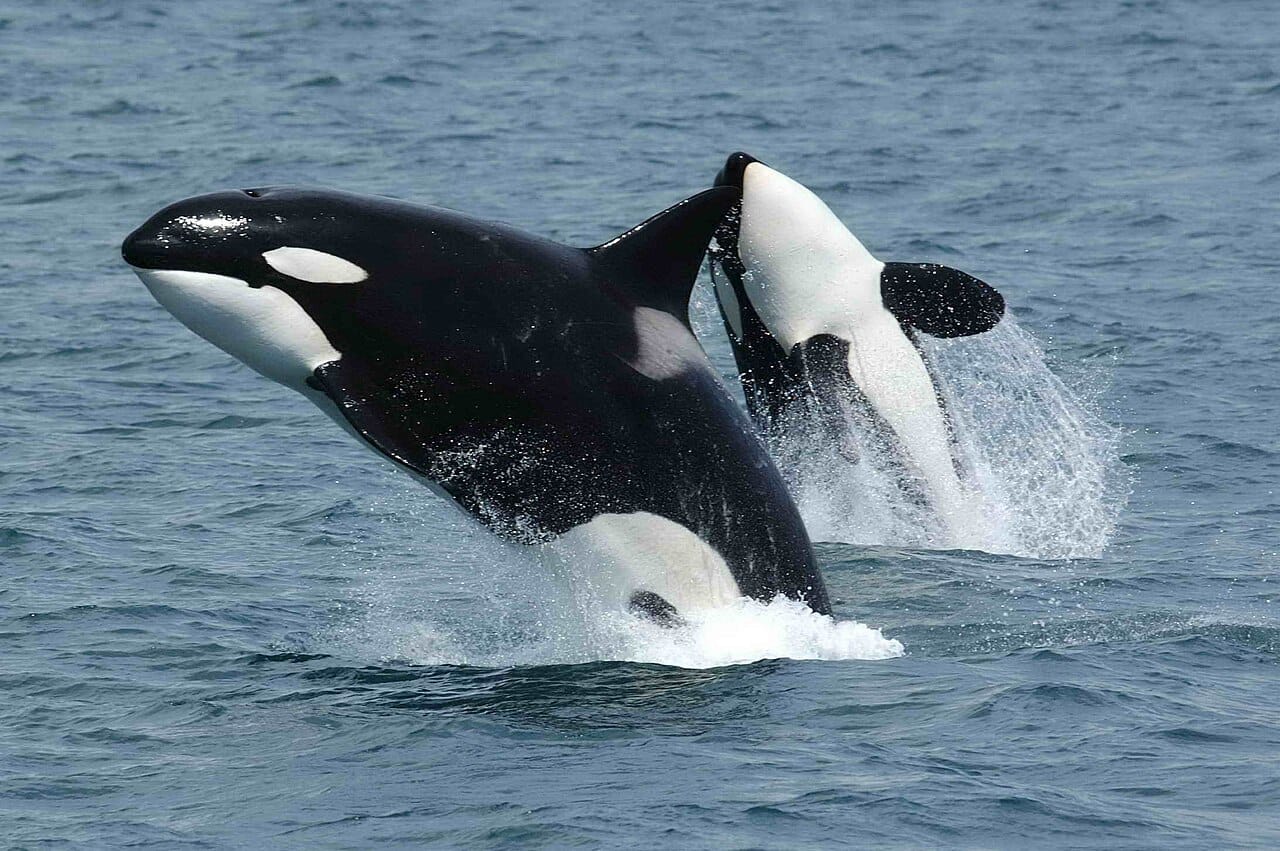
The bottlenose, Tursiops truncatus, is the familiar one: two to four metres, worldwide in temperate and tropical seas, and the species behind almost all captive and research work. The largest member of the family is the orca, which is a dolphin despite the name, and the smallest are under two metres.
Dolphins generate clicks in nasal air sacs below the blowhole and focus them through the melon, a fatty structure in the forehead that acts as an acoustic lens. Returning echoes are received not through ears but through the lower jaw, where a fat-filled channel conducts sound to the middle ear.
The resolution is very high. Dolphins discriminate targets differing slightly in thickness or material, detect objects buried in sediment, and distinguish between metals. They can also vary click rate from a slow search train to a rapid buzz on approach, in the same way bats do, which is convergence between a marine mammal and a flying one on the same physics.
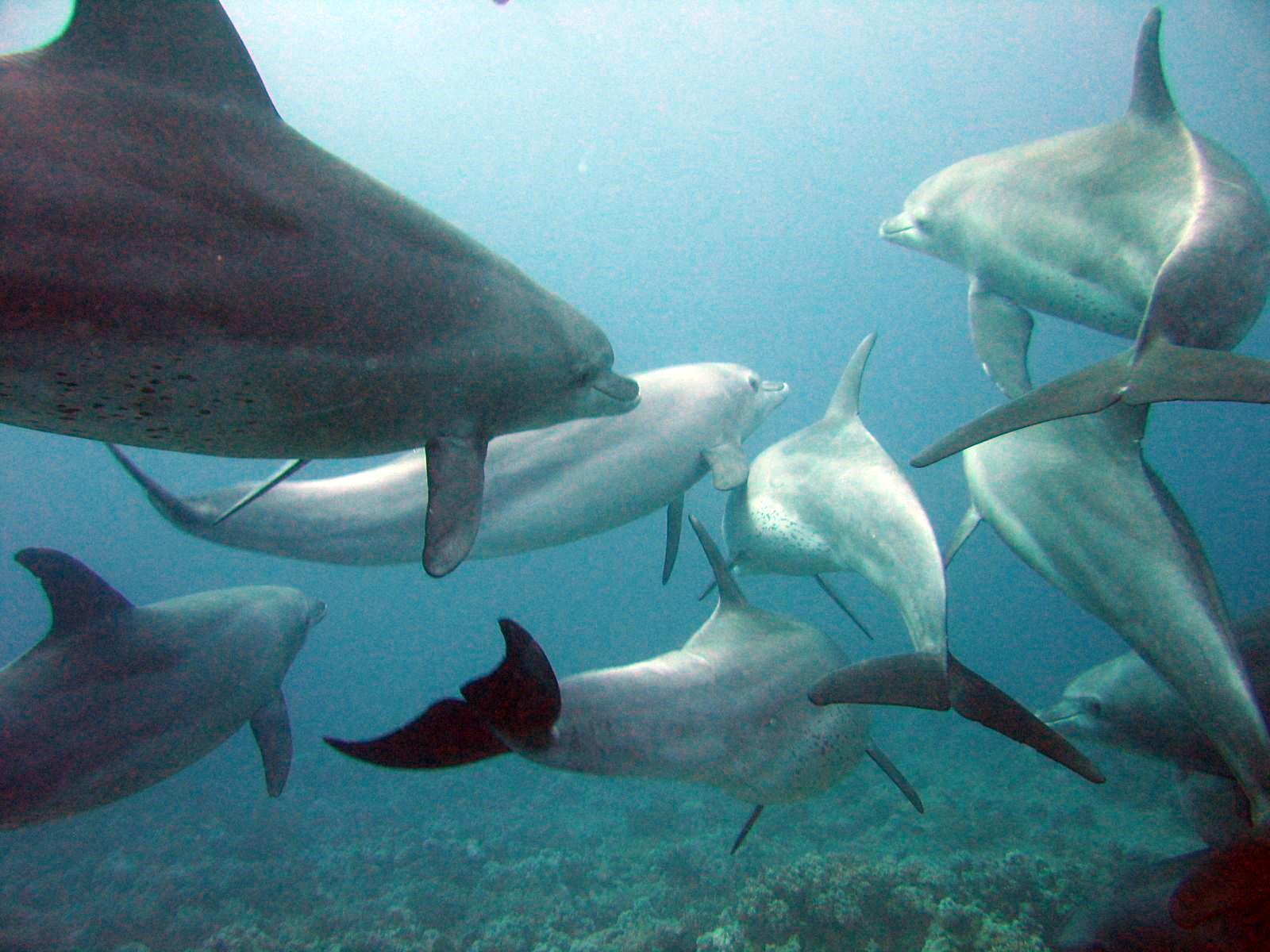
Each bottlenose dolphin develops a signature whistle, distinctive to the individual, largely fixed within the first year or two of life and kept for decades. Dolphins produce their own signature to announce themselves, and they copy the signature of another individual to address it.
Playback experiments settled the interpretation. Dolphins respond to a recording of their own signature whistle, and they respond when the whistle is synthesised to strip out the voice characteristics of the original caller, leaving only the frequency pattern. That means the information is in the tune rather than the voice, which is what makes it a name rather than a recognisable voice. Dolphins have also been shown to remember the signature whistles of animals they have not seen for more than twenty years.
Dolphins sleep unihemispherically: one hemisphere at a time, with the opposite eye closed, while the other half stays awake. A voluntary breather that fully lost consciousness would drown, and a calf in its first months barely sleeps at all in the ordinary sense.
They also use tools, in at least one well-documented and culturally transmitted case. In Shark Bay, Western Australia, some bottlenose dolphins carry a marine sponge on the rostrum while foraging on the seabed, which protects the snout while probing rubble for fish with no swim bladder that echolocation does not detect well. The behaviour passes almost exclusively from mother to daughter, and the spongers form a social cluster that associates preferentially with each other. That is a tradition, not an instinct.
Dolphins pass the mirror mark test, cooperate on tasks requiring coordinated timing, learn artificial symbol systems in the laboratory, and have large brains with a high encephalisation quotient and extensively folded cortex.
The reasonable dispute is about what follows from that. Paul Manger argued in 2006 that the large cetacean brain is explained substantially by thermogenesis in cold water and by an unusually high proportion of glia rather than by cognitive demand. Most of the field rejected the strong form of that claim, but the underlying caution has stuck: brain size and folding are weak evidence for specific abilities, and much of the popular literature about dolphin intelligence runs well past the experiments.
Two things frequently asserted are not supported. Dolphin-assisted therapy has no good evidence of benefit beyond that of any pleasant novel activity, and the studies claiming otherwise are small and poorly controlled. And the picture of dolphins as uniformly gentle is a selection effect: males form coalitions that coerce females, bottlenoses kill harbour porpoises without eating them, and infanticide is documented.
None of this makes them less interesting. It makes them an animal rather than a symbol.
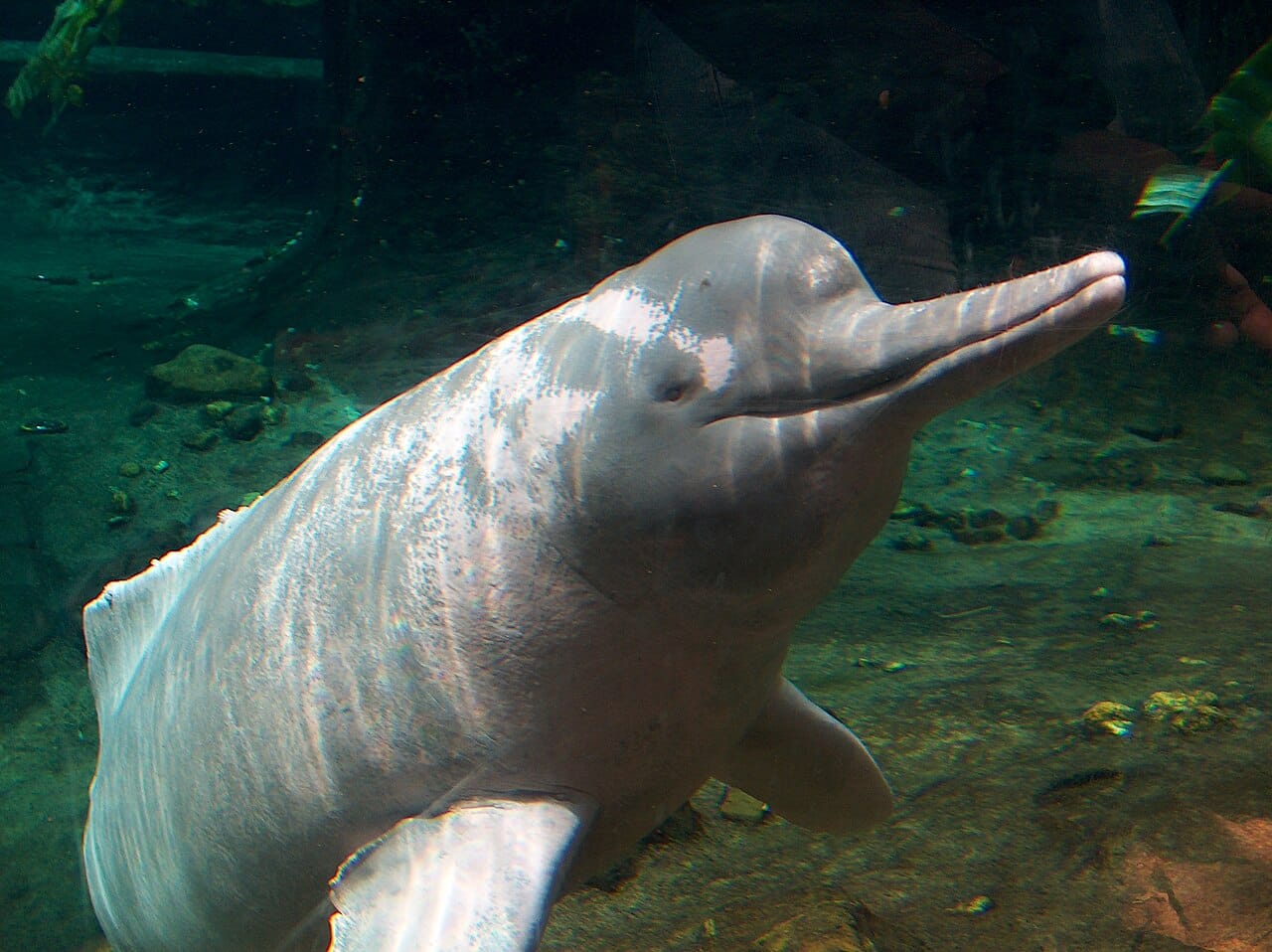
River dolphins occupy the Amazon, Orinoco, Ganges, Indus and formerly the Yangtze. They are not a natural group: they are separate lineages that moved into rivers independently and converged on the same solutions, since a turbid river rewards echolocation and makes eyes nearly useless. The Ganges river dolphin is functionally blind.
The Yangtze river dolphin, the baiji, was declared functionally extinct after a dedicated survey in 2006 found none. It is the first cetacean extinction attributable to human activity, and the causes were unremarkable: entanglement, boat strikes, dam construction, pollution and the removal of its prey by fishing. Nothing exotic was required.
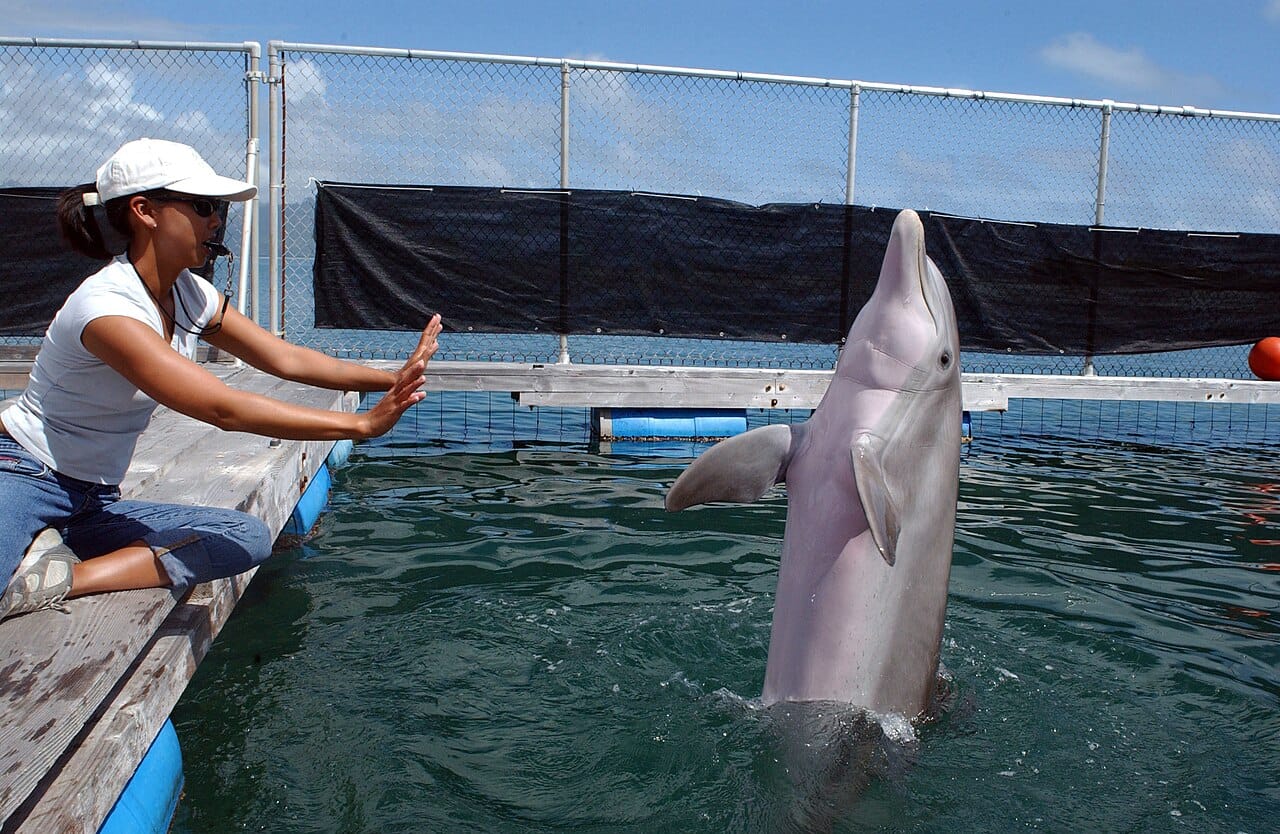
Dolphins have been kept and trained since the 1930s, and the pressure on that has grown. India, Chile, Costa Rica and others restrict or ban captive cetacean display, Canada prohibited it in 2019, and several jurisdictions permit existing animals to remain but forbid breeding.
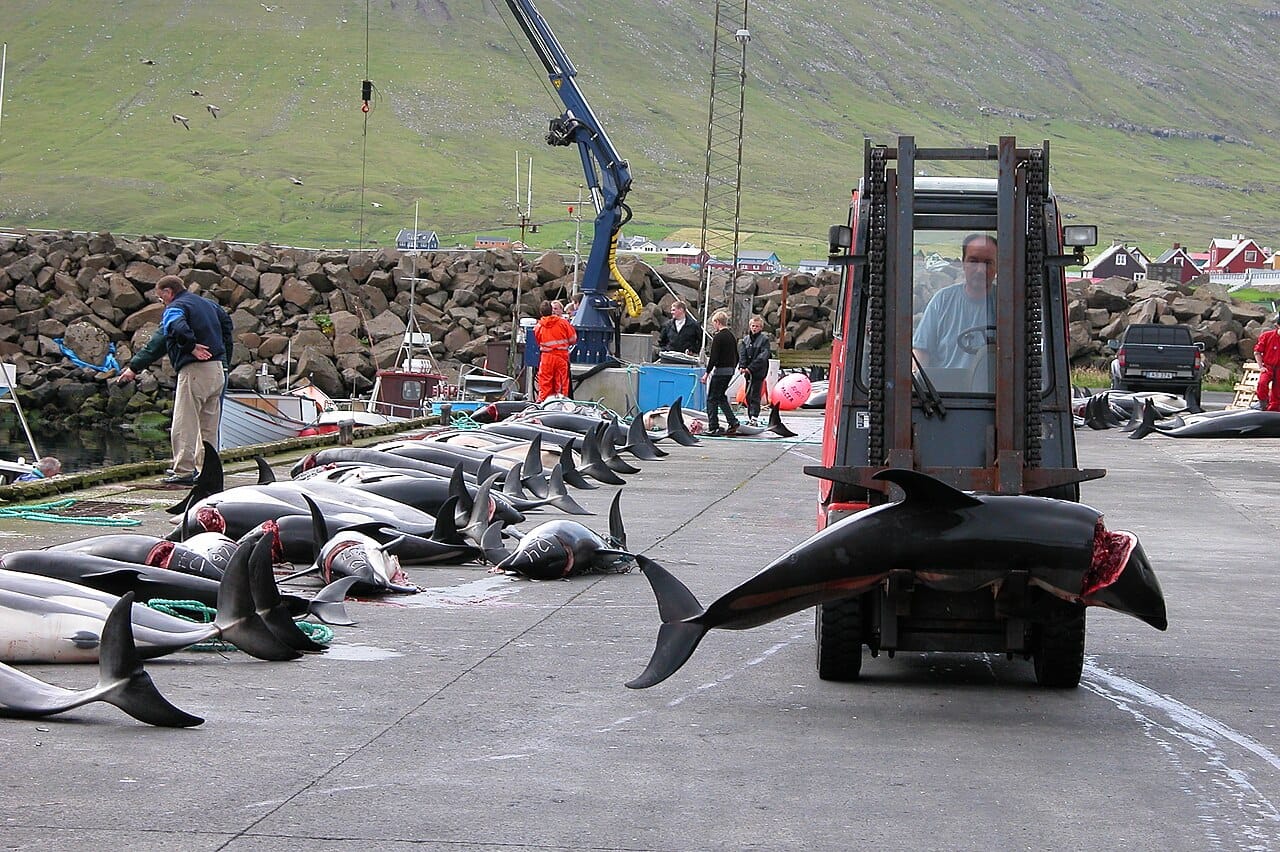
Drive hunts continue in the Faroe Islands and in Taiji, Japan. The Taiji hunt supplies the live-capture trade as well as meat, which links aquarium demand directly to it, and that link is why several international aquarium associations now refuse Taiji-sourced animals.
The larger killer is incidental. Hundreds of thousands of cetaceans die annually in fishing gear worldwide. The eastern tropical Pacific tuna fishery, which set purse seine nets on dolphin schools because yellowfin tuna swim beneath them, killed millions before dolphin-safe labelling and gear changes in the late 1980s cut mortality by more than ninety-nine per cent. That remains one of the most effective consumer-driven conservation results on record, and the definition of the label is still litigated.
The baiji is the point. It was a distinct lineage, tens of millions of years old, living in the most populous river basin on Earth, and it was lost inside about fifty years to ordinary industrial activity while everyone knew it was happening. The vaquita, a porpoise in the Gulf of California, is now down to about ten individuals on the same trajectory.