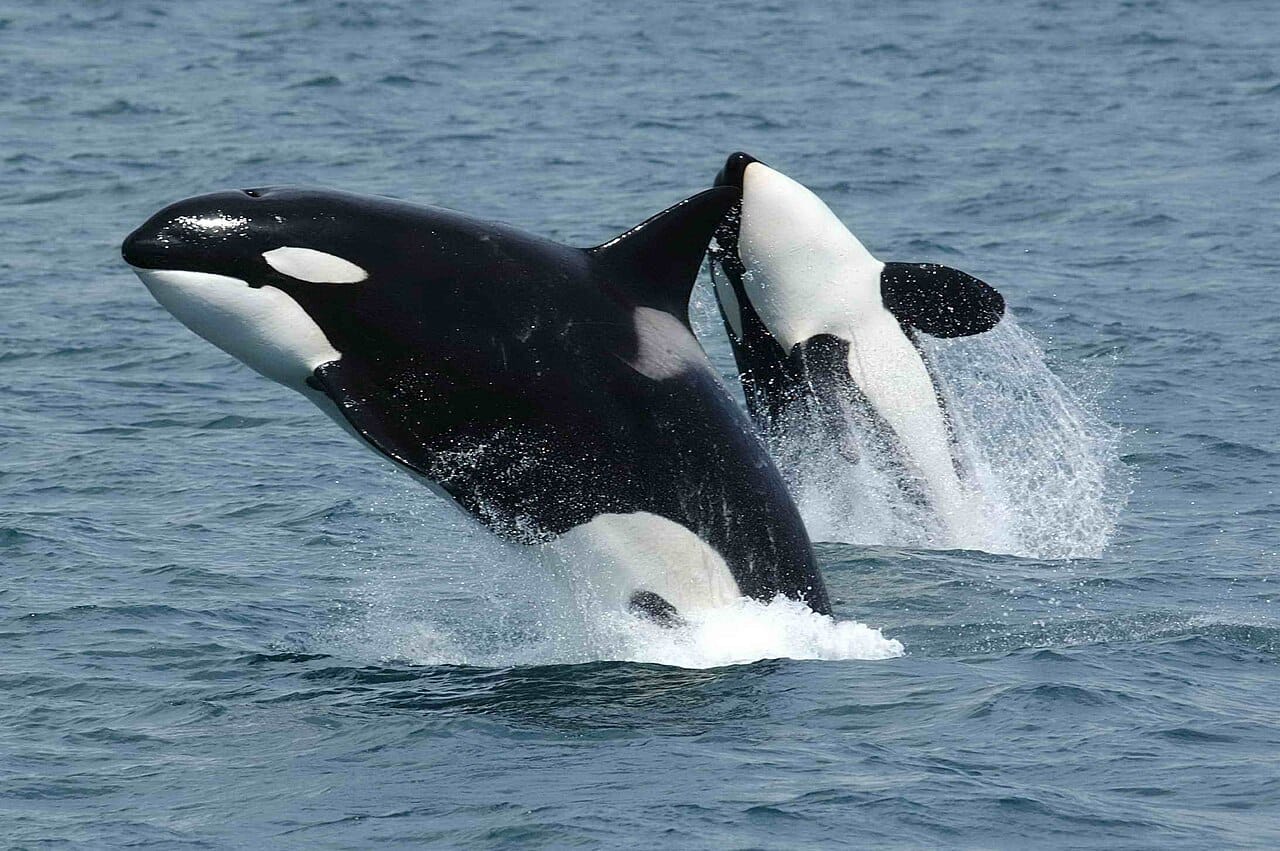
The orca, Orcinus orca, also called the killer whale, is the largest member of the dolphin family and the most widely distributed mammal on Earth after humans. It is an apex predator everywhere it occurs, it hunts in ways that are learned rather than instinctive, and it is currently the subject of an unresolved argument about whether it is one species or several.
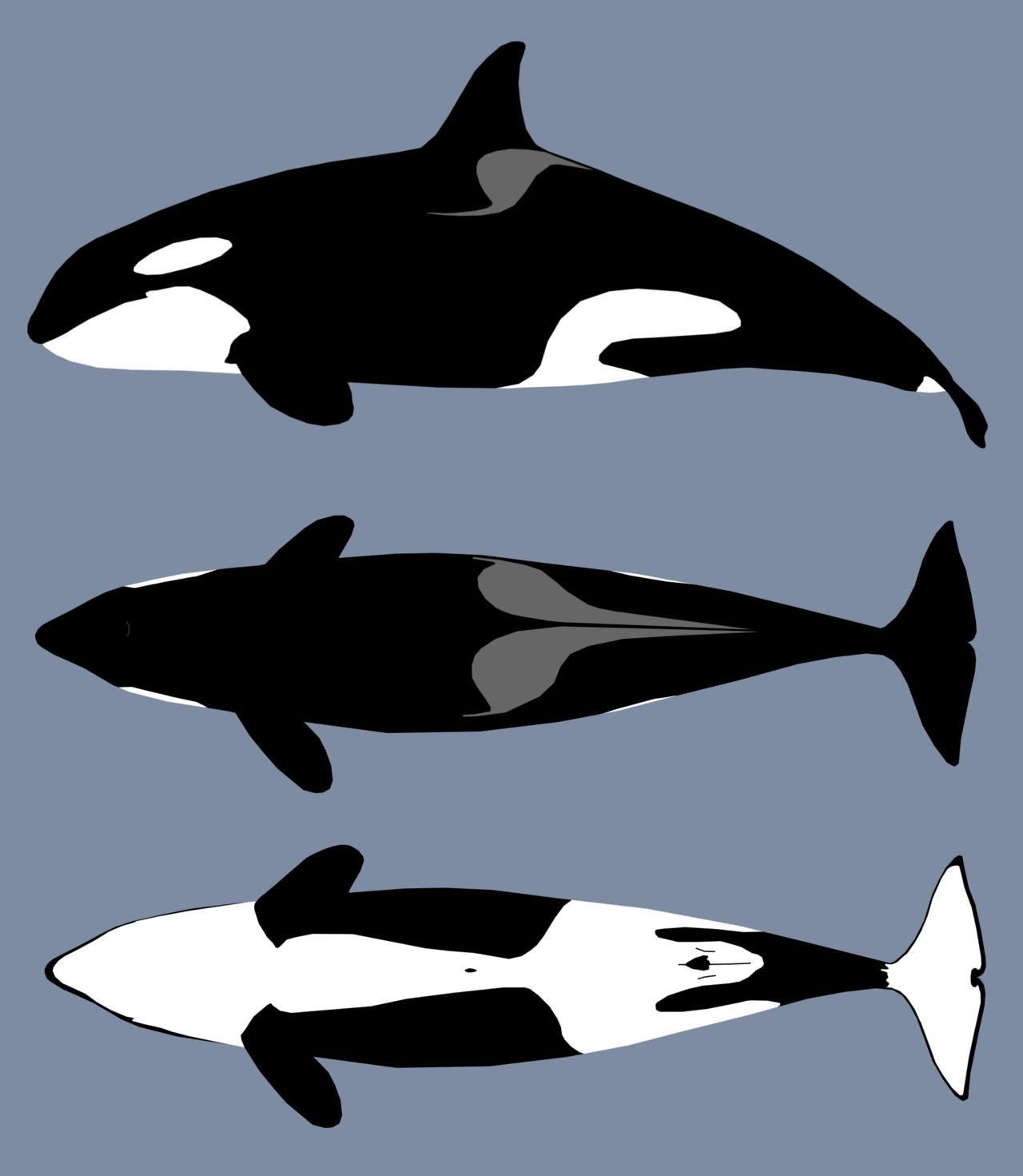
Orcas are large, with males reaching about 8 to 9 metres and 6 tonnes and females noticeably smaller. The black and white pattern is not camouflage in the ordinary sense but disruptive colouration, breaking up the outline against light from above and dark below.
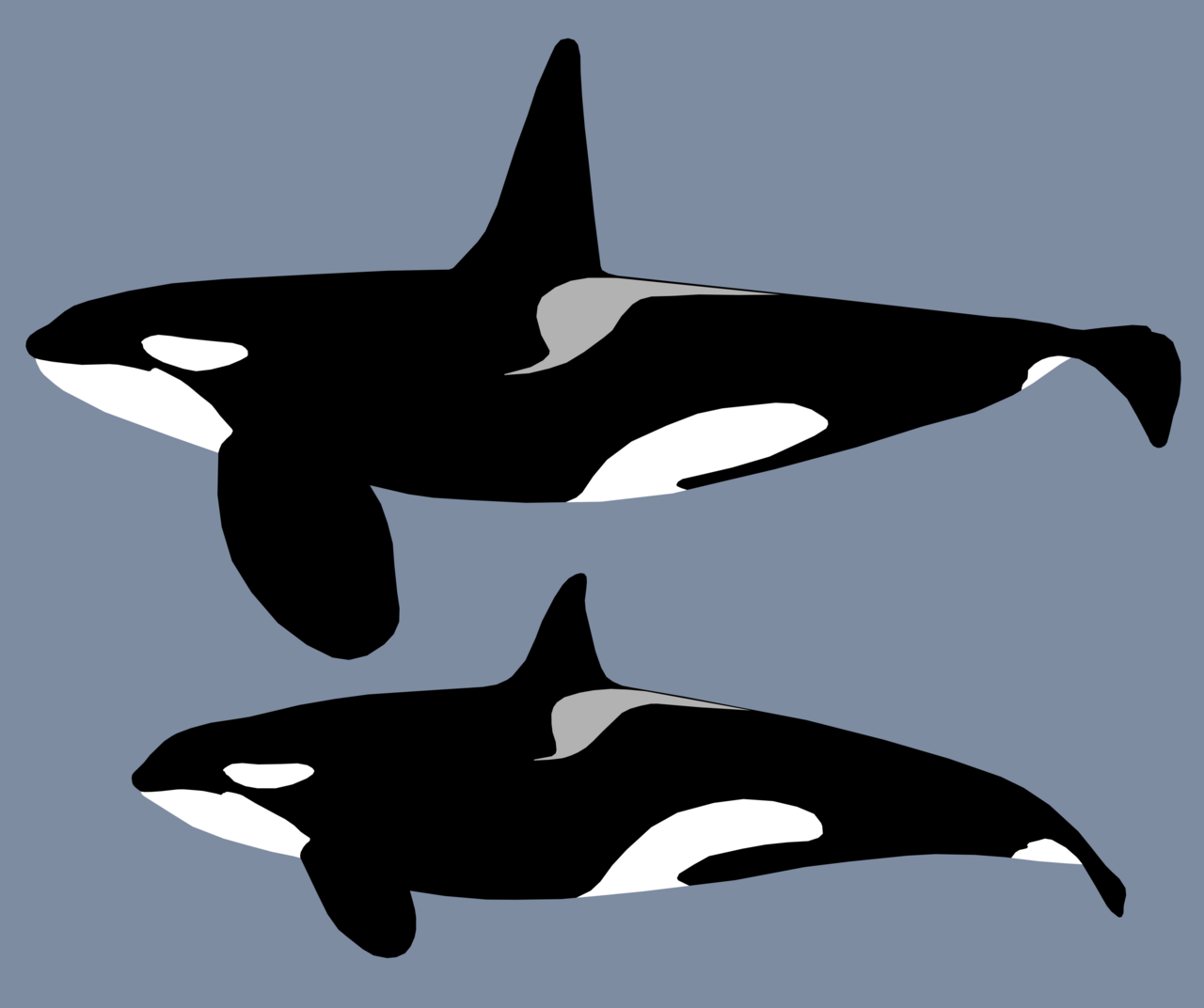
The dorsal fin is the most obvious sexually dimorphic feature in any cetacean. A mature male's fin can stand nearly two metres, straight and triangular; a female's is shorter and curved. Fins collapse in most captive males, which is rare in the wild and is one of the more visible signs of the physical toll of captivity.
Orcas are fast, capable of bursts over 45 kilometres an hour, and they echolocate. They have among the largest brains of any animal in absolute terms, with a highly developed paralimbic region, though brain size arguments about intelligence are weaker than they are usually made to sound.
The single most important fact about orcas is that they are not one thing behaviourally. Distinct populations, called ecotypes, differ in diet, size, markings, vocalisations, social structure and range, and they do not interbreed even where they overlap in the same water on the same day.
In the eastern North Pacific, resident orcas eat fish, principally Chinook salmon, live in large stable matrilineal groups, and are highly vocal. Bigg's orcas, formerly called transients, eat marine mammals, travel in small quiet groups, and hunt largely in silence because their prey can hear them. Offshore orcas eat sharks and have teeth worn nearly to the gumline by shark skin.
Antarctic ecotypes are similarly divided, including one that hunts seals by generating waves to wash them off ice floes, a behaviour that requires coordination between several animals and is not seen elsewhere.
Orcas are listed by the IUCN as Data Deficient, which is unusual for an animal this conspicuous. The reason is taxonomic: nobody is confident how many species the name covers, and a global assessment of a species that may not be one species is not meaningful.
In March 2024 Morin and colleagues published a revised taxonomy in Royal Society Open Science arguing that eastern North Pacific resident and Bigg's orcas are separate species, on genetic, morphological, acoustic and ecological grounds. They had been reproductively isolated for a very long time despite sharing water.
The Society for Marine Mammalogy's taxonomy committee considered the proposal and, later that year, recognised the two as subspecies rather than species, provisionally Orcinus orca ater for residents and Orcinus orca rectipinnus for Bigg's. The vote fell narrowly short of the two-thirds majority needed for species status.
So the current position is a subspecies split that a substantial minority of specialists regards as an undercount. This is worth stating plainly rather than resolving, because the conservation consequences are direct: a population that is not a listed taxon is harder to protect.
Orca hunting techniques are learned and differ between populations that could physically perform each other's methods and do not. Patagonian orcas at Punta Norte deliberately strand themselves on shingle beaches to take sea lion pups and then work their way back to the water, a technique adults teach to juveniles over years, and one that exists in only a couple of places on Earth.
Vocal repertoires work similarly. Resident pods have dialects, sets of calls shared within a matriline and differing between them, stable across decades and used in ways that track relatedness. The dialect is inherited socially from the mother, not genetically.
Menopause is the other remarkable feature. Orcas are one of a very small number of mammals in which females stop reproducing well before they die, living decades past their last calf. The leading explanation is that post-reproductive females carry ecological knowledge, particularly where salmon are in poor years, and lead the group; the survival of adult sons is measurably tied to whether their mother is alive.
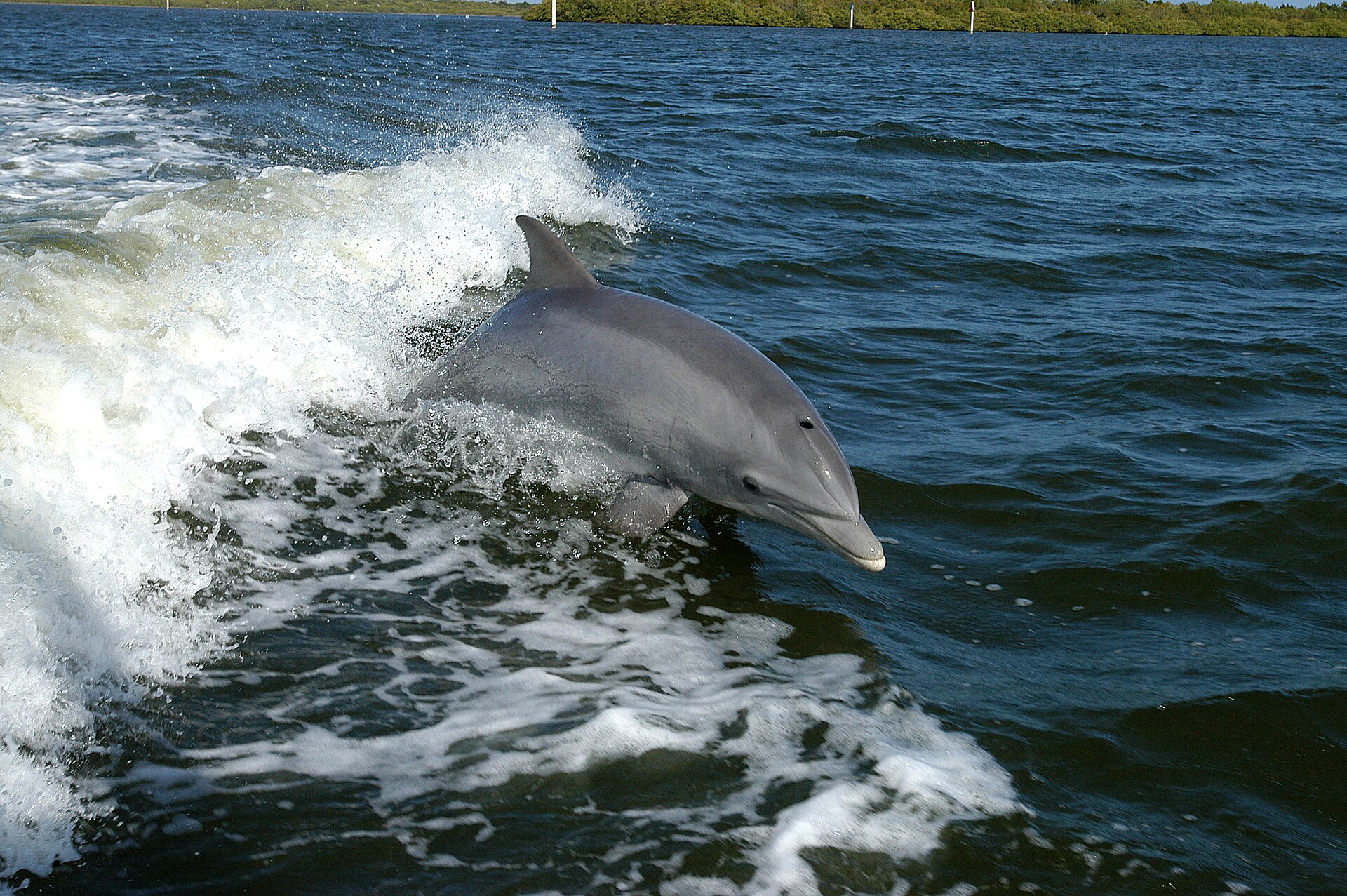
Orcas are delphinids, members of the oceanic dolphin family, and the killer whale name is a translation artefact: whalers called them whale killers for what they were seen doing, and the words were reversed.
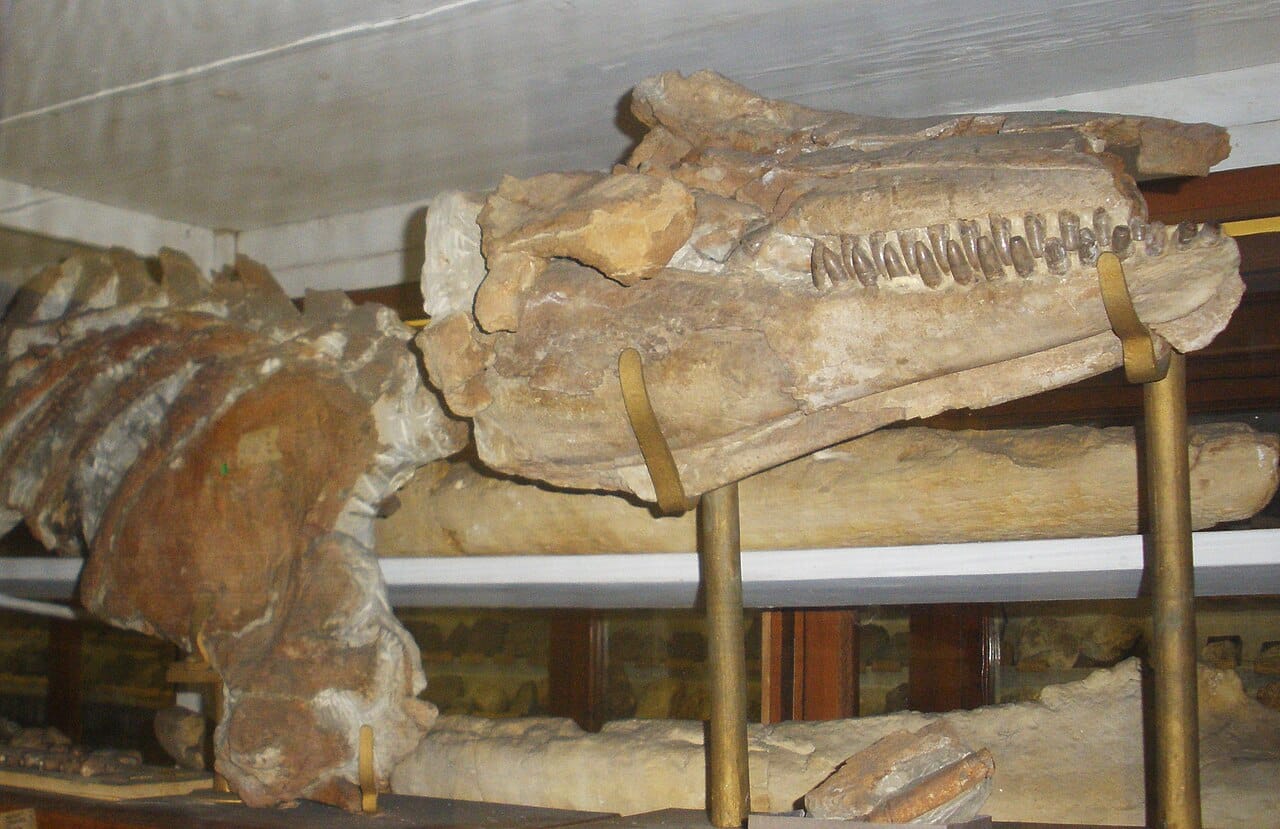
The fossil record includes Orcinus citoniensis from the Pliocene of Italy, a smaller animal with a larger number of teeth, consistent with a fish-eating ancestor from which the mammal-hunting habit developed later.
Globally the species is not thought to be at risk, but the global figure is exactly the one that means least here. The Southern Resident population of the eastern North Pacific numbers in the seventies and is Endangered under both US and Canadian law, limited by Chinook salmon availability, vessel noise that interferes with echolocation while hunting, and contaminant load.
Orcas accumulate persistent organic pollutants, particularly PCBs, at the top of long marine food chains. A 2018 modelling study projected that PCB burdens alone threaten the persistence of several populations over the coming century, through reproductive failure rather than acute toxicity. PCBs were banned decades ago and remain in the ocean.
There is no record of a wild orca killing a human being. There are several records of captive orcas killing their trainers, and the contrast is the point: an animal with this much capacity, held in a tank, does not behave as it does in the sea. The end of orca breeding at SeaWorld in 2016 followed public reaction to that fact more than any regulatory finding.