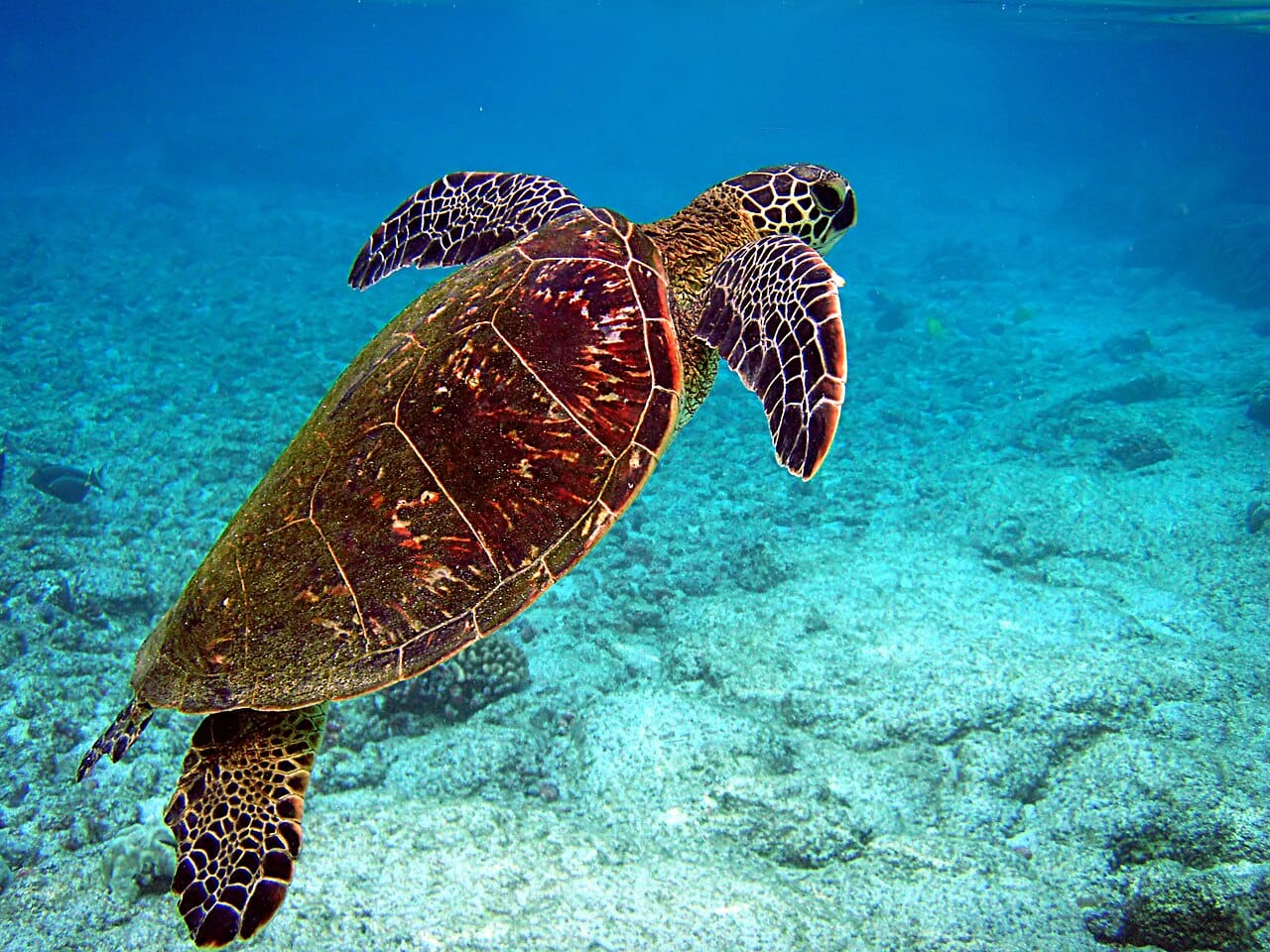
Sea turtles are marine reptiles of the superfamily Chelonioidea, seven living species that have been in the oceans for more than a hundred million years. They breathe air, navigate ocean basins, return to the beaches where they hatched, and produce male or female offspring depending on how warm the sand is, which has turned out to matter a great deal.
Seven species are recognised: green, loggerhead, hawksbill, leatherback, olive ridley, Kemp's ridley and flatback. Six are in the family Cheloniidae with hard shells; the leatherback is alone in its family and has a leathery carapace of oil-saturated connective tissue over a mosaic of small bones.
The forelimbs are flippers rather than legs, and the shell is flattened and streamlined. Unlike freshwater and land turtles, sea turtles cannot retract the head into the shell, a trade made for hydrodynamics.
The leatherback is the largest, reaching over two metres and 700 kilograms, and is the heaviest living reptile after the largest crocodiles. It is also partly endothermic in a limited sense, maintaining body temperature above the surrounding water through mass, insulating fat and countercurrent heat exchange in the flippers, which is why it can forage in water near freezing off Newfoundland and Norway.
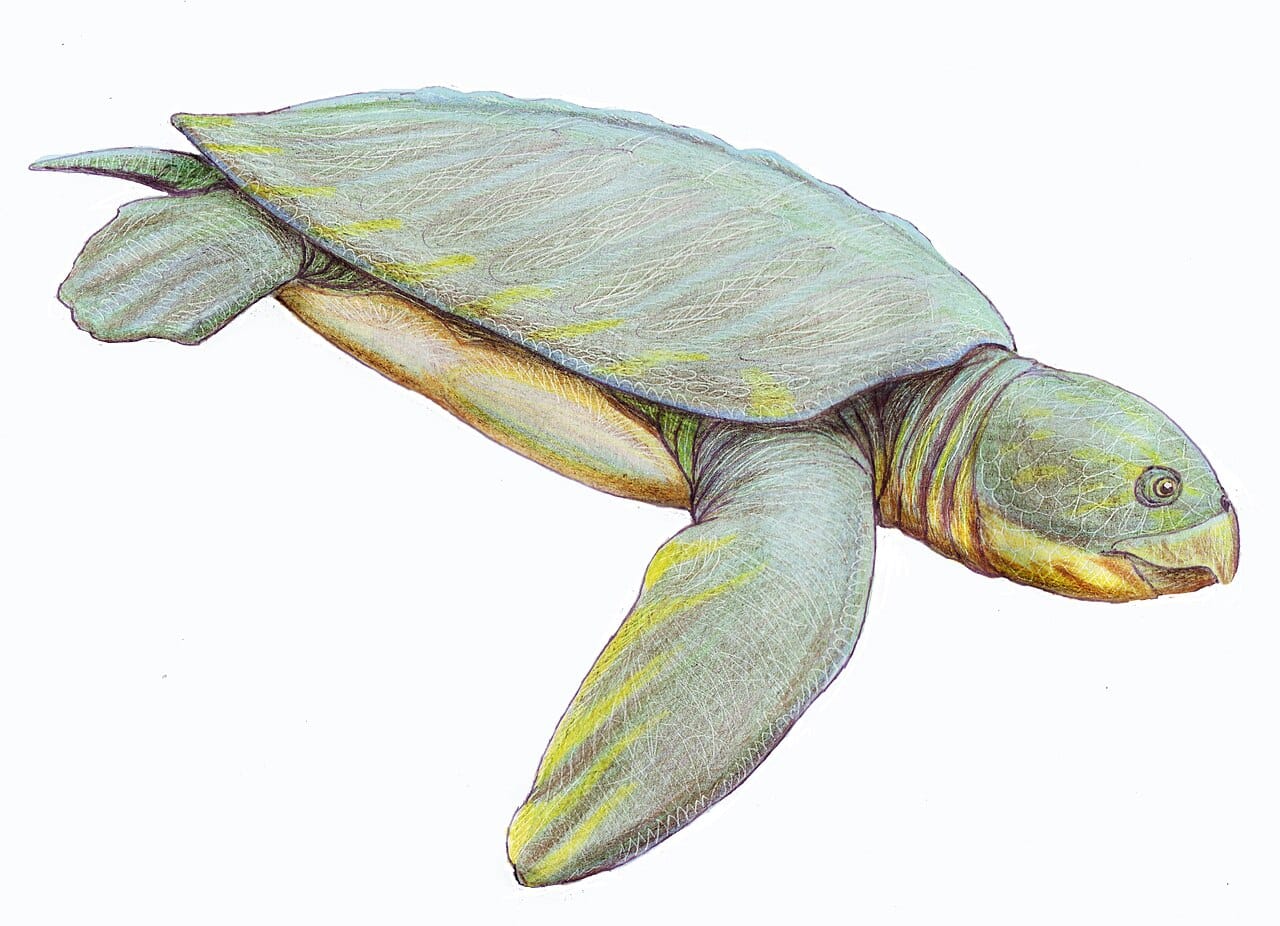
Sea turtles appear in the Cretaceous, and the group of that period included animals larger than any living species. Archelon, from the Western Interior Seaway around 70 million years ago, exceeded four metres.
The lineage passed through the end-Cretaceous extinction that removed the marine reptiles it shared the water with, the mosasaurs and plesiosaurs, and it has changed remarkably little in body plan since. This is often described as sea turtles being unchanged for a hundred million years, which overstates it, but the basic configuration is genuinely old and genuinely conservative.
Sea turtles undertake some of the longest migrations of any animal. Leatherbacks cross the Pacific between Indonesia and the west coast of the Americas. Loggerheads hatched in Japan cross to Baja California and return years later to nest.
Females return to nest on or near the beach where they themselves hatched, after decades at sea. This natal homing is well established by genetic evidence: nesting populations on different beaches are genetically distinguishable, which would not be the case if females chose beaches at random.
The mechanism is magnetic. Hatchlings imprint on the magnetic signature of their natal beach, a combination of field intensity and inclination angle that varies predictably with latitude, and use it to return. Experimental work in which hatchlings were placed in artificial magnetic fields corresponding to different points along a migratory route showed them orienting appropriately for each, without ever having been there.
Because the Earth's field drifts, the magnetic signature of a beach moves over decades, and nesting distributions have been shown to shift correspondingly, which is unusually direct evidence for the mechanism.
Sea turtles have temperature-dependent sex determination. There are no sex chromosomes; the sex of an embryo is set by the temperature of the sand during the middle third of incubation. Cooler nests produce males, warmer nests produce females, with a transition zone of only a degree or two around 29 degrees Celsius.
This is a system that works well in a stable climate and is dangerous in a warming one. A study of green turtles on the northern Great Barrier Reef published in 2018 found juveniles from that population were over 99 per cent female, and the adult population strongly skewed the same way, consistent with sustained warming at those nesting beaches over decades.
A population does not need one male per female to persist, since males breed more often than females and one male can fertilise many clutches, so a skew is not immediately fatal. But the trend has no natural brake, and the temperatures that produce all-female clutches are not far below the temperatures that kill the eggs outright.
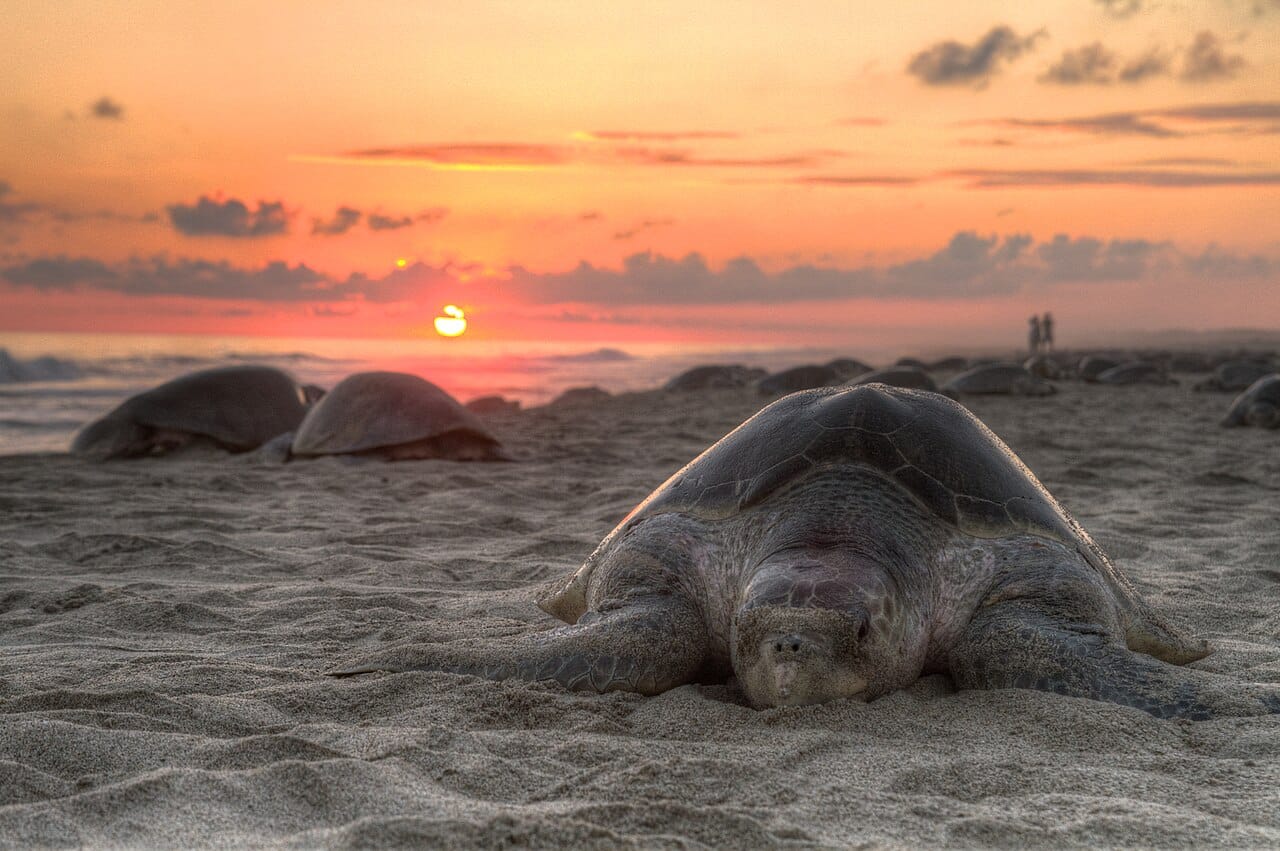
A female comes ashore at night, digs a chamber, lays around a hundred eggs, covers them and returns to the sea, repeating several times a season and then not nesting for two or three years.
Hatchlings emerge together, usually at night, and orient towards the brightest, lowest horizon, which on an undeveloped beach is the sea. Artificial lighting inland reverses this and kills large numbers, which is why lighting ordinances near nesting beaches are among the more effective sea turtle interventions.
What happens next was for a long time unknown and is still called the lost years. Hatchlings disappear into open ocean for a decade or more, associating with drifting sargassum and current systems, before reappearing in coastal foraging grounds as juveniles. Satellite tags small enough to attach to young turtles have only recently begun to fill this in, and they showed that hatchlings actively swim rather than drift passively, which contradicted the standing assumption.
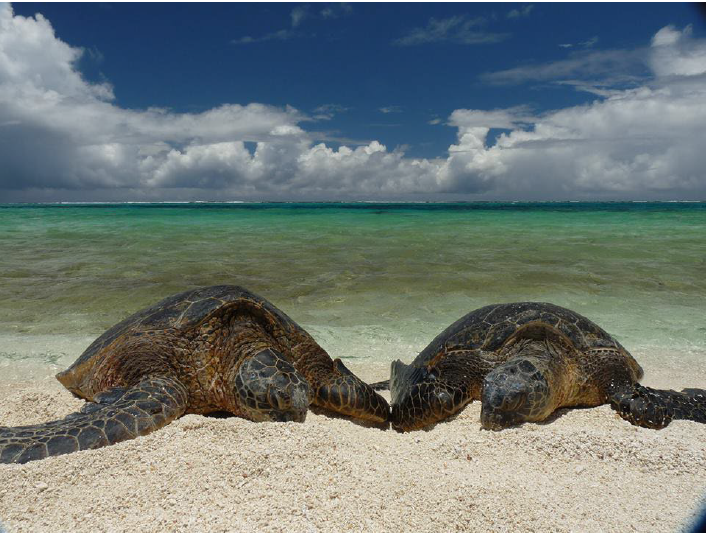
All seven species are of conservation concern, and the pressures are consistent: bycatch in trawls, longlines and gillnets; egg harvest and adult take; coastal development destroying nesting beaches; light pollution; plastic ingestion, to which leatherbacks are especially prone because a floating bag resembles a jellyfish; and vessel strikes.
Turtle excluder devices in shrimp trawls, which are grids that allow a turtle to escape while retaining shrimp, cut turtle mortality in those fisheries very substantially where required and used.
There have been real recoveries. Kemp's ridley, reduced to a few hundred nesting females by the 1980s, increased for two decades under protection of its principal beach at Rancho Nuevo and TED requirements, before stalling again. Green turtle populations at a number of protected sites have grown strongly. The interventions work when sustained across the several decades these animals take to mature, which is the difficulty.
Sea turtles are a test of whether conservation can operate on a timescale longer than the institutions doing it. An egg protected today produces a nesting female in twenty to thirty years. Nothing about the result is visible within a funding cycle or an electoral term, and the populations that have recovered are the ones where somebody kept doing it anyway.