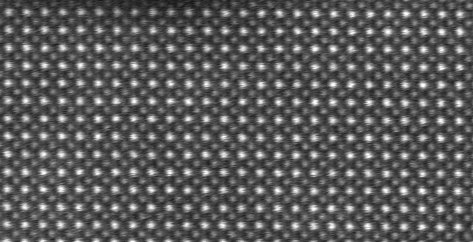
Crystallography is the science of crystals: how their atoms are arranged in orderly, repeating patterns, and how that hidden order gives crystals their shapes and properties. It is a meeting point of chemistry, physics, biology, and geology.
A crystal is a solid whose atoms are arranged in a regular, repeating three dimensional pattern, like an endlessly tiled wallpaper extended in every direction. This internal order, invisible to the eye, is the defining feature of a crystal and the source of all its special qualities.
The orderly inner arrangement is why crystals grow with flat faces and sharp angles, and why a snowflake, a salt grain, or a gemstone shows such striking geometric regularity. The outward shape is a visible echo of the hidden lattice of atoms within. The same substance always forms the same characteristic pattern.
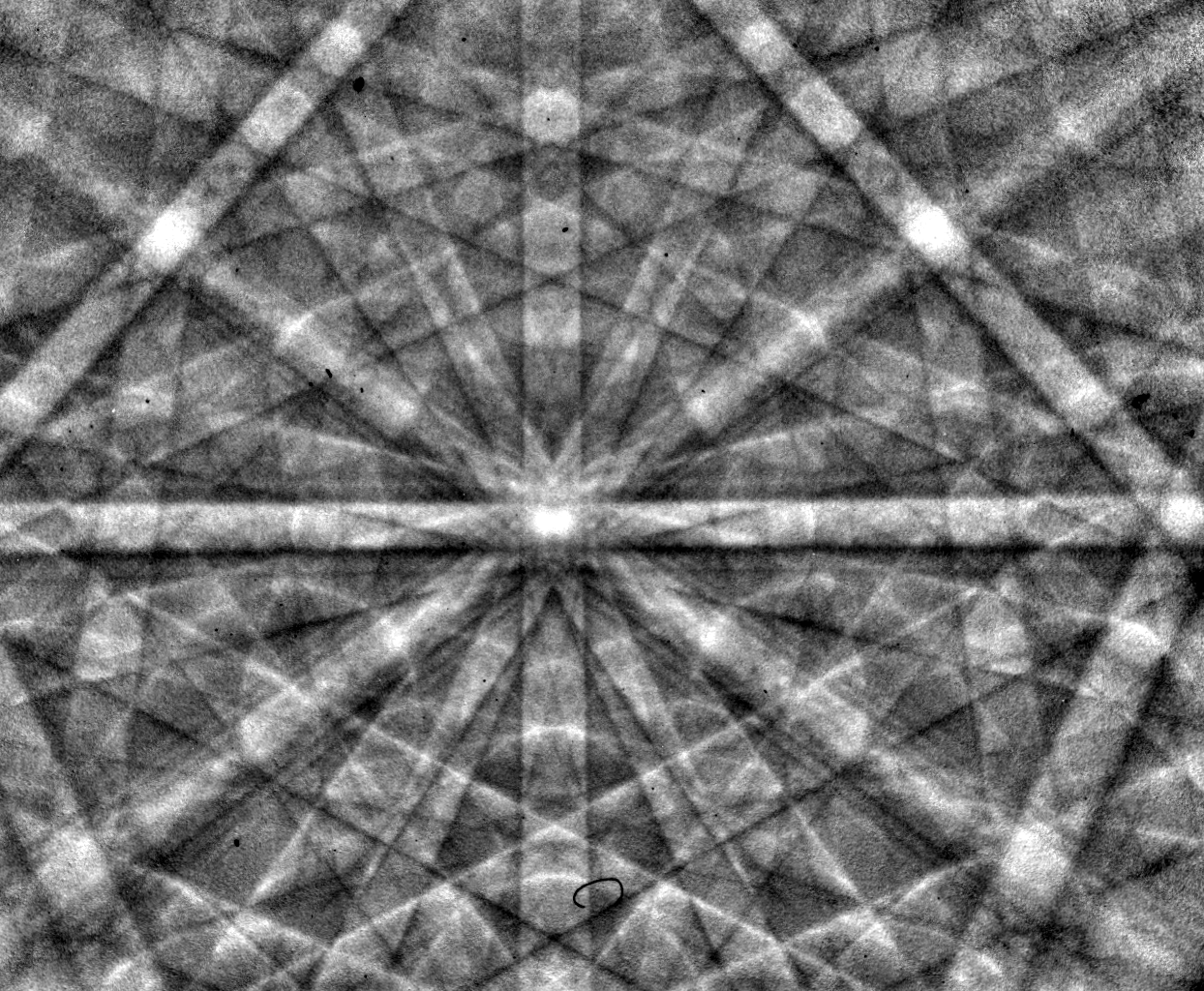
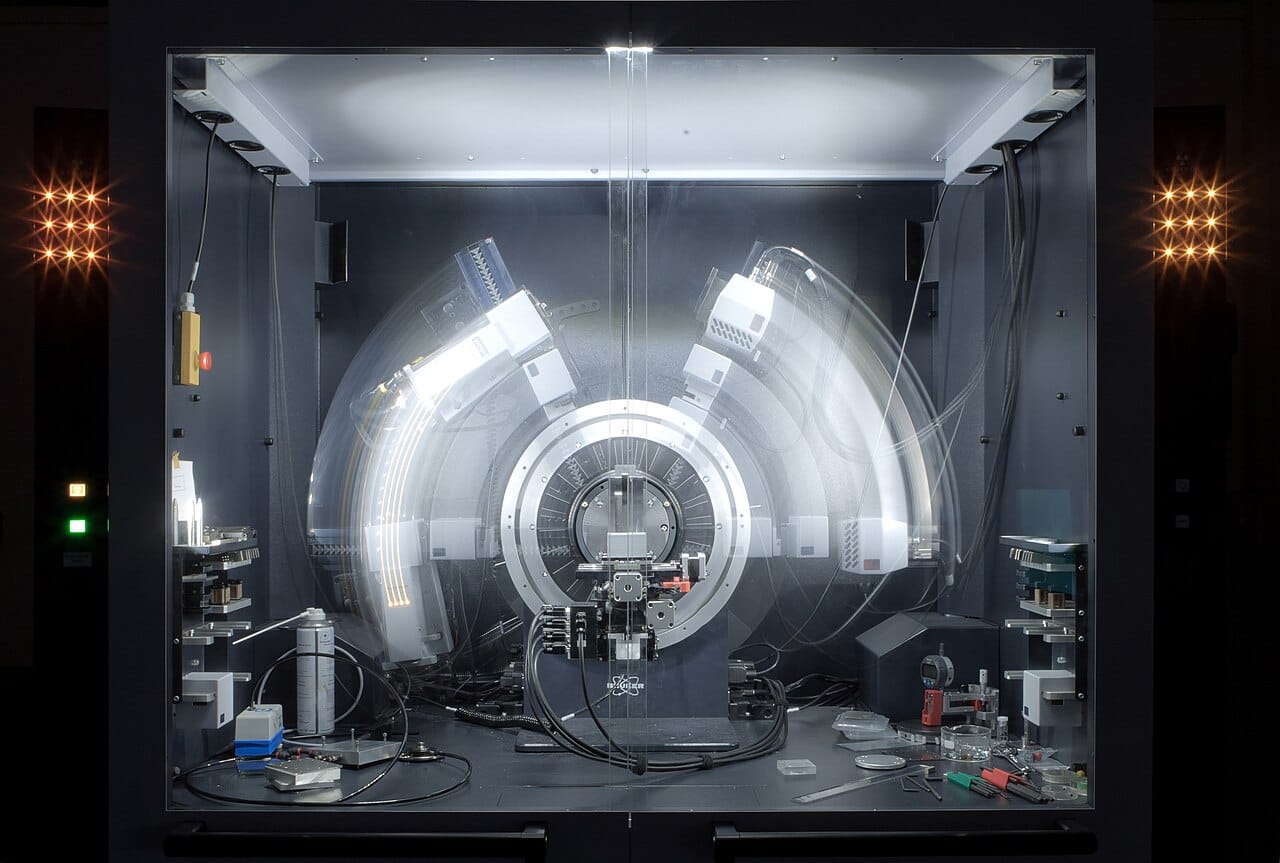
The breakthrough came in 1912, when scientists discovered that shining X-rays through a crystal produces a pattern of spots, because the orderly rows of atoms scatter the rays in a regular way. The pattern is a kind of coded fingerprint of the atomic arrangement, waiting to be deciphered.
By carefully analysing these diffraction patterns, crystallographers can work backward to map exactly where the atoms sit. It is a remarkable feat of indirect observation, deducing an invisible structure from the way it bends and scatters radiation. The technique, X-ray crystallography, opened a window onto the atomic world.
X-ray crystallography became one of the most powerful tools in all of science. Most famously, it revealed the double helix structure of DNA, the molecule of heredity, and the shapes of countless proteins. Understanding the exact form of these molecules transformed biology and medicine.
Knowing how atoms are arranged lets scientists explain and design materials with desired properties, from the hardness of a metal to the behaviour of a semiconductor. Crystallography guides the development of new drugs, electronics, and engineered materials, quietly underpinning much of modern technology.
From the sparkle of a gemstone to the structure of a life saving drug, crystallography connects the orderly arrangement of atoms to the visible world. By revealing the hidden geometry of matter, it has become a quiet but indispensable engine of scientific discovery across many fields.