Unrelated lineages repeatedly arrive at the same solution. Eyes, wings, flight, venom and photosynthesis have each evolved independently many times, and the pattern is among the strongest evidence that natural selection is a directional process rather than a random walk.
Two structures are homologous if they descend from a common ancestral structure, and analogous if they resemble each other because both were shaped by similar demands.
A bat's wing and a human hand are homologous: the same bones in the same order, differently proportioned. A bat's wing and an insect's wing are analogous: both aerofoils, built from unrelated tissue by unrelated developmental routes.
Distinguishing them is the central problem in reconstructing evolutionary relationships, since a similarity of the wrong kind groups unrelated lineages together. Molecular data has resolved many cases that anatomy alone could not.
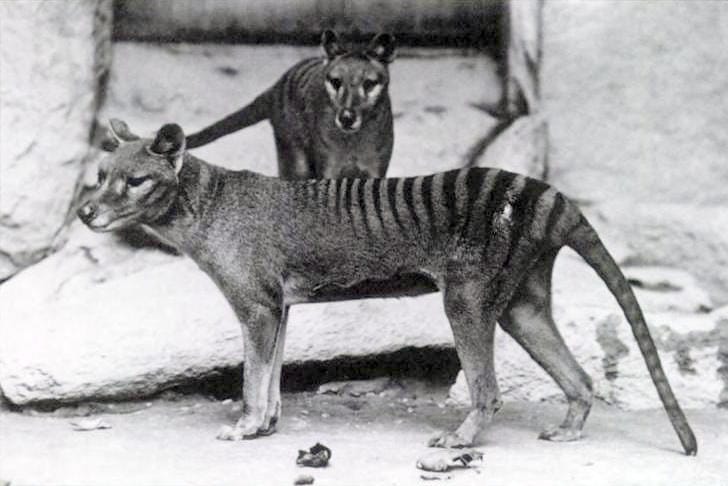
The thylacine, a marsupial, converged on the wolf, a placental mammal, so closely that comparing their skulls is a standard teaching exercise. Their lineages separated well over a hundred million years ago. Australia produced marsupial equivalents of moles, mice, flying squirrels and cats by the same process.
Ichthyosaurs were reptiles, dolphins are mammals, and sharks are fish. All three arrived at the same streamlined body, dorsal fin and tail, because water imposes the same demands on anything that must move through it quickly.
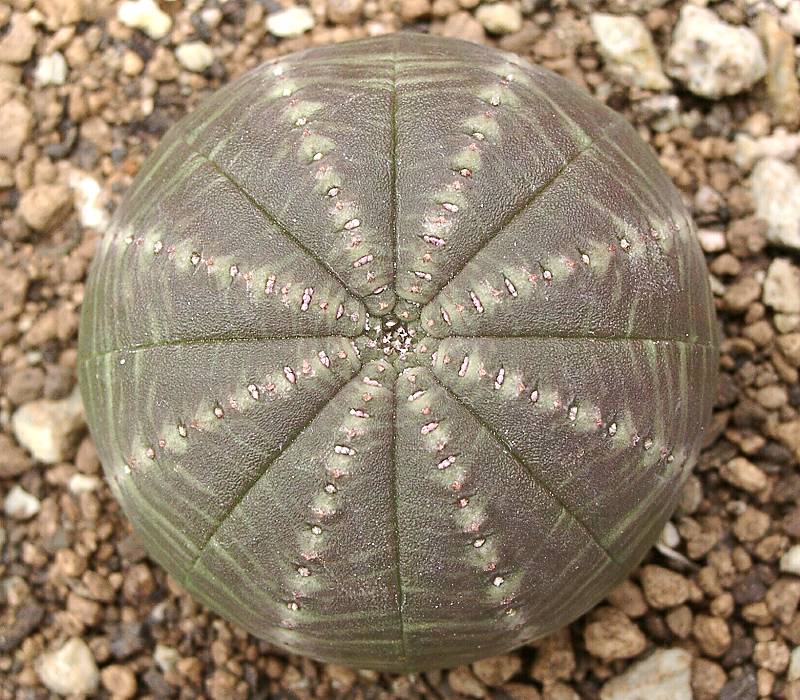
Cacti in the Americas and euphorbias in Africa are unrelated families that both evolved swollen water-storing stems, spines instead of leaves, and the same photosynthetic chemistry, under the same desert pressures.
Flight evolved independently at least four times, in insects, pterosaurs, birds and bats. Echolocation evolved separately in bats and in toothed whales, and remarkably the same changes appear in the same hearing gene in both, which is convergence at the level of the DNA sequence rather than merely the organ.
Eyes are the standard example, and Darwin's own stated difficulty.
Image-forming eyes have evolved independently somewhere between forty and sixty times, by several distinct optical strategies: pinhole, single lens, compound, and mirror-based in scallops and one deep-sea crustacean. Vertebrate and cephalopod camera eyes are the classic pairing, and they are built inside out relative to each other, which is why the vertebrate eye has a blind spot where the optic nerve passes through the retina and the octopus eye does not.
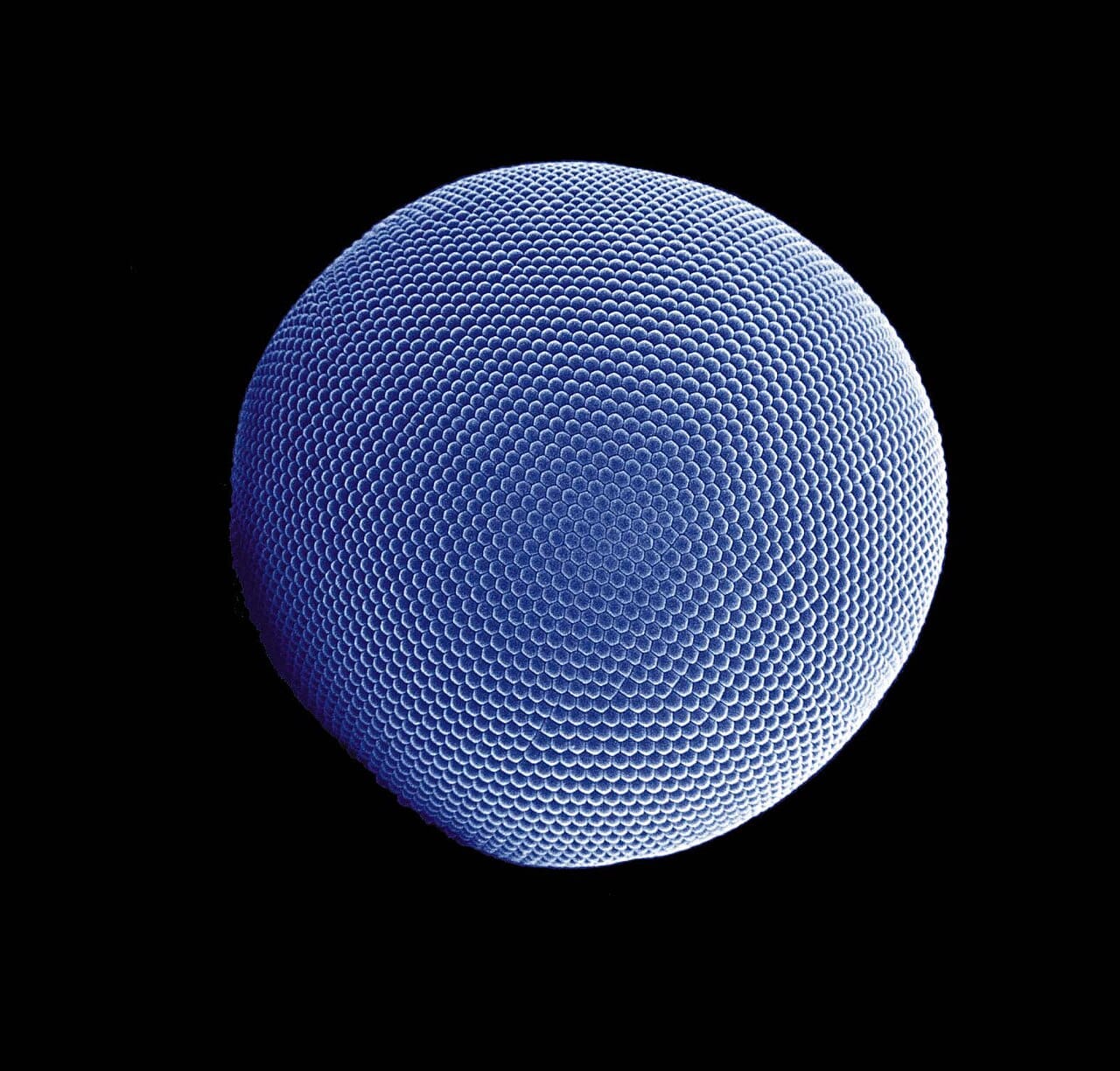
The repetition is the point. A structure that arises dozens of times independently is not improbable; it is what happens when light is available and detecting it is useful.
The pattern is agreed. What follows from it is argued, and the argument was framed by two eminent paleontologists taking opposite positions.
Stephen Jay Gould held that evolution is dominated by contingency. Replay the tape of life from the Cambrian, he argued, and the outcome would be unrecognisable, because chance events, mass extinctions, and historical accidents of which lineages happened to survive dominate the result.
Simon Conway Morris holds the reverse. The prevalence of convergence, he argues, shows that the number of workable solutions is small and that selection finds them reliably. Replay the tape and something much like a fish, a tree and an eye would appear again, because the physics permitting them has not changed.
The disagreement is genuine and turns on how many of the constraints are physical rather than historical. Convergence establishes that some outcomes are strongly favoured; it does not establish how far the principle extends.
Convergence is a natural experiment. When the same environment produces the same solution in lineages with no shared history, the correlation between problem and solution can be examined without the confound of common ancestry.
It also guides engineering. Repeated independent arrival at a design, as with the streamlined body, is evidence that the design is close to optimal for the constraints, which is why biomimetic work attends to convergent traits in particular.