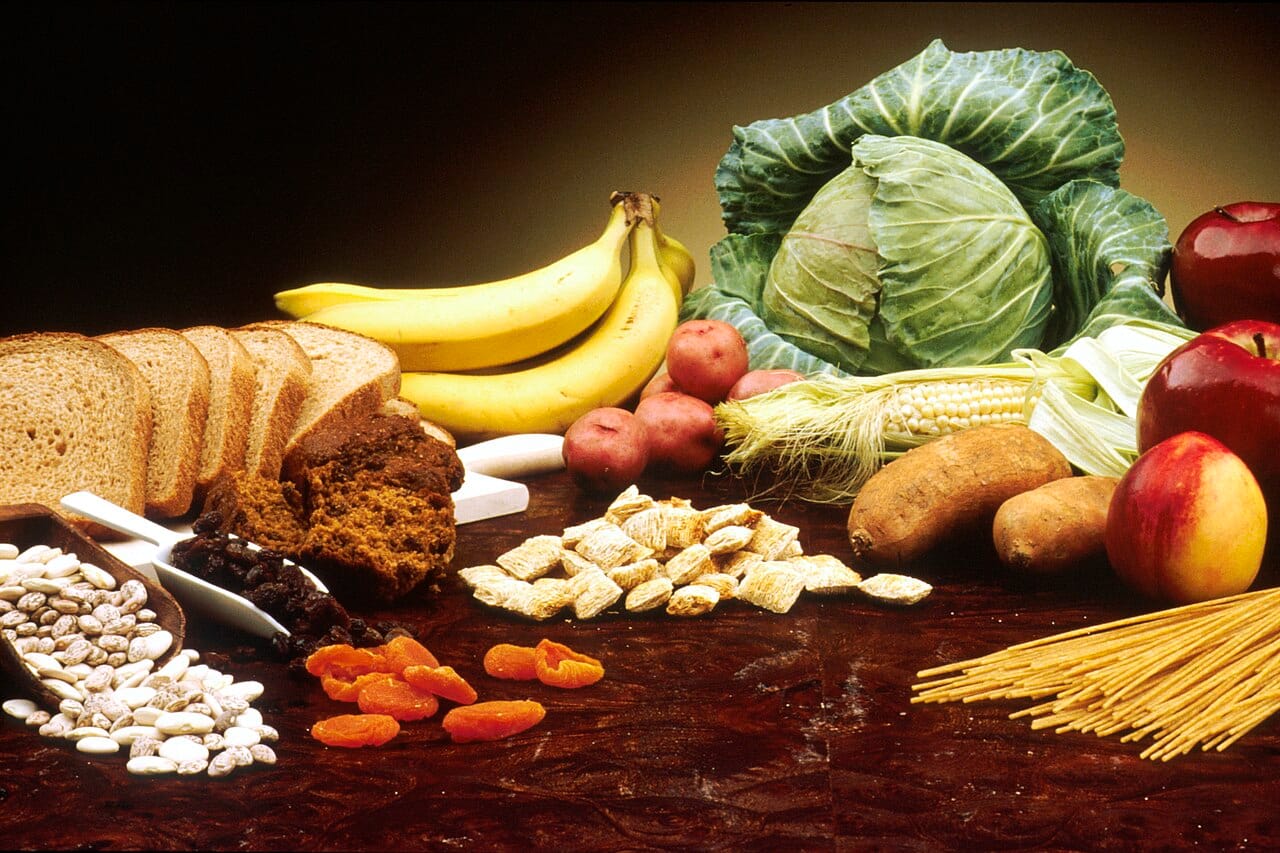
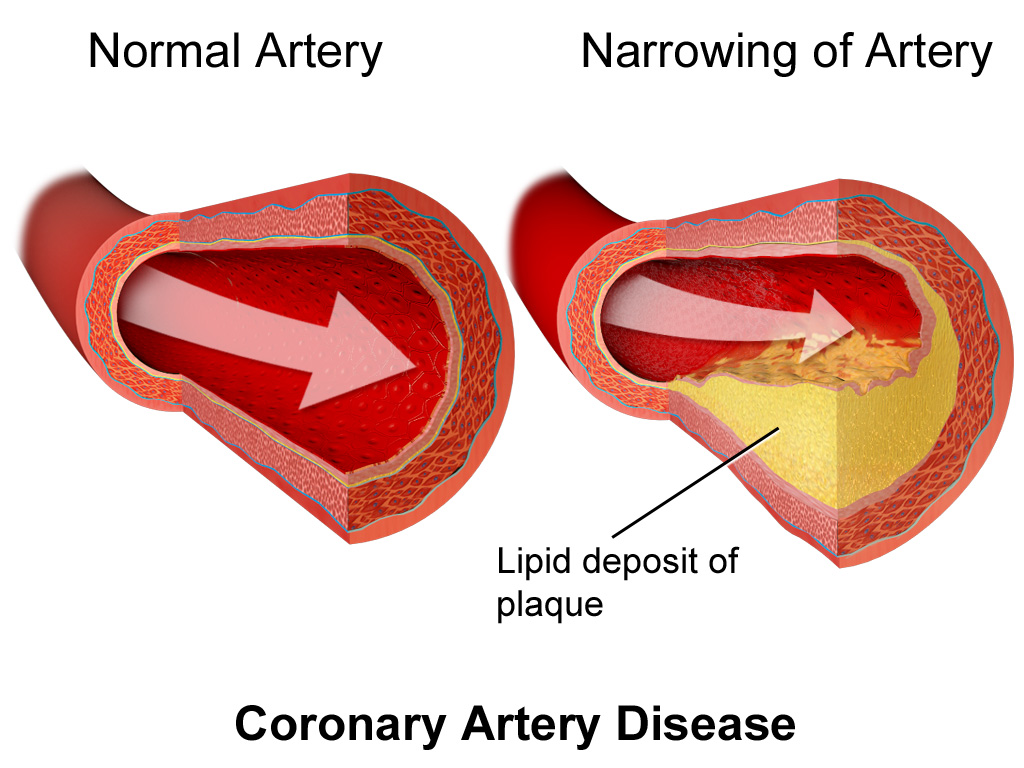
Organic compounds required in small amounts that the body cannot make for itself, or cannot make in sufficient quantity. Each was discovered through the disease its absence causes, and the deficiency diseases are among the clearest cause and effect relationships in medicine.
A vitamin is defined by three conditions taken together: it is an organic compound, it is required in small quantities for normal function, and the organism cannot synthesise enough of it and must obtain it from diet.
The third condition makes the category species-specific rather than absolute. Vitamin C is a vitamin for humans, other primates and guinea pigs, and not for most mammals, which synthesise it. The human lineage carries a broken copy of the gene for the final enzyme in its production.
Vitamin D is a partial exception in the other direction, since it is produced in skin exposed to ultraviolet light, and is required in the diet only when that exposure is insufficient.
Minerals such as iron and iodine are also essential and are not vitamins, being elements rather than organic compounds.
Fat-soluble vitamins, A, D, E and K, dissolve in fat, are absorbed with dietary fat and are stored in the liver and fatty tissue. Because they are stored, deficiency develops slowly, and excessive intake can accumulate to toxic levels. Vitamin A toxicity is well documented, including historical cases from eating the livers of certain animals, which store it in extreme concentrations.
Water-soluble vitamins, the B group and C, are not stored appreciably and excess is excreted. Deficiency therefore develops faster, and toxicity from excess is uncommon though not impossible.
The lettering scheme is historical and slightly disordered. What was first thought to be a single substance, vitamin B, turned out to be several, which is why the B vitamins carry numbers, and some letters were assigned to substances later found not to be vitamins, which is why the sequence has gaps.

Each was found through a deficiency disease, and the pattern of discovery is similar in each case: a population with a restricted diet develops a characteristic illness, and something in ordinary food prevents it.
Scurvy, from lack of vitamin C, killed enormous numbers of sailors on long voyages. James Lind conducted a comparative trial aboard ship in 1747, giving different supplements to groups of affected sailors, and found citrus effective. It is among the earliest controlled clinical trials, and its adoption by naval authorities took decades.
Beriberi, from lack of thiamine, appeared where polished white rice was the staple, since milling removes the outer layer where the vitamin is concentrated. Christiaan Eijkman observed in the 1890s that chickens fed polished rice developed similar symptoms and recovered on unpolished rice. He initially interpreted this as a toxin being neutralised rather than a nutrient being supplied.
That misinterpretation is worth noting because it recurs. The framework of the time was germ theory, which had been enormously successful, and the idea that a disease could be caused by the absence of something rather than the presence of something was genuinely difficult.
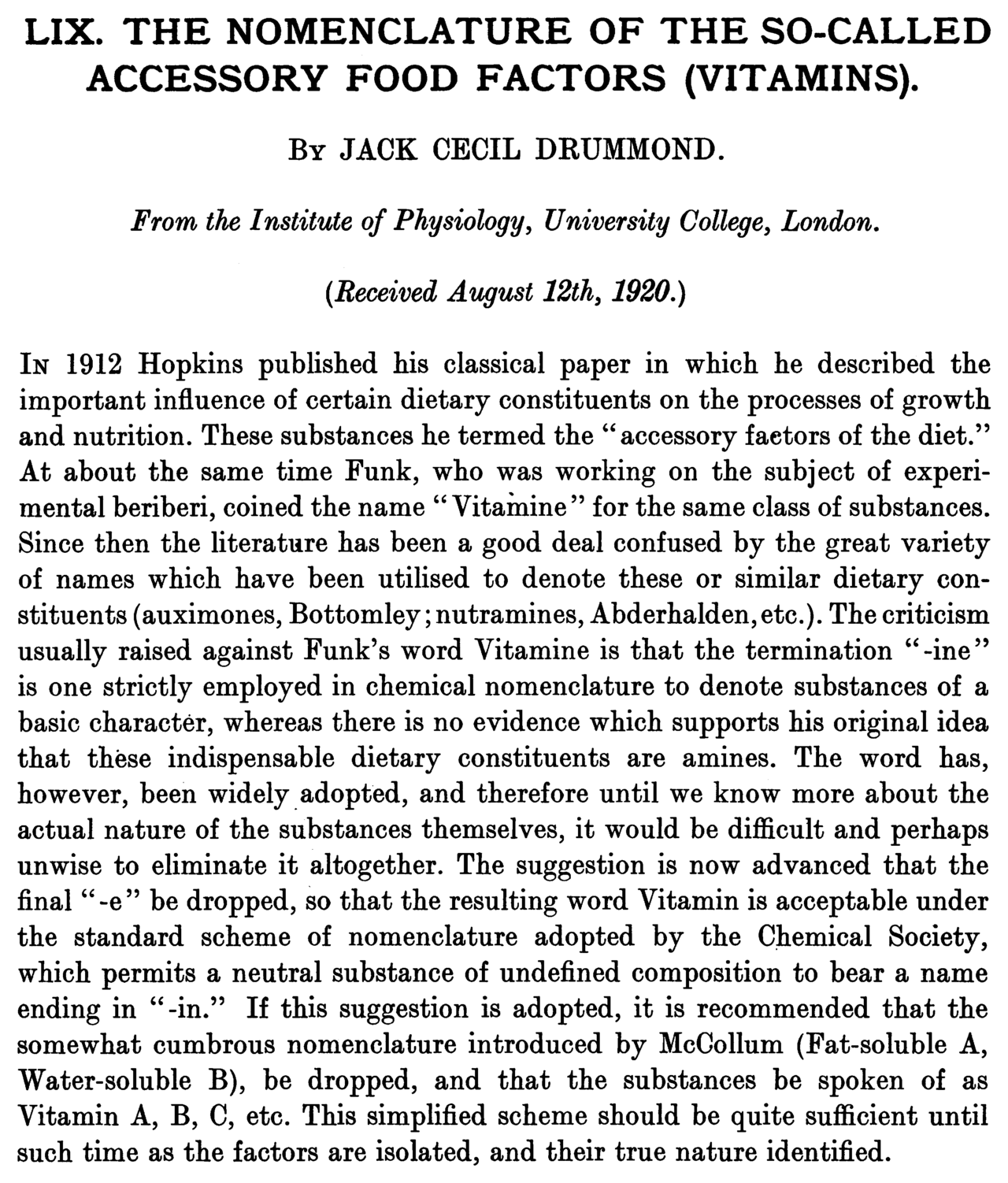
Casimir Funk proposed in 1912 that several such diseases were caused by missing dietary factors, and coined vitamine from vital and amine. Not all proved to be amines, and the final letter was dropped.
Pellagra, from lack of niacin, was widespread in populations dependent on maize. Joseph Goldberger demonstrated in the United States in the 1910s and 1920s that it was dietary rather than infectious, including by deliberately exposing himself and volunteers to material from patients without contracting it. Traditional maize preparation in Mesoamerica involves treatment with an alkali, which releases bound niacin, and the disease did not occur where that method was used.
Most vitamins function as coenzymes, small molecules that enzymes require in order to work. B vitamins largely serve this role in energy metabolism and in the synthesis of DNA and neurotransmitters.
Vitamin A is required for vision, since it forms part of the light-sensitive pigment in the retina, and for immune function and epithelial maintenance.
Vitamin D regulates calcium absorption and bone mineralisation, and functions more like a hormone than a typical vitamin.
Vitamin K is required for the modification that allows several clotting factors to function, which is why it appears in the blood clotting capsule and why warfarin works by interfering with it.
Correcting a deficiency produces dramatic benefit. Supplementing people who are not deficient generally does not, and this distinction is the central point.
Large trials of vitamin supplementation in well-nourished populations have mostly failed to show reductions in cardiovascular disease, cancer or mortality. Some found harm: beta-carotene supplementation increased lung cancer incidence in smokers in two large trials, which was the opposite of the expected result.
Specific supplementation with a clear evidence base remains standard: folic acid before and during early pregnancy substantially reduces neural tube defects, and vitamin D is recommended where sunlight exposure is limited.
Population-level fortification has been highly effective, including iodised salt, folic acid in flour, and vitamin D in milk, and these measures reach people who would not seek supplements.
The vitamins established that a disease can be caused by the absence of a substance, which was a genuine conceptual addition to a medicine organised around infectious causes. They also produced some of the cheapest and most effective public health interventions available, and remain the basis of a supplement industry whose scale is unrelated to the evidence for use outside deficiency.