The ordered sequence a cell follows to duplicate itself, controlled by checkpoints that stop it proceeding until the previous stage is complete. Understanding it explained how growth is regulated, and its checkpoints are what cancer defeats.
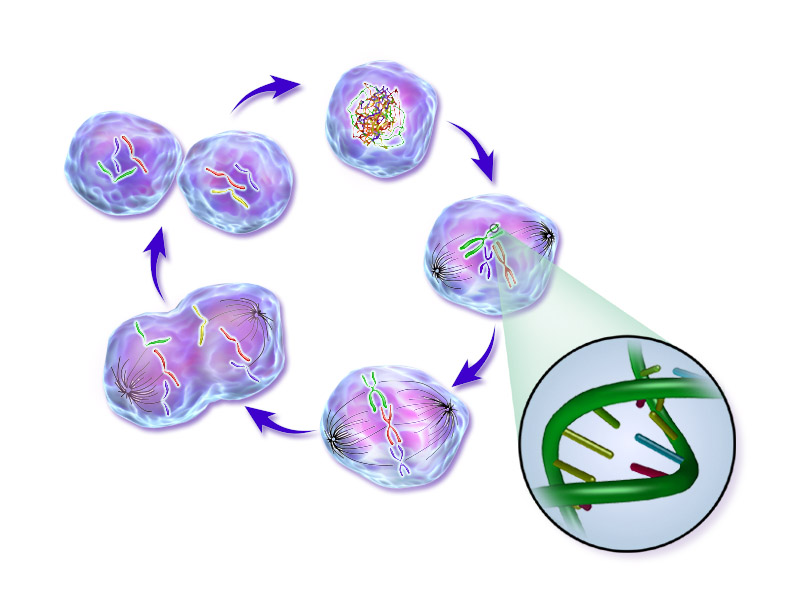
Interphase occupies most of the cycle and has three parts. G1 is growth, during which the cell increases in size and manufactures the machinery it will need. S phase is DNA synthesis, when the genome is replicated. G2 is further growth and preparation.
Mitosis then separates the duplicated chromosomes, and cytokinesis divides the cytoplasm into two cells.
Cells that are not dividing sit in G0, a quiescent state. Most cells in an adult body are in G0 at any moment, and some, including most neurons and cardiac muscle cells, effectively never leave it.
The cycle is driven by cyclins and cyclin-dependent kinases, and the arrangement is elegant.
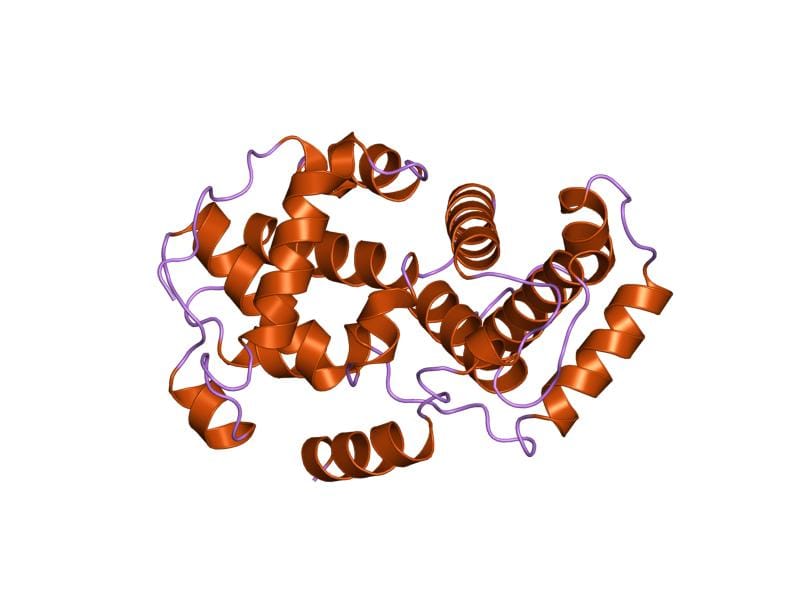
The kinases are present at roughly constant levels and are inactive on their own. The cyclins are synthesised and destroyed on a schedule, rising and falling through the cycle, and each activates its partner kinase when present. Different cyclin and kinase pairs drive different transitions.
Because cyclins are destroyed rather than merely deactivated, the transitions are irreversible, which is what stops the cycle running backwards.
Leland Hartwell identified the controlling genes in yeast, calling them cell division cycle genes, and found checkpoint mutants. Paul Nurse identified the key kinase and showed the human version could substitute for the yeast one, which established that the machinery is conserved across a billion years of divergence. Tim Hunt discovered cyclins in sea urchin eggs, noticing a protein whose concentration collapsed at each division. The three shared the 2001 Nobel Prize in Physiology or Medicine.
The cycle does not simply run. It pauses at defined points until conditions are verified.
The G1 checkpoint asks whether the cell is large enough, whether nutrients and growth signals are present, and whether the DNA is undamaged. This is the main decision point, and passing it commits the cell to divide.
The G2 checkpoint verifies that replication is complete and that DNA damage has been repaired.
The spindle checkpoint, during mitosis, verifies that every chromosome is correctly attached to the spindle before separation begins. A single unattached chromosome holds the whole cycle, which is why chromosome missegregation is rarer than it would otherwise be.
p53 is central to the damage response. It halts the cycle to allow repair and, if repair fails, triggers apoptosis. Its loss removes both the pause and the fallback.
The connection is not analogy. The genes most frequently mutated in cancer are cell cycle regulators.
p53 is altered in roughly half of all human tumours. RB1, whose product restrains the G1 to S transition, is inactivated in retinoblastoma and in many other cancers. Cyclin D is amplified in numerous tumours, and the kinases it activates are drug targets.
Two categories of gene are involved and they fail in opposite ways. Oncogenes are accelerators, and a single activating mutation is enough. Tumour suppressors are brakes, and both copies must be lost, which is the subject of the two-hit capsule.
Palbociclib and related drugs inhibit the cyclin-dependent kinases driving the G1 transition and are used in breast cancer, which is the cell cycle turned into a therapy.
Most conventional chemotherapy targets dividing cells, which is why it damages hair follicles, gut lining and bone marrow: those tissues divide constantly. The side effects are the mechanism, not an accident of it.
Normal cells do not divide indefinitely. Leonard Hayflick showed in 1961 that cultured human cells divide a limited number of times and then stop, which contradicted the prevailing belief that cells in culture were immortal.
The limit comes from telomere shortening, discussed in the DNA replication capsule. Reaching it produces senescence: the cell survives, ceases dividing, and secretes inflammatory signals. Senescent cells accumulate with age and are one of the hallmarks of ageing.
Cancer cells escape this, most commonly by reactivating telomerase. Unlimited division is one of the defining acquisitions of a tumour, and it requires defeating both the checkpoints and the counter.