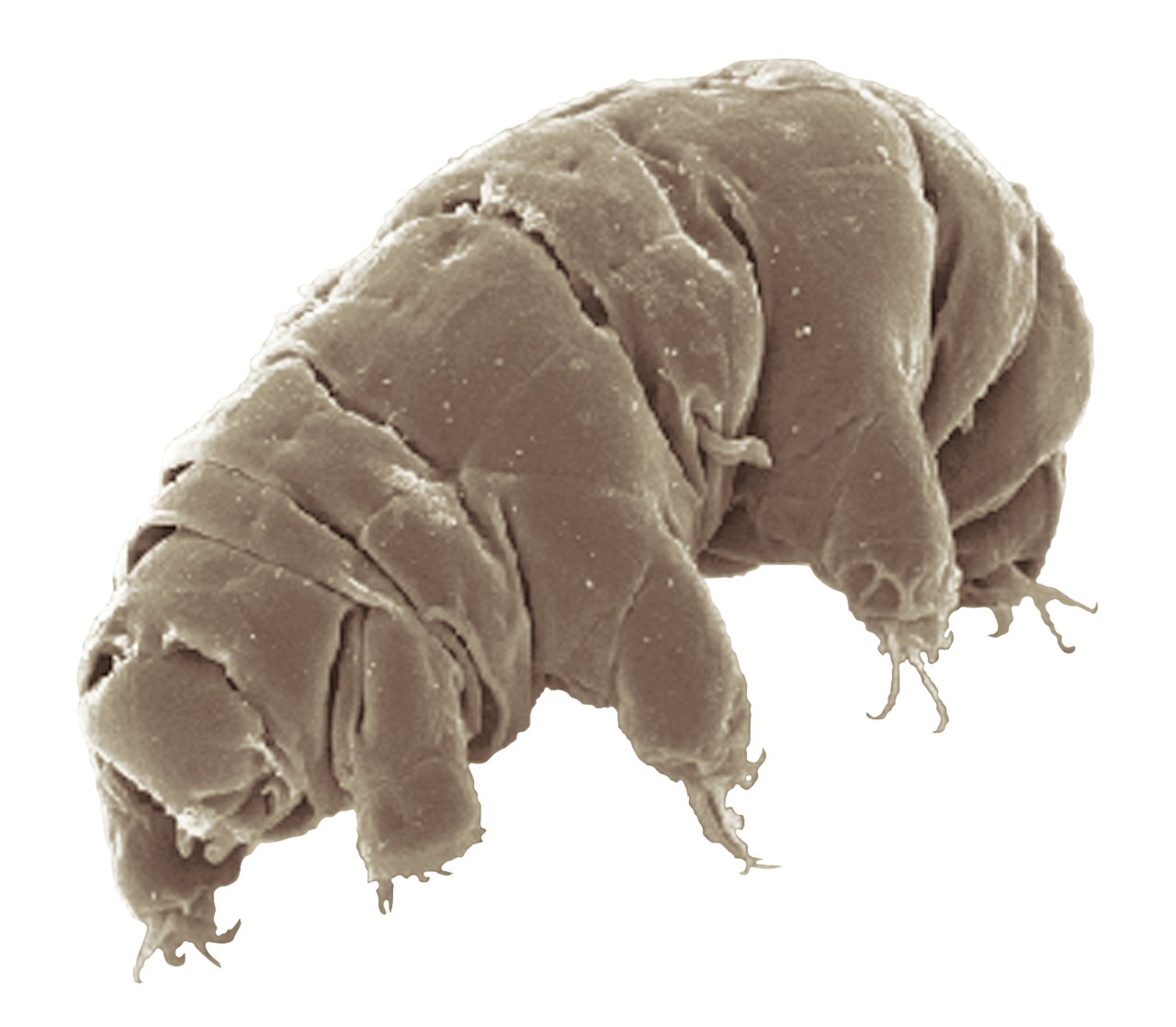
Tardigrades, also called water bears, are microscopic eight-legged animals forming their own phylum, Tardigrada, with around 1,500 described species. They are famous for surviving vacuum, radiation, extreme temperatures and desiccation, and that fame is accurate only with a qualification that is almost always dropped.
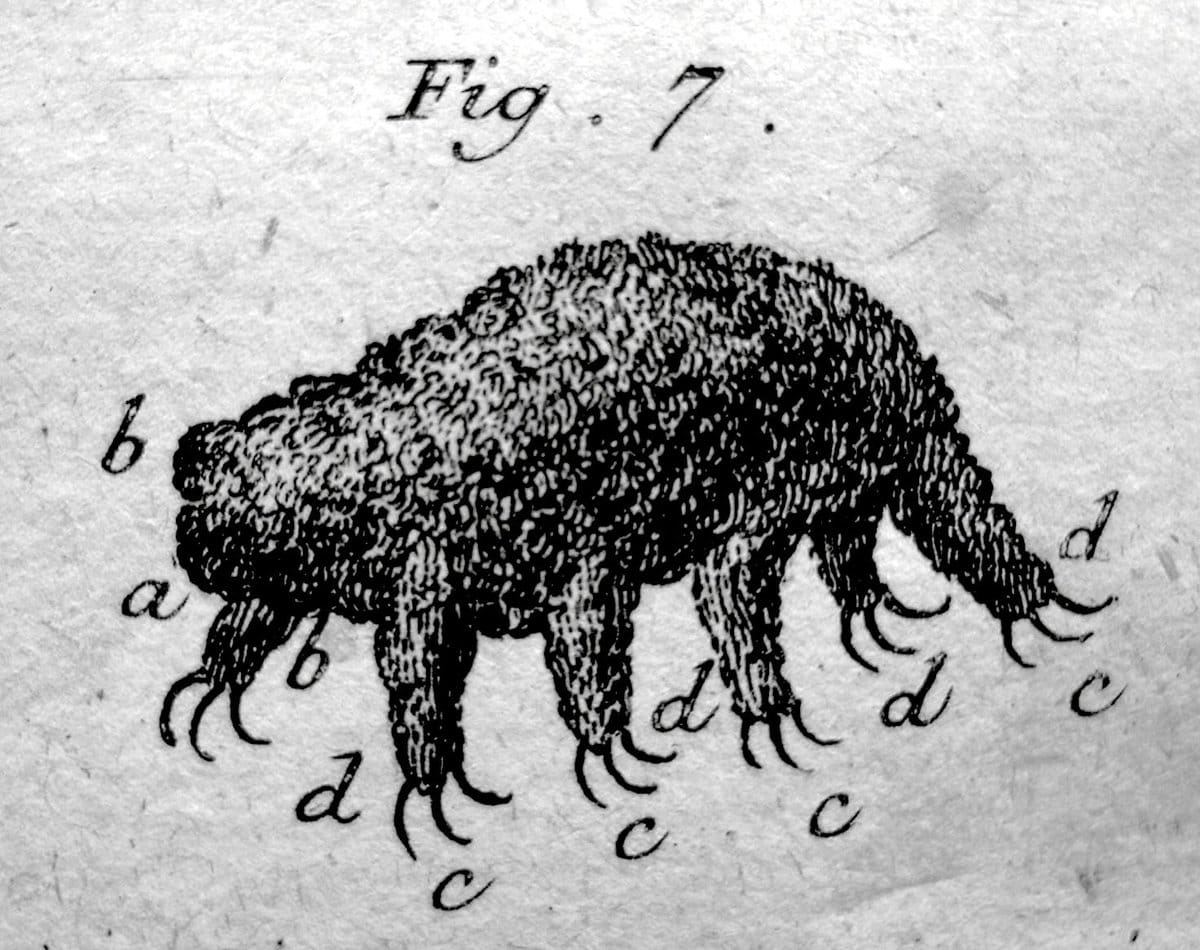
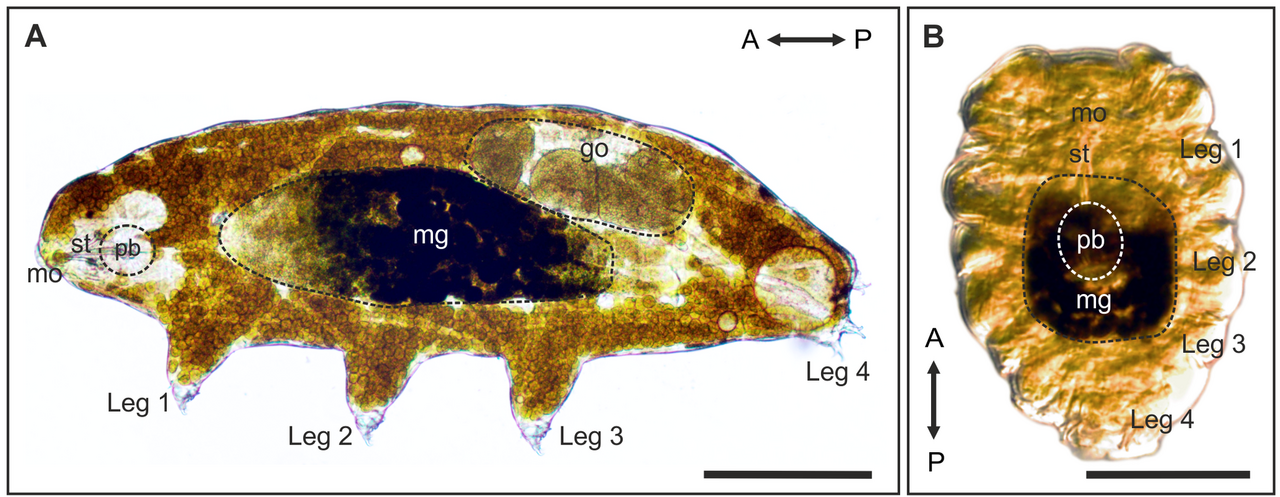
Tardigrades are typically 0.3 to 0.5 millimetres long, with a plump segmented body and four pairs of stubby legs ending in claws or adhesive discs. Johann Goeze described them in 1773 and called them kleiner Wasserbär, little water bear, for their lumbering gait. Lazzaro Spallanzani gave them the name Tardigrada, slow stepper, in 1776.
They are ecdysozoans, moulting animals, and are most closely related to the arthropods and the velvet worms. The body cavity is a haemocoel, movement is driven by hydrostatic pressure against the body wall, and there is no circulatory or respiratory system, gas exchange occurring across the whole surface.
Most feed by piercing plant cells, algae or moss with a pair of stylets and sucking out the contents; some are predators on nematodes, rotifers and other tardigrades.
Tardigrades are everywhere there is water, including a film of it. Marine sediment, freshwater, and above all the water held in mosses, lichens and leaf litter, which is where most people encounter them: a soaked scrap of moss under a microscope will usually produce some.
They occupy the Himalaya above 6,000 metres, deep ocean trenches, hot springs and Antarctic ice. The limestone wall and the roof gutter are as typical as any of it.
Here is the point that popular accounts drop. A tardigrade going about its life is a soft-bodied animal and is easy to kill. Squash it, dry it too quickly, heat it while active, and it dies like anything else.
What survives extremes is the tun: a state entered when the animal dries slowly, in which it withdraws its head and legs, contracts to about a third of its volume, expels the great majority of its body water, and shuts metabolism down to undetectable levels. This is anhydrobiosis, a form of cryptobiosis.
In the tun state tardigrades have survived temperatures near absolute zero and above 150 degrees Celsius briefly, pressures many times those of the deepest ocean, and doses of ionising radiation on the order of a thousand times the human lethal dose. They have been revived after years dry, with well-verified cases at the scale of a decade, and much longer claims that do not hold up.
The mechanisms are partly known. Trehalose, the sugar that protects many desiccation-tolerant organisms by replacing water in glass-like fashion, plays a role in some tardigrades but is present at low levels in others, which sent the field looking elsewhere. Tardigrade-specific intrinsically disordered proteins, the CAHS and SAHS families, vitrify on drying and appear to hold cellular structures in place. A separate protein, Dsup, found in Ramazzottius varieornatus in 2016, binds DNA and shields it from damage by hydroxyl radicals, and human cultured cells expressing Dsup showed reduced radiation damage.
Radiation tolerance is best understood as a side effect. Nothing on Earth applies that dose; drying, however, damages DNA in similar ways, so machinery evolved for desiccation confers radiation resistance for free.
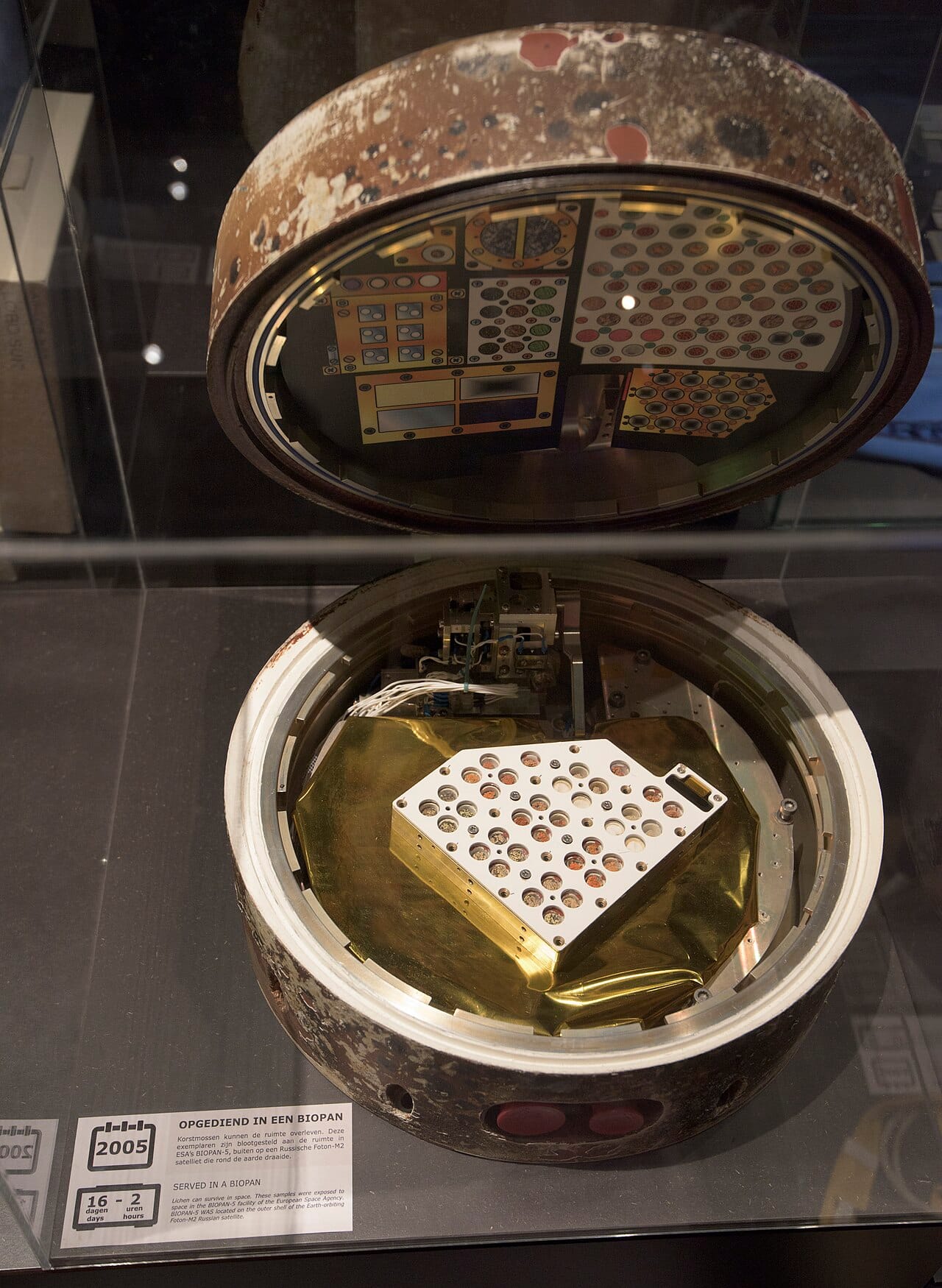
In September 2007 the European Space Agency's Foton-M3 mission carried dried tardigrades in the Biopan facility on the outside of the spacecraft, exposing them to vacuum and to solar radiation in low Earth orbit for ten days.
Most survived vacuum alone and rehydrated normally. Survival dropped sharply with full-spectrum solar ultraviolet exposure, but some animals survived even that and went on to produce viable eggs. This made tardigrades the first animals known to survive direct exposure to space.
There is a footnote worth including for accuracy. The Israeli Beresheet lander, which crashed on the Moon in April 2019, carried dehydrated tardigrades in its payload. They were in resin and epoxy, and there is no evidence any survived the impact and no plausible way they could revive without liquid water. The widely repeated claim that the Moon is now populated by tardigrades is not supported.
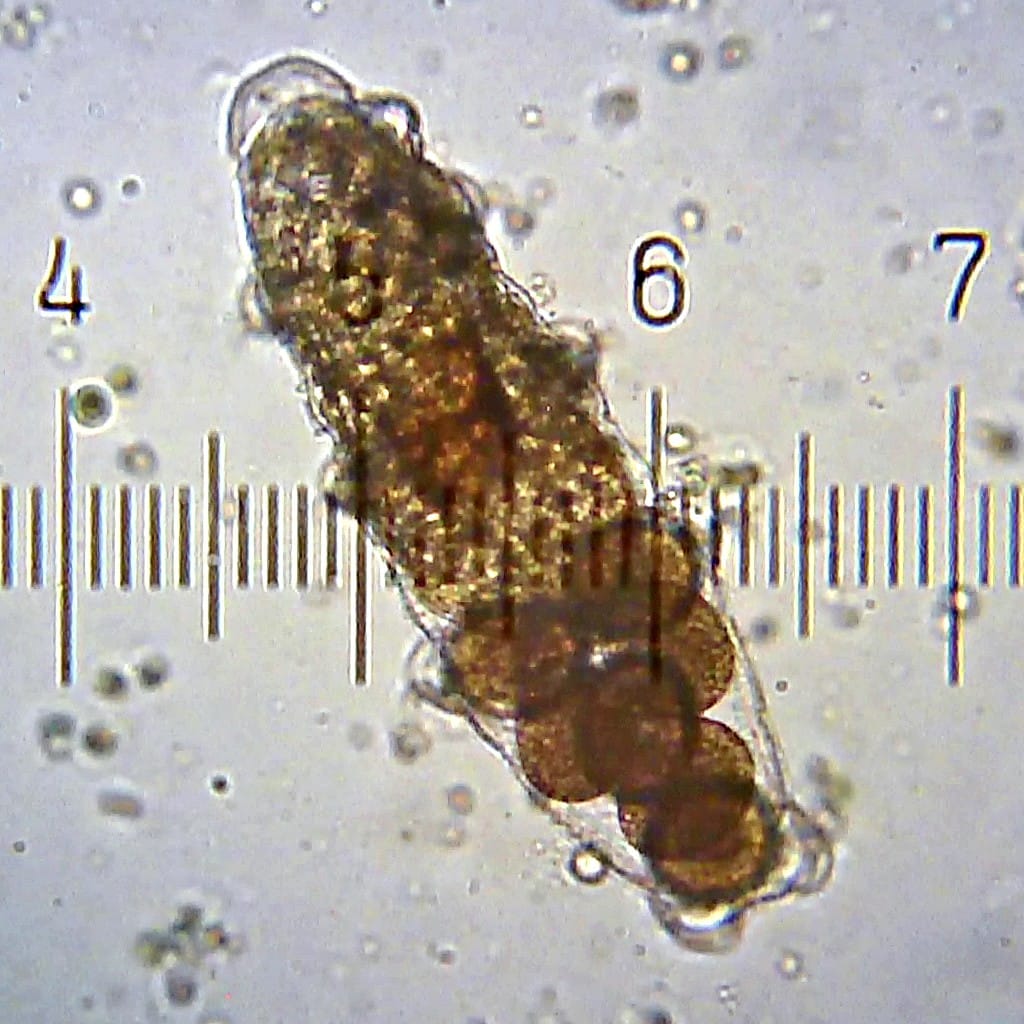
Reproduction is sexual in many species and parthenogenetic in many others, and some species have never had a male recorded. Eggs are often ornamented with species-specific spines and projections, and some species lay them inside the shed cuticle.
The genome caused a public scientific dispute in 2015. One team reported that roughly a sixth of the tardigrade genome was acquired by horizontal gene transfer from bacteria, which would have been extraordinary. A second team sequencing the same species found a far lower figure and attributed the first result to bacterial contamination in the sample. The lower estimate prevailed. It is a clean illustration of how contamination produces exciting results in genomics, and of preprint-stage correction working as intended.
Tardigrades are the standard reference point in astrobiology for what life can tolerate, and the reason is not toughness in the ordinary sense. It is that an animal can suspend itself, becoming for a period something that is neither dead nor metabolising, and then resume. That capacity, rather than any resistance to heat or radiation, is the interesting thing about them.