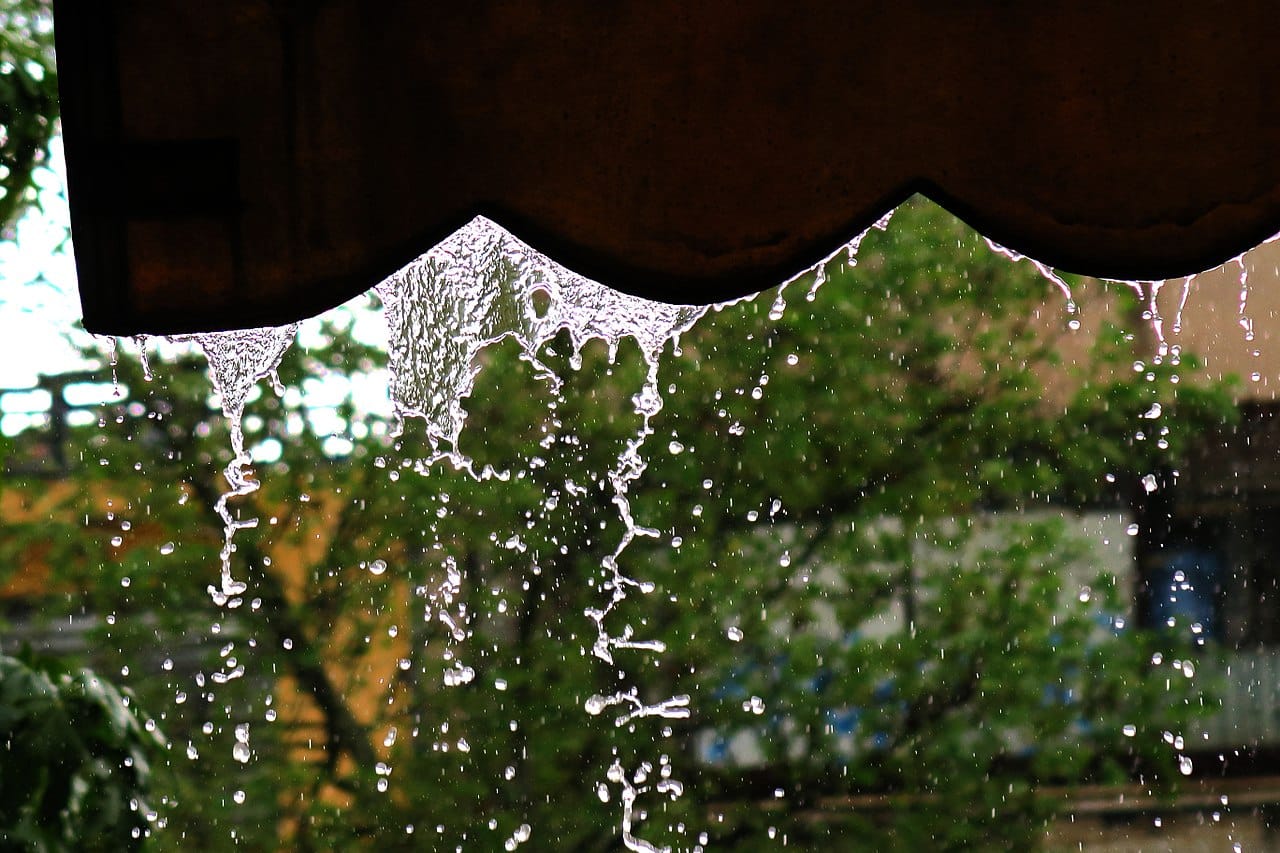
The tendency of a liquid surface to contract to the smallest possible area, because a molecule at the surface has fewer neighbours to attract it than one in the bulk. It is why drops are round, why some insects stand on ponds, and why lungs need a detergent to work.
Molecules in a liquid attract one another. A molecule deep inside is pulled equally in all directions, so the forces cancel.
A molecule at the surface has no neighbours above it, so the net pull is inward. Enlarging the surface means moving molecules from the bulk into that unfavourable position, which costs energy.
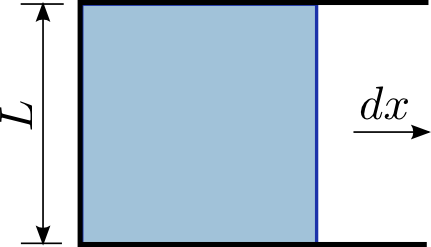
Surface tension can therefore be stated in two equivalent ways: as an energy per unit area, or as a force per unit length acting along the surface. The two have the same units and the same value.
Water is unusually high at about 72 millinewtons per metre at room temperature, because hydrogen bonding makes the cohesion strong. Mercury is far higher at around 486, and most organic liquids are well below water. Surface tension falls as temperature rises and reaches zero at the critical point, where the distinction between liquid and vapour disappears.
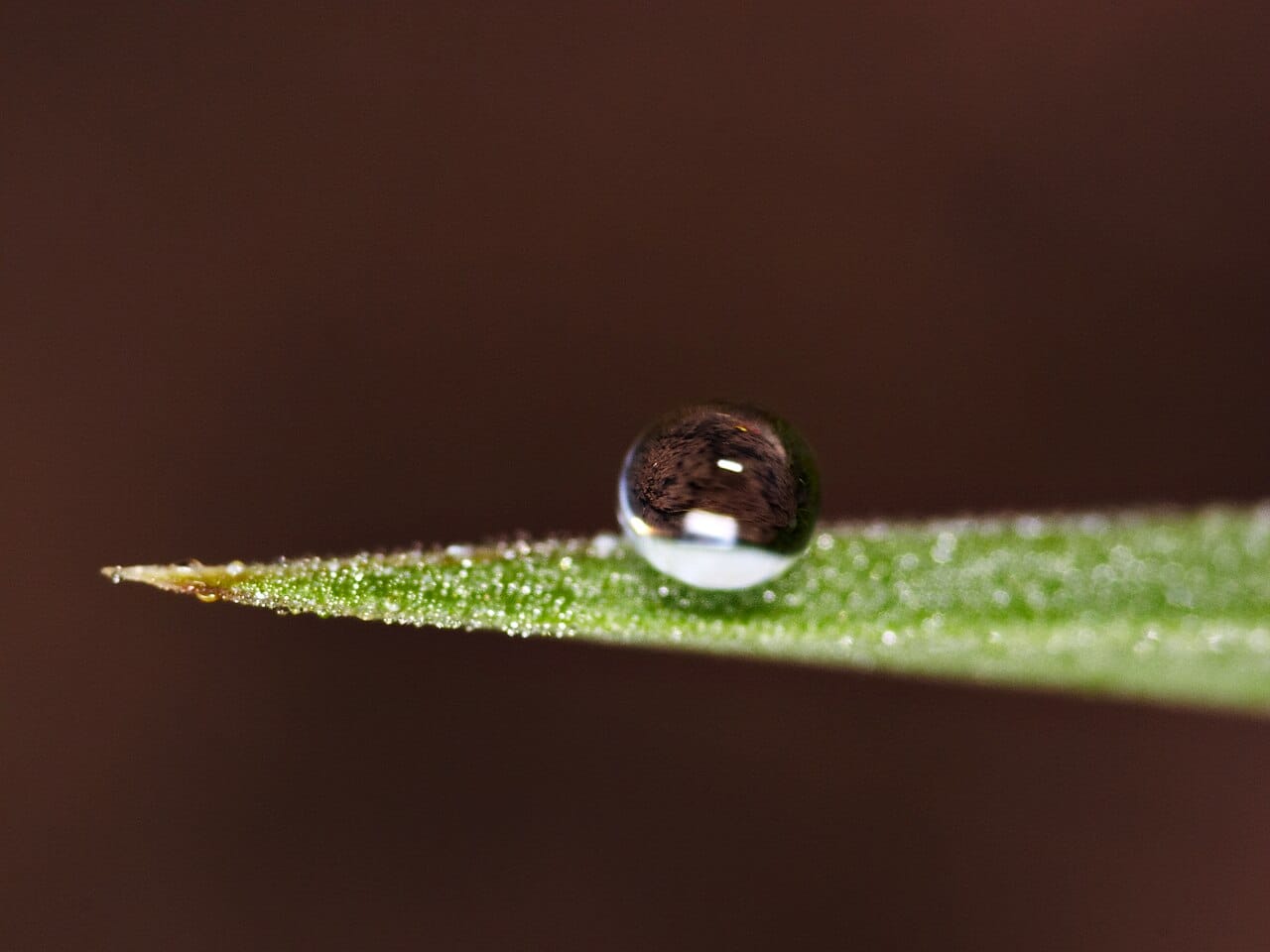
Drops are spherical because a sphere has the least surface area for a given volume, so contracting the surface drives them toward that shape. Larger drops flatten because gravity outweighs surface tension above a size set by the capillary length, about 2.7 millimetres for water.
A curved surface has a higher pressure inside than out, by an amount that grows as the radius shrinks. This is the Laplace pressure, and it is why small bubbles are harder to inflate than large ones, and why in a connected pair the smaller empties into the larger.
Capillary action follows from the competition between the liquid's attraction to itself and to a solid. Where the solid wins, the liquid climbs a narrow tube, to a height inversely proportional to the tube's radius. This carries water into soil, through paper and up the narrow vessels of plants, although the height reached in a tree is far greater than capillarity alone can supply.
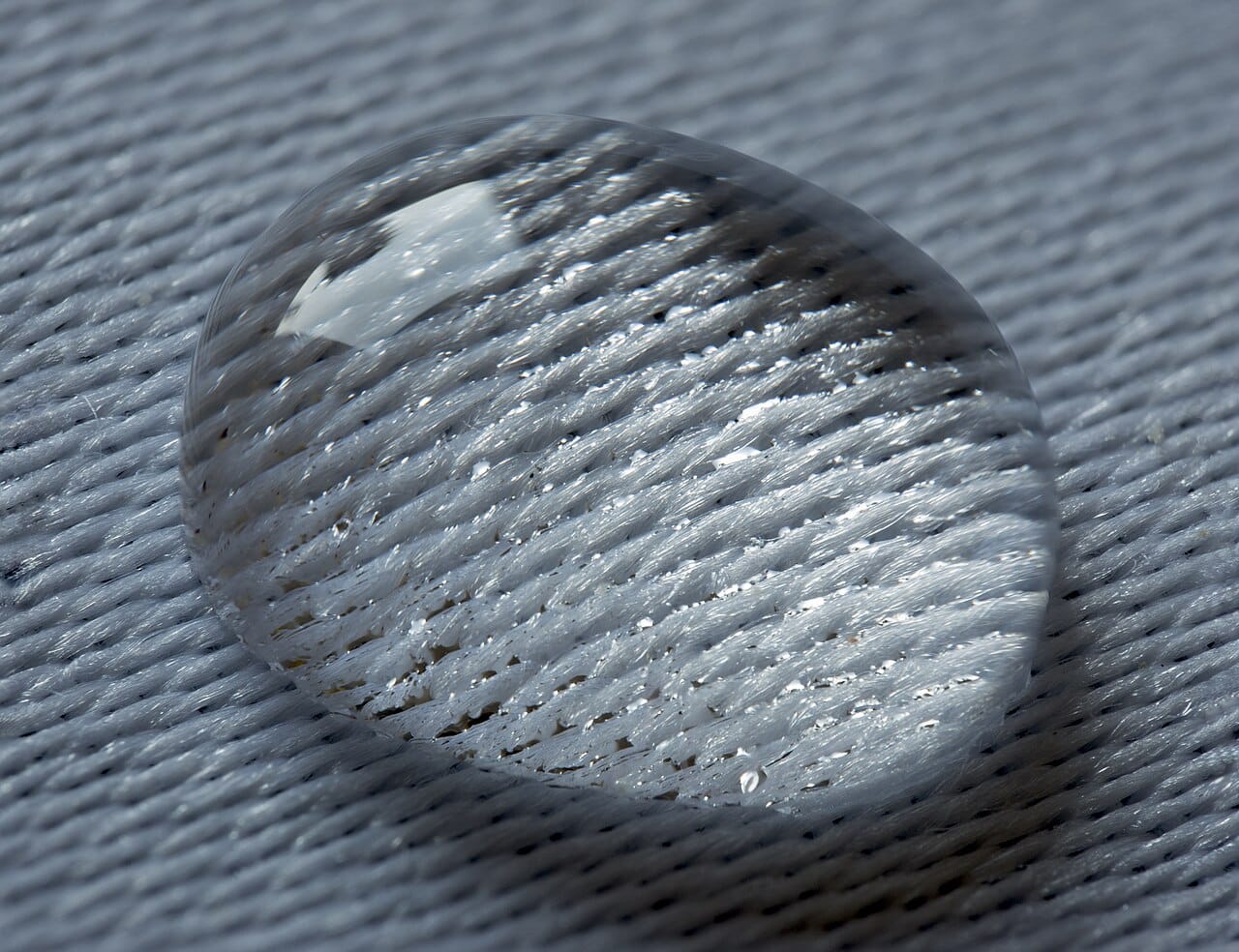
Wetting is described by the contact angle where liquid, solid and air meet. Small angles mean the liquid spreads, large angles mean it beads. Waxy leaves and treated fabrics are engineered for large angles.
Small animals exploit the surface directly. Water striders stand on unwetted, hairy legs that dimple the surface without breaking it, supported by the surface's resistance to being stretched rather than by buoyancy.
A surfactant is a molecule with a water-attracting head and a water-repelling tail. It collects at the surface, where the tail can escape the water, and its presence lowers the surface tension substantially.
Detergents work this way. Lowering surface tension lets water wet greasy surfaces and penetrate fabric instead of beading on it, and the same molecules surround oil droplets and hold them in suspension.
The biological case is the sharpest. The lungs contain hundreds of millions of alveoli, small enough that surface tension in their liquid lining would tend to collapse the smaller ones into the larger, following the Laplace relation. Pulmonary surfactant, secreted by type II alveolar cells, reduces surface tension and does so more strongly as the alveolus gets smaller, which stabilises the whole population. Premature infants who have not yet produced it develop respiratory distress syndrome, and administering surfactant is a routine and highly effective treatment.
Surface tension is the clearest everyday demonstration that intermolecular forces have visible mechanical consequences. It governs behaviour wherever surfaces are large relative to volumes, which is the regime of foams, emulsions, inkjet printing, soil water, microfluidics and the interior of the lung.