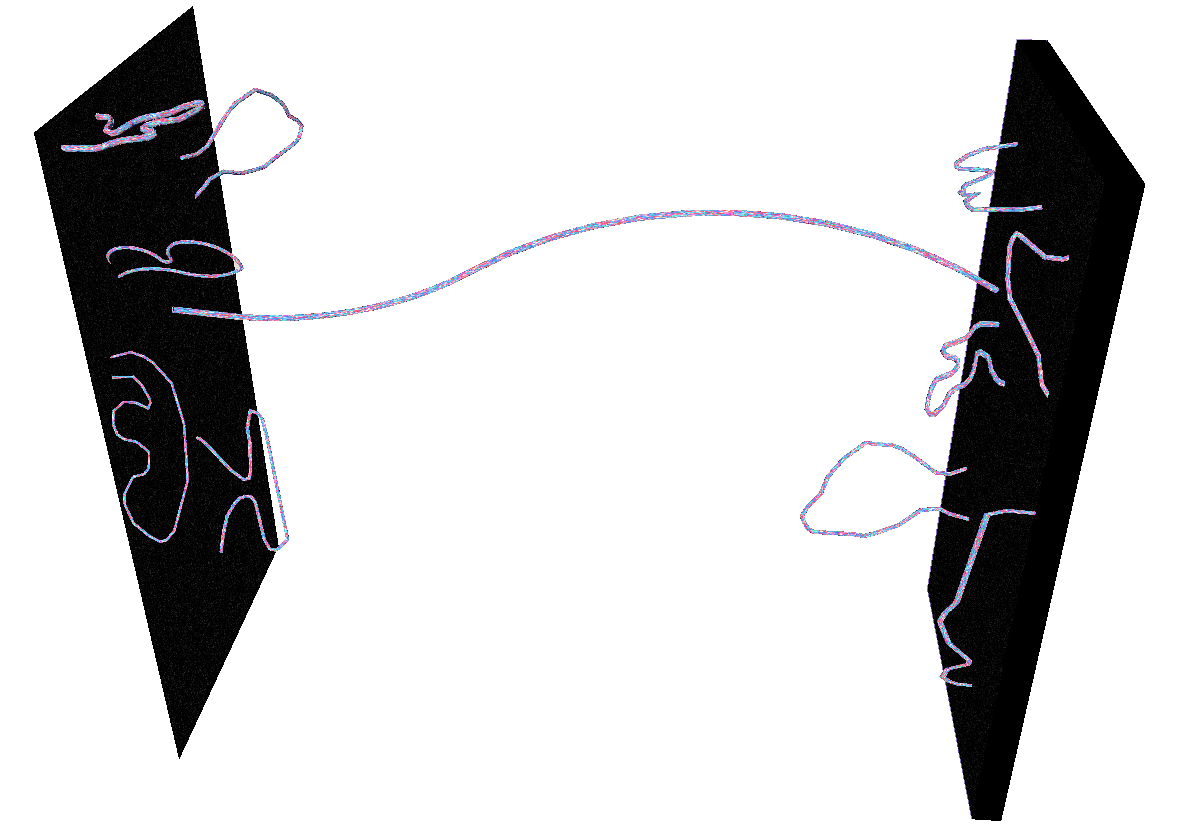
String theory is a theoretical framework that attempts to unify all the forces and particles of nature, including gravity, into a single description. Its central proposal is that the fundamental constituents of reality are not point-like particles but tiny, vibrating one-dimensional strings, with different vibration patterns appearing to us as different particles.
In the theory, an electron and a quark are not different objects but the same kind of string vibrating in different ways, much as one violin string can sound many notes. Crucially, one of those vibration patterns naturally behaves like the graviton, the hypothetical carrier of gravity, which is why string theory is the leading candidate for a quantum theory of gravity that general relativity alone cannot provide.
String theory grew out of one of the deepest problems in physics: gravity and quantum mechanics, each spectacularly successful in its own domain, are mathematically incompatible. By replacing point particles with extended strings, the theory smooths away the infinities that wreck other attempts to combine gravity with the quantum world, which is the main reason it has drawn decades of intense effort.
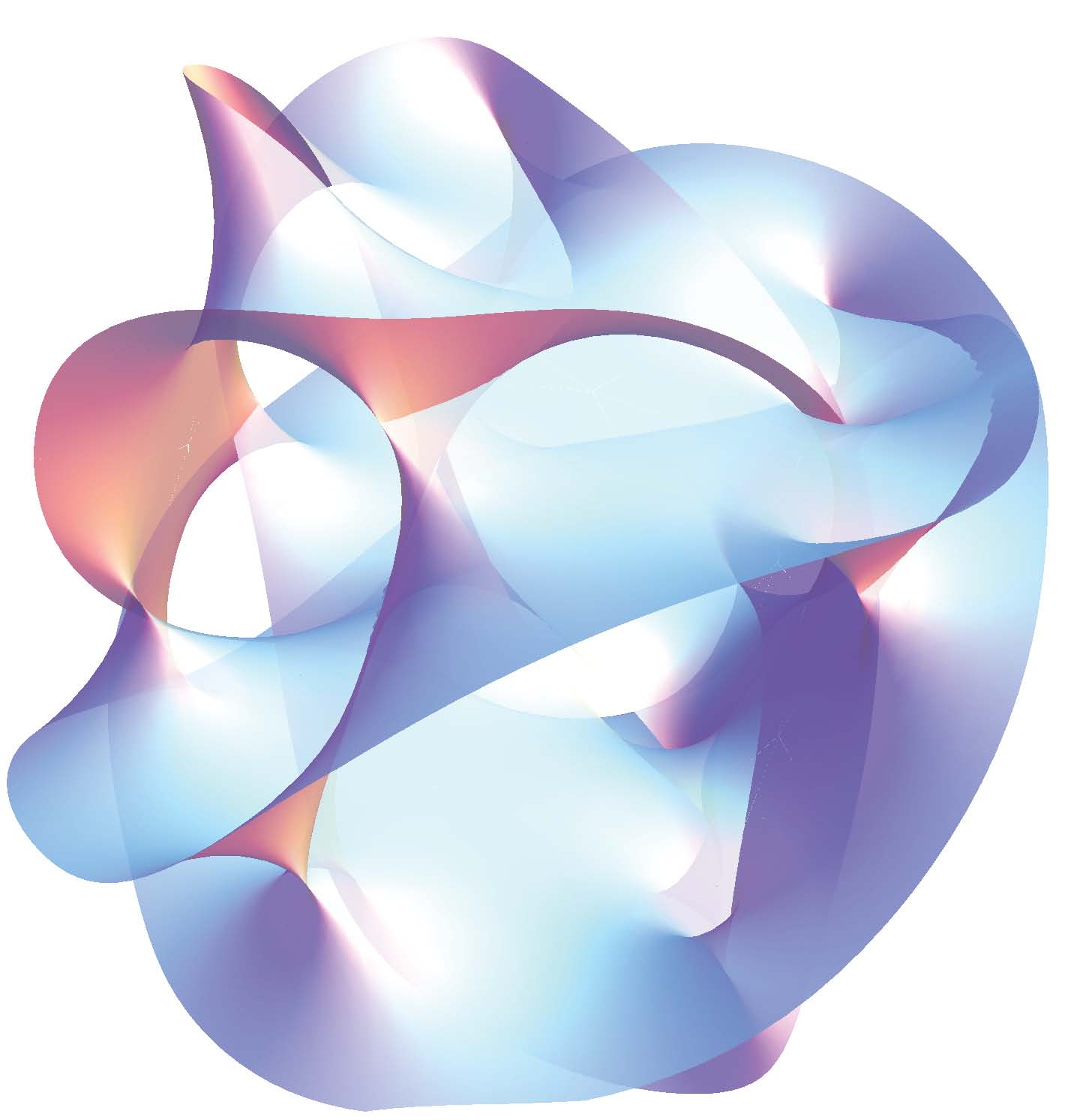
To be mathematically consistent, string theory requires more spatial dimensions than the three we experience, typically ten dimensions in total, with the extra ones curled up too small to see. The precise shape of these hidden dimensions would determine the physics we observe. There appear to be an astronomical number of possible shapes, a "landscape" of possible universes, and which one, if any, describes ours is unknown.
Even if it is never confirmed as a theory of nature, string theory has been remarkably fruitful. Its mathematics has produced deep insights in pure mathematics and has given physicists powerful new tools, including surprising links that let hard problems in one area be solved by translating them into another, with applications reaching even into the study of exotic materials.

String theory is mathematically rich and has reshaped both physics and pure mathematics, but it remains deeply contested as a description of nature. After decades of work it has produced no confirmed, testable prediction that distinguishes it from rival ideas, largely because the energies involved are far beyond any experiment. Critics argue this places it outside normal science; defenders counter that the mathematics is too compelling to abandon. The debate is unresolved.