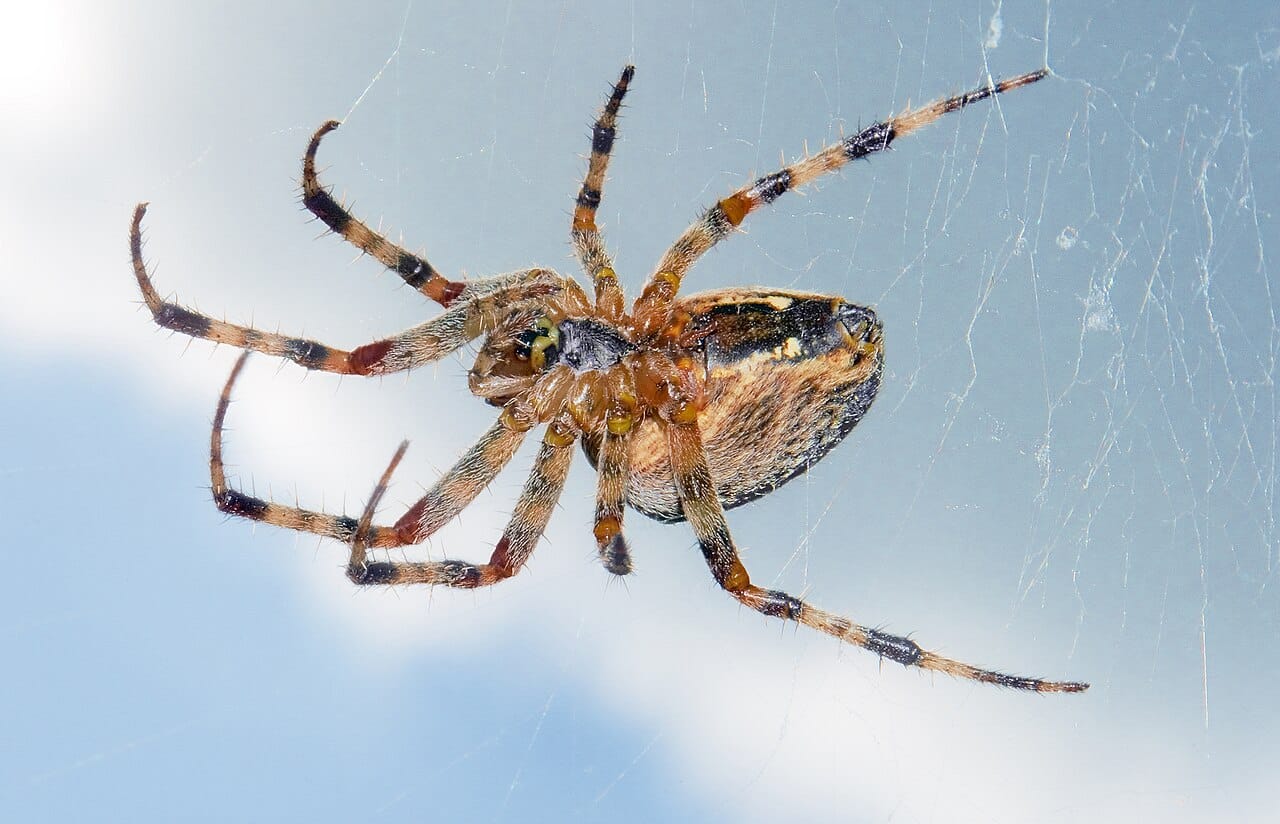
Spiders are arachnids of the order Araneae, with more than 50,000 described species. All of them produce silk, nearly all of them are venomous, and almost none of them are dangerous to people. They are the most abundant terrestrial predators on Earth by a wide margin.
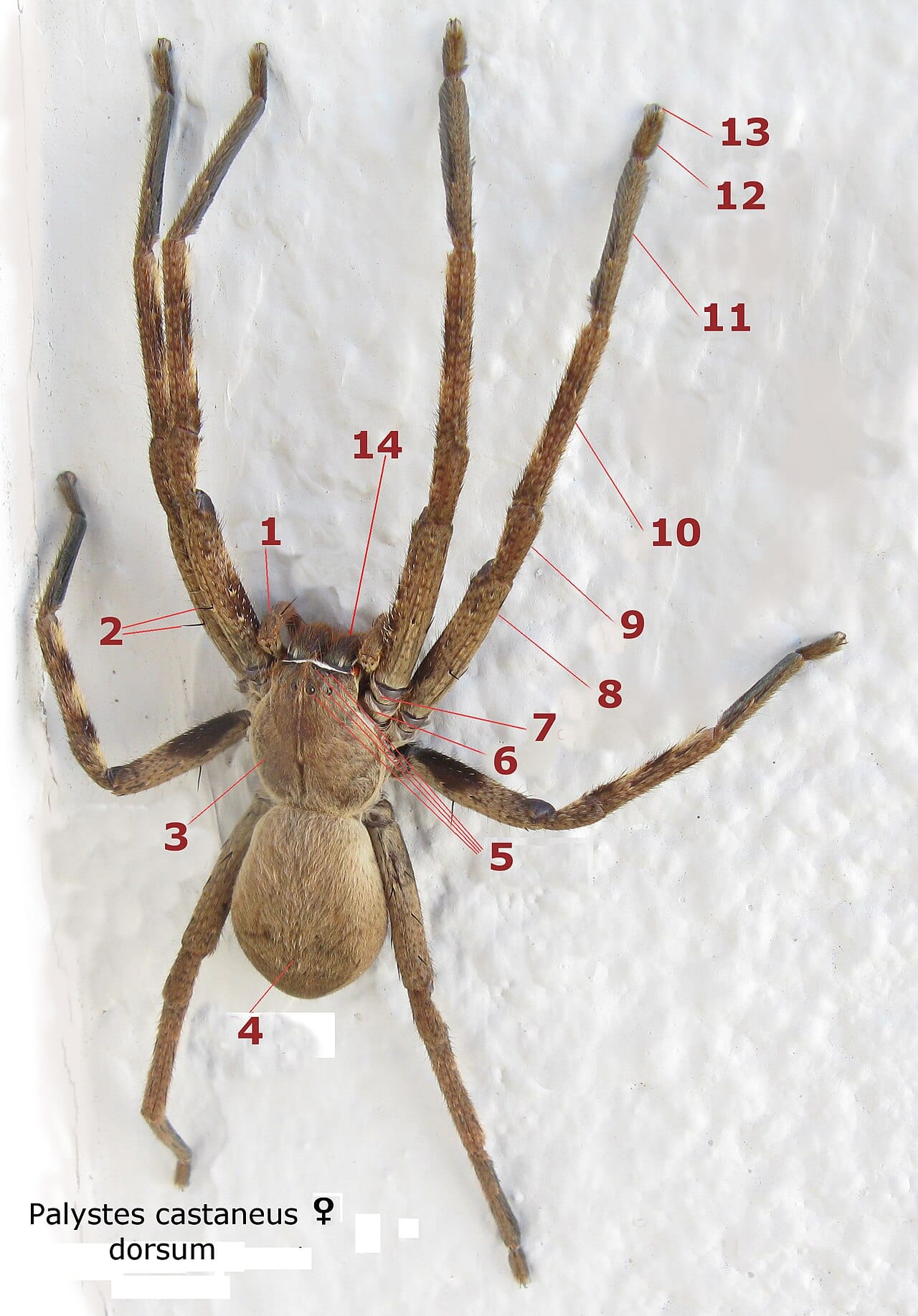
Spiders are not insects. They have two body segments rather than three, eight legs rather than six, no antennae and no wings. The front section, the cephalothorax, carries the eyes, the chelicerae with their fangs, the pedipalps and all eight legs. The abdomen carries the silk glands and spinnerets.
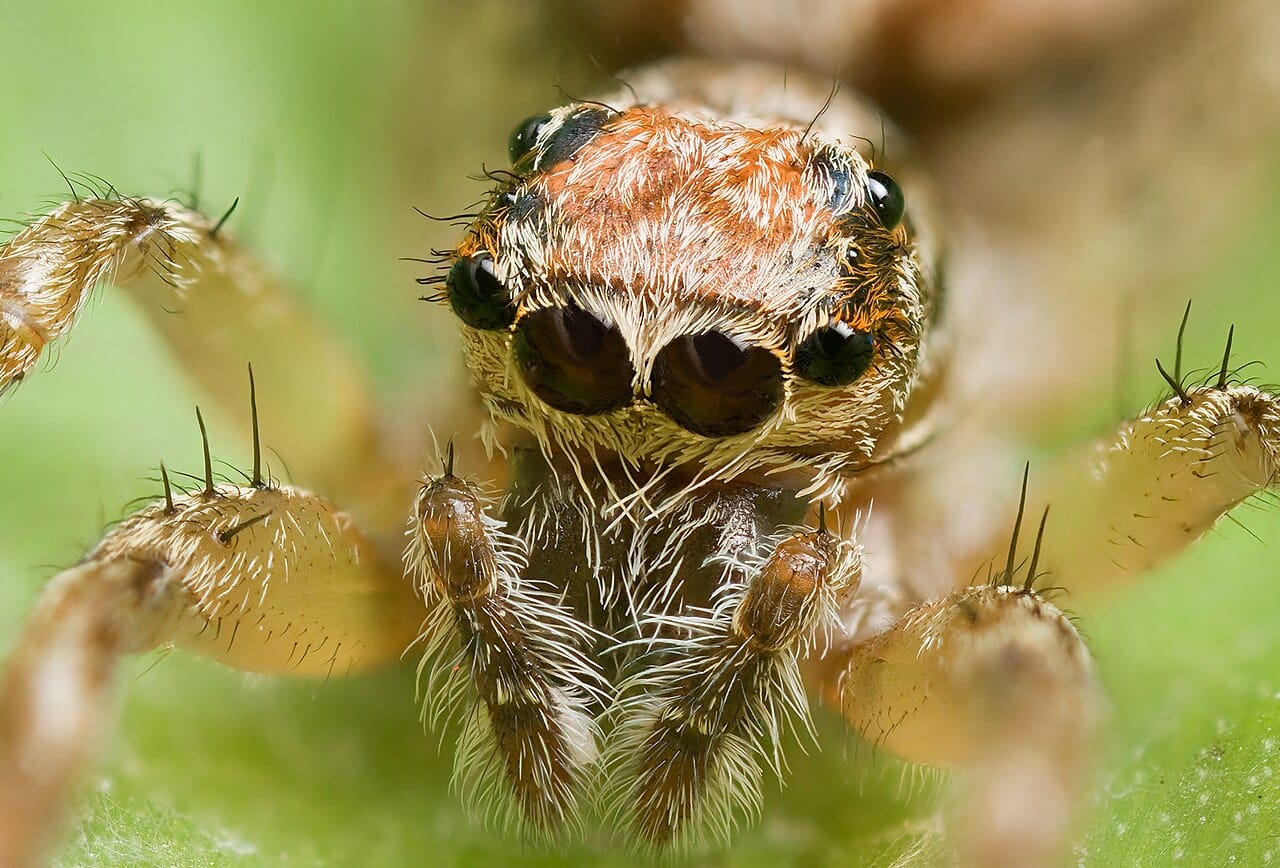
Most spiders have eight eyes, arranged in patterns that are diagnostic to family, though the number varies and some cave species have none. Vision is poor in most groups and excellent in a few.
Spiders cannot chew. Digestion is external: venom and digestive enzymes are injected or applied, tissue is liquefied, and the result is sucked up through a narrow filtering mouth. This is why a spider leaves a husk.
Leg extension is partly hydraulic. Spiders have muscles to flex the legs but rely on internal fluid pressure to extend them, which is why a dead spider curls up, and why jumping spiders can jump distances their leg muscles alone could not produce.
Silk is the defining spider trait and it is not one material. A single orb-weaver may produce up to seven distinct silks from different glands: dragline silk for the frame and safety line, capture spiral silk that is elastic and coated in glue, cocoon silk, attachment cement, and wrapping silk for prey.
Dragline silk is remarkable by any engineering measure. Its tensile strength is comparable to high-grade steel by weight, and it far exceeds steel in toughness, the energy absorbed before failure, because it combines strength with high extensibility. The molecular basis is a block structure of crystalline beta-sheet regions embedded in an amorphous elastic matrix, and the spider assembles it from a liquid protein solution at ambient temperature and pressure, with water as the solvent, which no industrial process approaches.
Commercial production has failed repeatedly. Spiders cannot be farmed because they are territorial and cannibalistic, and recombinant production in bacteria, goats and silkworms has struggled to reproduce the spinning process, which is as important to the material as the protein.
Not all spiders build webs. Web-building is ancestral but many lineages abandoned it: wolf spiders and jumping spiders hunt actively, crab spiders ambush in flowers, trapdoor spiders wait in burrows, and net-casting spiders hold a small web and throw it.
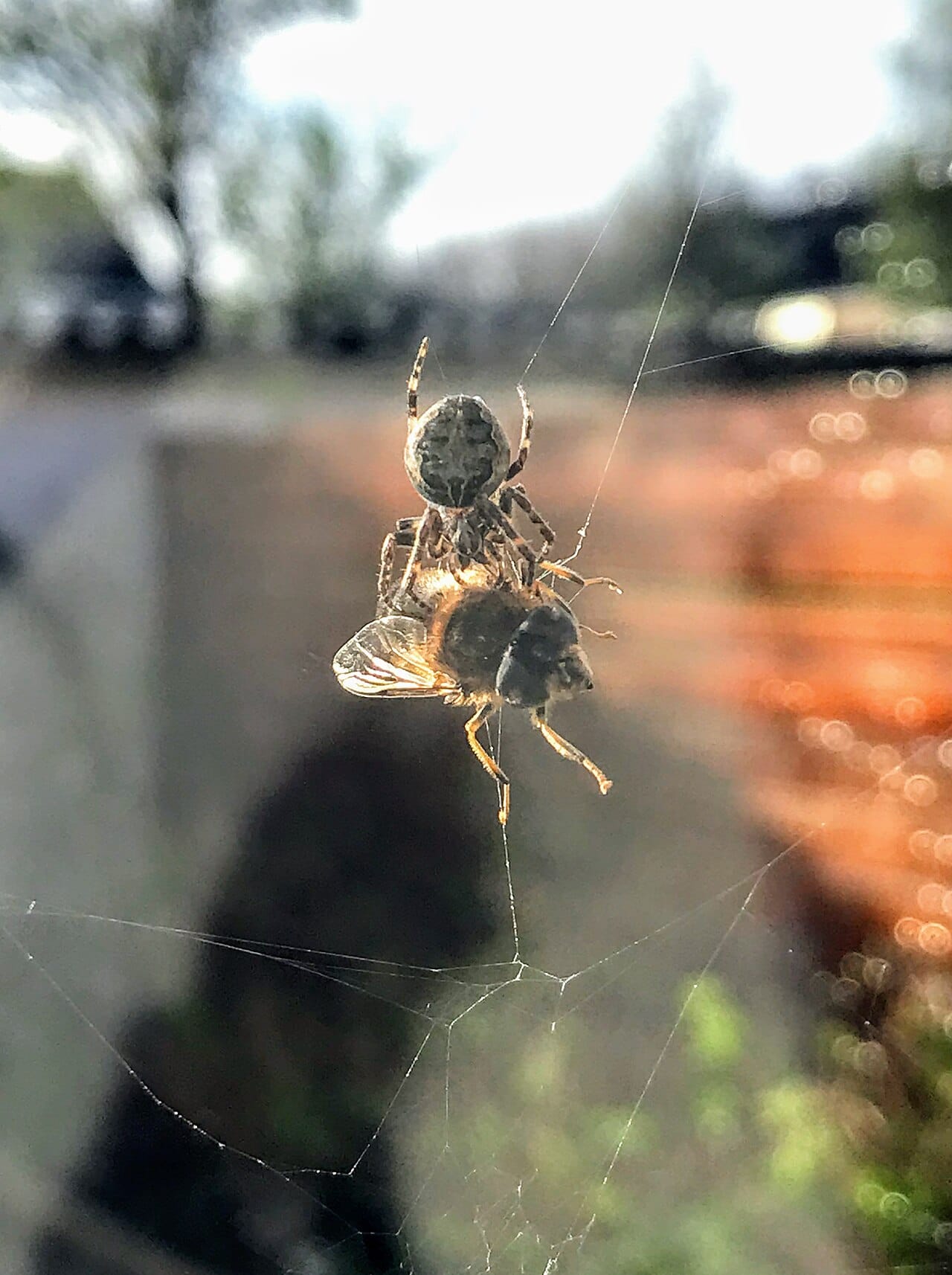
Nearly all spiders are venomous. Two families lack functional venom glands, and the rest use venom to subdue prey. Spider venoms are complex mixtures, most of them neurotoxic peptides targeting invertebrate ion channels, which is exactly why most are harmless to mammals: the target is not present in the same form.
Of more than 50,000 species, roughly a couple of dozen are medically significant to humans. The genuine ones are the widow spiders, whose latrotoxin causes severe systemic pain; the recluse spiders, whose venom can cause local tissue necrosis; the Australian funnel-webs, which are genuinely dangerous and for which an antivenom introduced in 1981 has prevented all deaths since; and the Brazilian wandering spiders.
Almost everything else about spider bites in circulation is wrong. Necrotic wounds are routinely attributed to recluse spiders far outside their range, where the actual cause is usually bacterial infection, commonly MRSA. Studies collecting cases of presumed spider bite have repeatedly found that most had another cause and no spider was ever seen.
Most spiders live by vibration and touch. Slit sense organs in the exoskeleton detect minute strains, and a web-building spider reads the position, size and struggle of prey from the vibration of radial threads under its feet.
The jumping spiders are the exception and are worth their own note. Their principal eyes have long focal length and a narrow retina which is moved around behind the lens by muscles, scanning the scene rather than imaging it all at once. Acuity approaches that of some mammals in a body a few millimetres long. Portia, a jumping spider that hunts other spiders, will take an indirect route to a target that carries it out of sight of that target for many minutes, which requires holding a plan without visual feedback, and is among the more striking behaviours recorded in an invertebrate.
Male spiders do not have a penis. They spin a small web, deposit sperm on it, take it up into the pedipalps, and then transfer it with those. The pedipalp tips of adult males are enlarged and species-specific in shape, and are the main character used to identify spiders.
Sexual cannibalism is real but far less universal than its reputation. It occurs regularly in some species and rarely in most, and in a few, including the Australian redback, the male actively assists by somersaulting into the female's fangs during mating, which extends copulation and increases his paternity.
Spiders are estimated to consume on the order of 400 to 800 million tonnes of prey a year globally, a figure comparable to the total consumption of all whales or the total meat and fish consumption of humanity. That estimate is broad, but the conclusion it supports is not controversial: spiders are the principal regulator of terrestrial insect populations.
Densities in temperate grassland can run to hundreds of individuals per square metre. Spiders disperse by ballooning, releasing silk that catches electrostatic and wind forces and lifts them, and have been collected from aircraft at several kilometres altitude and are among the first colonists of new volcanic islands.
Spiders are the clearest case of a group whose reputation is inverted relative to its effects. They are near-universally feared, medically almost irrelevant, and responsible for suppressing insect populations at a scale that no human intervention approaches.