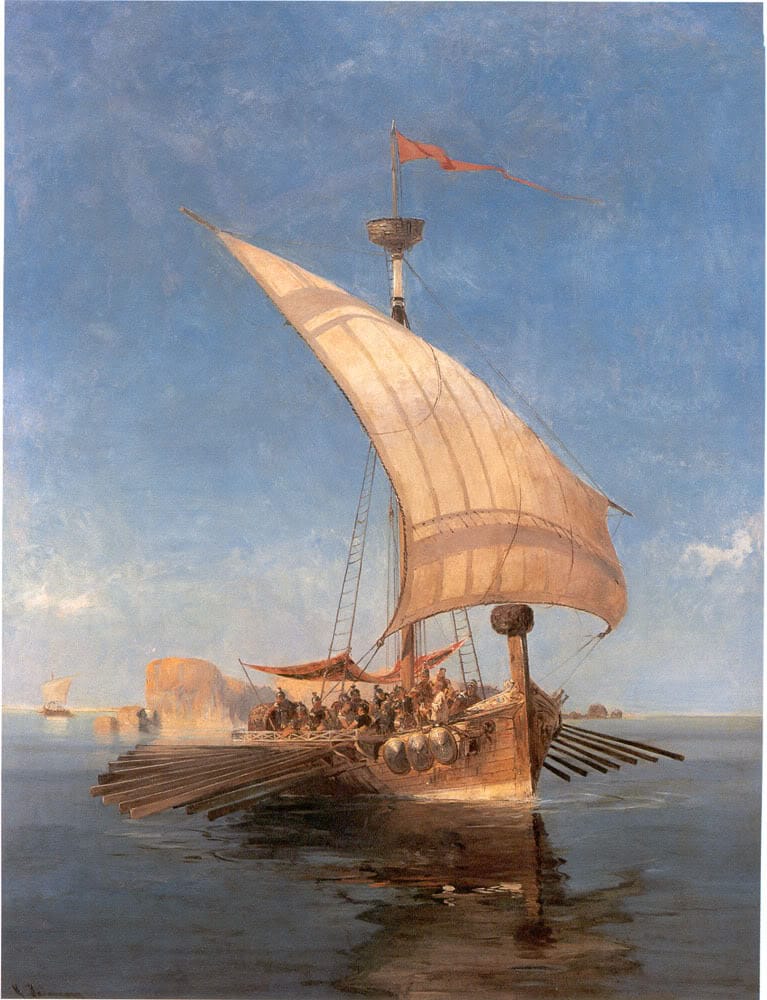
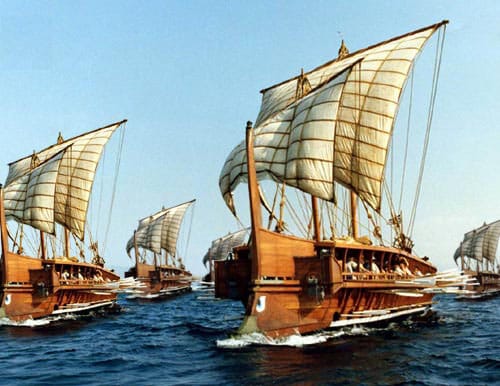
The ship of Theseus is a puzzle about identity over time. If every plank of a ship is replaced, one at a time, until no original material remains, is it still the same ship? The question is easy to state, resistant to answer, and turns out to matter well beyond philosophy seminars.
Plutarch records that the ship in which Theseus returned from Crete was preserved by the Athenians, who removed decayed planks and replaced them with new timber, so that the vessel became a standing example among philosophers of the question of things that grow. The puzzle is therefore ancient, and Plutarch reports it as already familiar.
Thomas Hobbes sharpened it considerably. Suppose someone collects every discarded original plank and reassembles them into a ship. There are now two vessels: one with continuous history and no original matter, one with all the original matter and no continuous history. Both have a serious claim, and they cannot both be the original.
Several positions are defended by serious philosophers and none commands agreement.
Continuity of form. What makes the ship that ship is its structure and function, maintained continuously. On this view the repaired ship is the original and the reassembled one is a replica. This matches how people treat buildings, orchestras, and their own bodies.
Continuity of matter. Identity follows the material. The reassembled ship is the original and the repaired one is a successor. Few defend this strongly, because it implies that every organism becomes a different individual as its atoms turn over, which they do.
Both, or neither. Some argue the question is defective. Identity is not a deep fact about the world but a convention about how we choose to speak, and where the convention gives no answer, none exists to be found.
Four-dimensionalism. Objects are extended in time as well as space, so a ship is a four-dimensional entity of which any moment is a slice. The two ships share earlier slices and diverge later, and asking which is really the original is like asking which fork of a river is really the river.
The puzzle recurs wherever continuity is legally or practically consequential. Courts have decided whether a rebuilt vehicle retains its original registration and whether a company that has replaced its staff, premises, and business remains liable for the acts of its predecessor. Heritage bodies confront it directly: the Ise Grand Shrine in Japan is rebuilt every twenty years and is understood as continuously ancient, while European conservation practice usually treats replacement of original fabric as loss. The bodies of living organisms replace most of their material over time, and personal identity through psychological rather than physical continuity is a further version of the same problem.