Darwin's second theory, proposed to explain traits that natural selection could not: peacock tails, antlers, birdsong, and every ornament that costs its bearer more than it appears to return. It was ignored for a century and is now among the most active areas of evolutionary biology.
Natural selection favours traits improving survival. A great deal of conspicuous biology does the opposite.
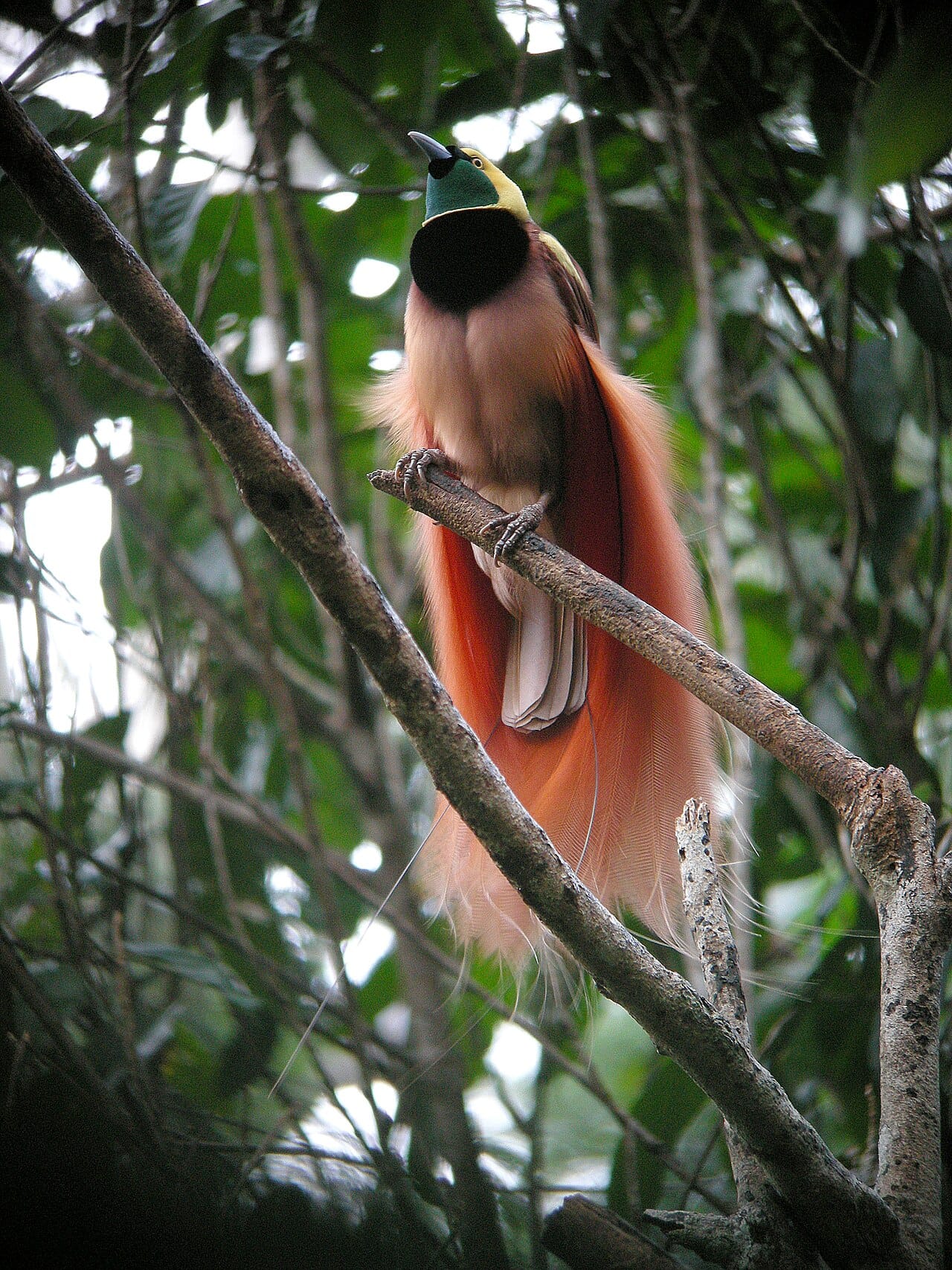
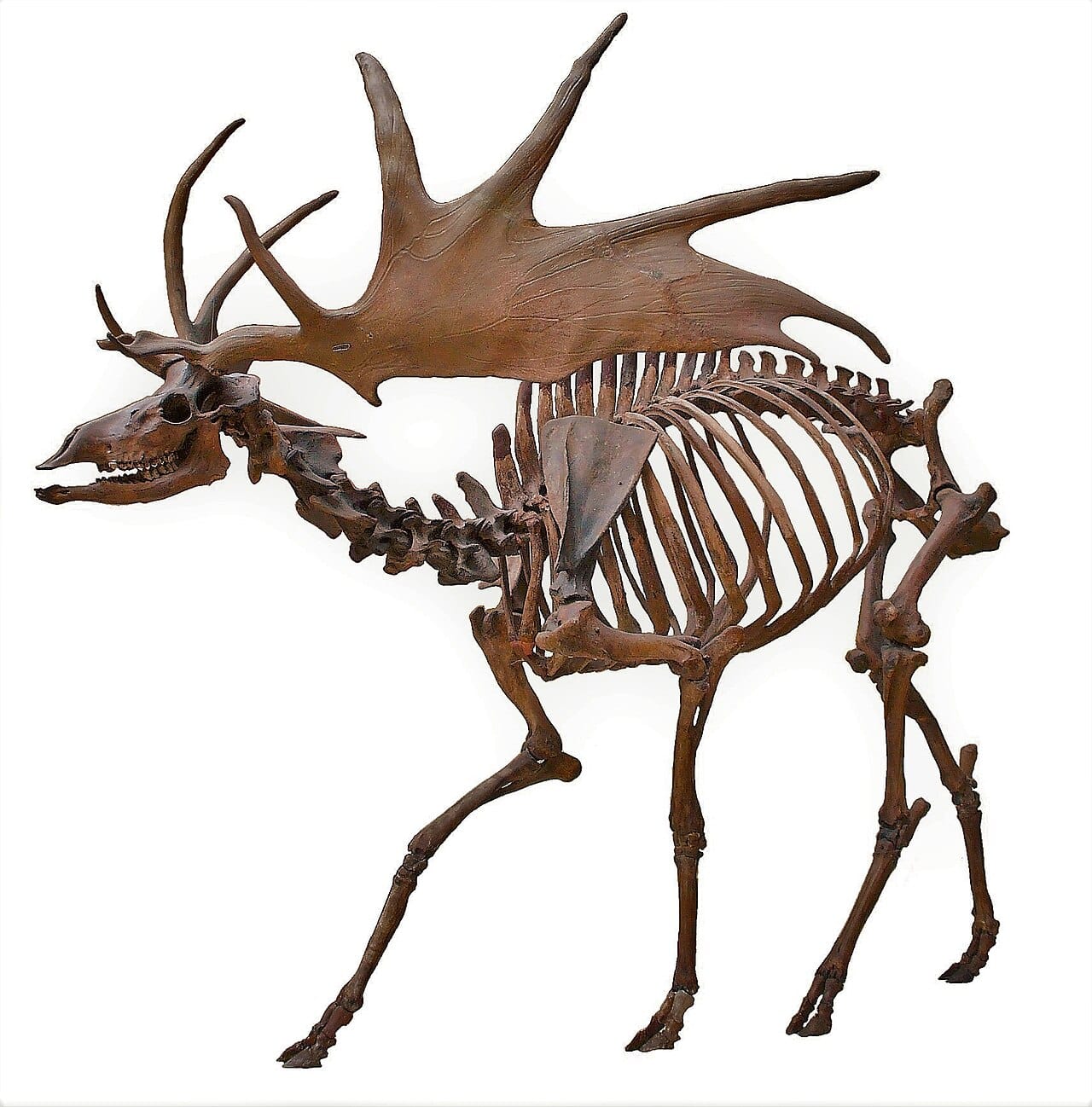
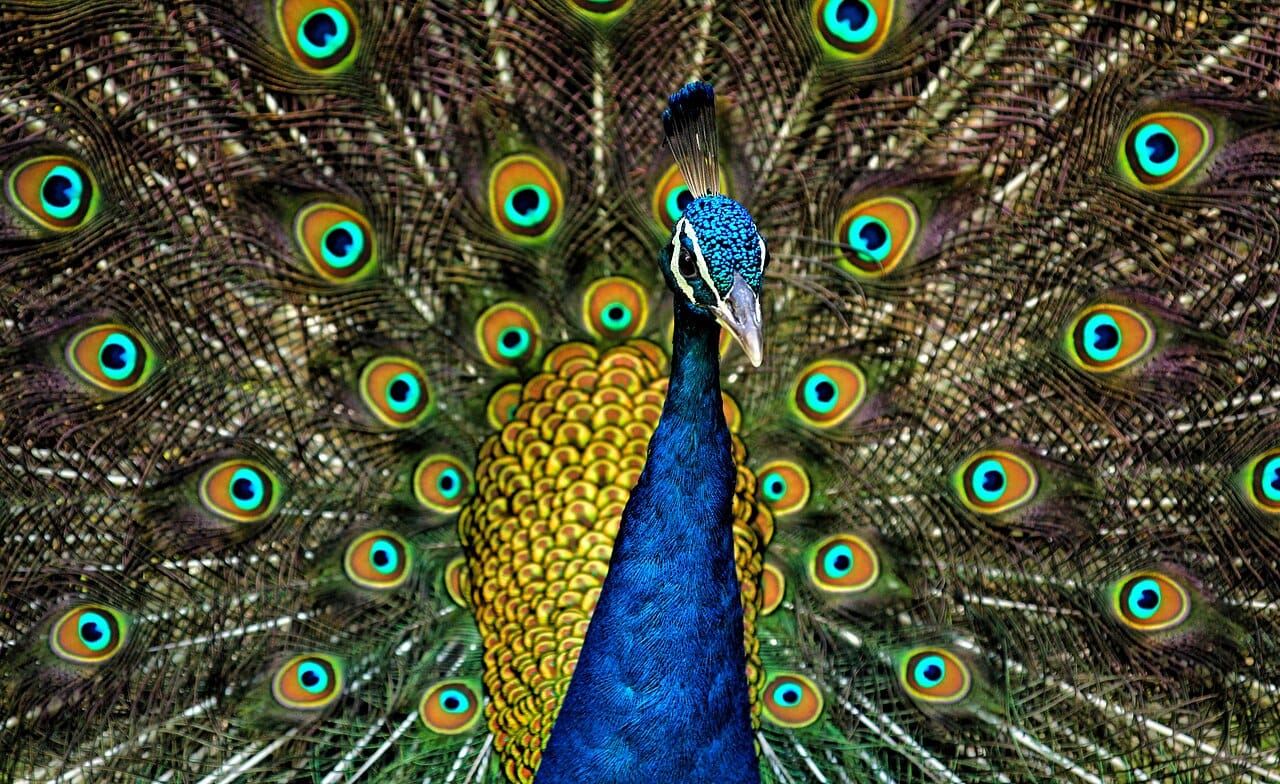
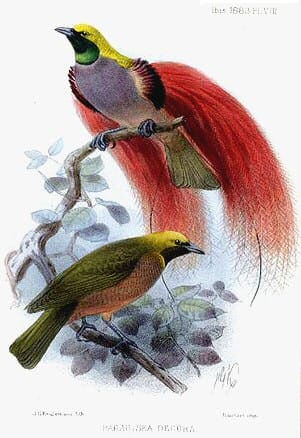
A peacock's train is heavy, hampers flight, and advertises the bird to predators. The Irish elk carried antlers spanning over three metres. Male birds of paradise perform elaborate displays in open view. Each of these reduces the bearer's chance of surviving, and each is common.
Darwin wrote in 1860 that the sight of a feather in a peacock's tail made him sick, because he could not account for it. He published the account in 1871.
Sexual selection operates by two routes, and Darwin distinguished them clearly.
Intrasexual selection is competition within one sex for access to the other. It favours weapons and size: antlers, tusks, horns, and the body mass to use them. Where it dominates, the sexes differ markedly in size, as in elephant seals, where males are several times the mass of females and a minority of them father most offspring.
Intersexual selection is choice by the other sex. It favours ornament and display rather than weaponry: colour, song, structures with no mechanical function. This is the mechanism Darwin's contemporaries rejected, because it required that animals, and specifically female animals, exercise preference. Alfred Russel Wallace objected on precisely those grounds, and the Victorian discomfort with the idea is a substantial part of why the theory lay unused until the 1970s.
The question of whether preference actually exists was settled experimentally.
Malte Andersson's 1982 study on long-tailed widowbirds is the standard demonstration. He cut the tails of some males and glued the removed feathers onto others, producing artificially shortened and lengthened birds along with unmanipulated controls. Males with lengthened tails attracted several times more nests than the others. The trait was manipulated directly and the response followed, which no observational study could have established.
Marion Petrie's work on peafowl found that peahens preferred males with more eyespots, and that the offspring of preferred males survived better when released into the wild, connecting the preference to an outcome.
The general finding has been replicated across birds, fish, frogs and insects with the same design: alter the ornament, measure the response.
That females choose is established. Why they choose what they choose is where the argument is, and there are two main positions.
The good genes account holds that ornaments are honest signals of quality. Amotz Zahavi's handicap principle makes the logic precise: a signal is reliable only if it is costly, because a low-quality individual cannot afford to fake it. A heavy train is credible evidence of vigour precisely because carrying it is hard. Related versions hold that bright colouration signals freedom from parasites, for which there is reasonable evidence.
The Fisherian runaway account, from Ronald Fisher, requires no quality signal at all. If females prefer a trait and the preference is heritable, then a female choosing an ornamented male has sons with the ornament and daughters with the preference. Preference and trait become genetically correlated and reinforce each other, and the process accelerates until survival costs halt it. On this account the ornament indicates nothing except that others also prefer it.
The two are not exclusive and both are probably operating. Distinguishing them in a given species is difficult, and it is a central technical problem in the field.
Sexual selection now extends well past the original formulation.
Competition continues after mating. Sperm competition, cryptic female choice, and mating plugs are all forms of the same process operating internally, and they explain a great deal of otherwise puzzling reproductive anatomy.
Sexual conflict arises because the interests of the sexes diverge: what is optimal for one is often costly for the other, and this produces antagonistic coevolution rather than a stable outcome.
Role reversal occurs where males invest more in offspring, as in seahorses and several shorebirds, and the ornament and competition switch sex accordingly, which is a strong test of the theory since it predicts the reversal from investment rather than from sex.