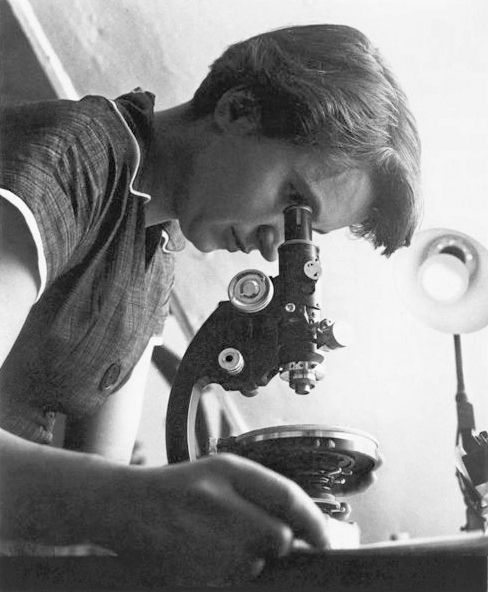
Rosalind Franklin (1920 to 1958) was a British scientist whose work was crucial to discovering the structure of DNA, the molecule of heredity. Long overlooked, she is now recognized as a key figure in one of the greatest discoveries in the history of biology.
Franklin was a gifted and meticulous scientist who excelled in physical chemistry, working with great precision and rigour. In an era when science offered women few opportunities and little recognition, she pursued her research with determination, becoming an expert in the demanding technique of X-ray crystallography.
Franklin used X-rays to study the structure of molecules, a method in which X-rays scattered by a crystal reveal the arrangement of its atoms. Applying this painstaking technique to DNA, she produced a famous image, known as Photo 51, that captured the shape of the molecule with remarkable clarity.
Photo 51 and Franklin's careful measurements provided vital evidence for the structure of DNA, pointing clearly toward its helical, twisted ladder form. Her data contained the key clues needed to solve the puzzle, the fruit of exacting, expert work at the very frontier of the science.
In 1953, James Watson and Francis Crick worked out the famous double helix structure of DNA. Crucially, they drew on Franklin's data and her best image, which were shown to them without her knowledge or permission. Her essential contribution was not properly credited, a now famous episode of a scientist overlooked.
Watson, Crick, and Maurice Wilkins later shared a Nobel Prize for the discovery of the structure of DNA. Franklin, however, was not among them. She had died several years earlier, and Nobel Prizes are not awarded after death, so the woman whose work was so vital went unhonoured by the prize.
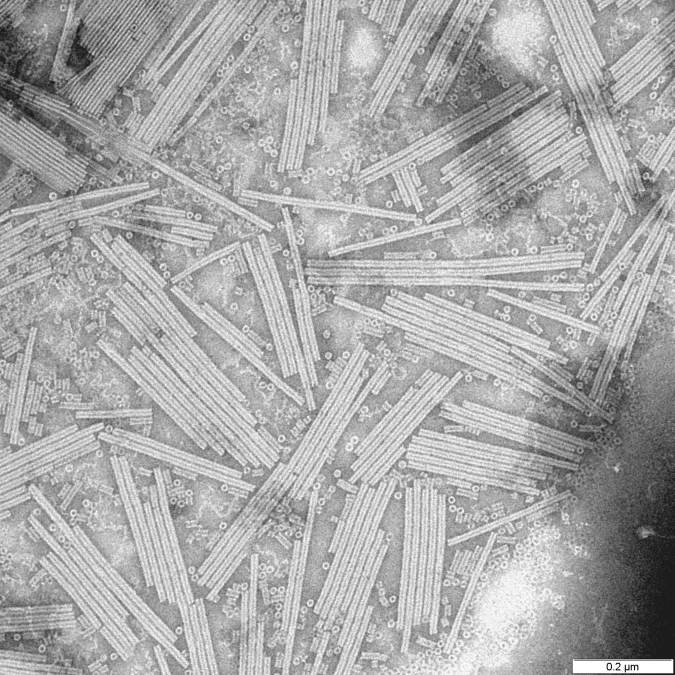
Franklin's contributions were not limited to DNA. She went on to do important pioneering work on the structure of viruses, applying her crystallographic skills to understand how these tiny agents are built. This research, cut short by her early death, was significant in its own right.
Franklin died of cancer in 1958, aged just thirty seven, before the full importance of her role in the DNA story was widely known. Her life and career were cut tragically short at a time when she was still doing first rate science, leaving much unfinished.
In the decades since, historians and scientists have recognized Franklin's central part in the discovery of DNA's structure. She is now celebrated as a brilliant scientist and has become a symbol of the contributions of women too often left out of the history of science, her name finally given its due.