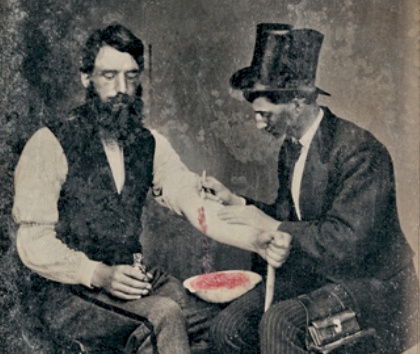
The sale of radioactive substances as general health tonics in the first decades of the twentieth century. Radium was added to water, ointments, suppositories and cosmetics, sold on the claim that it restored vitality, and it killed people.
Radium was isolated by Marie and Pierre Curie in 1898. It glowed, it produced heat without any apparent source, and it plainly carried energy, which in the popular understanding of the time was closely associated with vitality and health.
Two further facts supplied a veneer of reasoning. Radium was already being used deliberately to destroy tumours, which established that it had genuine medical power. And some celebrated natural spa waters were found to be slightly radioactive, which allowed marketers to present radioactivity as the active principle behind an ancient and respectable practice.
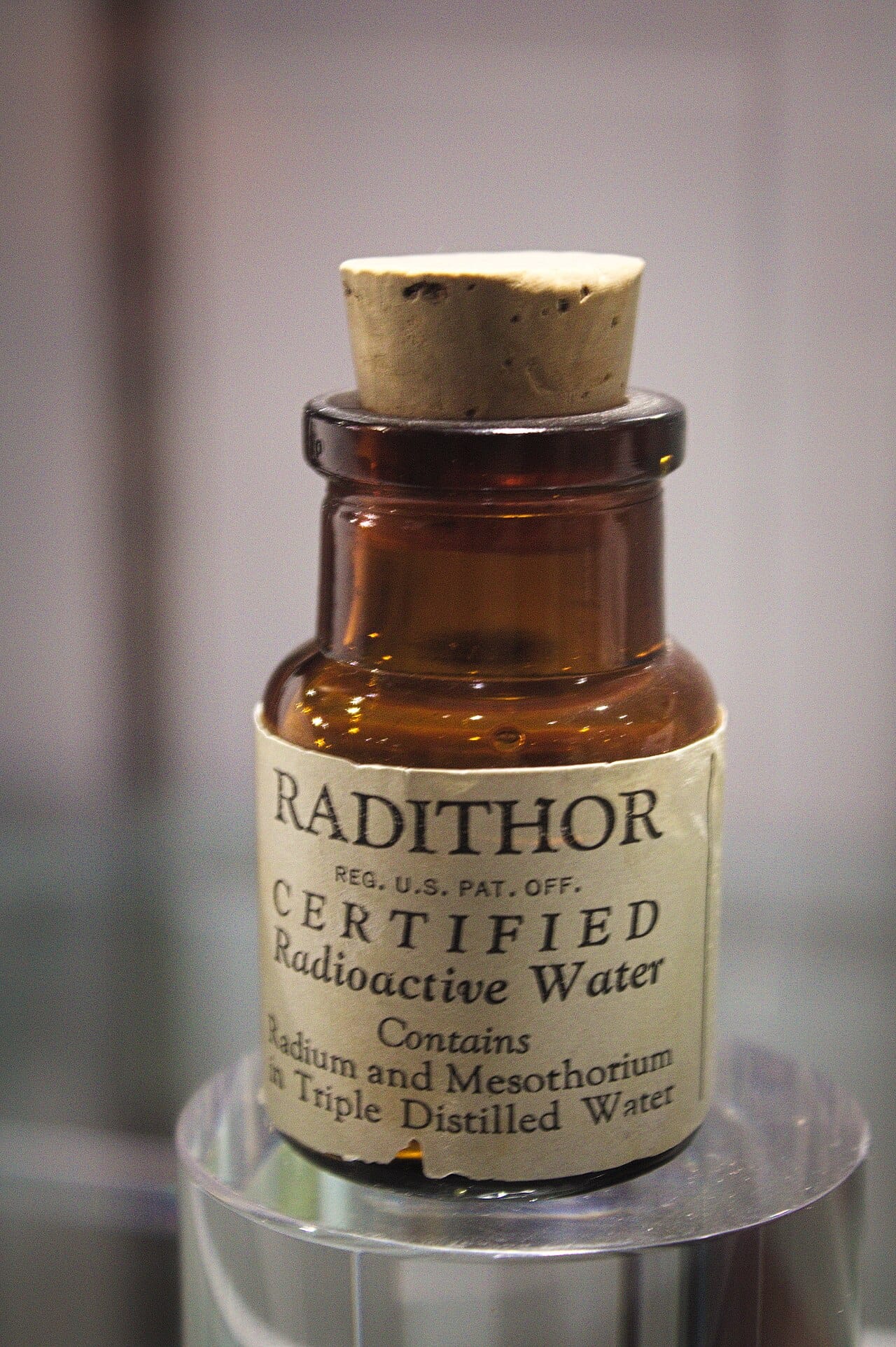
The result was a substantial industry. Radithor, produced by William Bailey from 1918, was distilled water containing radium and mesothorium, sold by the case. There were radium-bearing water dispensers for the home, radioactive suppositories, a device worn under the clothing at night, and radium-containing toothpaste and face creams.
Many products marketed as radioactive contained nothing at all, which was fortunate for their purchasers. Radithor was not one of them.
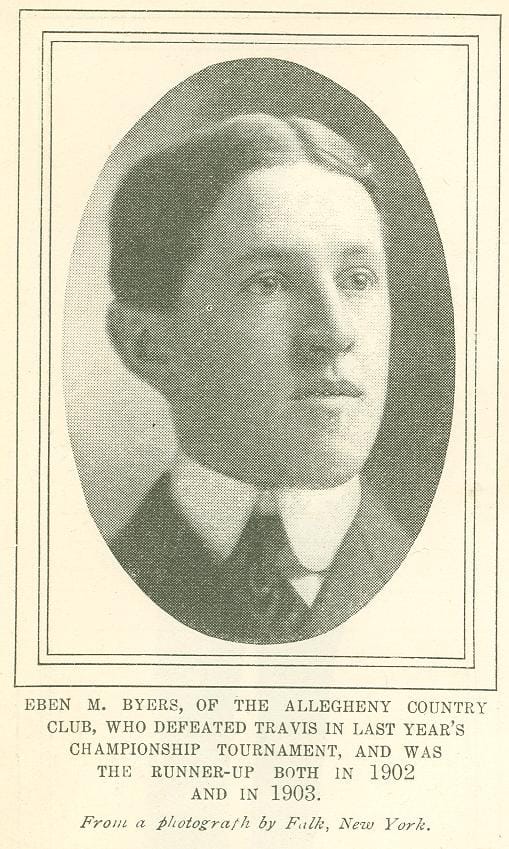
Eben Byers was a wealthy American industrialist who began taking Radithor in 1927 after an injury, on a physician's recommendation, and consumed an estimated fourteen hundred bottles over roughly three years.
Radium is chemically similar to calcium and is deposited in bone, where it irradiates the surrounding tissue continuously. Byers developed necrosis of the jaw and skull, lost most of his upper and lower jaw to surgery, and died in 1932. His body was so radioactive that he was buried in a lead-lined coffin, and measurements made when it was exhumed decades later confirmed the burden.
The Wall Street Journal's headline on his death, that the radium water worked fine until his jaw came off, is the line the episode is remembered by.

The related and larger harm fell on workers rather than consumers. From 1917 women were employed painting watch and instrument dials with radioluminescent paint, and were instructed to point the brushes with their lips. They ingested radium continuously.
Many developed severe bone destruction of the jaw, anaemia and bone tumours. Their employers disputed the cause, and the litigation that followed, particularly the 1928 New Jersey case, established important precedent on occupational disease liability and contributed to the development of industrial safety regulation and radiation protection standards.
The Byers case prompted decisive action. The Federal Trade Commission moved against Bailey's company in 1932, and radioactive patent medicines disappeared from the American market over the following years.
The regulatory gap it exposed is worth naming. The Food and Drugs Act then in force addressed adulteration and false labelling, and Radithor was neither adulterated nor mislabelled: it contained precisely what it claimed. Nothing required a manufacturer to show that a product was safe before selling it.
That gap was closed by the Federal Food, Drug, and Cosmetic Act of 1938, which for the first time required pre-market demonstration of safety. The Act was driven principally by a different disaster, the sulfanilamide elixir poisoning of 1937, and the radium products were part of the same argument.
Radiation is genuinely therapeutic in specific applications, and the contrast is instructive.
Radiotherapy treats cancer by delivering a targeted dose to a defined volume, and radium-223 is used today to treat bone metastases in prostate cancer, exploiting the same bone-seeking property that killed Byers. The difference is dose, targeting, indication and monitoring.
The claim that was refuted is that small continuous doses of an internally deposited alpha emitter are a general tonic. The idea that low doses of radiation might be beneficial, sometimes called hormesis, is still occasionally argued in radiation biology and is not accepted; regulatory bodies work on the assumption that risk has no threshold.
Radium quackery is the case that established the principle behind modern drug regulation: that a manufacturer must demonstrate safety before sale, rather than a regulator demonstrating harm after it.
It also shows how a genuine scientific advance creates a market for its own misapplication. The products sold because radioactivity was real, powerful, and newly famous, and the association of energy with health required no evidence at all to be persuasive.