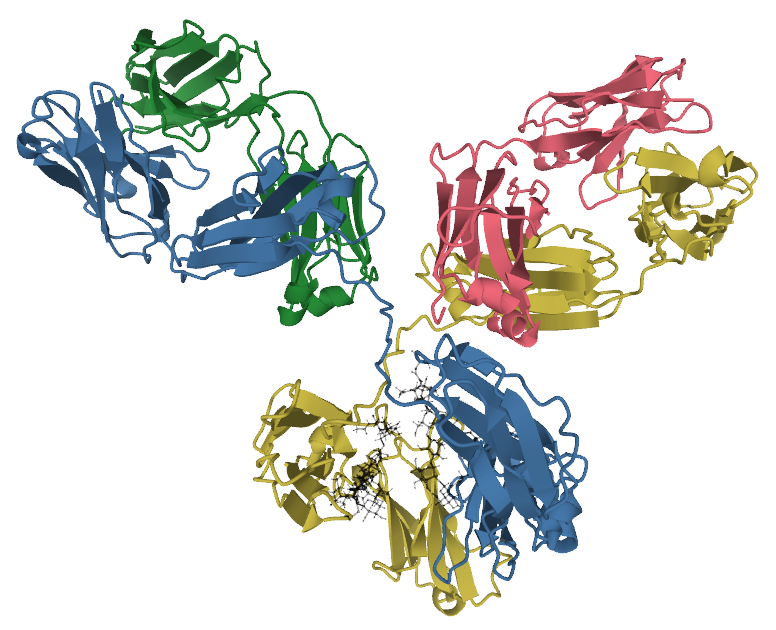
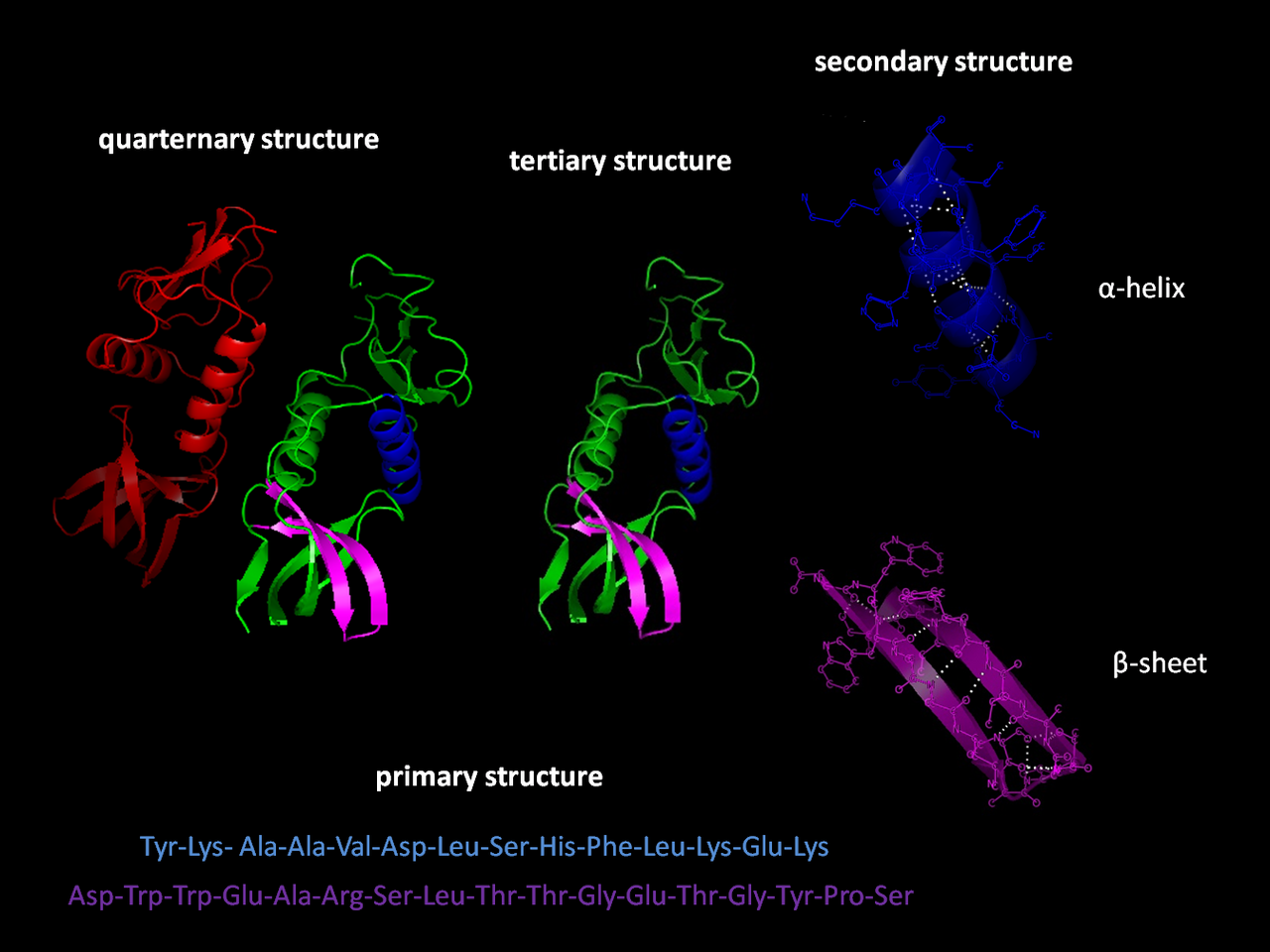
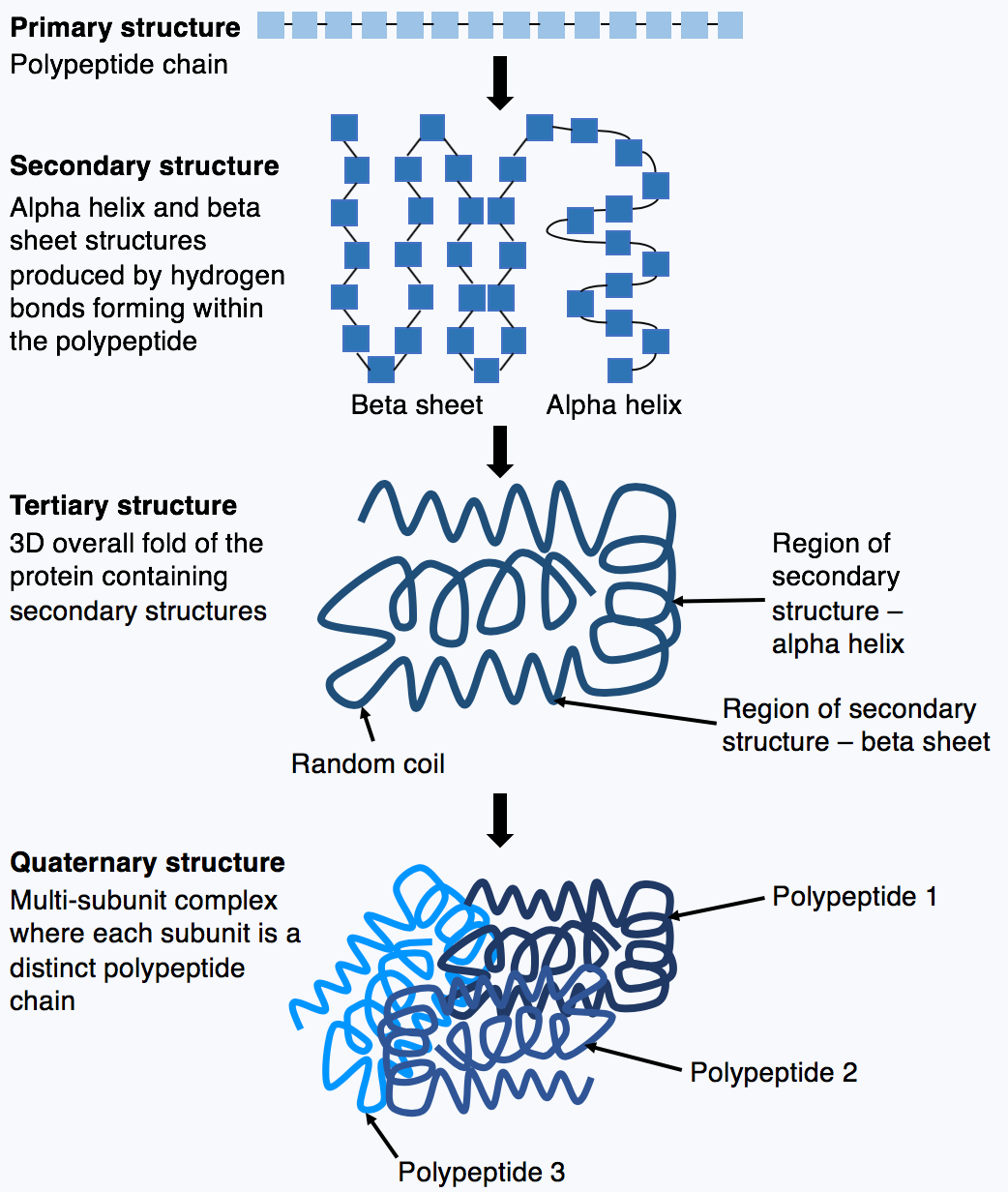
A protein is manufactured as a linear chain of amino acids and only works once it has folded into a specific three-dimensional shape. How the chain finds that shape, and how to predict it from the sequence alone, was among the hardest open problems in biology for fifty years.
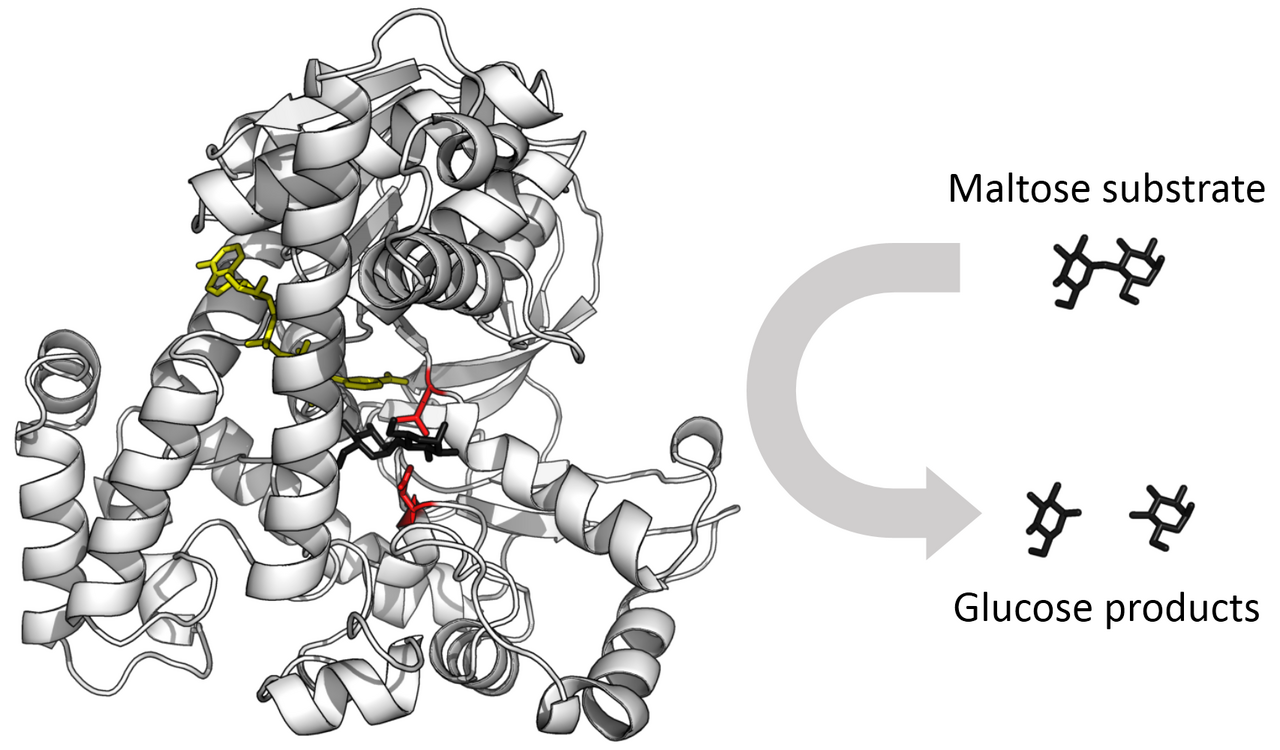
A protein's function is its geometry. An enzyme works because its active site holds a substrate in a particular orientation; an antibody works because its binding surface is complementary to a target. Change the fold and the function is gone, which is why heat, which unfolds proteins, kills.
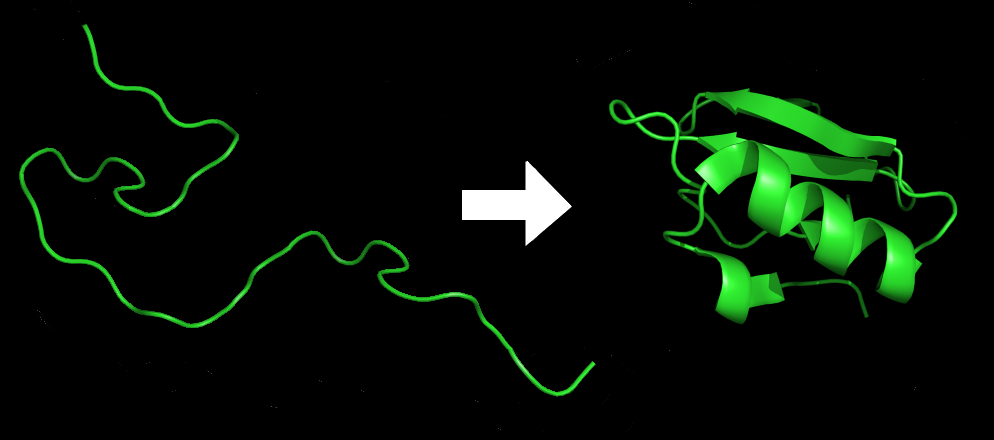
Christian Anfinsen showed in the 1950s and 1960s that a purified protein, denatured until it lost all structure and then returned to normal conditions, refolded on its own into its original working shape. Nothing else was present to guide it. The conclusion, that the amino acid sequence determines the native structure, is Anfinsen's dogma and won the 1972 Nobel Prize in Chemistry.
Cyrus Levinthal pointed out in 1969 that a chain of even modest length has an astronomical number of possible conformations. Sampling them one at a time at physically plausible rates would take longer than the age of the universe, and yet real proteins fold in milliseconds.
The resolution is that folding is not a search. The energy landscape is funnelled: partially correct structures are more stable than random ones, so the chain is pulled downhill toward the native state rather than wandering. Local elements form first and assemble, which collapses the problem to a manageable size.
Misfolded proteins aggregate, and aggregates are toxic. Alzheimer's disease, Parkinson's disease, Huntington's disease, type 2 diabetes and the prion diseases all involve proteins that have adopted a wrong conformation and clumped. Cells carry chaperone proteins whose job is to prevent this, and a quality control system that destroys chains that fail to fold, but the defences are imperfect and degrade with age.
Predicting structure from sequence was tested every two years from 1994 by a blind competition, CASP, in which groups predicted structures that had been solved experimentally but not published. For two decades results improved slowly and no method was reliable.
In 2020, AlphaFold 2 produced predictions of a quality comparable to laboratory measurement across most targets. The organisers said the problem was substantially solved for single chains. A database of over 200 million predicted structures followed, covering nearly every protein known from sequence, and Demis Hassabis and John Jumper shared the 2024 Nobel Prize in Chemistry for the work.
AlphaFold 3 followed in 2024, rebuilt around a diffusion model and extended beyond proteins alone to complexes including nucleic acids, small molecules and ions, which is the form most useful for drug discovery.
Predicting a structure is not the same as understanding the folding process, and AlphaFold does not simulate it: it predicts the endpoint without producing the pathway.
Disordered proteins remain the clearest limitation, and quantifying it has become its own field. Intrinsically disordered regions have no single native structure and are functional anyway, and the models tend to assign them confident structure they do not possess. Benchmarking studies published since 2025 report substantial rates of such errors, describing them as hallucinations by analogy with language models: the output is confident, well-formed, and wrong. Since disordered regions are heavily involved in signalling and in disease, the errors fall where the biology is often most interesting.
Multi-protein complexes are handled less reliably than single chains, particularly where a disordered region mediates the interaction. The effect of a single mutation on stability, which is what a clinician most often wants to know, remains poorly predicted.
The useful summary is that structure prediction went from an open problem to a solved one for ordered single chains, and that the remaining cases are not a rounding error. A prediction carries no measurement behind it, and the confidence score a model reports is its own estimate rather than an independent check.