Operant conditioning is the psychological theory that behaviour is shaped by its consequences: actions followed by rewards become more likely, and actions followed by unpleasant outcomes become less likely. Developed in the early twentieth century and refined by the American psychologist B. F. Skinner, it is one of the most thoroughly demonstrated principles of learning, observed across the animal kingdom and applied widely in education, therapy, and animal training.
The groundwork was laid by Edward Thorndike, who placed cats in puzzle boxes from which they had to escape to reach food. He found that actions which led to escape were gradually repeated more often, while useless ones faded away. From this he drew his law of effect: responses that produce a satisfying result are strengthened, and those that produce discomfort are weakened. This simple principle became the seed of a whole science of learning.
Skinner built this insight into a precise theory. He distinguished reinforcement, any consequence that makes a behaviour more likely, from punishment, any consequence that makes it less likely, and showed that each can work either by adding something or by taking something away. He also found that the timing and pattern of rewards, the schedule of reinforcement, has powerful and predictable effects on how strongly and how persistently a behaviour is learned.
To study these effects rigorously, Skinner devised a controlled apparatus, often called a Skinner box, in which an animal such as a rat or pigeon could press a lever or peck a key to receive food. By varying exactly when and how rewards were given, he mapped the laws of operant learning in fine detail, producing results so reliable that they could be reproduced again and again, the hallmark of solid science.
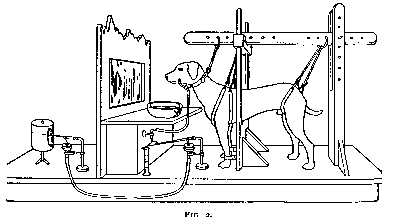
Operant conditioning is usually paired with classical conditioning, the form of learning studied by Pavlov. The key difference is what is being learned. In classical conditioning an animal learns an association between two events, as a bell comes to signal food. In operant conditioning it learns the consequences of its own actions, as pressing a lever comes to produce food. Together the two processes form the core of the behaviourist account of learning.
Operant conditioning underlies a vast range of everyday practice, from rewards and consequences in classrooms and parenting to the training of animals, methods of behaviour therapy, and the design of habit forming products and games. More than a laboratory finding, it is a well established mechanism by which experience continually shapes the behaviour of humans and animals alike.