The chemicals nerve cells use to signal to one another across synapses. They are the point at which the nervous system becomes chemical rather than electrical, and they are where most drugs acting on the brain do their work.
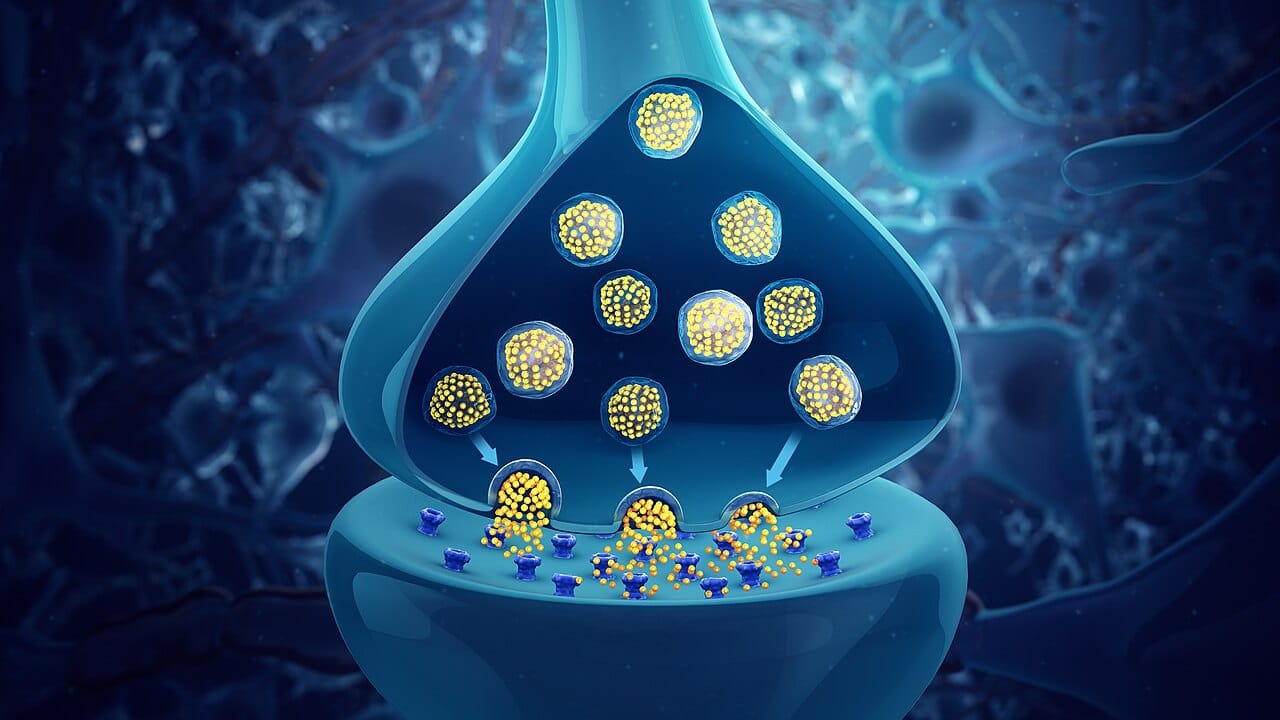
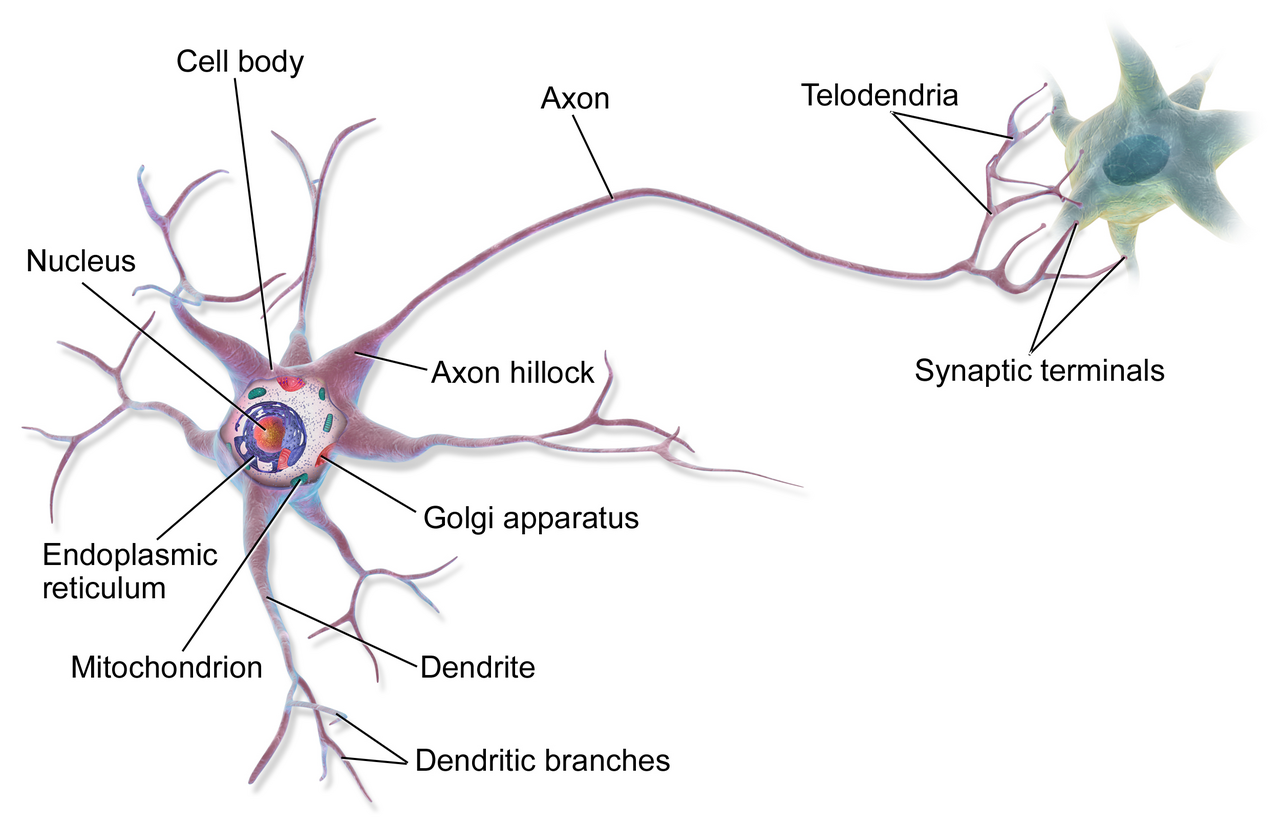
An electrical signal travelling down an axon reaches the terminal and cannot cross the gap to the next cell directly.
Instead, the arriving signal causes calcium to enter the terminal, which triggers vesicles containing neurotransmitter to fuse with the membrane and release their contents into the synaptic cleft.
The molecules diffuse across, bind receptors on the receiving cell, and change its electrical state. They are then removed, either broken down by enzymes or taken back into the releasing cell by transporters.
Every one of those steps, synthesis, packaging, release, receptor binding, breakdown and reuptake, is a point at which a drug can intervene, which is why the synapse is the target of most neuropharmacology.
A common misconception is that a neurotransmitter is inherently excitatory or inhibitory. The effect is determined by the receptor, not by the molecule.
Acetylcholine excites skeletal muscle and slows the heart, through different receptor types on those tissues.
Receptors fall into two broad classes. Ionotropic receptors are themselves channels and open within milliseconds, producing fast direct effects. Metabotropic receptors trigger internal signalling cascades, acting over hundreds of milliseconds to minutes and modulating how a cell responds to other inputs.
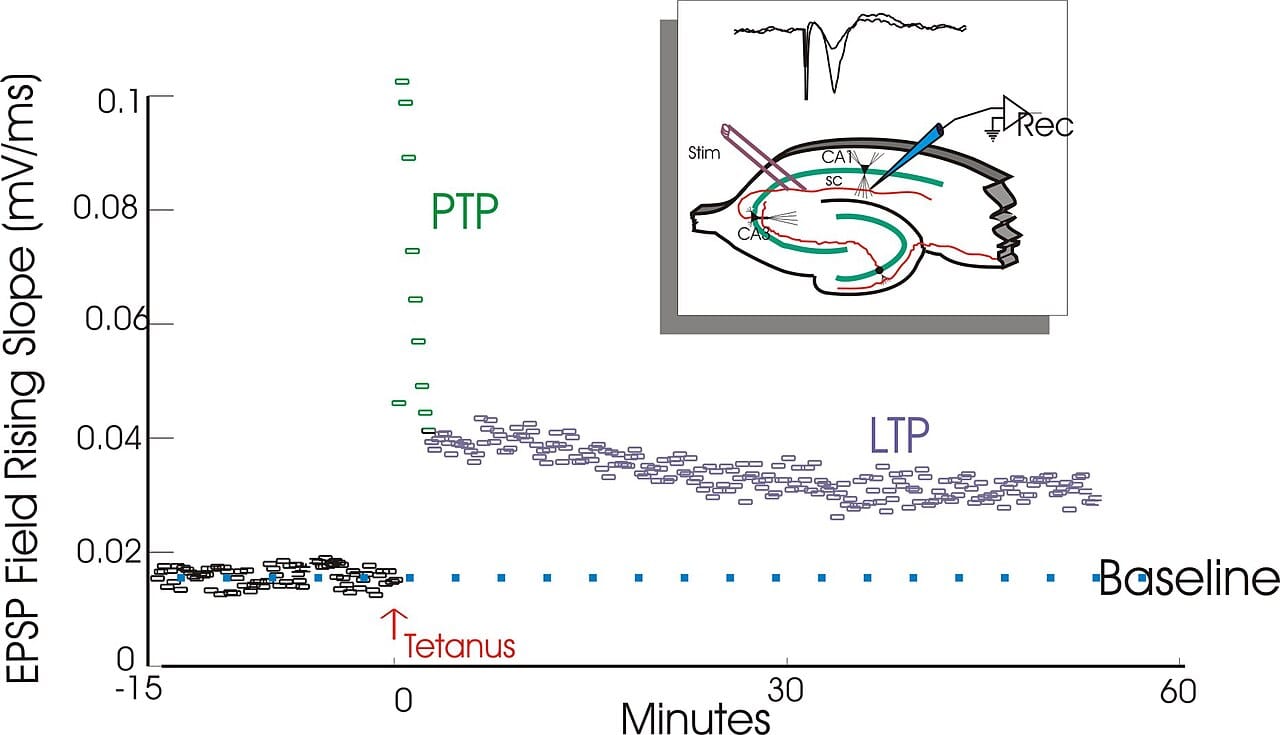
Glutamate is the principal excitatory transmitter in the vertebrate central nervous system, used at the great majority of excitatory synapses. It is central to learning, through the mechanism described in the long-term potentiation capsule, and in excess it is toxic, which contributes to damage after stroke.
GABA is the principal inhibitory transmitter. Alcohol, benzodiazepines and many anaesthetics act by enhancing its effect, which is why they are sedating, and loss of GABAergic inhibition produces seizures.
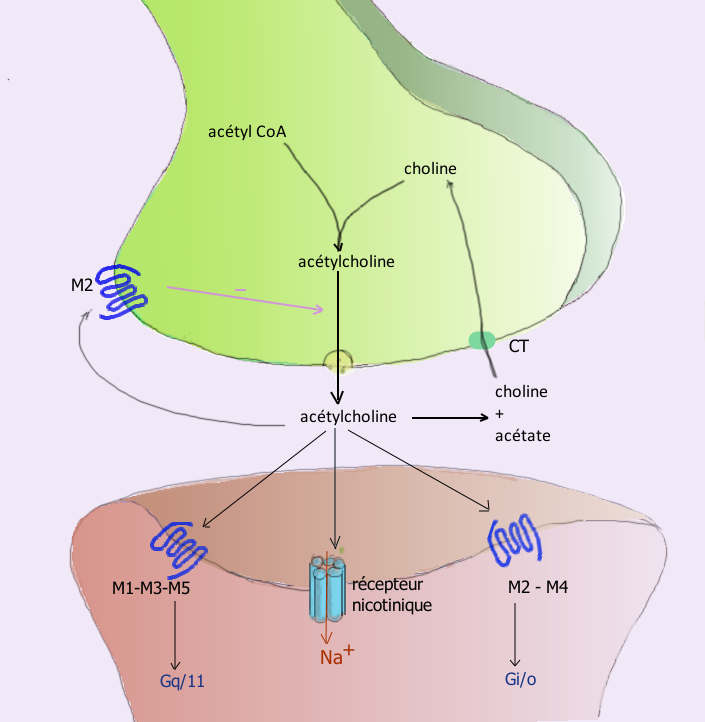
Acetylcholine acts at the neuromuscular junction, where it triggers muscle contraction, and in the brain in attention and memory. Nerve agents and some insecticides work by blocking the enzyme that breaks it down, leaving muscles unable to relax.
Dopamine is involved in movement, motivation and learning from outcomes. Its loss from a specific midbrain region causes Parkinson's disease, and the drugs of addiction converge on increasing it in a particular pathway.
Serotonin is involved in mood, appetite, sleep and gut function, with the large majority of the body's serotonin in the gut rather than the brain.
Noradrenaline mediates arousal and the response to stress.
Endorphins and related peptides act on the receptors that opioid drugs also bind, which is how those drugs relieve pain.
Selective serotonin reuptake inhibitors block the transporter that returns serotonin to the releasing cell, increasing its presence in the synapse. Their clinical effect takes weeks while the biochemical effect is immediate, which is one reason the simple chemical-imbalance account is inadequate, as the serotonin hypothesis capsule sets out.
Levodopa is a precursor of dopamine that crosses into the brain and is converted there, replacing what is lost in Parkinson's disease.
Antipsychotics block dopamine receptors, which is the basis of the dopamine hypothesis of schizophrenia treated separately.
Stimulants increase dopamine and noradrenaline availability by blocking reuptake or promoting release.
Opioids bind endorphin receptors, and their effects on pain, breathing and reward follow from where those receptors are.
Botulinum toxin blocks acetylcholine release, which paralyses muscle and is used both cosmetically and clinically.
Describing psychiatric conditions as chemical imbalances of particular neurotransmitters has been influential and is not supported as stated.
The difficulties are specific. Drugs alter transmitter levels within hours and clinical effects take weeks. Depleting serotonin does not reliably produce depression in healthy people. And the same transmitter is involved in many functions, so a system-wide change cannot account for a specific symptom pattern.
The current understanding places more weight on circuits, receptor changes and plasticity than on transmitter quantity alone, and the imbalance framing survives mainly in public communication rather than in research.
Neurotransmitters are the mechanism by which the nervous system is chemically modifiable, which is what makes it possible to influence brain function with a drug at all.
They are also where the limits of the pharmacological approach are visible. Every psychoactive drug acts on these systems, and the fact that treatments work while the account of why they work remains incomplete is an accurate description of the field rather than a criticism of it.