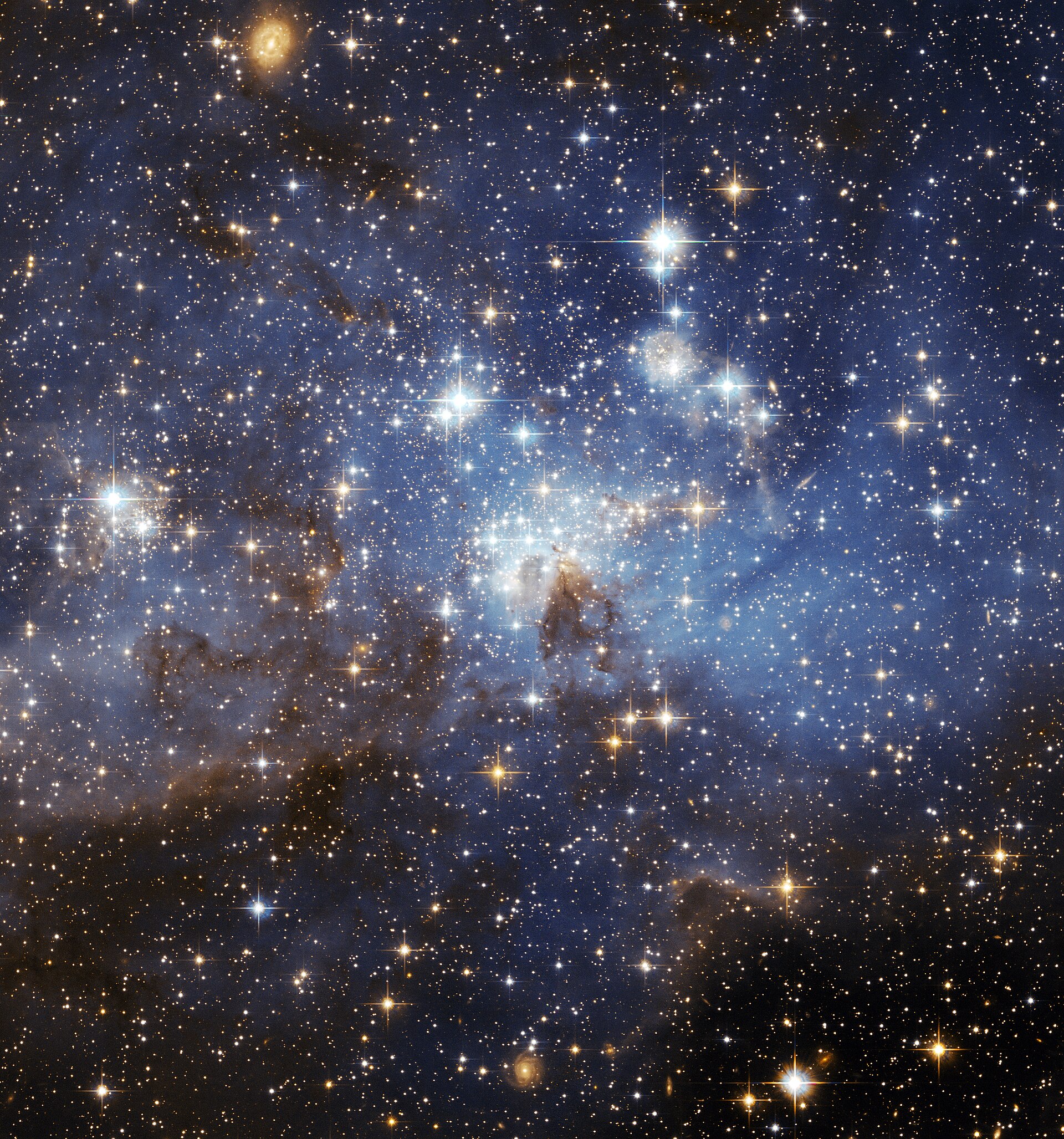
The nebular hypothesis is the accepted scientific theory of how the Sun and its planets formed. It holds that the entire Solar System condensed, around four and a half billion years ago, from a vast slowly spinning cloud of gas and dust. Most of the material gathered at the centre to become the Sun, while the leftover matter flattened into a disk in which the planets grew. Once a bold conjecture, the theory is now strongly supported by direct observation of other young stars.
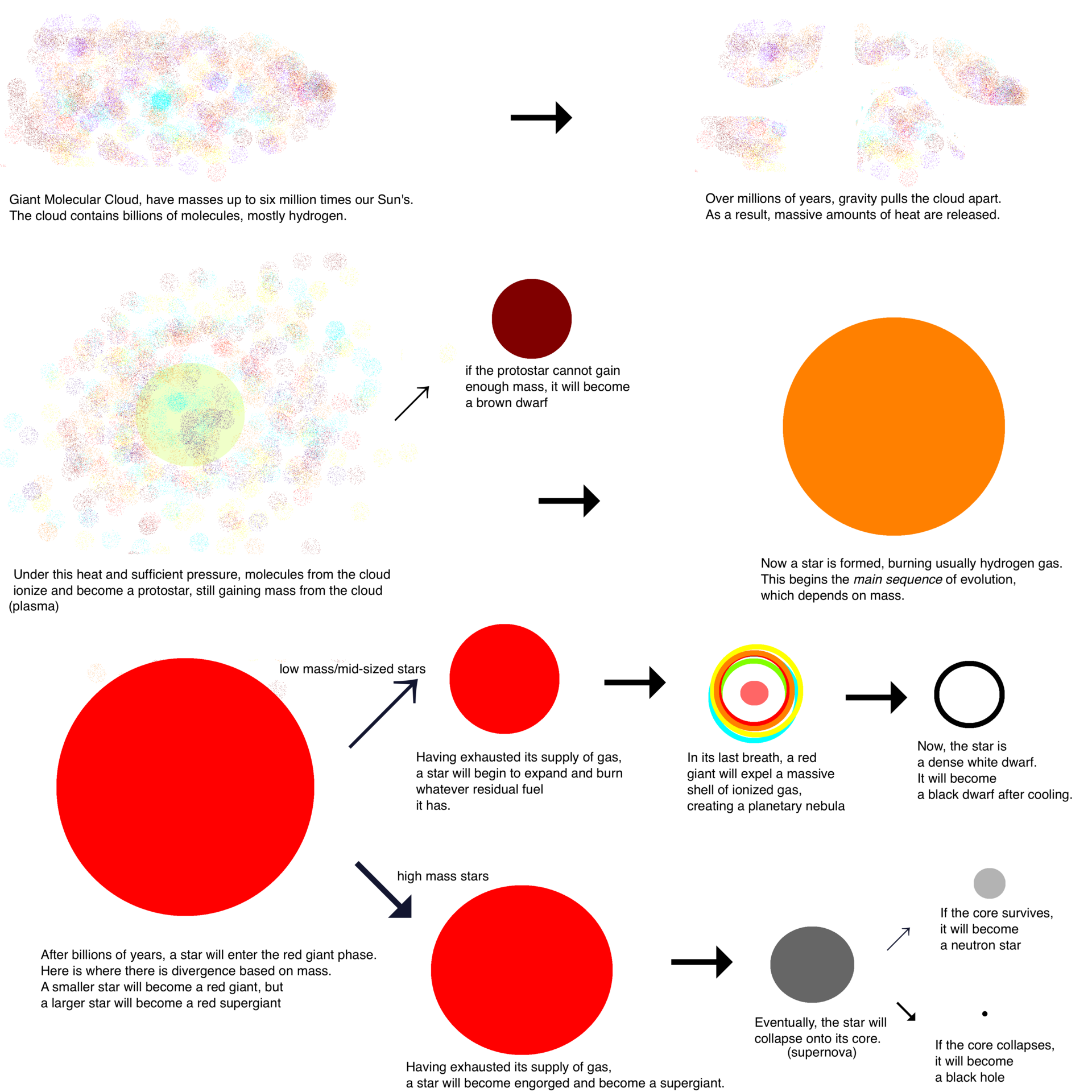
The theory begins with a giant cloud of gas and dust, drifting in space, that starts to collapse under its own gravity. As it shrinks it spins faster and flattens into a rotating disk, with a dense, hot centre. That centre eventually becomes hot enough to ignite as a star, while in the surrounding disk dust grains stick together into ever larger clumps, building up over time into asteroids, moons, and planets. This single process naturally produces a star encircled by orbiting worlds.
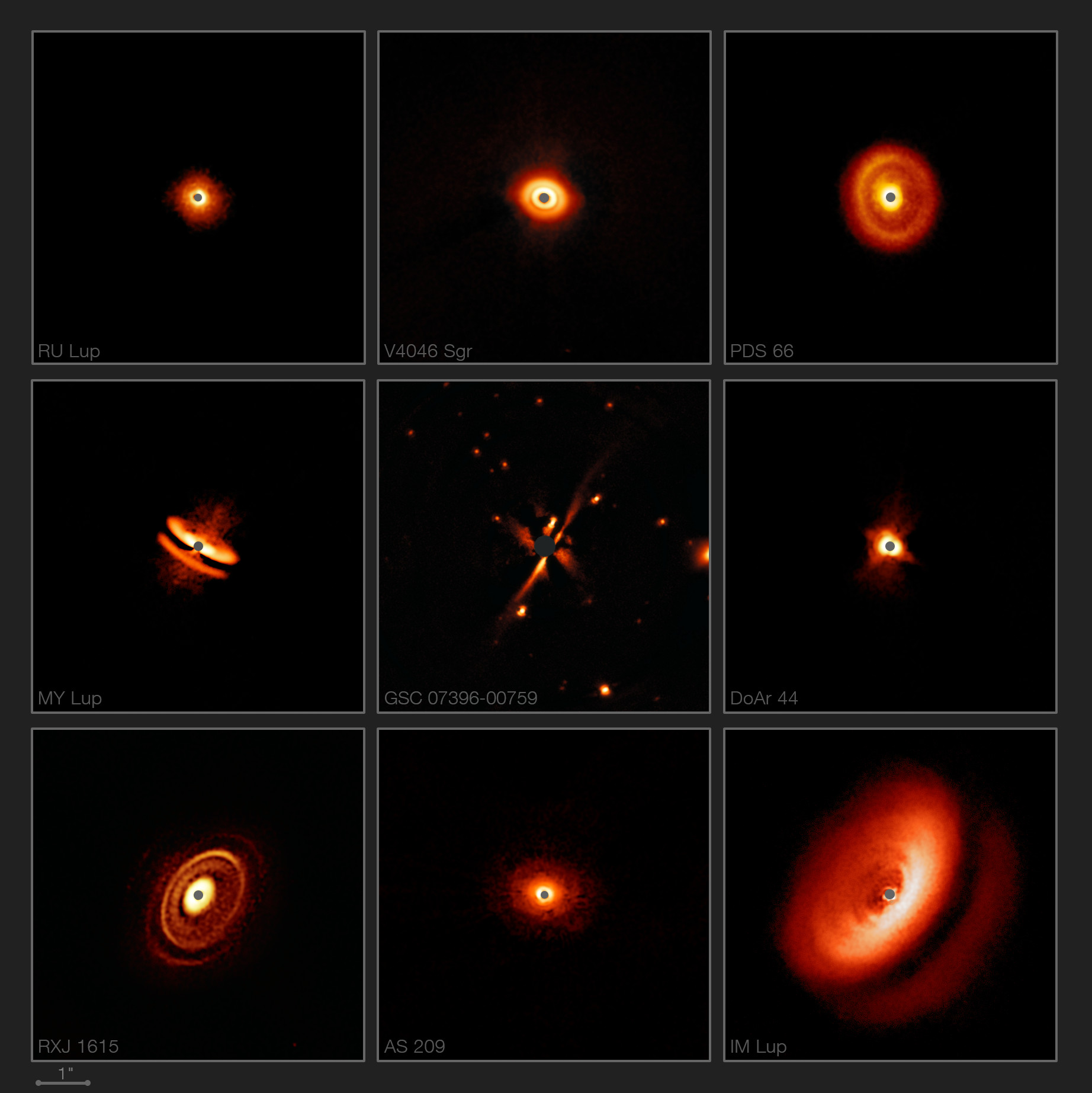
The strongest support for the theory is that astronomers now watch the process directly. Powerful telescopes have photographed exactly the kind of dusty, planet forming disks the theory predicts, swirling around newborn stars elsewhere in the galaxy, some with gaps already carved out by forming planets. What was once an inference from our own Solar System is now an observed fact about how stars and planets are born throughout the universe.
The theory accounts neatly for the main features of our planetary system. The planets all orbit the Sun in the same direction and in nearly the same flat plane, exactly as expected from a spinning disk. The rocky planets formed close to the heat of the young Sun, where only metals and rock could survive, while the giant gas planets formed farther out, where ice could also gather, explaining why the inner and outer planets are so different.
Although the broad picture is secure, the details are still being worked out. The discovery of thousands of planets around other stars, including giant planets orbiting extremely close to their suns, has shown that newborn planets can migrate inwards or outwards after they form, reshaping their systems. Exactly how the first dust grains stick together, and how common Solar Systems like ours really are, remain active areas of research.
The nebular hypothesis turned the origin of the Earth and its neighbours from a matter of myth into a question answered by observation and physics. It is the foundation of modern planetary science, and the reason we can say with confidence that the ground beneath our feet was once part of a glowing disk of dust circling a young star.