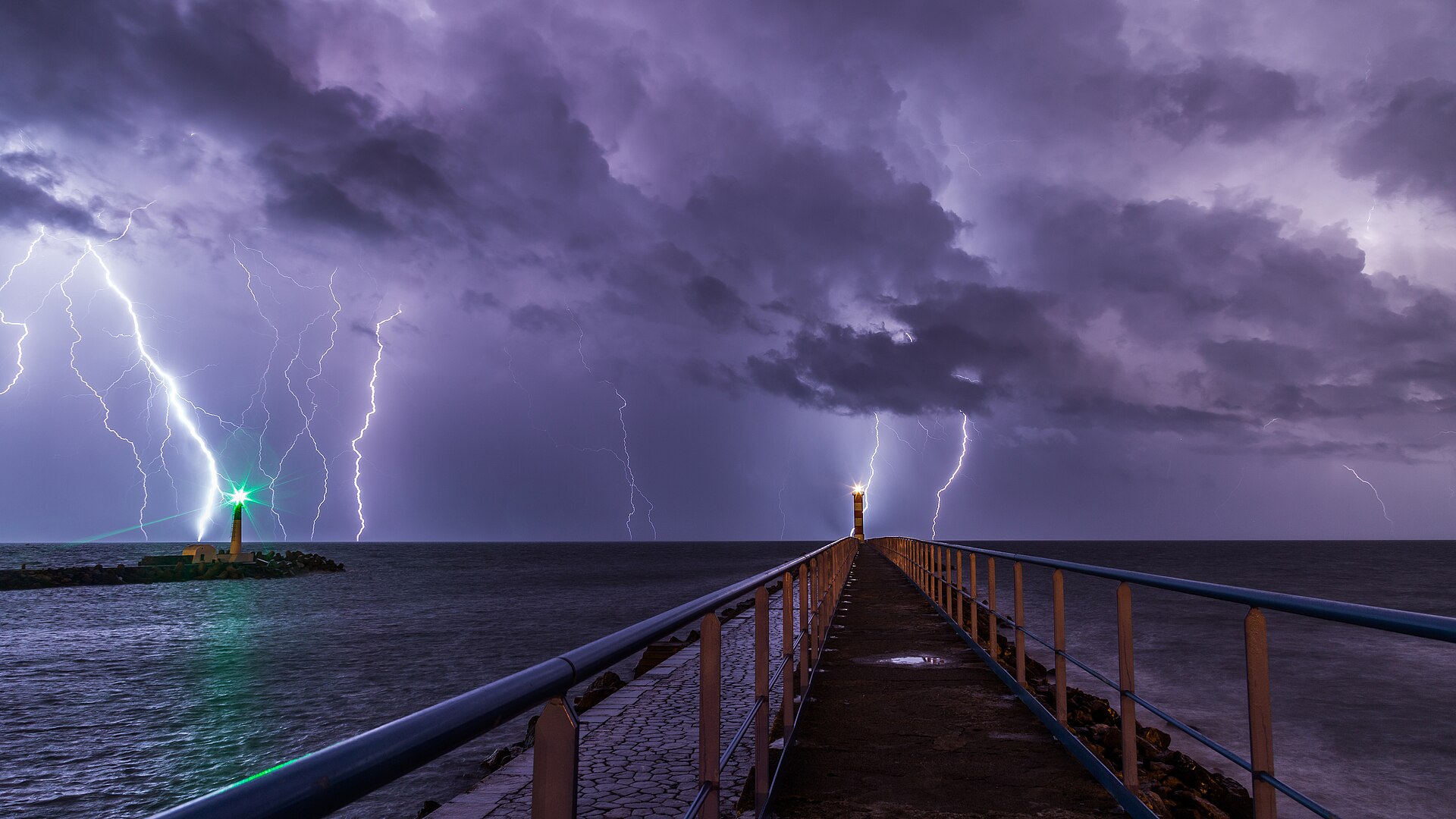
Lightning is a sudden, powerful discharge of electricity in the atmosphere, one of nature's most dramatic and dangerous phenomena. A single bolt can carry hundreds of millions of volts and heat the air around it to roughly 30,000 degrees Celsius, around five times hotter than the surface of the Sun, in a fraction of a second.
Lightning is born inside towering thunderstorm clouds. As air rises and falls violently within a storm, ice crystals and water droplets collide and exchange electric charge, so that the cloud gradually separates into regions of positive and negative charge, usually with negative charge gathering near the base. When the difference becomes great enough to overcome the air's resistance, the charge is released in a brilliant flash.
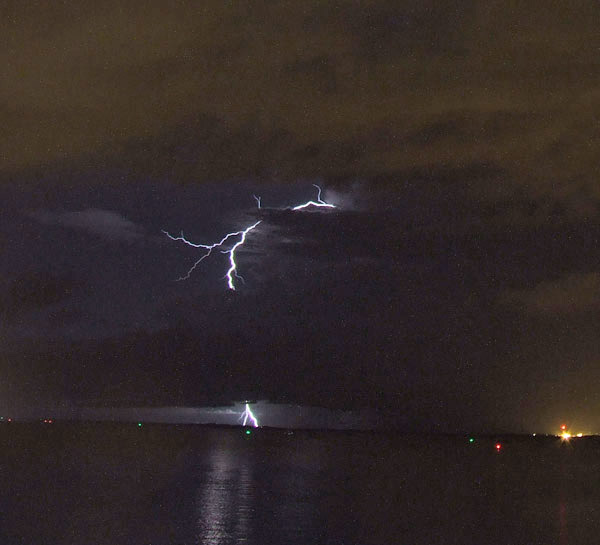
The core of a lightning bolt is staggeringly hot, briefly reaching roughly five times the temperature of the surface of the Sun. It is this sudden, extreme heating of a narrow channel of air that makes lightning glow so brilliantly, and that drives the explosive expansion of the air we hear as thunder.
A lightning strike is not a single flash but a rapid sequence. A faint, branching channel of charge, the "stepped leader," works its way down from the cloud, and when it nears the ground an upward spark leaps to meet it. The moment they connect, a massive return stroke surges back up the channel, producing the blinding flash we see, often several times in quick succession.
The flash and the thunder are two parts of the same event. The discharge heats the air so violently that it explodes outward as a shock wave, which we hear as thunder. Because light travels far faster than sound, we see the flash almost instantly but hear the thunder later, and counting the seconds between them gives a rough sense of how far away the strike was.
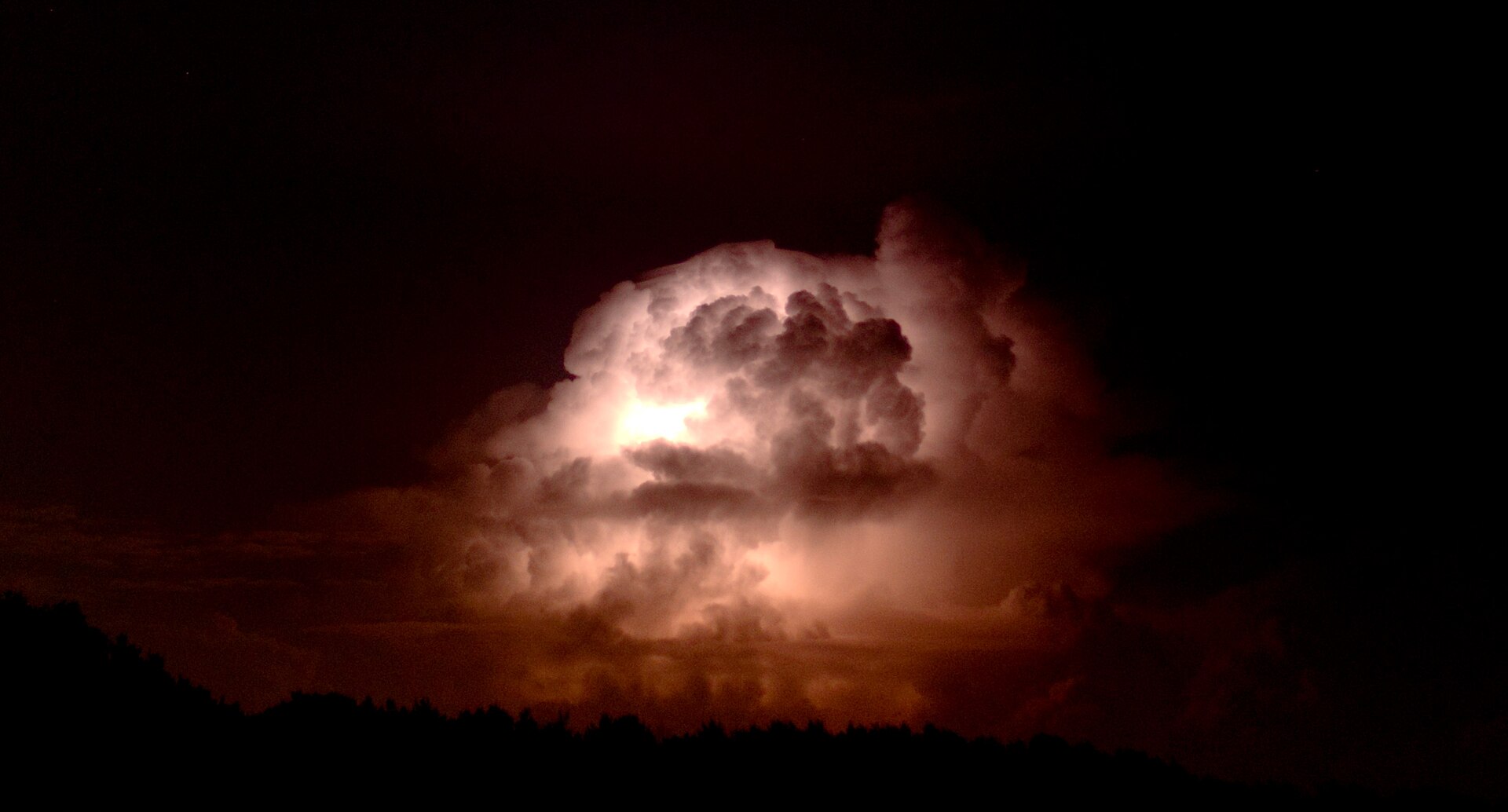
Not all lightning is the same. Most flashes leap from cloud to cloud or stay within a single cloud, and only some reach the ground. There are rarer and stranger forms too, from sprawling "bolts from the blue" that strike far from their parent storm to the faint, still-mysterious glow of ball lightning that observers have reported for centuries.
Lightning strikes the Earth millions of times every day and kills or injures thousands of people a year. It tends to strike tall, isolated objects, which is why sheltering under a lone tree in a storm is so dangerous, and why tall buildings are fitted with lightning rods to carry the charge safely to the ground. The safest place in a thunderstorm is indoors or inside a metal-bodied vehicle, away from water and open ground.
Far from being merely destructive, lightning plays a useful role in nature. Its intense energy splits nitrogen molecules in the air, helping to form compounds that fall to the ground and fertilise the soil, and it may have helped spark the chemistry that led to life on the early Earth. For all our understanding, the precise details of how lightning initiates inside a cloud are still an active area of scientific research.