The framework that treats an organism's schedule of growth, reproduction and death as an evolved allocation of limited resources, subject to trade-offs. It asks why organisms mature at the age they do, have the number of offspring they have, and die when they die.
An organism has a finite budget of energy, time and materials. What is spent on one function is unavailable for another, so the schedule of a life is an allocation problem with a solution that selection can act on.
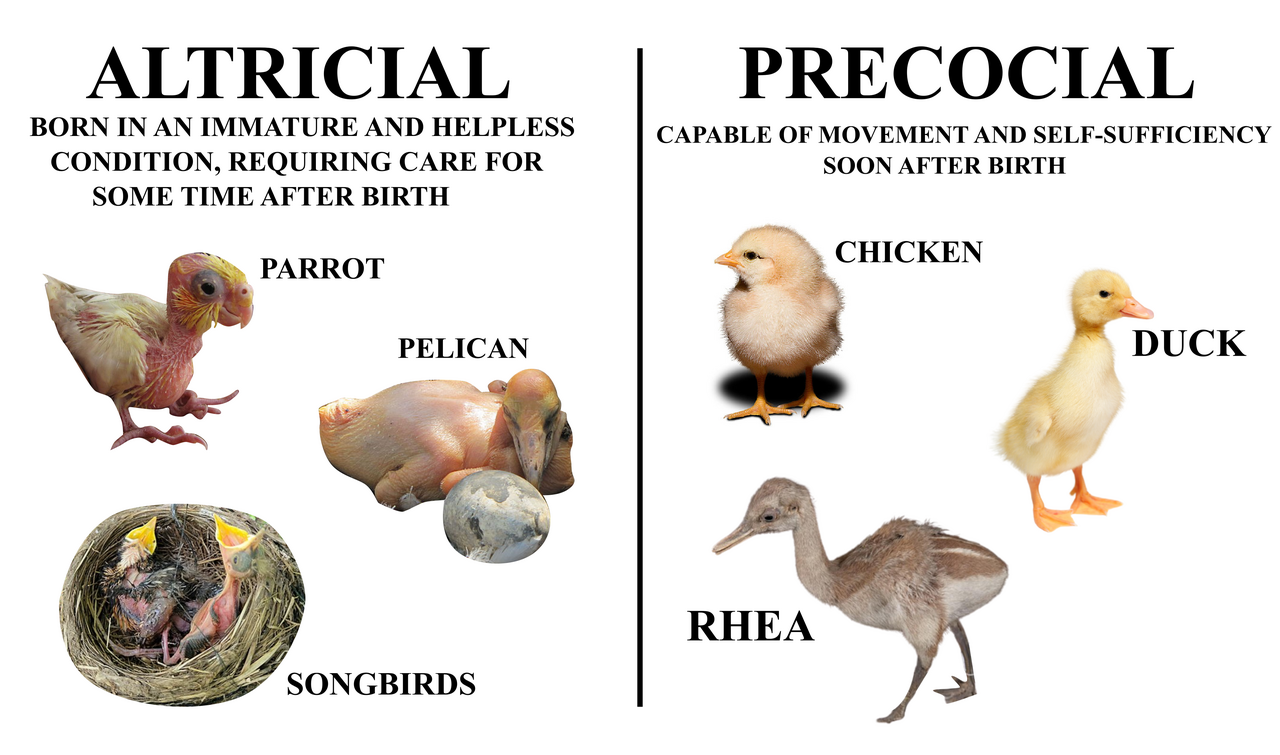
The main trade-offs are few and recur across taxa. Current reproduction against future survival, since reproducing is costly and can shorten life. Number of offspring against investment in each. Growth against reproduction, since energy put into eggs is not put into size. Maintenance and repair against everything else.
The traits the framework tries to explain are correspondingly few: size at birth, growth rate, age and size at maturity, number and size of offspring, reproductive lifespan and pattern, and lifespan itself.
Where adult mortality is high and unpredictable, selection favours maturing early, reproducing quickly, and investing less in maintenance. Where adult survival is good and juvenile competition is intense, it favours maturing later, reproducing repeatedly, and investing more in each offspring. This is the most robust prediction the framework makes, and it is supported by comparisons across species and by experiments in which mortality regimes are manipulated directly.
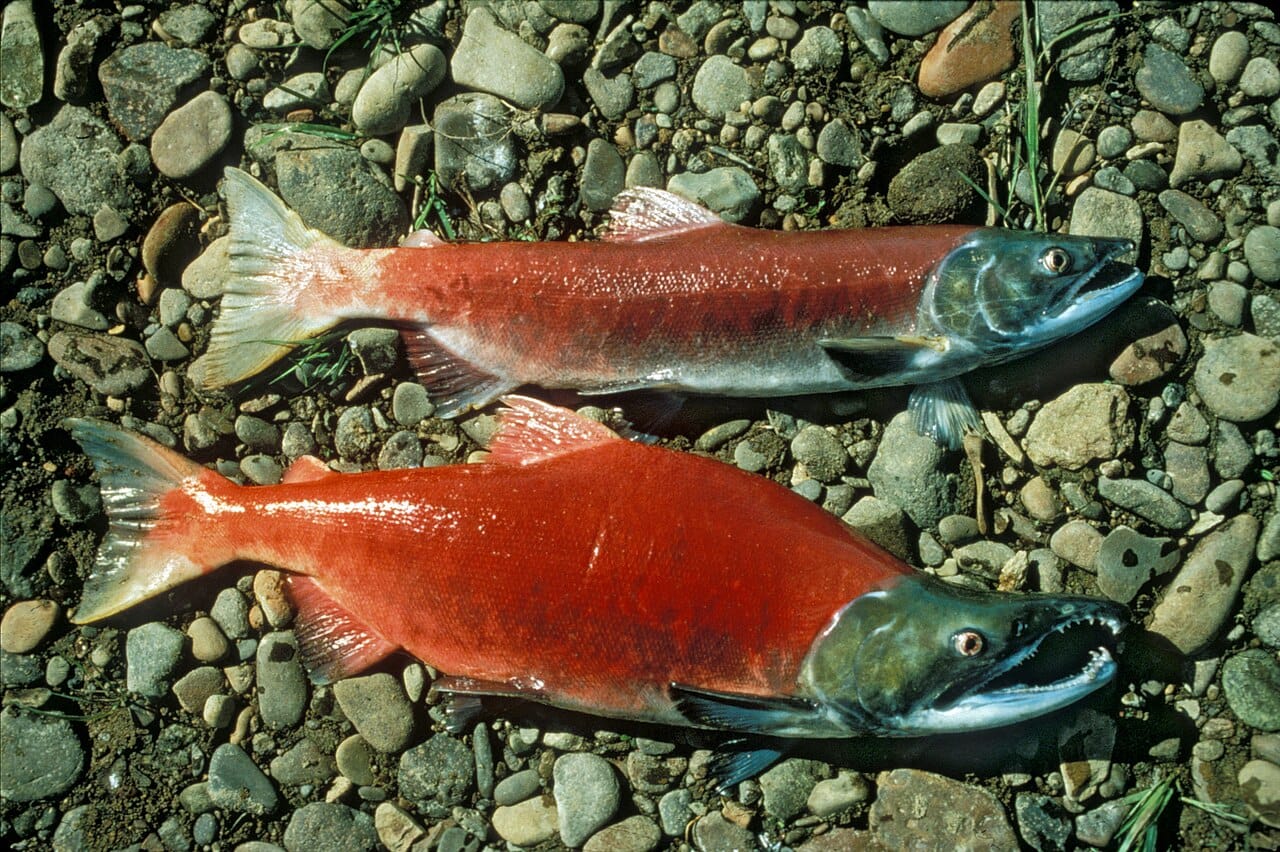
Semelparity, breeding once and dying, is predicted where a single reproductive episode can be made far more productive than a series of smaller ones, or where surviving to breed again is unlikely. Pacific salmon and many annual plants fit. Iteroparity, breeding repeatedly, is predicted otherwise.

Clutch or litter size is predicted to settle where the number of surviving offspring is maximised, not where the number produced is. David Lack argued in 1947 that birds should lay the clutch they can successfully rear, and experiments adding eggs to nests generally confirm that larger clutches produce lighter, less viable chicks and cost the parent.
Senescence is predicted rather than assumed. Because the force of selection weakens with age once reproduction has occurred, alleles with late-acting harmful effects are poorly opposed. This links life history theory directly to the evolutionary theories of ageing, which are treated in their own capsules.
An older version of the framework sorted species along a single axis from r selected, meaning fast growing, early maturing and producing many offspring, to K selected, meaning slow, late and few.
The scheme was influential and is still taught, but it was largely abandoned in the research literature from the late 1970s. It compressed several independent axes into one, it made predictions in terms of density that often failed, and age-structured demographic models proved both more general and more accurate. The vocabulary survives as a rough shorthand and should not be taken as the current theory.
The framework's difficulty is that trade-offs are easier to assume than to measure. Individuals in good condition often do better at everything at once, so a comparison across individuals can show a positive correlation between reproduction and survival where a true trade-off exists. Detecting the trade-off requires experimental manipulation or careful control for condition.
Whether trade-offs are set by energy allocation or by regulatory signalling is also unsettled. In several model organisms, manipulating hormonal or nutrient-sensing pathways changes lifespan and reproduction together in ways that a simple energy budget does not predict.
Applying the framework to humans is contested in a further way. Long juvenile dependence, menopause and long post-reproductive life are unusual and have prompted specific explanations, including the grandmother hypothesis, which is supported by demographic data in some populations and not others. Extensions of the framework to human behavioural differences, particularly those framing childhood adversity as calibrating a fast or slow strategy, have drawn criticism for weak measurement and for making adaptive claims that are hard to falsify.
Life history theory supplies the reason a mouse and an elephant differ in more than size, and it is the standard tool for predicting which species tolerate exploitation. A long-lived, late-maturing, low-fecundity species cannot replace losses quickly, which is why sharks, whales and large tortoises collapse under fishing or hunting pressure that a fast-reproducing species absorbs. Fisheries management and conservation triage both rest on it.