The kinetic theory of gases explains the behaviour of gases as the result of countless tiny particles, atoms and molecules, in constant, rapid, random motion. It connects the invisible world of molecules to the everyday properties of gases, such as pressure and temperature.
According to the theory, a gas is mostly empty space, sparsely filled with molecules flying about at high speed and colliding with one another and with the walls of their container. There is no order to their motion; they move in every direction at a vast range of speeds, ceaselessly and chaotically.
The pressure a gas exerts comes from the ceaseless drumming of its molecules against the walls of its container. Each tiny impact is negligible, but with countless molecules striking every instant, the combined effect is a steady, measurable push. Squeeze the gas into a smaller space and the impacts grow more frequent, raising the pressure.
In the kinetic picture, temperature is a measure of how fast the molecules are moving on average. The hotter the gas, the faster they fly and the harder they hit. This reveals the deep meaning of heat: it is not a substance but the energy of molecular motion, the invisible jiggling of matter.
The kinetic theory neatly explains the familiar gas laws known from experiment. It shows why heating a gas at constant volume raises its pressure, why squeezing it into less space raises its pressure too, and why a warmed gas expands. Behaviour measured in the laboratory falls out naturally from the motion of molecules.
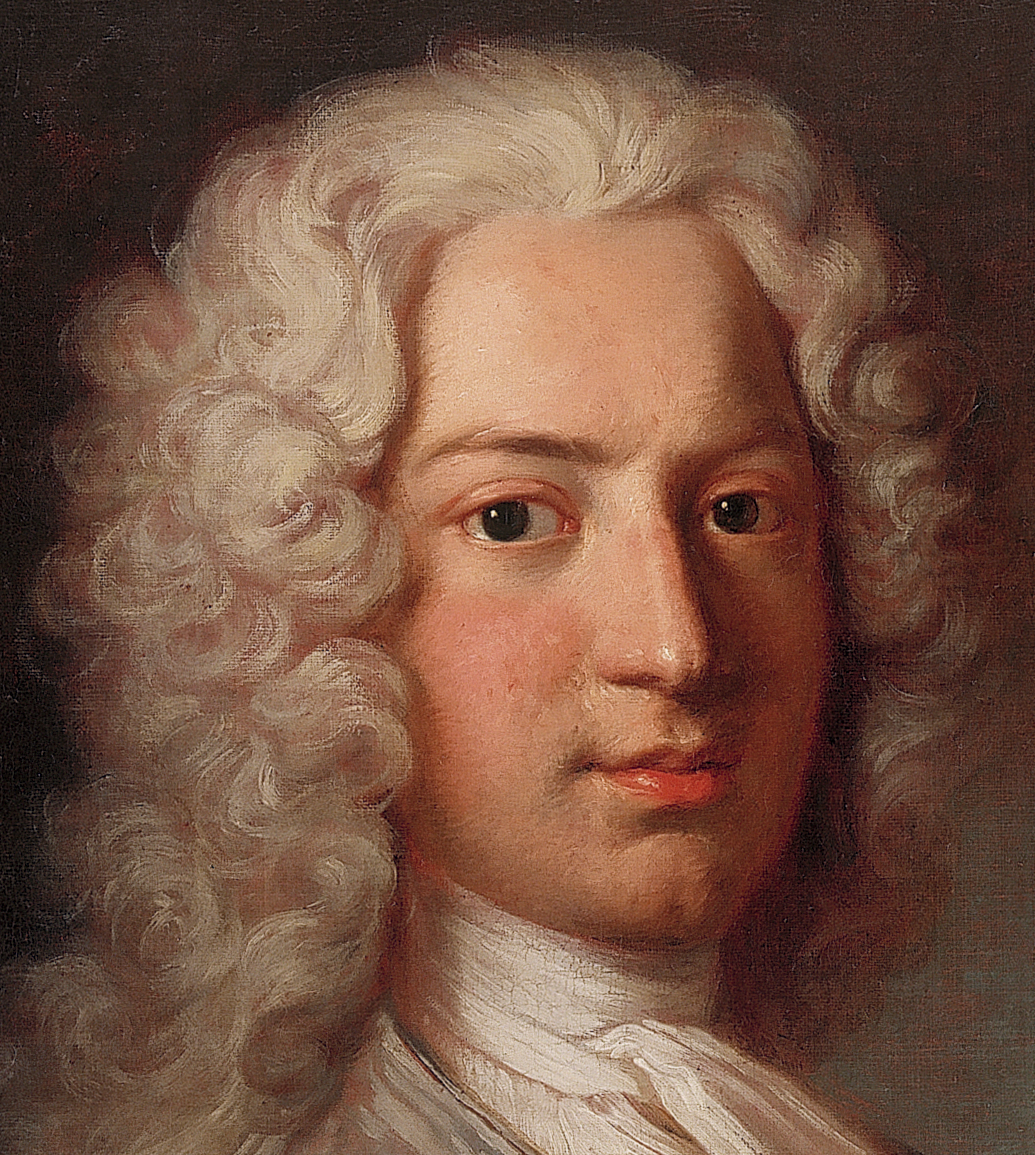
The idea that heat is motion was suggested by several thinkers, and in 1738 Daniel Bernoulli worked out how moving particles striking a wall could produce pressure, anticipating the theory by more than a century. His insight was ahead of its time and was largely overlooked for generations.
The theory was developed fully in the nineteenth century by James Clerk Maxwell and Ludwig Boltzmann. Rather than track every molecule, they described the spread of molecular speeds statistically, with some molecules slow and some fast around an average. This statistical approach founded the field of statistical mechanics.
By explaining the measurable properties of gases through the motion of unseen particles, the kinetic theory provided powerful evidence that matter really is made of atoms and molecules, a point still doubted by some scientists into the twentieth century. The success of the theory helped settle the question.
The kinetic theory accounts for diffusion, the slow spreading of a smell through a room, for how gases conduct heat, and for the relationship between a gas's temperature, pressure, and volume. By linking molecules to measurable behaviour, it became one of the great triumphs of physics, bridging the seen and the unseen.