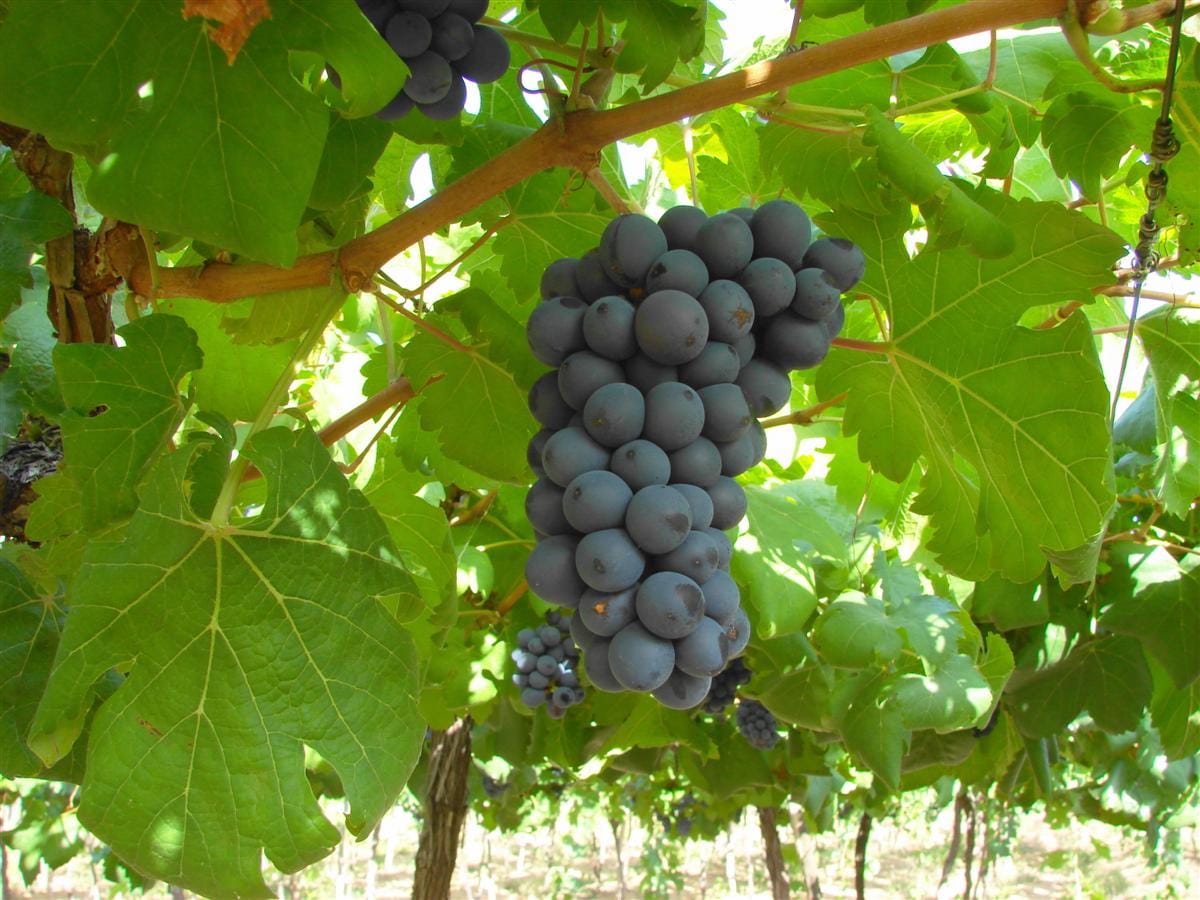
Supplying water to crops artificially. It made agriculture possible in places rainfall could not support, it is the largest human use of fresh water, and its long-term failure mode has ended civilisations.
Roughly a fifth of cultivated land is irrigated and it produces around forty per cent of the world's food, which makes irrigated agriculture disproportionately productive.
Agriculture accounts for around seventy per cent of global freshwater withdrawals, as the water cycle capsule notes, so irrigation is the dominant use of fresh water worldwide.
Irrigation also removes the dependence on the timing of rainfall, which is frequently more limiting than the total. A region receiving adequate annual rain in the wrong months cannot grow a crop without storage and delivery.
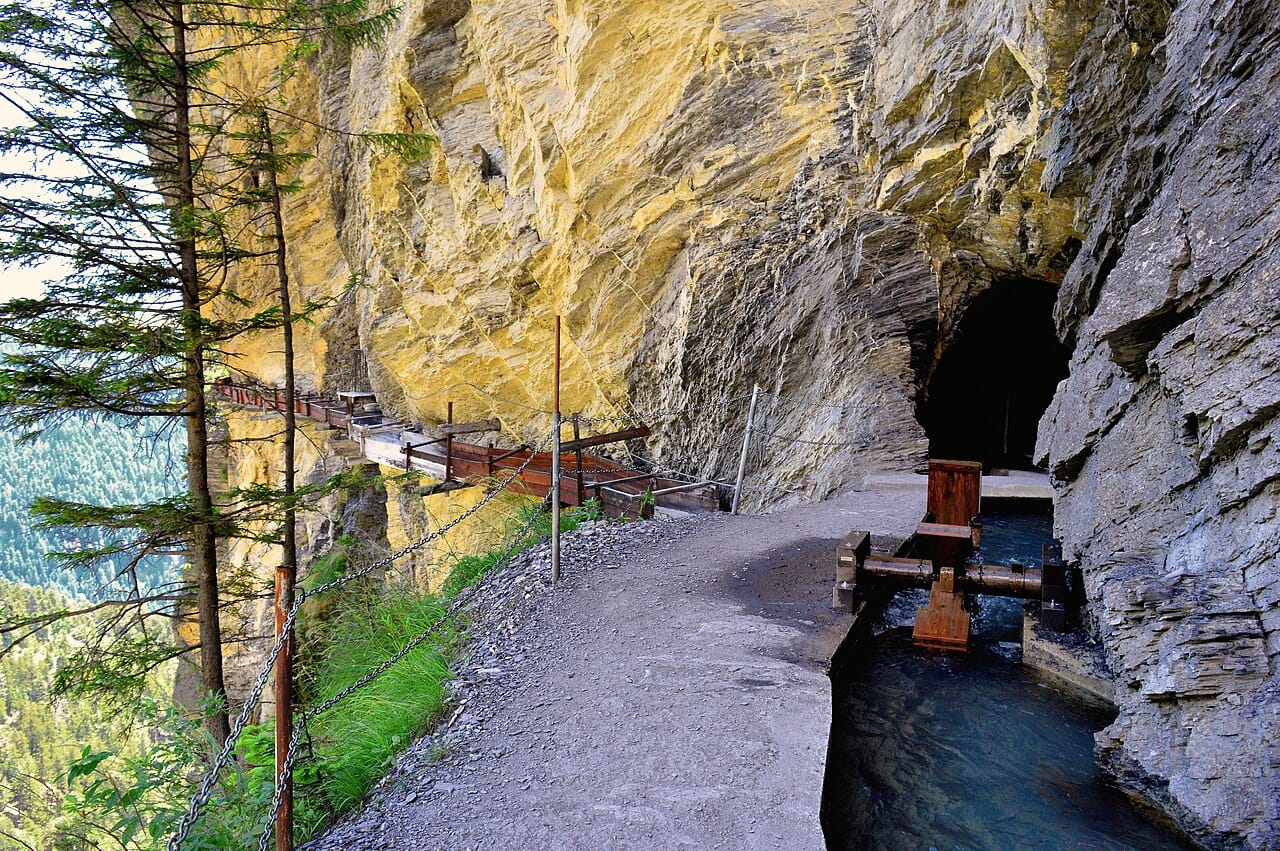
Surface irrigation floods or channels water across a field. It is the oldest and still the most widely used method, requires no pumping where gravity serves, and is inefficient, with a large share lost to evaporation and deep percolation.
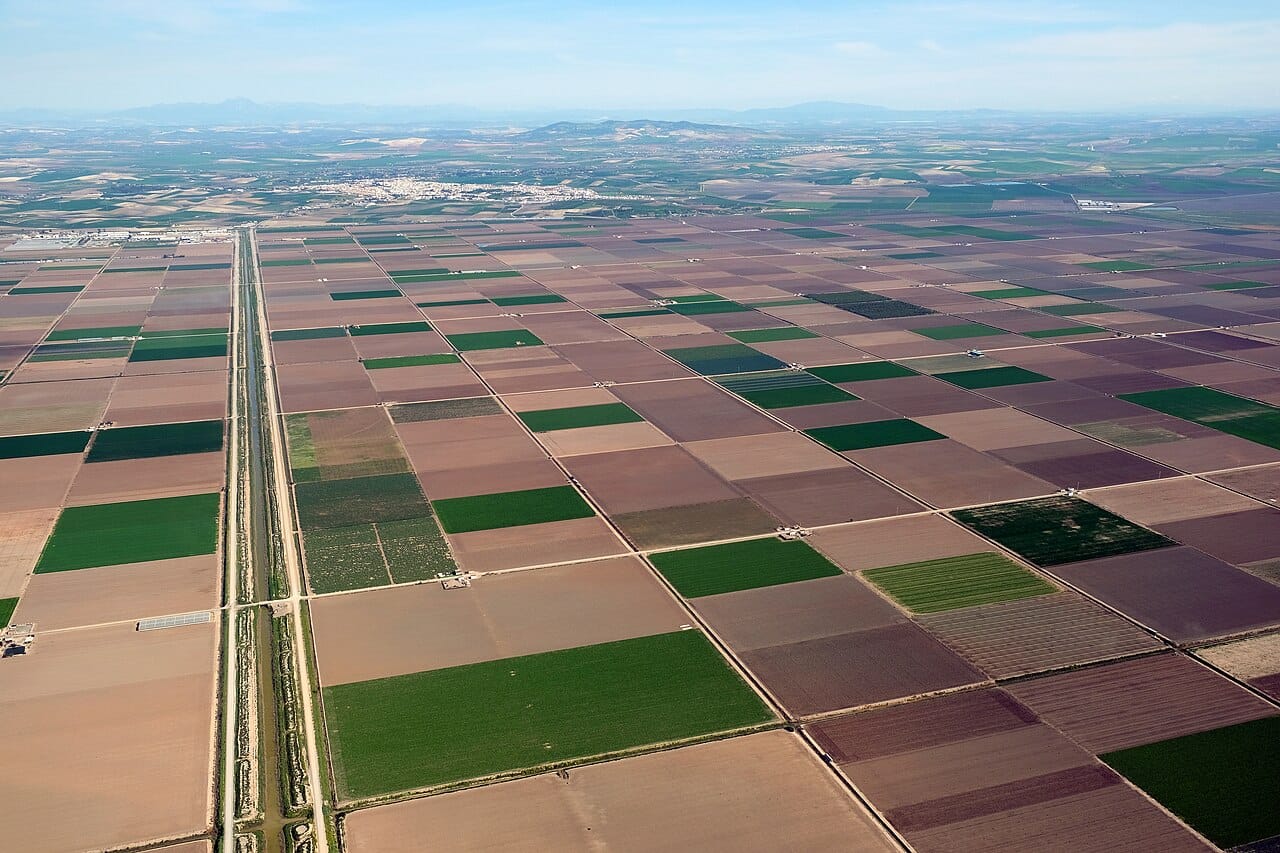
Sprinkler systems distribute water through the air under pressure. Centre pivot systems, which rotate a long boom around a central point, produce the circular fields visible from the air across large parts of the world.
Drip irrigation delivers water slowly to the root zone through emitters. It is by far the most efficient, since almost nothing is lost to evaporation or runoff, and it is expensive to install and requires filtration and maintenance.
Subsurface systems place the delivery below ground, reducing loss further.
The choice is generally determined by capital available rather than by efficiency, which is why the least efficient method remains the most common.
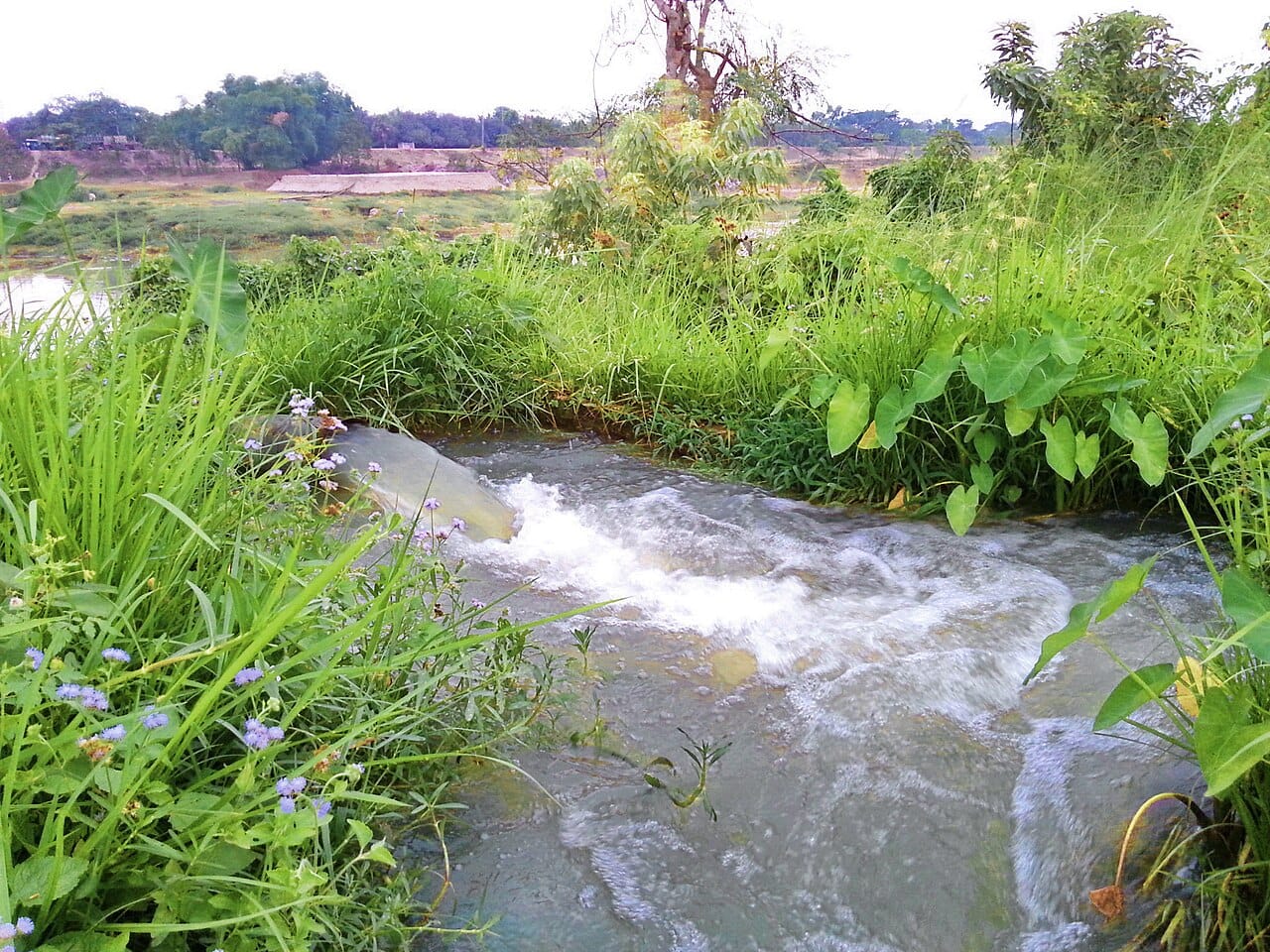
Surface water from rivers and reservoirs is the traditional source, and its use is constrained by what is available and by competing claims.
Groundwater use expanded enormously in the twentieth century with cheap pumps and rural electrification. It is reliable and available on demand, which is why farmers prefer it, and it is being extracted faster than it recharges across several of the world's most important agricultural regions.
Aquifer depletion is documented in northern India, the North China Plain, the American High Plains and elsewhere, and satellite gravity measurements have made the losses directly measurable. Some of the water being pumped entered the ground thousands of years ago and is not renewable on any useful timescale.
Wastewater reuse and desalination supply irrigation in water-scarce regions, the latter being energy-intensive and generally viable only for high-value crops.
The characteristic long-term failure of irrigation is salinisation, and it is worth stating precisely because it has repeatedly destroyed the agriculture it created.
All water contains dissolved salts. Crops take up water and leave most of the salt behind. In a rain-fed system, rainfall leaches salt downward and away.
Under irrigation in a dry climate, evaporation exceeds rainfall, so salt accumulates in the root zone with every application. Without adequate drainage to carry it away, concentration rises until yields fall and then until nothing will grow.
Waterlogging compounds it. Where drainage is poor, the water table rises toward the surface and salt is carried up by capillary action.
The historical record is clear. Records from southern Mesopotamia document a shift from wheat to more salt-tolerant barley over centuries, and then declining yields of that, in a region whose agriculture had supported early cities.
Salinisation currently affects a substantial share of irrigated land worldwide, and the remedy, adequate drainage and periodic leaching with excess water, requires water and infrastructure that the affected regions frequently lack.
Irrigation is what allows agriculture in the dry regions where a large share of humanity lives, and its expansion was a substantial part of the productivity gains of the twentieth century.
Its constraints are also becoming binding rather than theoretical. Groundwater depletion and salinisation both operate slowly enough to be ignored for decades and are extremely difficult to reverse once advanced, which is a combination that has caught out irrigating societies repeatedly.