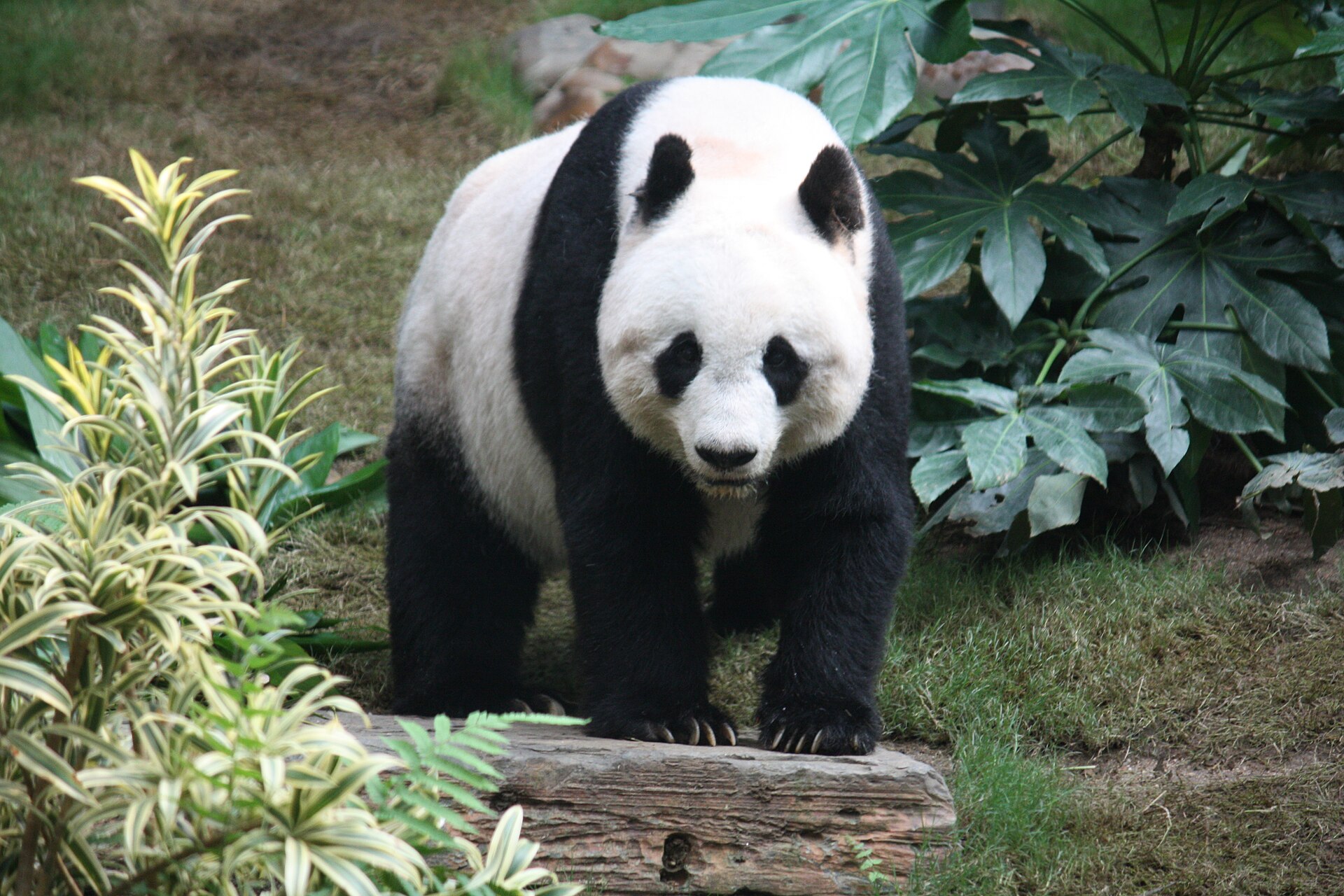
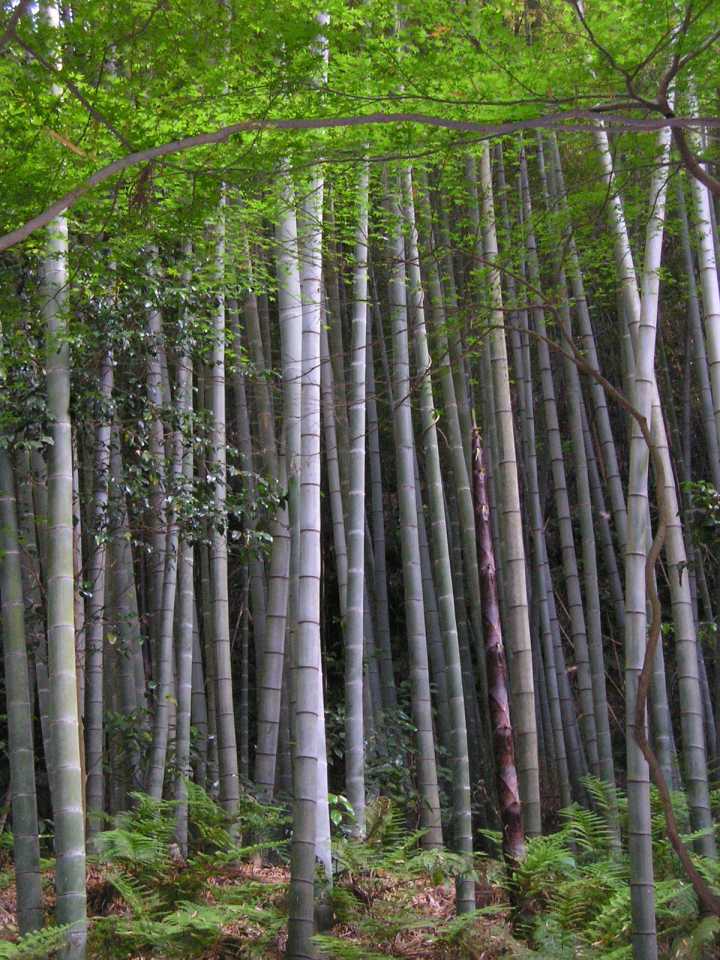
The giant panda, Ailuropoda melanoleuca, is a bear that eats bamboo. That sentence contains the whole problem: it has the digestive system of a carnivore and a diet that is almost entirely one plant, which forces it to eat for most of its waking life. It is also the animal on which modern conservation branding was built, and its recovery is genuine and contested at the edges.
Whether the panda was a bear, a raccoon relative, or something of its own was argued for over a century, largely because it shares a false thumb and a bamboo diet with the unrelated red panda. Molecular work from the 1980s settled it: the giant panda is a bear, in the family Ursidae, and the earliest-branching one, having diverged from the other bears roughly nineteen million years ago.
The red panda is not closely related at all. It sits in its own family, Ailuridae, nearer to weasels and raccoons, and the shared features are convergence on the same diet. It is a good demonstration that similar problems produce similar solutions in lineages that are not related.
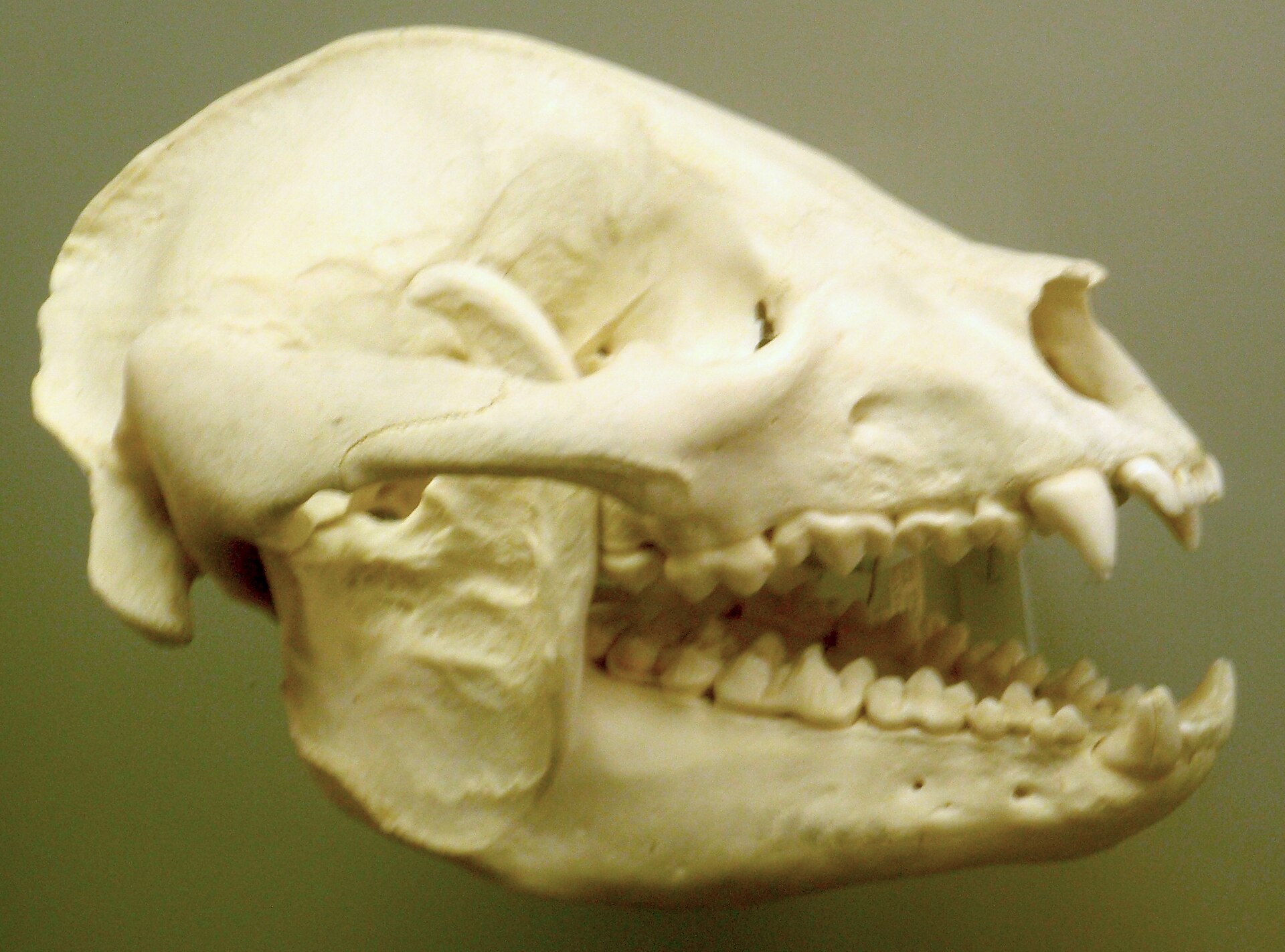
The skull and teeth are heavily modified: a shortened snout, huge attachment area for the jaw muscles, and broad flat molars several times the size of a comparable bear's, all for crushing bamboo culms.
The panda's famous sixth digit is not a thumb but an enlarged wrist bone, the radial sesamoid, which works against the palm to grip bamboo stems. It is one of the standard examples in evolutionary biology of a structure repurposed from available parts rather than designed, and Stephen Jay Gould used it as exactly that.
The digestive tract is the striking failure to adapt. It is a carnivore's gut: short, simple, without the multiple chambers or the long fermentation vat that herbivores of similar diet possess. Pandas therefore extract only around seventeen per cent of the energy in what they eat, and they compensate by volume and by time, consuming twelve to thirty-eight kilograms of bamboo a day and spending ten to sixteen hours eating it.
The gut microbiome does not rescue this. A 2015 study found the panda's gut bacteria resemble those of bears rather than those of herbivores, with low diversity and few of the cellulose-degrading organisms that make herbivory efficient elsewhere.
There is a matching genetic trace. The T1R1 gene, which encodes part of the umami receptor that detects the savoury taste of meat, is pseudogenised in the panda, inactivated by mutation roughly four million years ago, which is broadly when the dietary shift is thought to have happened. The panda did not lose the ability to digest meat so much as lose interest in it.
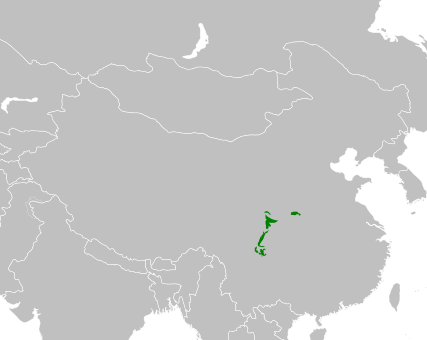
Wild pandas occupy temperate montane forest in six mountain ranges in Sichuan, Shaanxi and Gansu, generally between 1,200 and 3,400 metres. The historic range was far larger, extending across much of southern and eastern China and into Myanmar and Vietnam.
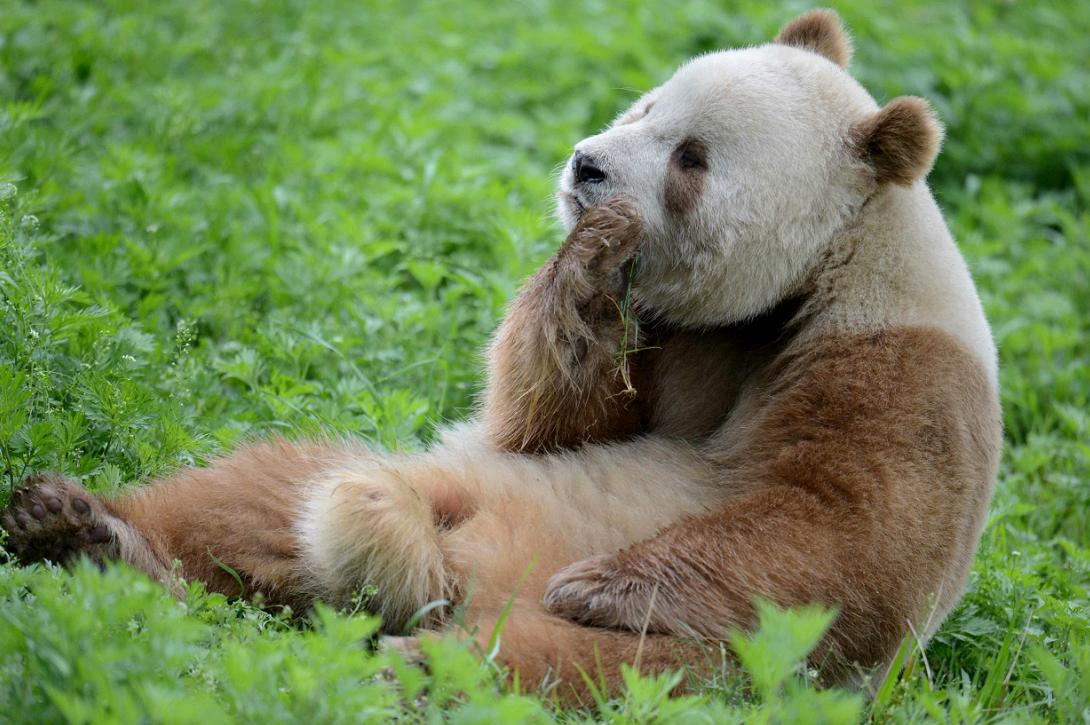
The range is broken into more than thirty isolated subpopulations by roads, farmland and settlement, and a number of them hold fewer than thirty animals, which is below any reasonable threshold for long-term viability. Fragmentation, rather than absolute numbers, is the harder problem.
Bamboo adds a specific hazard. Bamboo species flower synchronously across huge areas at long intervals, then die back en masse. A panda population with access to several bamboo species can move and switch; one confined to a fragment with a single species cannot, and mass die-offs in the 1970s and 1980s killed pandas for this reason.
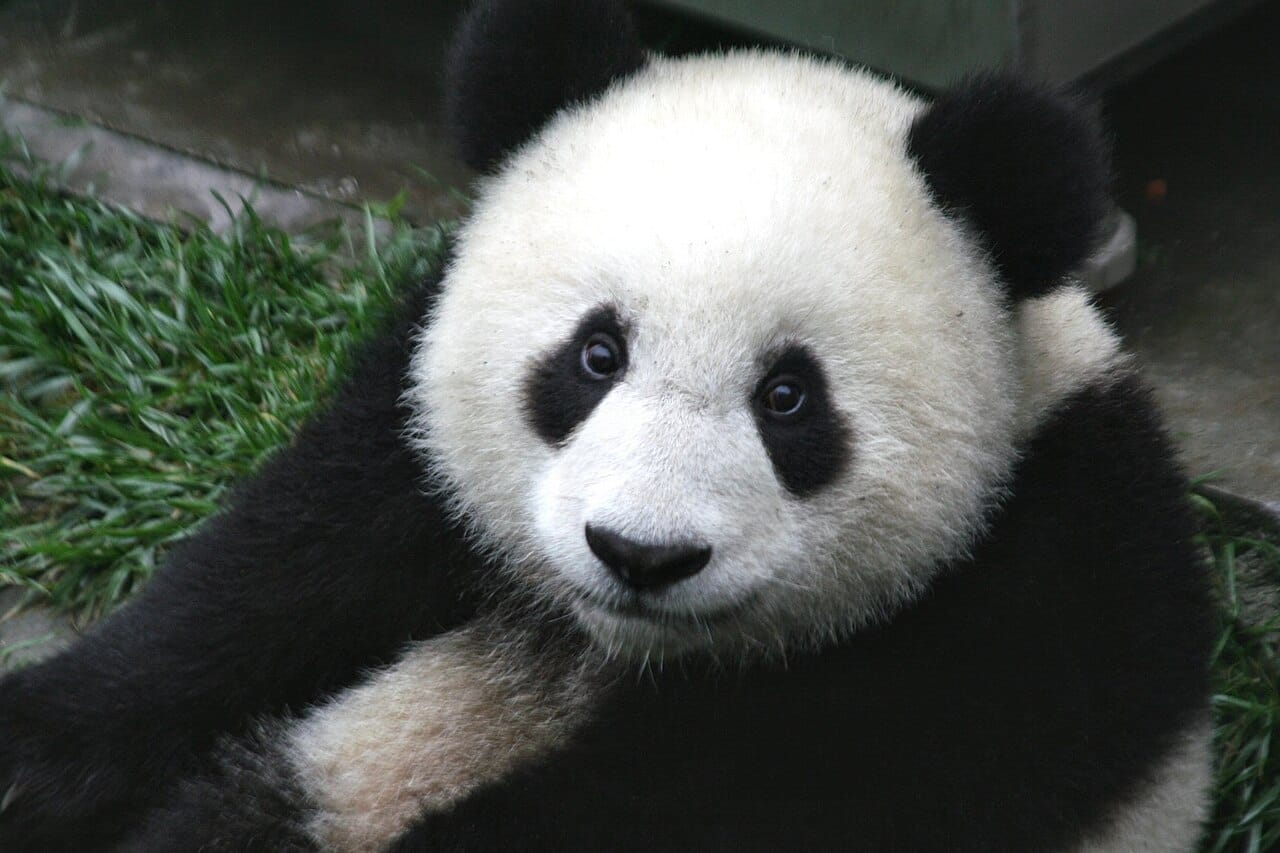
Panda reproduction is genuinely difficult, and not only in captivity. Females are in oestrus once a year for something between one and three days. Implantation is delayed, so gestation length varies from about 95 to 160 days and cannot be predicted, and pseudopregnancy is common enough that keepers frequently cannot tell whether a female is pregnant at all until a cub arrives.
Cubs are extraordinarily small relative to the mother, around 100 grams. Twins are common, and in the wild the mother usually raises one and the other dies. Captive programmes exploit this by swapping twins between the mother and an incubator so both survive, which is the single change that most improved captive breeding success.
The wild population was around 1,114 in the 1980s and 1,864 at the 2014 national survey, with more recent figures near 1,900. On that basis the IUCN downlisted the panda from Endangered to Vulnerable in 2016.
China's forestry authority objected publicly, arguing the downlisting was premature and risked reducing protection while the underlying fragmentation was unresolved. That objection has substance: part of the measured increase comes from improved survey methods and from surveying more area, the subpopulations remain small and isolated, and climate projections suggest substantial loss of bamboo habitat this century.
The counter-argument also has substance. Habitat protection was real and large: a logging ban after the 1998 Yangtze floods, a national reserve network now covering most of the remaining range, and the consolidation of reserves into the Giant Panda National Park in 2021. Forest cover in panda range increased.
Both can be true. The panda is doing better and remains structurally precarious, and the disagreement is about which of those to put in the headline.
The reintroduction record is honest about its difficulty: several released captive-bred pandas have died, including the first, and the programme now trains cubs with minimal human contact and in enclosures approximating wild conditions.
The panda is the reason a great deal of conservation looks the way it does. It has been the WWF's emblem since 1961, chosen partly because a black-and-white animal was cheap to print, and it established the model of a charismatic species used to raise money for a landscape. The criticism, that this diverts resources to photogenic animals, is fair. The defence is measurable: protecting panda habitat protected takin, golden snub-nosed monkeys, red pandas and a large area of temperate forest that nobody would have raised money for on its own.