The immune system generates enormous numbers of cells with randomly assembled receptors, and whichever happen to fit an invader are multiplied. It is natural selection running inside a body over days, and it explains how a system with a finite genome recognises threats it has never encountered.
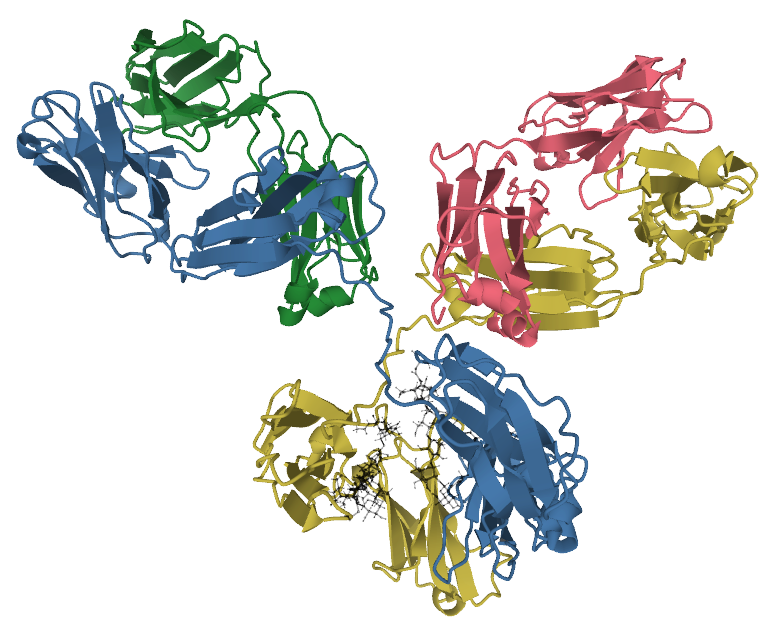
The immune system produces antibodies specific to essentially any molecule, including synthetic compounds that never existed before a chemist made them.
That capacity cannot be encoded directly. The human genome has around twenty thousand protein-coding genes, and the antibody repertoire is estimated in the billions or more. There is no room to store it.
Instructive theories dominated into the 1950s. Linus Pauling proposed in 1940 that an antibody folds around the antigen, taking its shape from it, so the invader instructs the antibody.
It is a reasonable proposal and it is wrong. Antibody specificity is determined by amino acid sequence, and a protein's sequence comes from a gene, not from whatever it happens to touch. It also fails to explain immunological memory: why a second exposure produces a faster and stronger response than the first.
Niels Jerne proposed a selective mechanism in 1955 and Frank Macfarlane Burnet developed it into clonal selection theory in 1957, with David Talmage reaching similar conclusions independently.
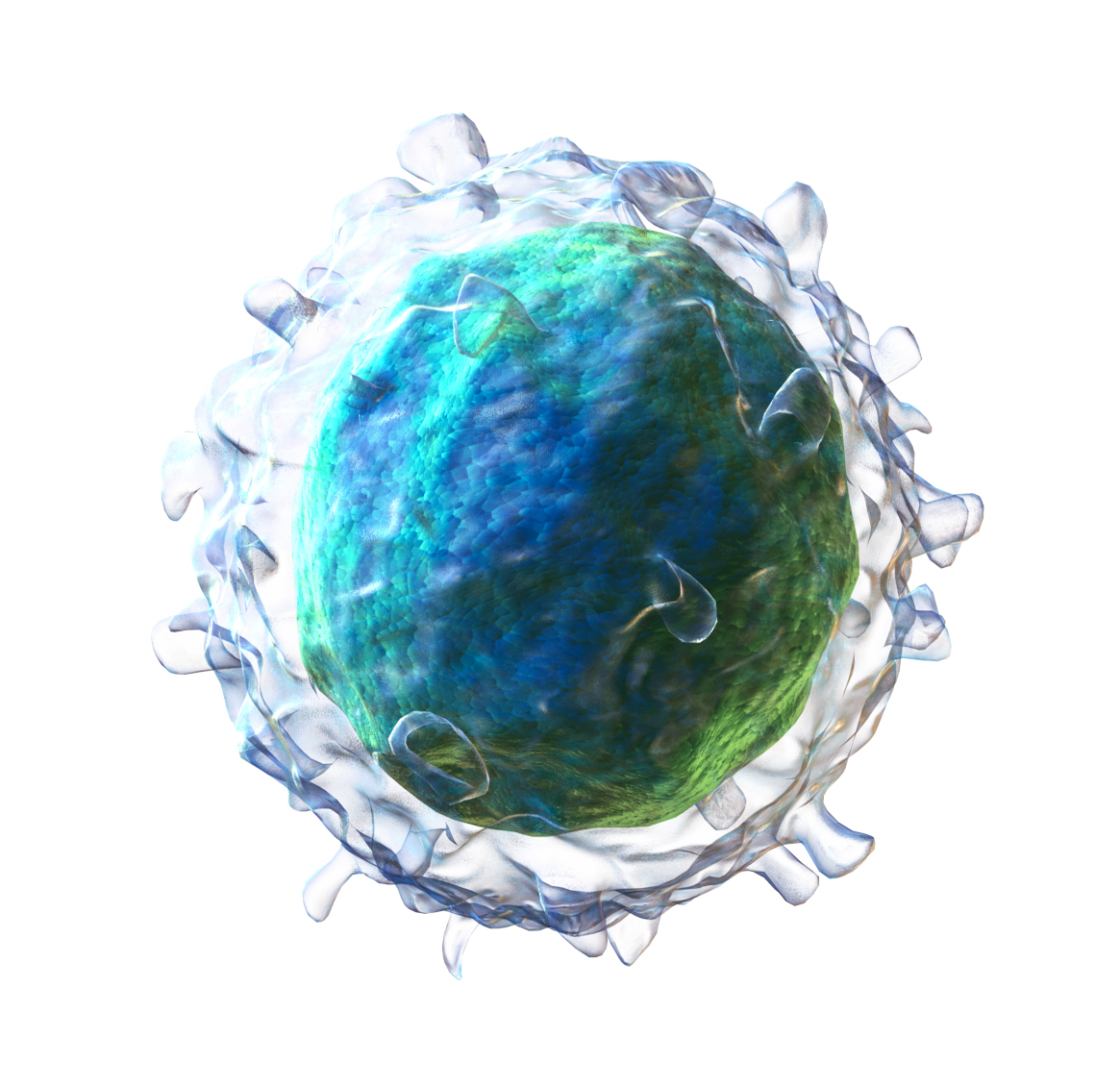
The claims are specific.
Each lymphocyte carries receptors of a single specificity, generated before any encounter with an antigen. The repertoire is produced in advance, randomly, and most of it is never used.
An antigen does not instruct anything. It binds whichever cells happen to fit, and those cells are triggered to divide, producing a clone of identical cells directed at that target. This is why the response takes days: the cells must multiply.
Cells whose receptors bind the body's own tissue are eliminated during development, which is how self-tolerance arises. Burnet predicted this, and predicted that an animal exposed to foreign tissue during development would accept it later as self. Peter Medawar demonstrated exactly that in mice, and the two shared the 1960 Nobel Prize in Physiology or Medicine.
Some cells from an expanded clone persist as memory cells, which is why the second response is faster.
The genetic mechanism was found by Susumu Tonegawa in 1976 and won him the 1987 Nobel Prize.
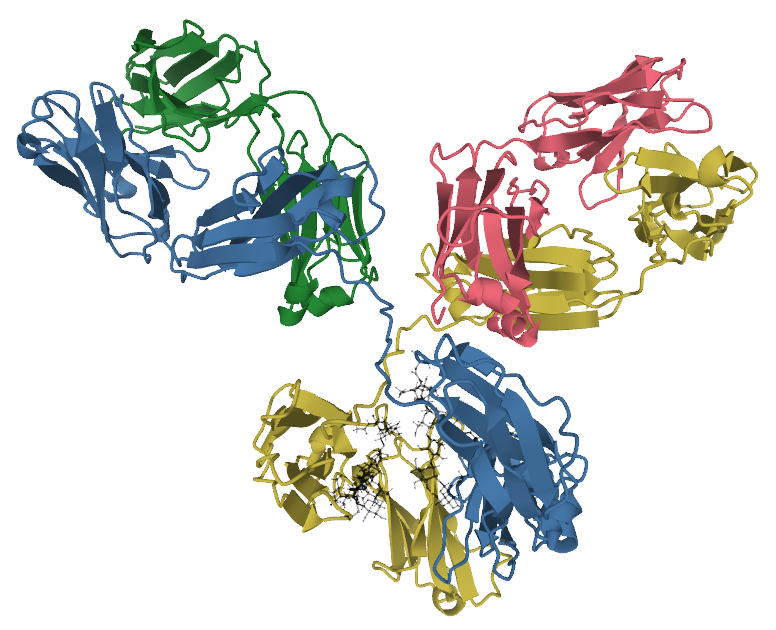
Antibody genes are not inherited intact. The genome contains multiple alternative segments for each part of the binding region, and a developing lymphocyte cuts and rejoins one of each at random, discarding the rest. Additional bases are inserted and deleted at the joins.
The combinatorics generate an enormous repertoire from a modest number of segments. This was a startling result: it meant that a cell's genome is not the same as the organism's genome, which contradicted an assumption held without much examination.
Somatic hypermutation adds a second stage. During a response, the antibody genes of activated B cells mutate at a rate roughly a million times higher than normal, and cells whose receptors bind better are preferentially selected to survive and divide. This is affinity maturation, and it is Darwinian selection operating over days within a lymph node. It is why antibodies produced late in a response bind far more tightly than the initial ones.
Vaccination, directly. A vaccine presents an antigen without the disease, the matching clones expand, and memory cells persist. Everything about vaccine design, including why boosters work and why some vaccines need adjuvants, follows from this framework.
Autoimmune disease, as a failure of the elimination step or of peripheral tolerance mechanisms that suppress self-reactive cells escaping it.
Allergy, as clonal expansion directed at a harmless antigen.
Monoclonal antibodies, which are the practical exploitation: isolate a single clone producing an antibody of interest and grow it indefinitely. Cesar Milstein and Georges Kohler developed the method in 1975 and shared the 1984 Nobel Prize. Monoclonals are now among the largest classes of pharmaceutical, used in cancer, autoimmune disease and infection.
Transplant rejection, as the response of clones recognising foreign tissue, and the rationale for matching donors and suppressing immunity.
Clonal selection is one of the clearest cases of evolutionary logic operating outside evolution.
Generate variation without regard to what is needed. Select whatever happens to work. Amplify it. Retain a record.
The same structure appears in the maturation of the nervous system, where excess neurons and connections are produced and pruned by use, and it is the general shape of any system that must respond to an environment it cannot anticipate. Burnet was explicit that he had taken the idea from Darwin.