Classical conditioning is the psychological theory describing how a neutral signal, through repeated association, can come to trigger an automatic response that it never produced before. First studied systematically by the Russian physiologist Ivan Pavlov around the turn of the twentieth century, it is one of the most basic and well established forms of learning, observed in humans and animals alike and confirmed by countless experiments.
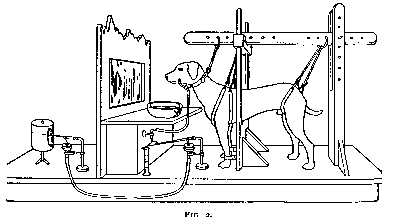
Pavlov discovered the effect by accident while studying digestion in dogs. He noticed that the animals began to salivate not only when food was placed before them but at signals that reliably preceded it, such as the footsteps of the attendant who fed them. By deliberately pairing a neutral sound with the arrival of food, he found that the sound alone would eventually make the dogs salivate, a response they had learned through simple association.
The theory describes the process in clear terms. A stimulus that naturally produces a reflex, such as food causing salivation, is paired repeatedly with a neutral stimulus, such as a bell. After enough pairings, the once neutral bell comes to trigger the response on its own. The learned reaction can fade if the signal is repeated many times without the food, a process called extinction, and can return or transfer to similar signals, showing that conditioning follows reliable rules.

Classical conditioning is far more than a curiosity about dogs. It helps explain how people come to fear particular things after a frightening experience, how tastes and cravings form, and how moods attach to places and sounds. The principles are used deliberately in therapy to treat phobias and anxiety, in animal training, and in advertising, where products are paired with appealing images to build positive associations in the mind of the viewer.
Classical conditioning is usually distinguished from operant conditioning, a related form of learning in which behaviour is shaped by rewards and punishments that follow it. Where operant conditioning concerns the consequences of actions, classical conditioning concerns the associations between events. Together these two processes form the foundation of the behaviourist account of how humans and animals learn.
More than a century after Pavlov's experiments, classical conditioning remains a cornerstone of psychology, a clearly demonstrated mechanism by which experience reshapes behaviour. Its rules are so reliable, and so widely confirmed, that it is regarded as one of the basic building blocks of learning in the living world.