The property of an object that cannot be superimposed on its mirror image, as with a left and a right hand. In chemistry it applies to molecules, and it matters because living systems are built almost entirely from one hand and respond differently to the other.
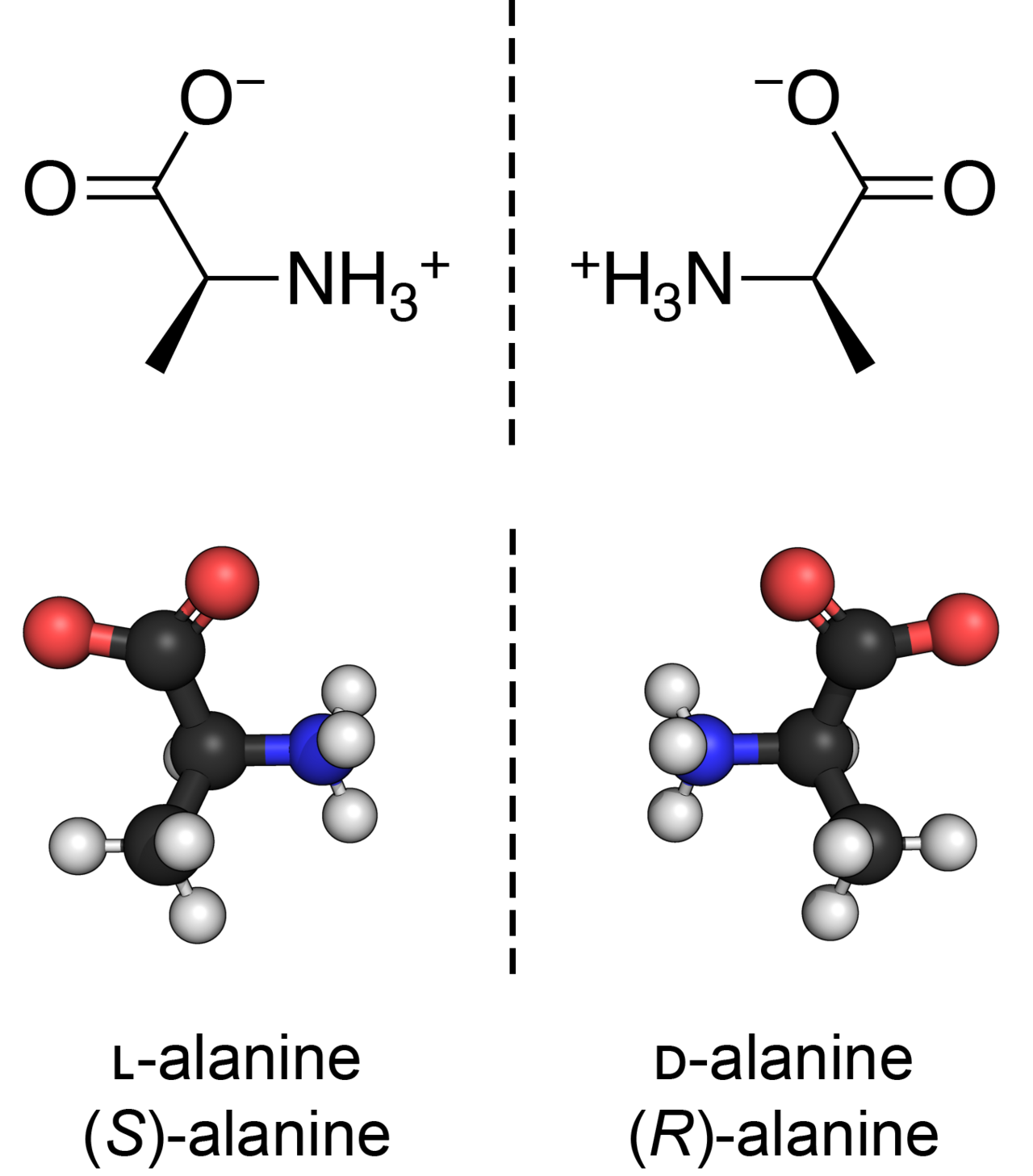
The commonest source is a carbon atom bonded to four different groups. Such an atom is a stereocentre, and swapping any two of its groups produces the mirror-image molecule.

The two mirror forms are called enantiomers. They have the same melting point, the same solubility in ordinary solvents, the same spectra by most methods, and the same energy, because nothing about their internal bonding differs.
Chirality does not require a stereocentre. A molecule can be chiral through a stereogenic axis, where rotation about a single bond is hindered enough that the two twisted forms do not interconvert.

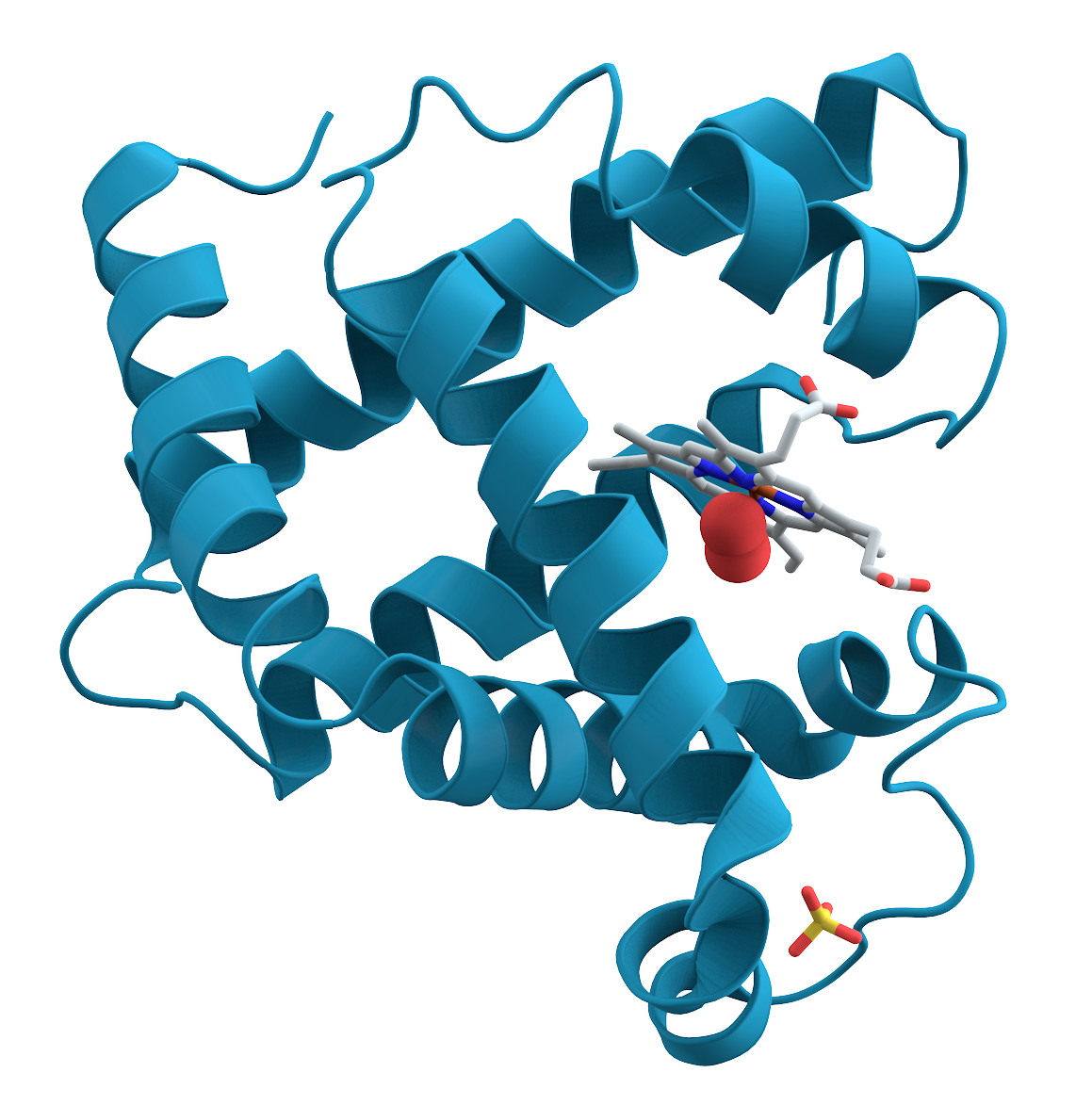
Helices are chiral for the same reason, which is why DNA, which is right handed, and many proteins have a handedness at the level of their overall shape rather than at any one atom.
Enantiomers differ in exactly one class of interaction: with other chiral things, and with circularly polarised light.
Plane polarised light passing through a solution of a single enantiomer has its plane rotated, one form clockwise and the other counterclockwise by the same amount. Jean Baptiste Biot observed this in the early nineteenth century, and it is why enantiomers were originally called optical isomers.
Louis Pasteur made the connection to molecular structure in 1848 by separating the two crystal forms of a tartrate salt by hand under a microscope and showing that their solutions rotated light in opposite directions. It was the first demonstration that molecules have three-dimensional shape.
An equal mixture of the two is a racemate, and it does not rotate light because the two effects cancel.
Separating enantiomers requires a chiral environment. Standard methods form a temporary bond to another single-handed molecule, producing a pair of compounds that genuinely differ in their properties and can be separated, or pass the mixture over a chiral stationary phase in chromatography.
Life uses one hand almost exclusively. Proteins are built from L amino acids, nucleic acids and most metabolic sugars from D sugars.
The reason the choice matters is that enzymes and receptors are themselves chiral, so they present a binding site that fits one enantiomer and not the other, in the way a glove fits one hand.
The consequences are ordinary and everyday. Carvone smells of spearmint in one form and caraway in the other, because the two bind olfactory receptors differently. Only one enantiomer of most amino acids is nutritionally useful.
Why life settled on one hand is not settled. Proposals include amplification of a small initial imbalance by autocatalysis, a slight energetic preference from the weak nuclear interaction, and selection driven by circularly polarised light in the early solar system. Meteorites carry small excesses of L amino acids, which suggests some of the bias may predate life, but the question is open.
If a receptor binds one enantiomer, then in a racemic drug half the material may be inactive, or active in a different way.
Thalidomide is the case usually cited, and it is usually cited incorrectly. One enantiomer is sedative and the other is teratogenic, which is true. The inference that selling the single safe enantiomer would have prevented the disaster is not, because thalidomide racemises in the body: administering either pure form produces a mixture within hours.
Better examples of the principle are routine. Levodopa is given as a single enantiomer for Parkinson's disease. Esomeprazole and escitalopram are single-enantiomer versions of drugs first sold as racemates. Regulators now expect the pharmacology of each enantiomer of a chiral drug to be characterised separately rather than assumed equivalent.
Making a single enantiomer efficiently is a substantial part of modern synthetic chemistry. Asymmetric catalysis, in which a chiral catalyst produces one hand preferentially, was recognised with the 2001 Nobel Prize in Chemistry to William Knowles, Ryoji Noyori and Barry Sharpless, and organocatalysis with the 2021 prize to Benjamin List and David MacMillan.
Chirality is the clearest case where a difference invisible to most measurements determines biological effect entirely. It is also the property that makes drug manufacture a stereochemical problem rather than only a question of assembling the right atoms.