The proposal that tumours are sustained by a small subpopulation of cells with stem-like properties, and that killing the bulk of a tumour without eliminating those cells is why cancer returns. It reframes what treatment should target, and the category it depends on may not be a fixed category at all.
Tumours are not uniform. Cells within a single tumour differ in appearance, in gene expression, in growth rate and in drug sensitivity.
The clinical pattern that demands explanation is relapse. Chemotherapy and radiotherapy frequently shrink a tumour dramatically, and it returns months or years later, often more aggressive and less treatable. Something survived that treatment did not reach.
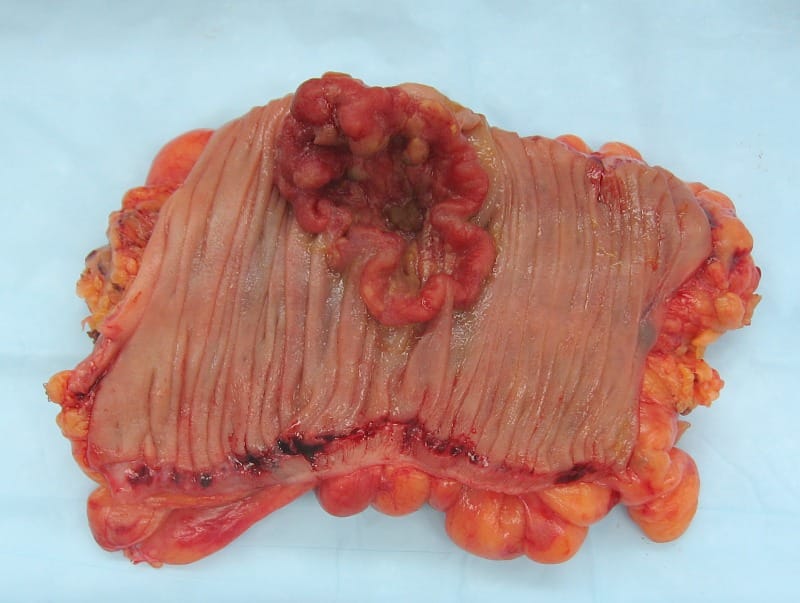
The hypothesis holds that tumours are organised hierarchically, like normal tissue.
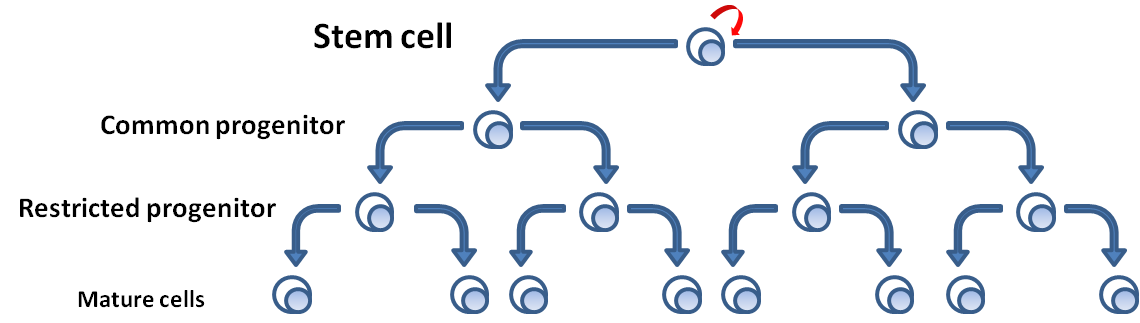
Normal tissues are maintained by a small number of stem cells that self-renew and produce differentiating daughter cells doing the tissue's work. The proposal is that tumours have an equivalent: a minority of cells capable of self-renewal and of regenerating the whole tumour, with the majority being their progeny and incapable of sustaining it.
If so, several things follow. Conventional treatments target rapidly dividing cells; stem-like cells often divide slowly and would be spared. They express drug efflux pumps and efficient DNA repair, so they resist chemotherapy and radiation on their own account. Killing ninety nine percent of a tumour while sparing them guarantees recurrence.
The therapeutic implication is that tumour shrinkage is the wrong endpoint. A treatment eliminating stem-like cells might shrink a tumour slowly or not at all while being curative, and a treatment that shrinks it rapidly might not be.
The founding evidence is from leukaemia. John Dick's group showed in 1994 and 1997 that only a small fraction of human acute myeloid leukaemia cells, identifiable by surface markers, could initiate the disease when transplanted into immunodeficient mice. Similar populations were subsequently reported in breast, brain, colon and other solid tumours.
The central difficulty is that the stem-like state appears not to be fixed.
Non-stem cancer cells can acquire stem-like properties. This has been shown repeatedly: differentiated tumour cells revert under stress, and the conversion is reversible. In colorectal cancer, treatment converted marker-positive cells to marker-negative and withdrawal converted them back.
If any cell can enter the state, the hypothesis changes character entirely. It is no longer a claim about a distinct population to be targeted but a claim about a condition cells move in and out of, and eliminating the cells currently in it accomplishes little if others take their place.
Worse, therapy itself appears to induce the state. Radiation and chemotherapy have both been reported to drive conversion of ordinary tumour cells into stem-like ones, which would mean treatment generates the population it needs to eliminate.
The identification methods are contested. Stem-like cells are defined by their ability to form a tumour in an immunodeficient mouse, which is an assay rather than a property. Results depend heavily on which mouse strain is used, how the cells are prepared, and how many are injected. Work on melanoma found that under more permissive assay conditions a very large fraction of cells could initiate tumours, which is not compatible with a rare privileged population.
Surface markers used to isolate the cells are inconsistent between tumour types and between studies of the same tumour type, and none is specific.
And the hypothesis has not yet delivered clinically. Multiple agents targeting stem-like populations have entered trials and none has produced the expected result, which after two decades is a meaningful absence.
The observations are real: tumours are hierarchically heterogeneous, some cells regenerate tumours far more efficiently than others, and slowly dividing cells survive treatments aimed at dividing ones.
The framework has shifted. The current formulation is less a hypothesis about a cell type and more one about cellular plasticity: a state that confers self-renewal and drug tolerance, entered and exited under the influence of the tumour's environment and of treatment itself.
That version explains more of the data and is harder to act on, since a state cannot be surgically removed the way a population can. It is filed as a hypothesis because the clinical prediction that follows from it, that targeting the state prevents relapse, has been tested and has not yet worked.