A selective barrier separating the brain's blood supply from its tissue, admitting what neurons need and excluding almost everything else. It protects the brain and it is the single largest obstacle to treating neurological disease.
Paul Ehrlich injected dyes into animals in the 1880s and observed that most organs stained while the brain and spinal cord did not. He attributed this to the brain having low affinity for the dye.
Edwin Goldmann, his student, ran the reverse experiment in 1913: injecting dye into the cerebrospinal fluid stained the brain and nothing else. The dye could not leave the brain either.
That established a barrier rather than a difference in affinity, though its physical basis was not seen until electron microscopy in the 1960s.
The barrier is a property of the capillaries themselves.
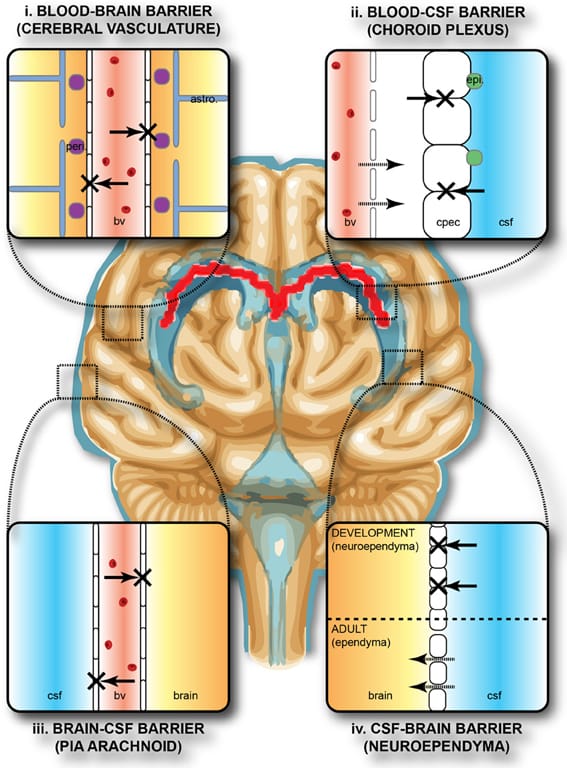
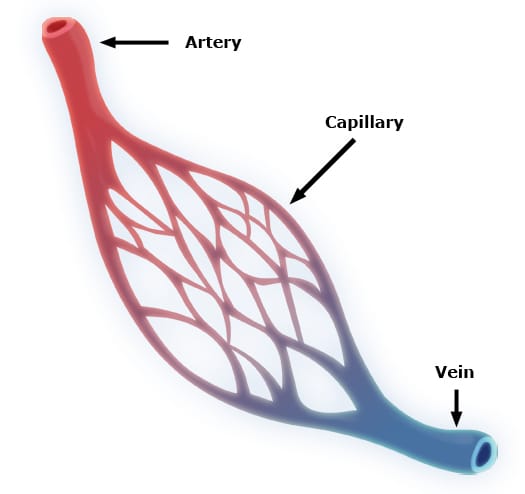
Capillaries elsewhere in the body are leaky by design, with gaps between the cells lining them permitting fluid and small molecules to pass. In the brain those cells are joined by tight junctions that seal the gaps almost completely, so anything crossing must pass through the cells rather than between them.
The cells also have very few of the vesicles that ferry material across elsewhere, and they carry a high density of efflux transporters, principally P-glycoprotein, which actively pump many compounds back into the blood after they have entered.
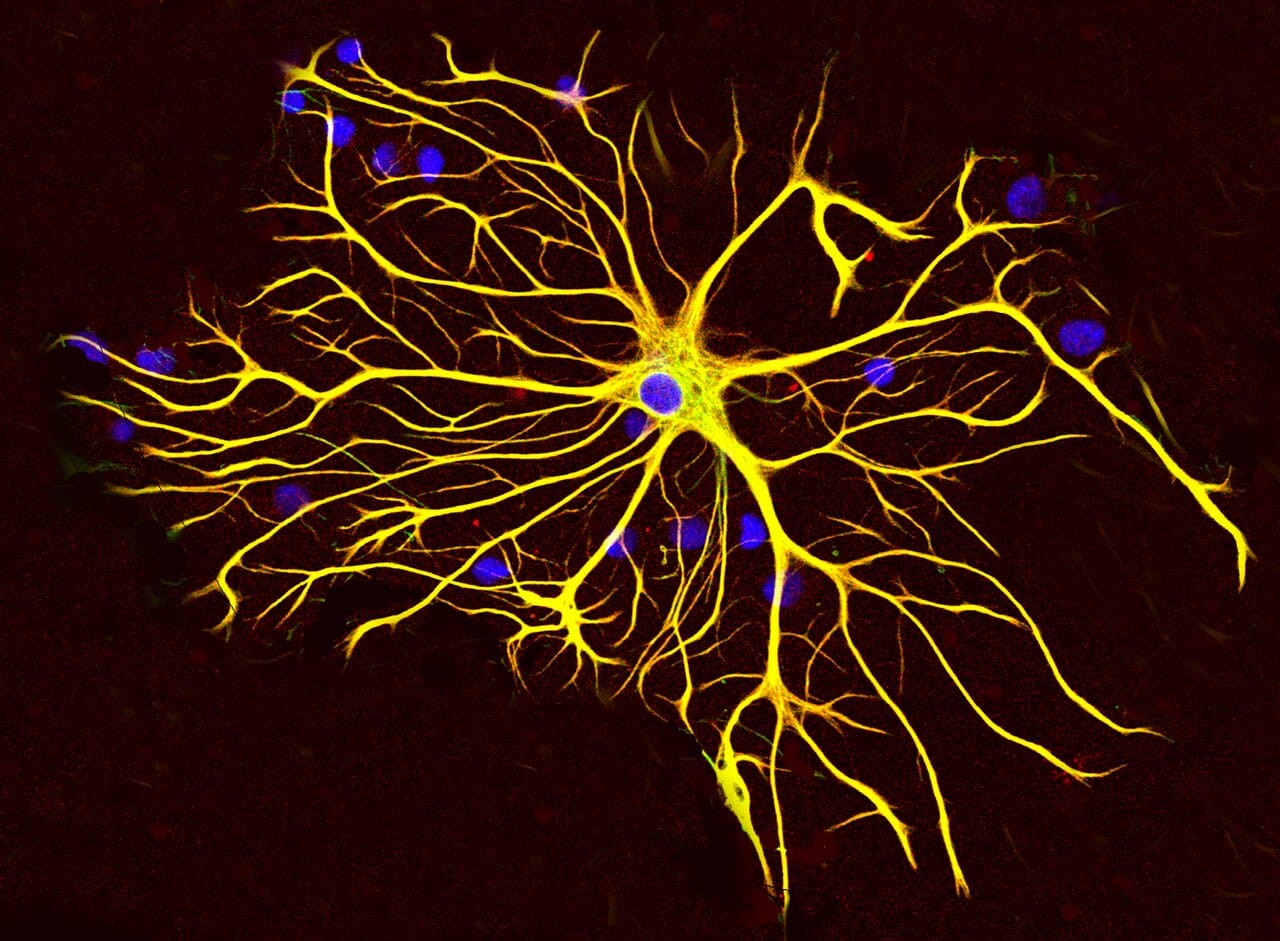
Astrocytes wrap their end-feet around the capillaries and pericytes sit on their surface. Neither forms the barrier, and both are required to induce and maintain it, which is why the arrangement is now usually called the neurovascular unit rather than a barrier alone.
Small, fat-soluble, uncharged molecules cross by simply dissolving through membranes. Oxygen, carbon dioxide, alcohol, nicotine, caffeine and most anaesthetics do this readily, which is why they act on the brain quickly.
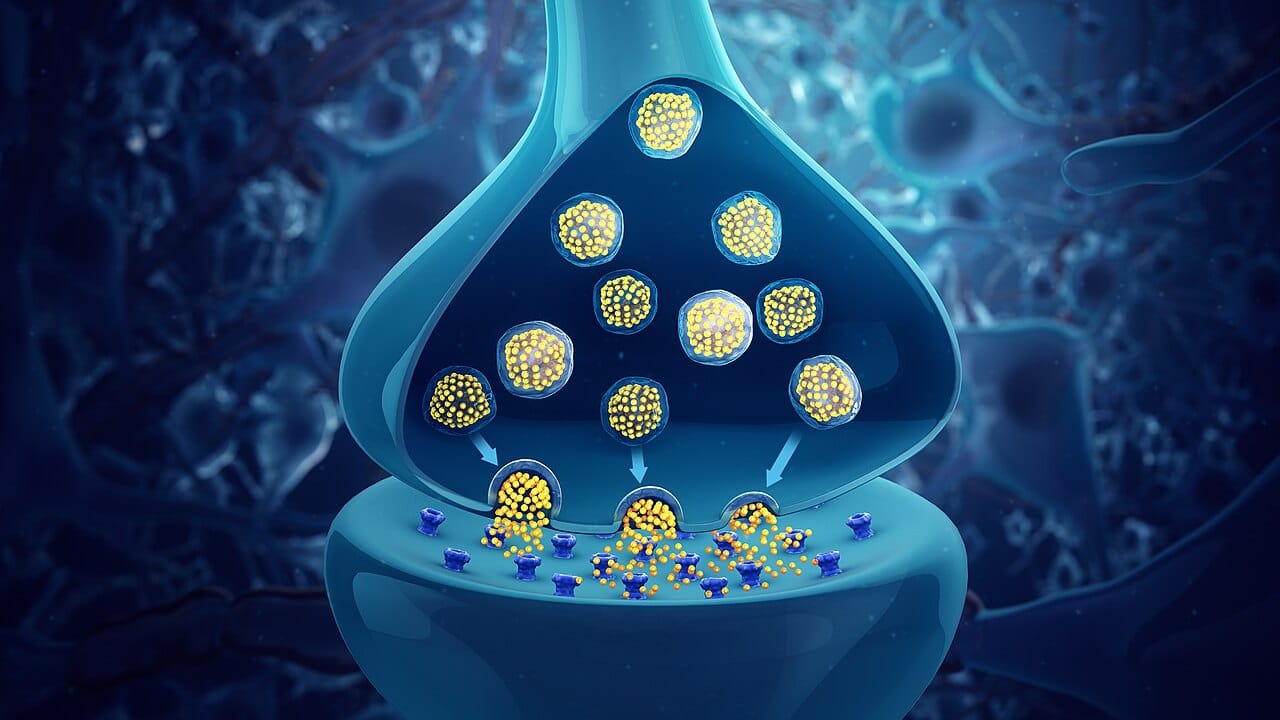
Everything else needs a transporter. Glucose crosses through a dedicated transporter and is the brain's principal fuel. Specific amino acid transporters admit what is needed for neurotransmitter synthesis. Insulin and transferrin cross by receptor-mediated transport.
Large molecules and most water-soluble compounds do not cross at all. This includes almost all antibodies, most peptides, and the great majority of drugs.
The frequently quoted estimate is that around ninety eight percent of small-molecule drugs and essentially all large-molecule drugs fail to reach the brain in useful concentrations. The figure varies by source and the order of magnitude is not disputed.
Neurons signal using ion gradients, and their function depends on the composition of the fluid around them being held within narrow limits. Fluctuations in blood potassium after a meal would otherwise alter neuronal excitability directly.
Many circulating molecules are also neurotransmitters or resemble them. Glutamate in blood plasma is far above the concentration that is excitotoxic in brain tissue, and admitting it freely would kill neurons.
And the brain has limited capacity for repair, so excluding pathogens and toxins matters more there than elsewhere.
A few regions deliberately lack the barrier, the circumventricular organs, where sensing blood composition is the point: the area postrema detects circulating toxins and triggers vomiting, and hypothalamic regions monitor hormones.
The barrier is the main reason neurological drug development fails.
Antibiotics that work systemically frequently do not treat brain infections, and meningitis treatment relies partly on inflammation opening the barrier. Chemotherapy reaches brain tumours poorly, which contributes to their prognosis. Antibody therapies, which have transformed several other fields, largely cannot get in.
Levodopa illustrates the workaround. Parkinson's disease involves dopamine loss, and dopamine itself does not cross. Levodopa, its precursor, uses an amino acid transporter, crosses, and is converted to dopamine inside. It is given with a peripheral inhibitor to stop the conversion happening in the blood.
Strategies to get past the barrier include designing molecules to fit existing transporters, attaching drugs to molecules that are transported, and focused ultrasound with injected microbubbles, which opens the barrier temporarily and reversibly at a targeted location. The last has reached clinical trials for brain tumours and Alzheimer's disease.
Barrier breakdown is a feature of several conditions rather than a curiosity.
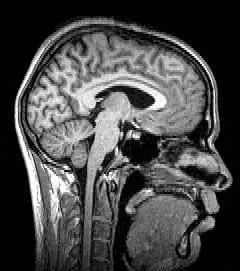
Multiple sclerosis involves immune cells crossing into the brain, and the barrier's failure is visible on contrast-enhanced imaging as active lesions. Stroke produces breakdown and consequent swelling. Traumatic brain injury does the same. Increasing evidence implicates gradual barrier dysfunction in ageing and in the development of Alzheimer's disease, which is one route by which the vascular and amyloid accounts of that disease connect.