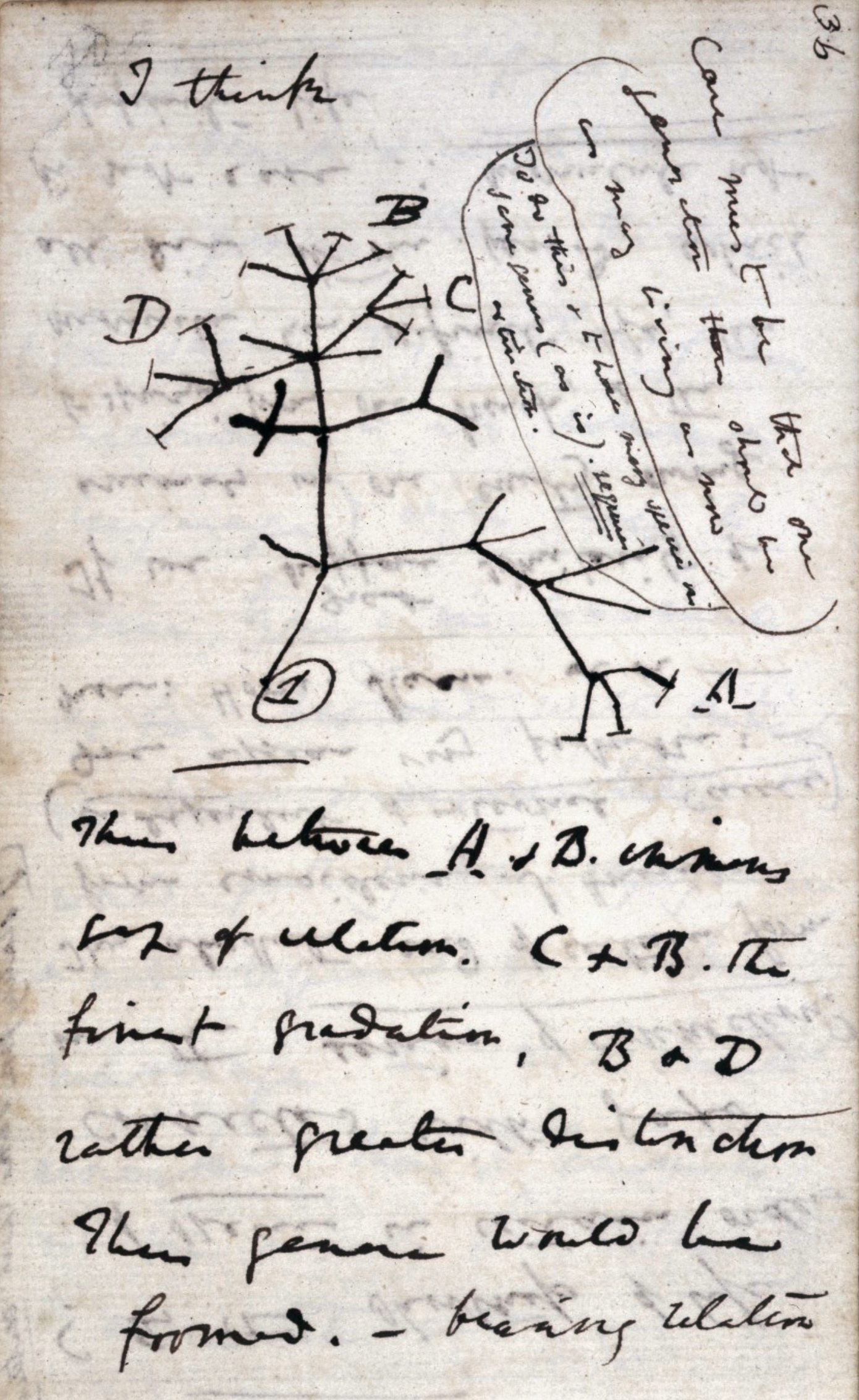
The proposal that behaviours learned during life can steer subsequent genetic evolution, without any Lamarckian inheritance of acquired traits. It offers a way for learning to influence genes, it is logically sound, and demonstrating it in nature has proved very hard.
Lamarckian inheritance, in which traits acquired during life are passed to offspring, does not occur for the reasons set out in the central dogma capsule: there is no mechanism for a body's experience to be written back into its germline DNA.
That seems to leave learning evolutionarily inert. A skill acquired by an individual dies with it.
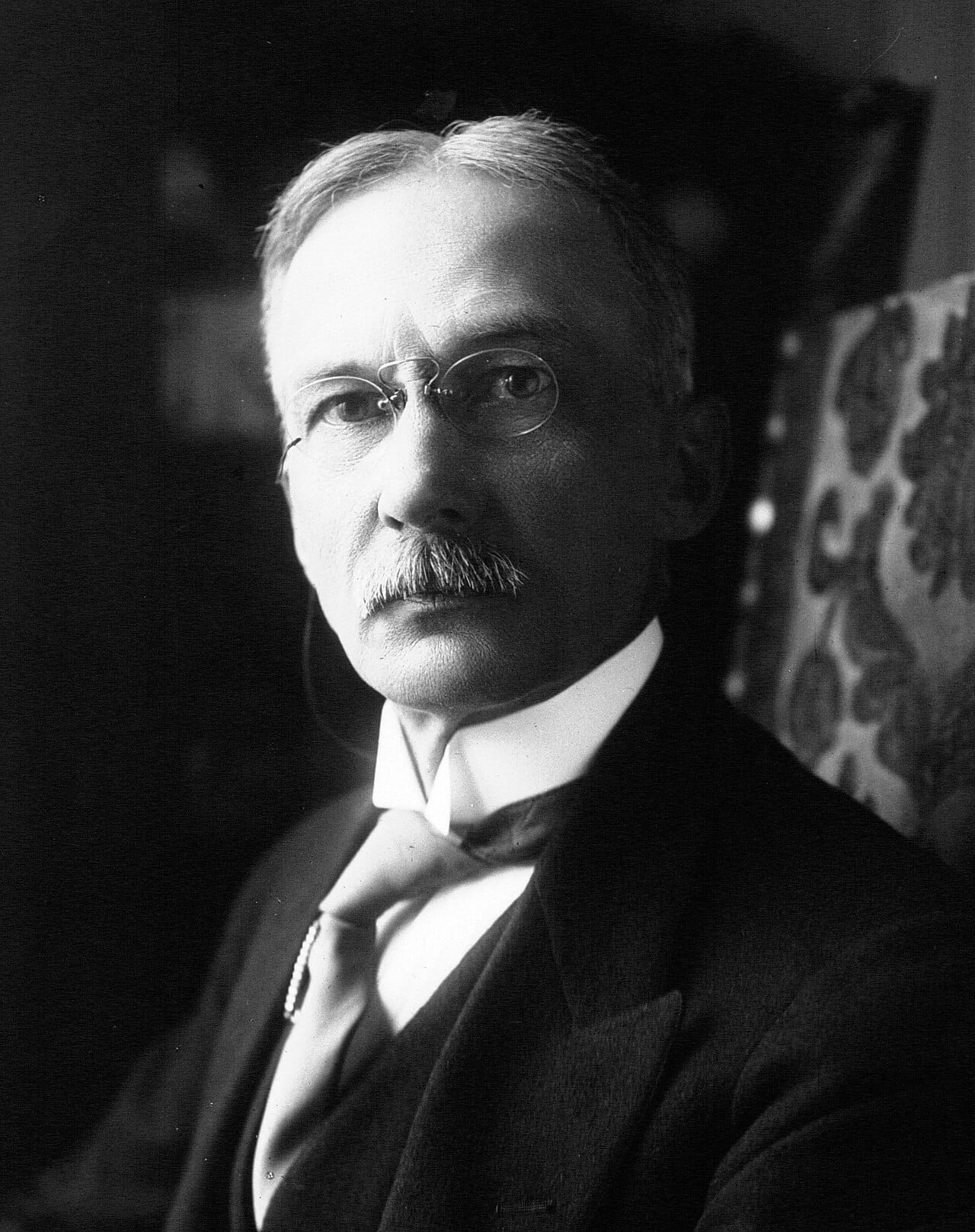
James Mark Baldwin proposed in 1896, with Conwy Lloyd Morgan and Henry Fairfield Osborn independently reaching similar ideas, that learning could nonetheless direct evolution by a purely Darwinian route.
The argument has three steps and involves no violation of anything.
A population encounters a new challenge. Some individuals cope with it by learning or by phenotypic plasticity, adjusting within their lifetime. Those individuals survive better, so the population persists where it would otherwise have died out.
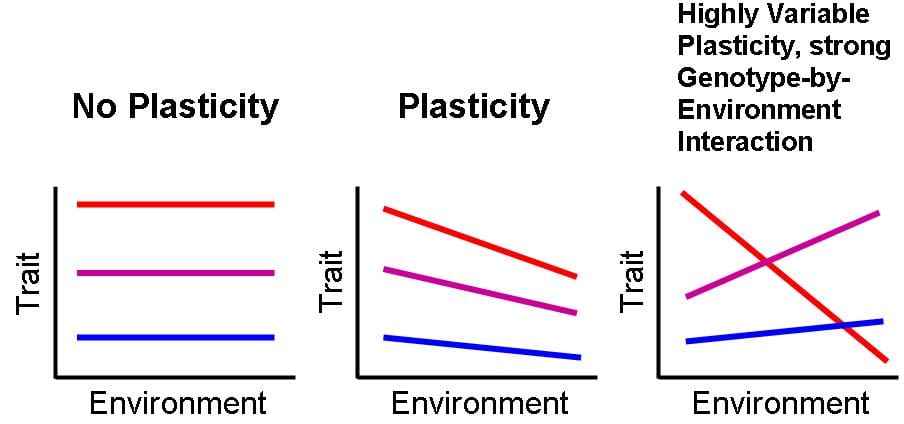
The population now lives under sustained selection in the new environment. Any genetic variant making the behaviour easier, faster or more reliable to acquire is favoured, because learning is costly: it takes time, carries risk during the trial period, and requires energy.
Over generations, selection favours variants requiring less and less learning, until the behaviour appears reliably with little or no experience.
The end state looks Lamarckian. A behaviour that was learned is now innate. But nothing was inherited from the learning; genetic variation was selected under conditions that learning made survivable.
Learning does not transmit information into the genome. It keeps the population alive long enough, and in the right place, for ordinary selection to work.
Computer simulations demonstrate it clearly. Geoffrey Hinton and Steven Nowlan showed in 1987 that adding learning to a simulated evolutionary search dramatically improved its ability to find a solution, by smoothing a search landscape that was otherwise impossible to navigate. That established the mechanism works in principle.
Natural examples are much weaker.
Proposed cases include tolerance of toxic plants in some herbivores, where learned avoidance may have preceded evolved detoxification, and bird song learning, where species differ in how much of a song is innate.
The difficulty is distinguishing the Baldwin effect from ordinary adaptation. Both produce a population well suited to its environment, and demonstrating that learning came first requires knowing the historical sequence, which fossils and comparative data rarely provide.
Critics also argue the effect is unnecessary. If genetic variation for the trait existed anyway, selection would have produced the adaptation without the learning stage, and the learning merely accompanied the process.
Defenders answer that this misses the point: the population would have gone extinct before selection could act, and learning is what prevented that. On this reading the Baldwin effect explains not what evolved but whether the lineage survived to evolve it.
Human evolution is where it appears most often. Language, tool use and cultural transmission are all proposed to have been learned before becoming easier to acquire, and the argument that humans are born predisposed to learn language rather than born knowing it is Baldwinian in shape.
Lactase persistence, discussed in the niche construction capsule, is sometimes cited and is arguably a different pattern: the cultural practice created a new selection pressure rather than buying time for an existing one.
Machine learning research uses the principle directly, in algorithms that combine evolutionary search with local learning, where the combination reliably outperforms either alone.
The mechanism is logically valid, uncontroversial in principle, and demonstrated in simulation and in the analogous case of genetic assimilation.
What is missing is a well-documented natural case where the sequence, learned first and genetically fixed later, has been established rather than inferred. After more than a century, that absence is the reason the effect remains a hypothesis rather than a documented process.