Cancer cells burn glucose wastefully, converting it to lactate even when oxygen is plentiful. The observation is a century old and undisputed, it is used every day in hospitals to find tumours, and why cells do it is still not fully explained.
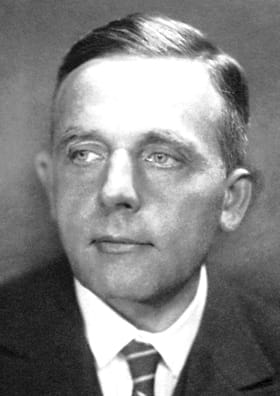
Otto Warburg found in the 1920s that tumour slices consumed glucose at extraordinary rates and produced large amounts of lactate, and that this continued in the presence of ample oxygen.
That is strange on its face. Fermenting glucose to lactate yields two molecules of ATP; oxidising it completely yields roughly fifteen times as many. A cell choosing fermentation when oxygen is available is discarding most of the available energy.
Warburg received the 1931 Nobel Prize in Physiology or Medicine for work on cellular respiration, and the effect carries his name.
He concluded that the mitochondria of cancer cells are damaged, that impaired respiration is the primary cause of cancer, and that everything else follows from it.
That is wrong and has been known to be wrong for decades. Cancer cell mitochondria are generally functional, and most tumours carry out oxidative phosphorylation perfectly well alongside the fermentation. Cancer is driven by genetic alterations, and the metabolic shift follows from them rather than causing them.
The claim persists in alternative medicine, where it supports arguments that cancer is a metabolic disease treatable by diet, particularly by restricting carbohydrate. Warburg's specific causal claim does not support that, and the ketogenic diet's actual evidence in cancer is limited and separate from anything he demonstrated.
The observation stands and the explanation is what remains open. Several accounts are proposed and none covers every case.
Biosynthesis is currently the leading one. A dividing cell needs raw material more than it needs energy: nucleotides, amino acids, lipids, all built from carbon skeletons. Running glucose through glycolysis rapidly and diverting intermediates into biosynthetic pathways supplies those skeletons. Complete oxidation, by contrast, converts the carbon to carbon dioxide and loses it. On this account the cell is not wasting glucose but using it as material rather than fuel.
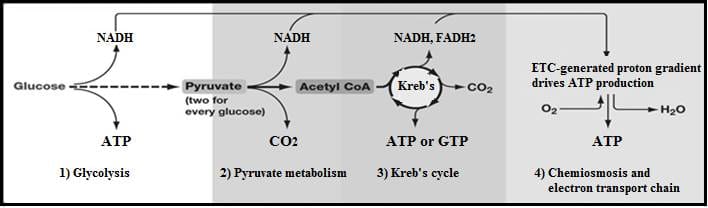
Speed is a related argument. Glycolysis produces ATP much faster per unit time than oxidative phosphorylation, even though it produces less per glucose molecule, and a cell with abundant glucose may be optimising rate rather than yield.
Acidification is a third. Lactate exported from the cell acidifies the surrounding tissue, which degrades the extracellular matrix, aids invasion, and suppresses immune cells in the tumour environment. On this account the waste product is itself useful.
Signalling effects have also been proposed, since the metabolic state alters the balance of molecules that regulate gene expression.
Importantly, the effect is not unique to cancer. Rapidly proliferating normal cells do it too, including activated immune cells and cells in developing embryos, which argues that it is a general property of proliferation rather than a cancer-specific defect.
The metabolic shift is downstream of the same oncogenic signalling that drives everything else in a tumour.
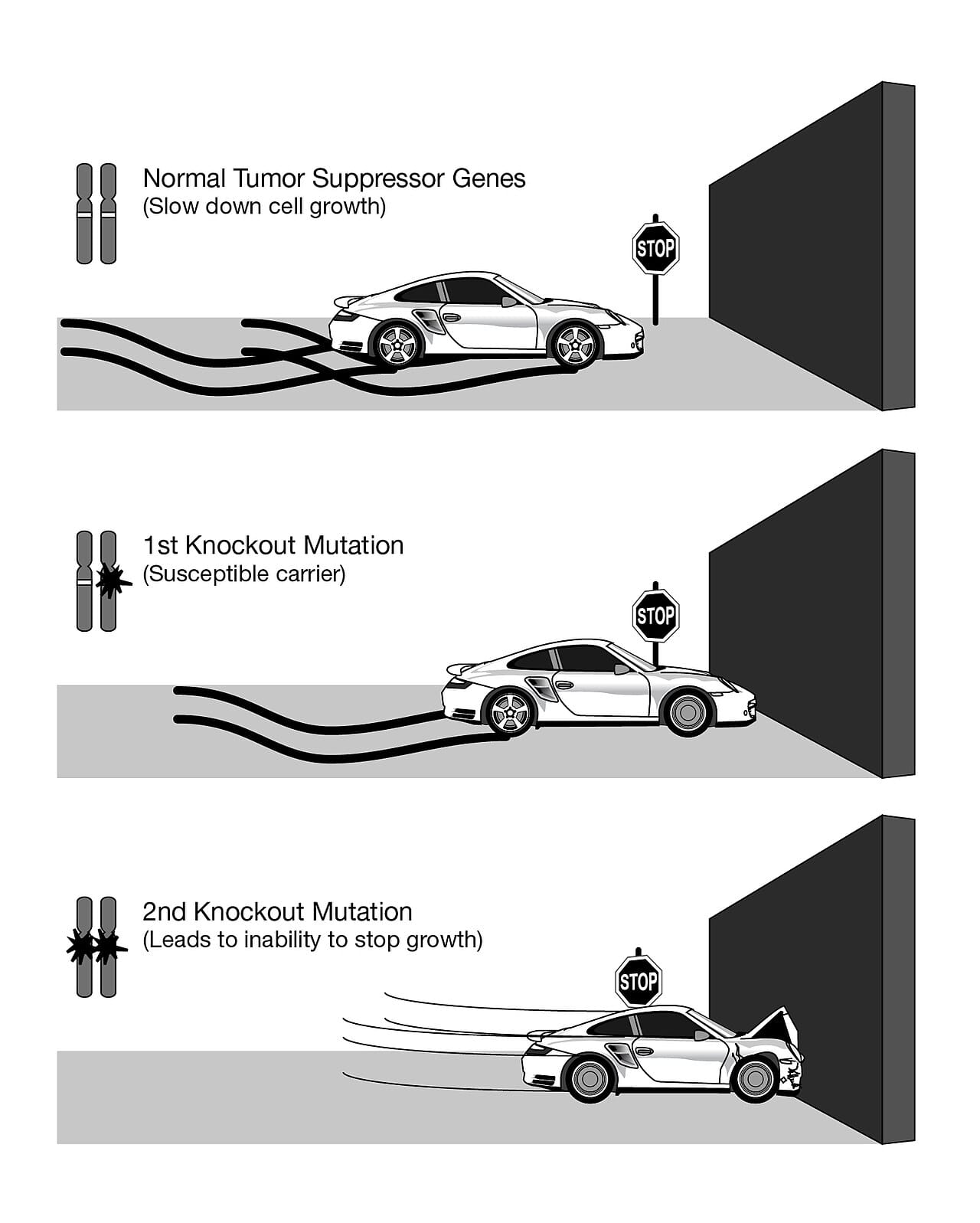
KRAS, MYC, the PI3K-AKT-mTOR pathway and HIF-1 alpha all increase glucose uptake and glycolytic enzyme expression. Loss of p53 removes a restraint on glycolysis. The metabolism is therefore a consequence of the genetics, which is the reverse of Warburg's proposal.
Whatever its cause, the effect is exploited clinically every day.

Positron emission tomography with fluorodeoxyglucose injects a radioactive glucose analogue. Cells take it up in proportion to their glucose demand, and because it cannot be fully metabolised it accumulates inside them. Tumours light up.
This is used for staging cancers, for detecting metastases, and for assessing whether a treatment is working, often before any change in tumour size is visible. It is a direct application of an observation nobody can fully explain.
Targeting cancer metabolism has been pursued for decades with limited success.
Inhibiting glucose uptake or glycolytic enzymes does impair tumour growth in models. The clinical problem is selectivity: normal proliferating tissues, including bone marrow and gut lining, use the same metabolism, so the therapeutic window is narrow.
Metformin, which affects cellular energy sensing, attracted attention from epidemiological associations with lower cancer incidence in diabetics, and randomised trials have been largely disappointing.
Dozens of agents targeting metabolic enzymes are in development, and as of the mid 2020s almost all remain experimental.
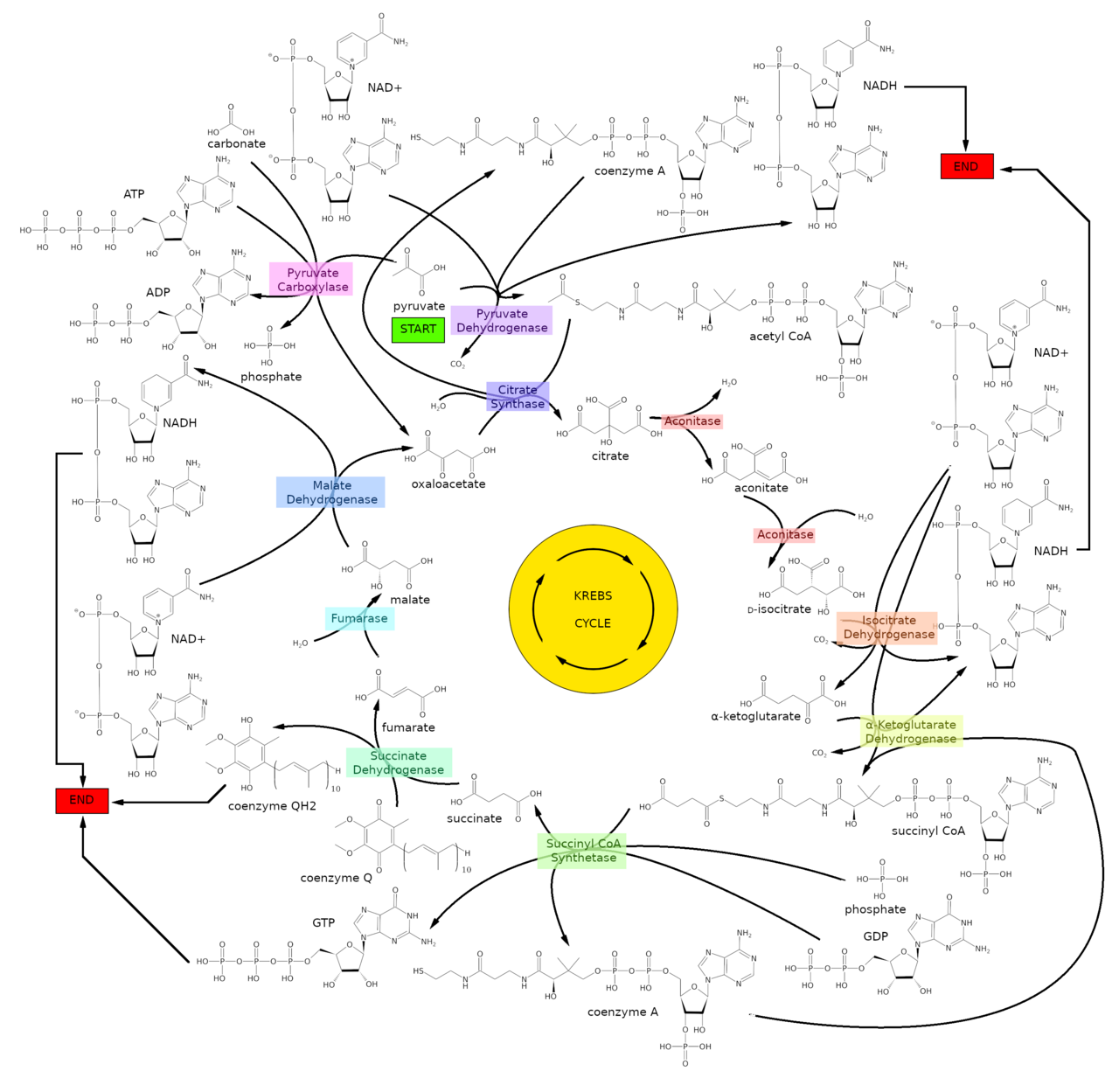
The exceptions are the mutant metabolic enzymes discussed in the Krebs cycle capsule, where inhibitors of mutant isocitrate dehydrogenase are approved. Those work because the target is specific to the tumour, which is precisely what general glycolytic inhibition is not.
The observation is a fact. Warburg's causal claim is debunked. The current explanations, biosynthetic demand, rate, acidification, are plausible, partly supported, and collectively unable to account for every situation in which the effect is seen.
A hundred years of unexplained observation in a field this well funded is unusual, and it is worth stating plainly rather than presenting the biosynthesis account as settled.