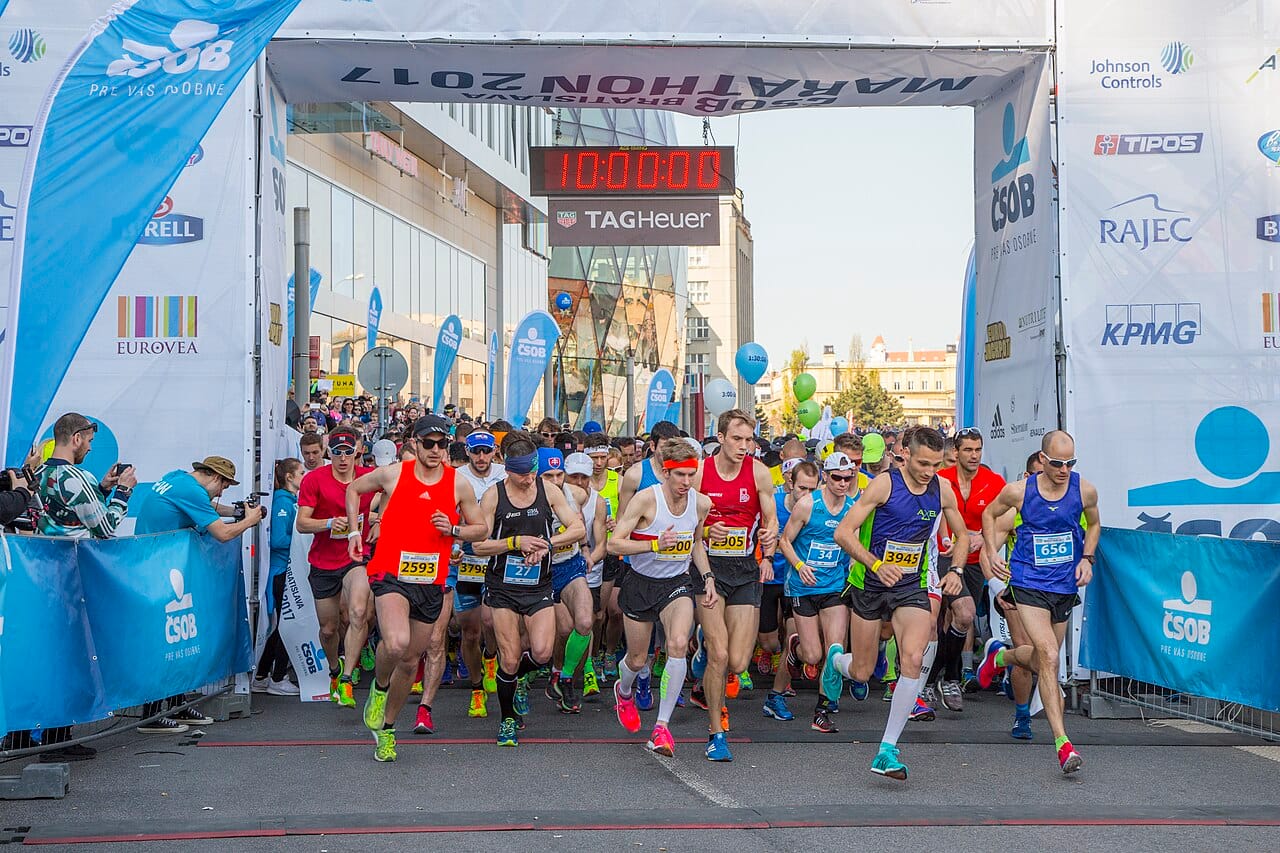
A running race of 42.195 kilometres. The distance is arbitrary, its founding story is largely legend, and it has become the standard test of endurance for both elite athletes and ordinary participants.
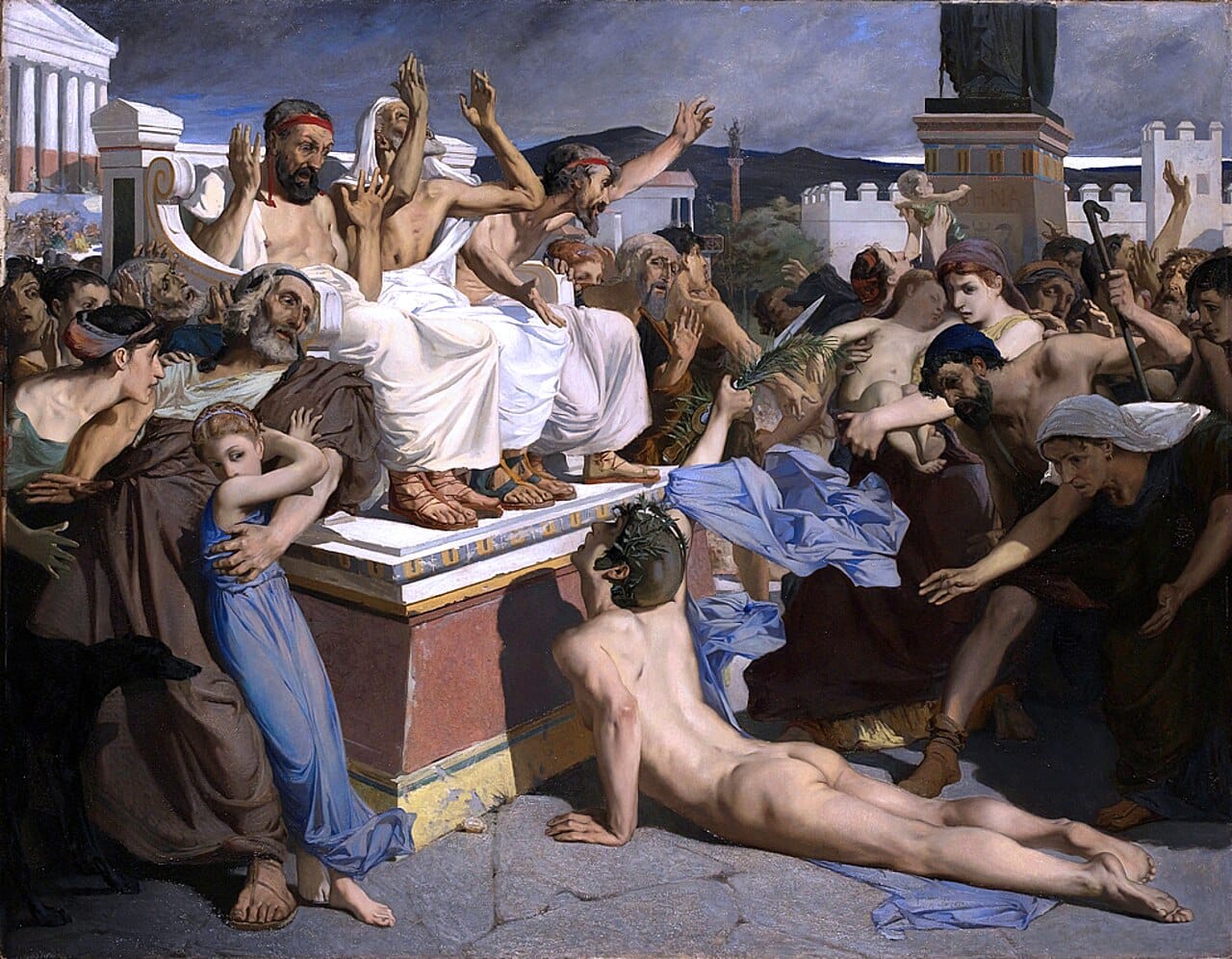
The story holds that a messenger ran from the battlefield at Marathon to Athens in 490 BCE to announce victory over the Persians, delivered the news and died.
Herodotus, writing within living memory of the battle, records something different and more plausible: Pheidippides ran from Athens to Sparta to request help before the battle, a distance of around 240 kilometres, which he covered in about two days.
The run from Marathon to Athens appears only in much later sources, several centuries afterwards, and the dramatic death appears later still.
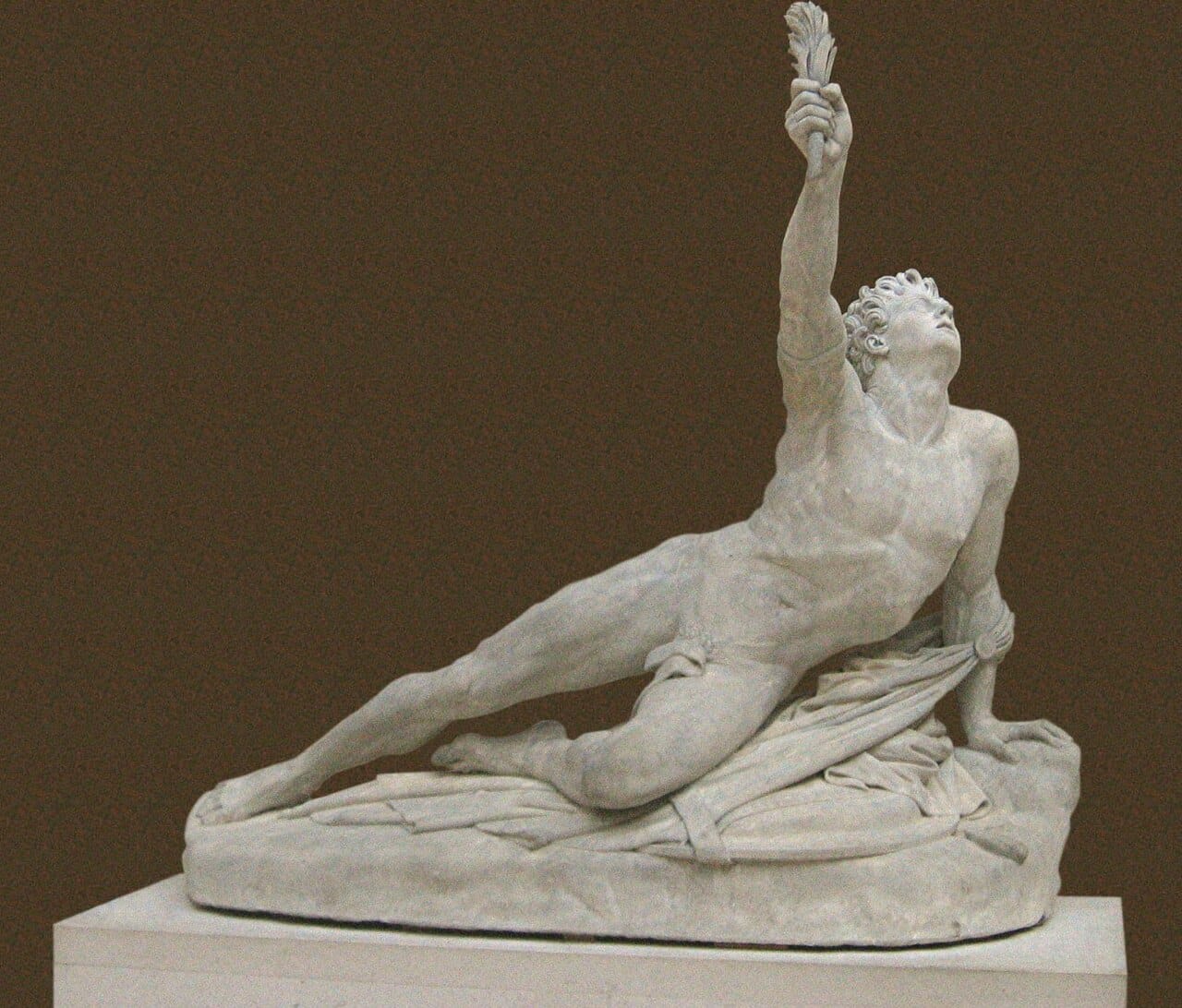
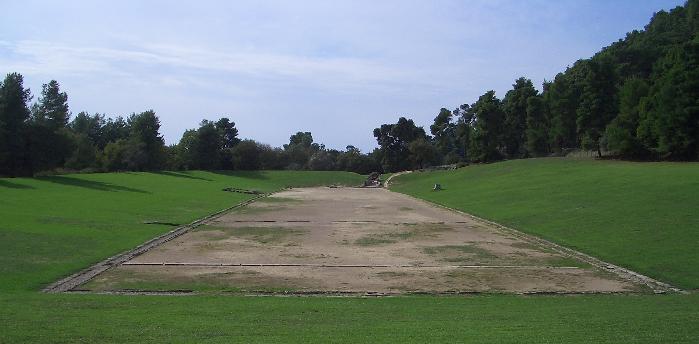
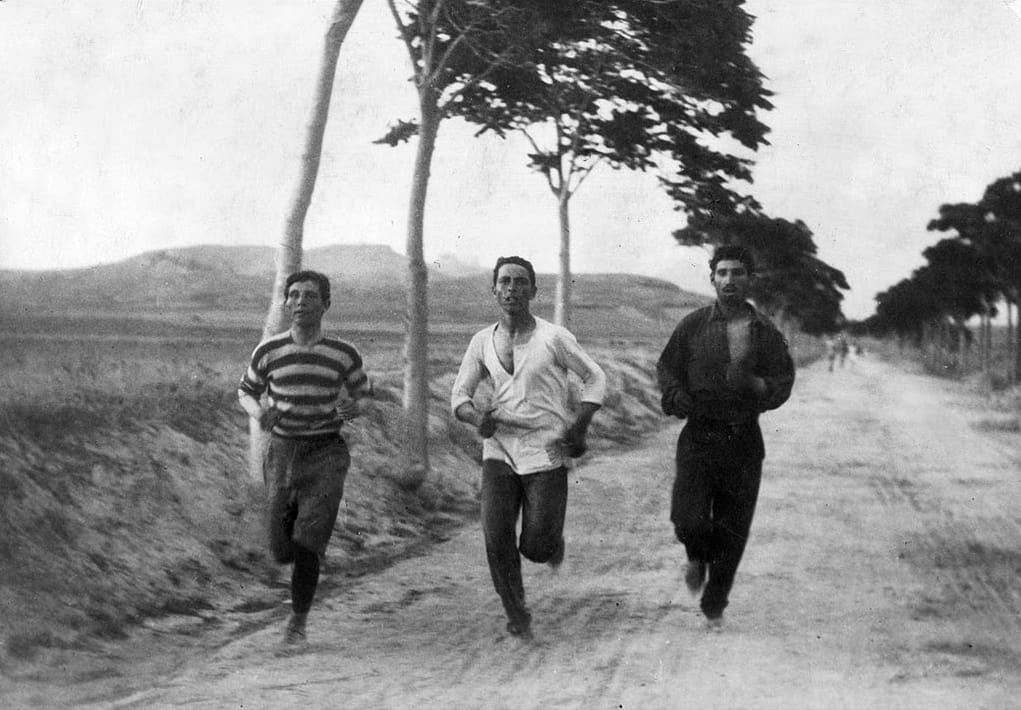
The modern race was created for the first modern Olympic Games in 1896, on a proposal to revive the legend rather than to reproduce a historical event. The connection to antiquity is therefore an invention of the 1890s built on a story that was already doubtful.
The 1896 race was approximately 40 kilometres, and early marathons varied.
The current distance was set at the 1908 London Olympics. The course ran from Windsor Castle to the stadium in London, with the finish placed in front of the royal box, and the resulting distance was 26 miles and 385 yards, or 42.195 kilometres.
That figure was adopted as standard in 1921 and has not changed since.
The distance therefore records the geography of one particular course in one particular year rather than anything about human physiology or about Greek history.
The marathon sits at a specific point relative to the body's fuel systems, which is what makes it the distinctive test it is.
Muscle glycogen is the preferred fuel at racing intensity and stores are limited to roughly ninety minutes to two hours of hard running. Elite runners complete the distance in near that time; most participants take considerably longer.
When glycogen is depleted, the body relies more heavily on fat, which yields energy more slowly, and pace falls sharply. This is the wall, generally encountered around thirty kilometres, and it is a fuel problem rather than a matter of will.
Carbohydrate intake during the race extends the supply and is standard practice, and training increases both storage capacity and the ability to use fat at higher intensities.
Hyponatremia, dangerously low blood sodium, is caused by drinking too much water rather than too little, and has caused deaths in mass-participation events. Guidance shifted from encouraging maximal fluid intake to drinking to thirst as a result, which is a clear case of advice reversing on evidence.
Heat is the other major risk, since the body generates substantial heat and its ability to shed it limits performance, which is why marathon world records are set in cool conditions.
Cardiac events are rare and receive disproportionate attention, and the absolute risk during a marathon is low, though not zero.
Mass participation is the most significant development. Marathons were competitions between small fields of specialists until the running boom of the 1970s, after which large city races admitting tens of thousands became the norm.
The major city marathons now attract enormous fields, and a substantial share of participants raise money for charity, which has become part of the event's function.
Women were excluded from official competition for decades on grounds that had no physiological basis. Kathrine Switzer ran Boston with a registered number in 1967 and a race official attempted physically to remove her, an incident that was photographed and became widely known. The women's Olympic marathon was introduced only in 1984.
The two-hour barrier for men was broken in a specially arranged event in 2019 under conditions not eligible for record purposes, including rotating pacemakers, and official records have continued to fall.
Shoe technology has become contested. Footwear incorporating carbon plates and particular foams has been shown to improve running economy by several per cent, and records have fallen rapidly since their introduction, which prompted regulation of shoe specifications.
The marathon is the endurance event most widely attempted by people who are not athletes, which makes it unusual: an elite competitive distance that has become a mass participation goal.
It is also a good illustration of how traditions are constructed. A race distance fixed by the position of a royal box in 1908, commemorating a story that the closest historian does not record, is now treated as a fixed test with ancient authority, and the invention is recent and documented.