Compulsory payments levied by a state on individuals and organisations. It funds government, and its structure determines who bears the cost of collective provision, which makes its design among the most consequential decisions any state makes.
Revenue is the obvious reason, and it is not the only one.
Redistribution transfers resources between groups, and the extent to which a system does this is the central political question about it.
Behaviour change is deliberate in some taxes. Levies on tobacco, alcohol, fuel and sugar are intended to reduce consumption, and their revenue declines if they succeed, which is a rare case of a policy whose success reduces its own yield.
Macroeconomic management uses tax to influence aggregate demand.
Taxation also has a historical relationship with political representation. The demand that those taxed should consent to the taxation drove constitutional development in several countries, and the requirement that parliaments approve taxes is the origin of much legislative power.
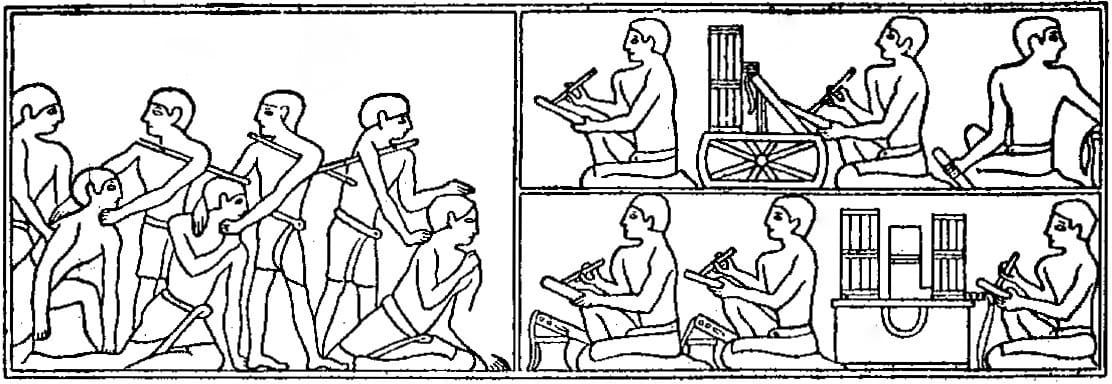
The administrative demands of taxation also drove the development of writing, record-keeping and census, as the census capsule notes.
Income tax levies a share of earnings, and is generally the largest source in developed economies. It is usually progressive, with higher rates on higher bands.
Payroll or social insurance contributions fund pensions and health systems, and are frequently levied at flat rates up to a ceiling, which makes them regressive in structure.
Consumption taxes, principally value added tax and sales tax, are levied on purchases. Value added tax is collected at each stage of production with credit for tax already paid, which makes evasion harder and is why it has been adopted almost universally outside the United States.
Corporate tax is levied on company profits, and is the most difficult to administer because profit can be shifted between jurisdictions.
Property tax is levied on land and buildings. It is hard to evade, since the base cannot be moved, and it is politically unpopular because it is visible and payable regardless of income.
Wealth, inheritance, capital gains, tariffs and excise duties make up the remainder.
A tax is progressive if it takes a larger share of income from higher earners, proportional if it takes the same share, and regressive if it takes a larger share from lower earners.
Consumption taxes are generally regressive in isolation, because lower earners spend a larger proportion of their income, and many systems exempt or reduce rates on necessities to offset this.
The relevant measure is the overall system rather than any single tax, since a regressive tax funding progressive spending can produce a redistributive result. Countries with high value added tax and extensive welfare provision are the standard illustration.
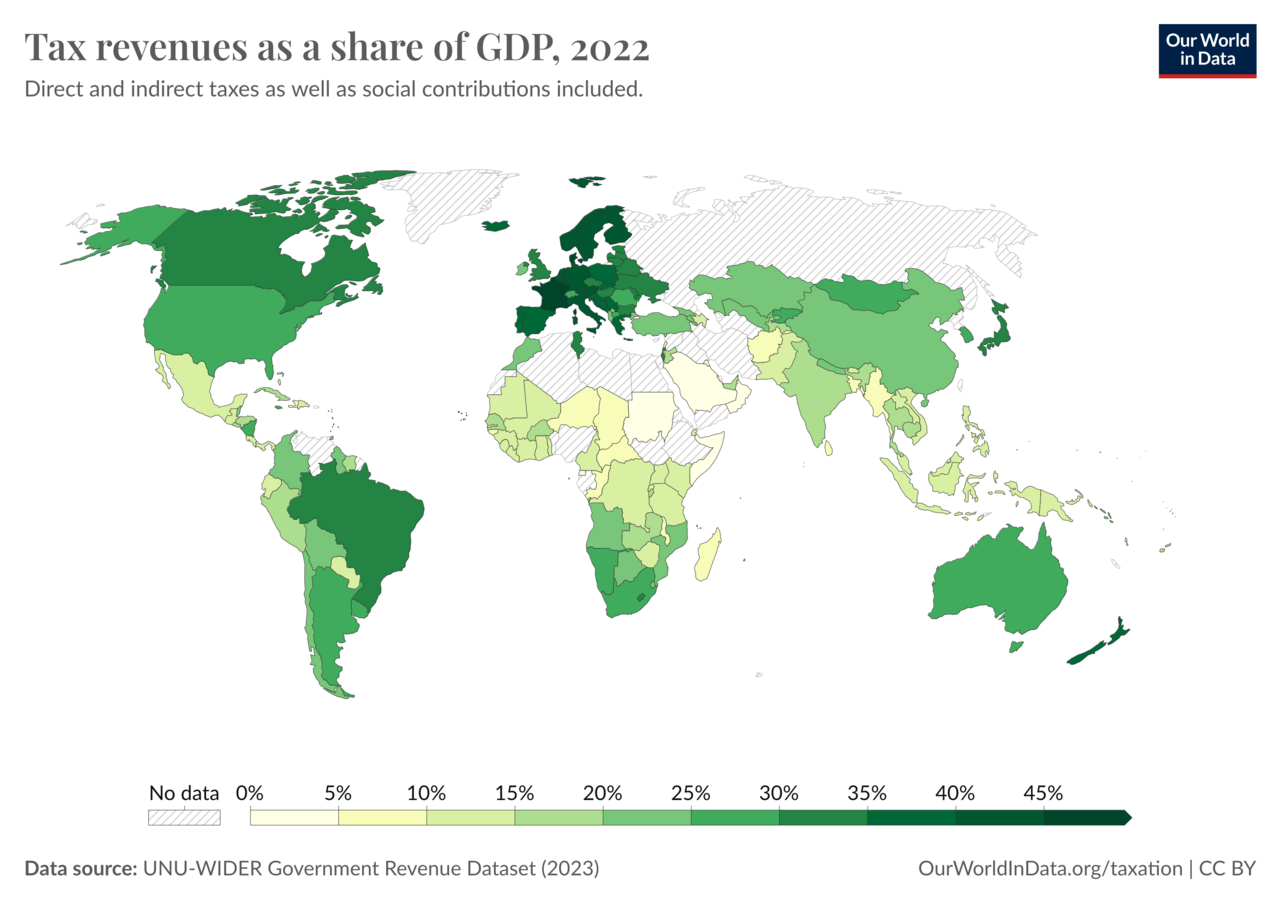
Total tax as a share of national income varies substantially between countries of comparable wealth, from roughly a quarter to close to half, which demonstrates that the level is a political choice rather than an economic necessity.

Adam Smith set out four maxims in 1776, and they remain a reasonable framework.
Equity, meaning contribution in proportion to ability. Certainty, meaning the amount and timing should be clear rather than arbitrary. Convenience, meaning collection at a time and manner that suits the payer. And efficiency, meaning the cost of collection should be small relative to the revenue.
Modern analysis adds that taxes distort behaviour, and that the distortion is a real cost. A tax on an activity discourages it, and the resulting loss is greatest where behaviour responds most.
This produces a general principle: taxing things that respond little to being taxed causes less distortion. Land is the classic example, since its supply is fixed, which is the basis of the long-standing argument for land value taxation.
Avoidance and evasion differ legally and shade into each other in practice. Corporate profit shifting between jurisdictions has driven international coordination, including an agreement on a global minimum corporate rate reached in 2021.
How progressive a system should be is the central political dispute in most democracies and is a question about values rather than about economics.
The effect of tax rates on economic growth is empirically contested, with the evidence indicating that the composition of taxation and the quality of spending matter at least as much as the level.
Whether higher rates raise proportionally less revenue at some point is accepted in principle and the location of that point is disputed, and the empirical estimates vary widely.
Corporate taxation raises the question of who ultimately bears it, since a company is not a person, and the incidence falls in some combination on shareholders, workers and customers that is genuinely difficult to determine.
Taxation determines what a state can do and who pays for it, which makes it the mechanism through which almost every other public policy is realised.
It is also unusual among government functions in being universally experienced. Most citizens interact with the state most consistently through the tax system, which is why its perceived fairness affects the legitimacy of government well beyond the revenue it raises.