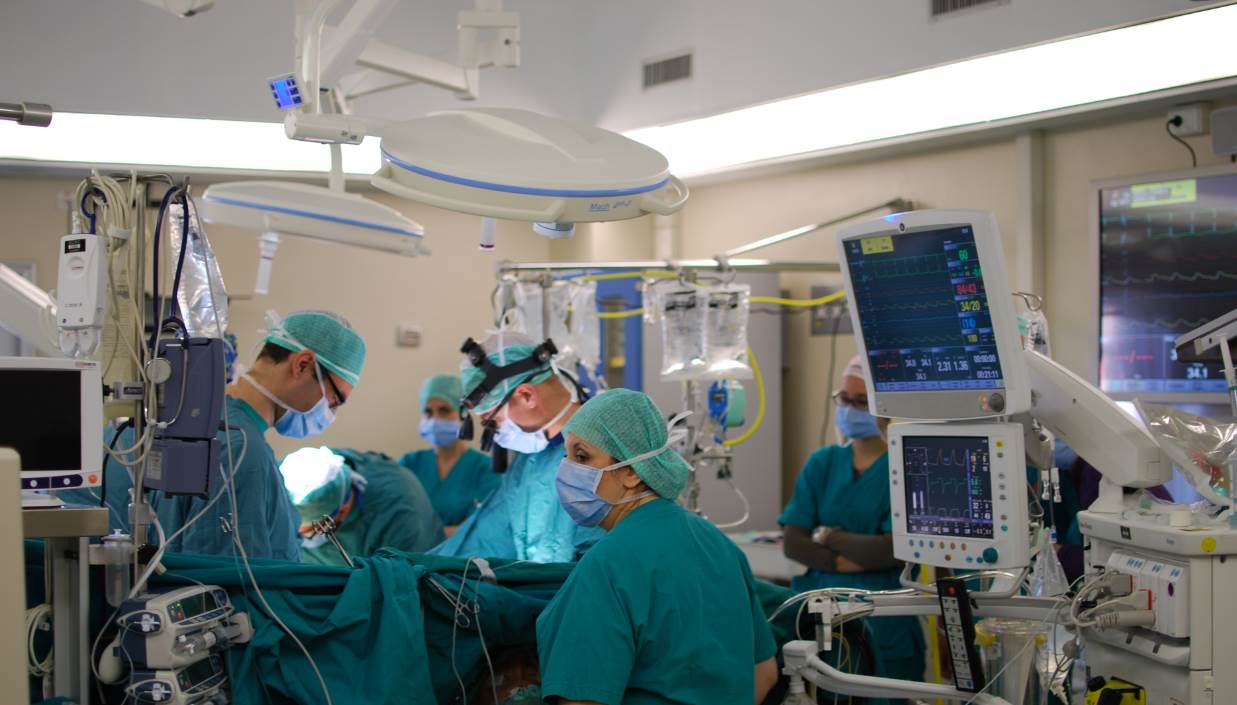
Treatment by physical intervention in the body. Surgery was limited for millennia not by knowledge of anatomy but by three specific obstacles, and the century in which those were removed transformed it from a last resort into routine medicine.
Pain limited what could be done. Without anaesthesia, an operation had to be finished in minutes, which restricted surgery to amputation and to work on the surface. Speed was the principal surgical virtue, and celebrated operators were timed.
Infection killed patients who survived the operation. Mortality after major surgery in mid nineteenth century hospitals frequently exceeded a third, and the wards where it happened were understood to be dangerous without anyone knowing why.
Bleeding could not be controlled beyond ligature and cautery, and entering the chest or abdomen risked haemorrhage that could not be stopped.
Each was solved within roughly fifty years, and the order matters: anaesthesia came first, which permitted longer operations, which made infection an even larger problem than it had been.

Trepanation, cutting a hole in the skull, is the oldest known surgical procedure, attested from the Neolithic across several continents, and healed bone margins show that patients frequently survived.
The Edwin Smith papyrus, an Egyptian text of the seventeenth century BCE copying older material, describes forty eight cases in a consistent structure of examination, diagnosis, treatment and prognosis. It is notably empirical, with little appeal to magic, and it states directly when a condition is untreatable.
Sushruta in India described numerous procedures including cataract couching and reconstructive nose surgery, the latter developed in a context where amputation of the nose was a judicial punishment, and the technique reached Europe much later.
Islamic surgeons including al-Zahrawi produced illustrated instrument catalogues and detailed operative descriptions that were used in Europe for centuries.
European surgery was long a trade rather than a profession, practised by barber-surgeons and ranked below physicians, and the separation persists in the British convention of surgeons being addressed as mister rather than doctor.
Ambroise Paré, a sixteenth century French military surgeon, replaced cauterisation of amputation wounds with ligature and dressing after running out of boiling oil during a battle and finding the untreated patients did better, which is an early instance of an accidental controlled comparison changing practice.
Anaesthesia arrived in the 1840s, with ether demonstrated publicly in Boston in 1846 and chloroform shortly after. Its effect was immediate and total: within a few years, painless surgery was standard across Europe and North America. It is treated in the general anaesthesia capsule.
Antisepsis followed. Ignaz Semmelweis showed in the 1840s that handwashing with chlorinated lime drastically reduced deaths from puerperal fever in a Vienna maternity ward, and was rejected and dismissed, dying in an asylum. Joseph Lister, working after Pasteur's germ theory gave a mechanism, introduced carbolic acid antisepsis from 1867, and his results were accepted because there was by then a reason for them to be true.
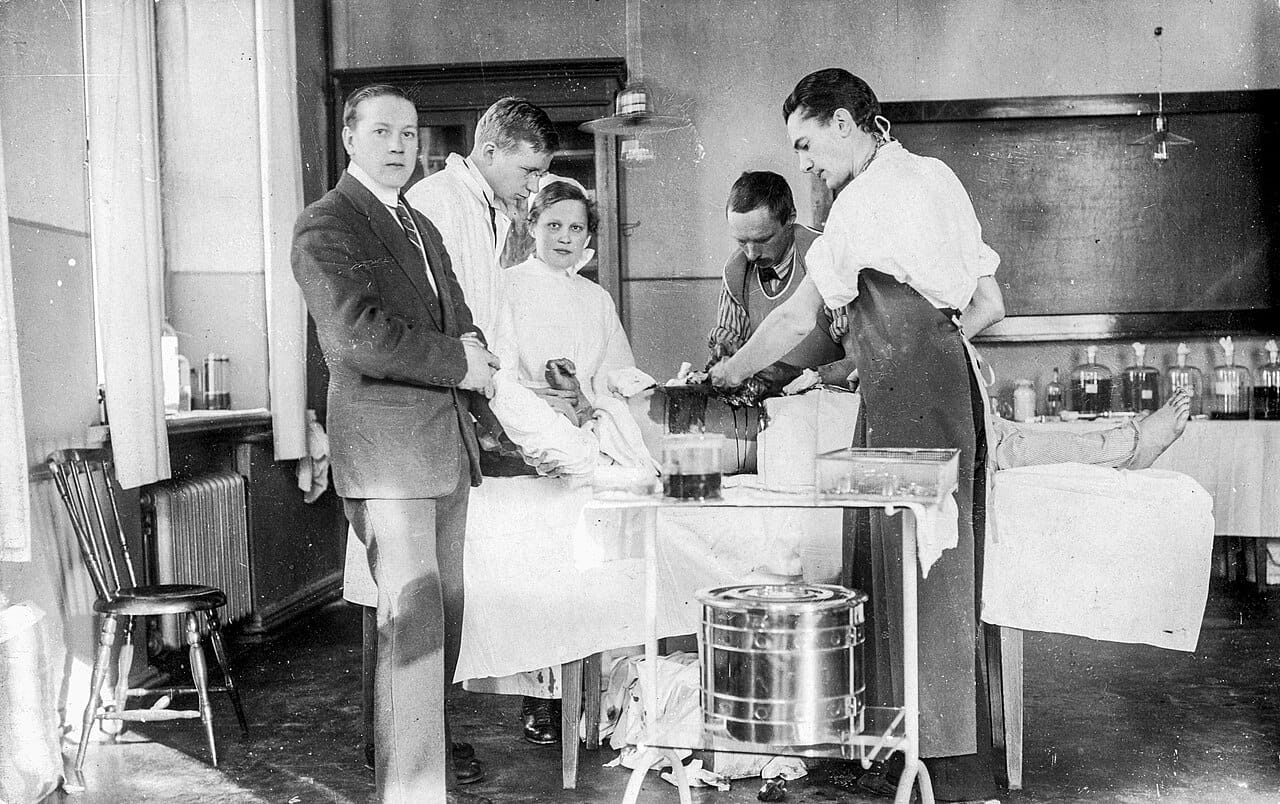
Asepsis replaced antisepsis: rather than killing organisms during the operation, keep them out entirely by sterilising instruments, gowns, gloves and the field. Rubber gloves entered use in the 1890s, initially to protect a nurse's hands from disinfectant.
Blood transfusion became safe after the discovery of blood groups in 1901, which explained why earlier transfusions had killed some patients and not others, and made major surgery survivable.
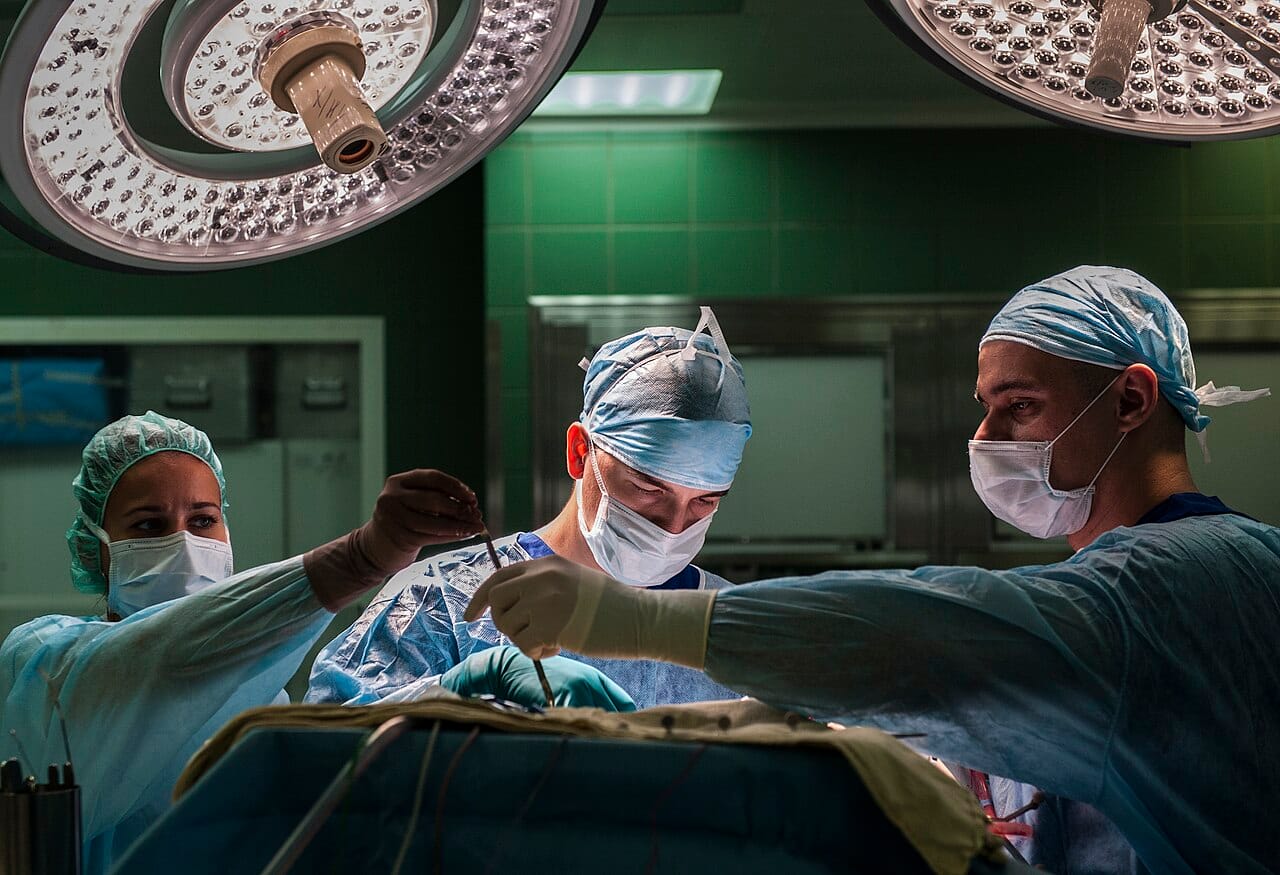
Minimally invasive surgery operates through small incisions using a camera and instruments. Recovery is faster and complications fewer for many procedures, and it requires learning to operate while watching a screen and losing direct touch.
Robotic systems give the surgeon articulated instruments and stereoscopic vision under direct control. They are not autonomous. Evidence for better outcomes over conventional laparoscopic surgery is mixed and procedure-specific, and cost is substantially higher.
Transplantation became possible once immune rejection could be suppressed, and organ availability rather than surgical technique is now the limiting factor.
Checklists have produced some of the largest measured safety improvements. The surgical safety checklist introduced through the World Health Organization, a short list of confirmations before anaesthesia, incision and leaving the theatre, was associated with substantial reductions in complications and deaths across diverse hospitals. The mechanism is partly the checks themselves and partly that it requires the team to speak to each other, which is the same finding aviation reached.
Volume is associated with outcome. Surgeons and hospitals performing more of a given procedure generally achieve better results, which is a strong argument for concentrating complex surgery and an unpopular one locally.
Surgery moved from a desperate measure performed at speed on a conscious patient to a planned intervention with a mortality risk that is, for many procedures, very low. The change took about a century and depended on three specific problems being solved.
The Semmelweis case is also the standing lesson about evidence without mechanism. He was right, his data were strong, and he was rejected because he could not say why, which is a failure that has been repeated in other forms since.