The mathematics of uncertainty. It assigns numbers between zero and one to events, and its rules are simple enough to state on a page and produce results that human intuition contradicts persistently.
A probability is a number between zero and one, where zero means impossible and one means certain.
The probabilities of all possible outcomes sum to one.
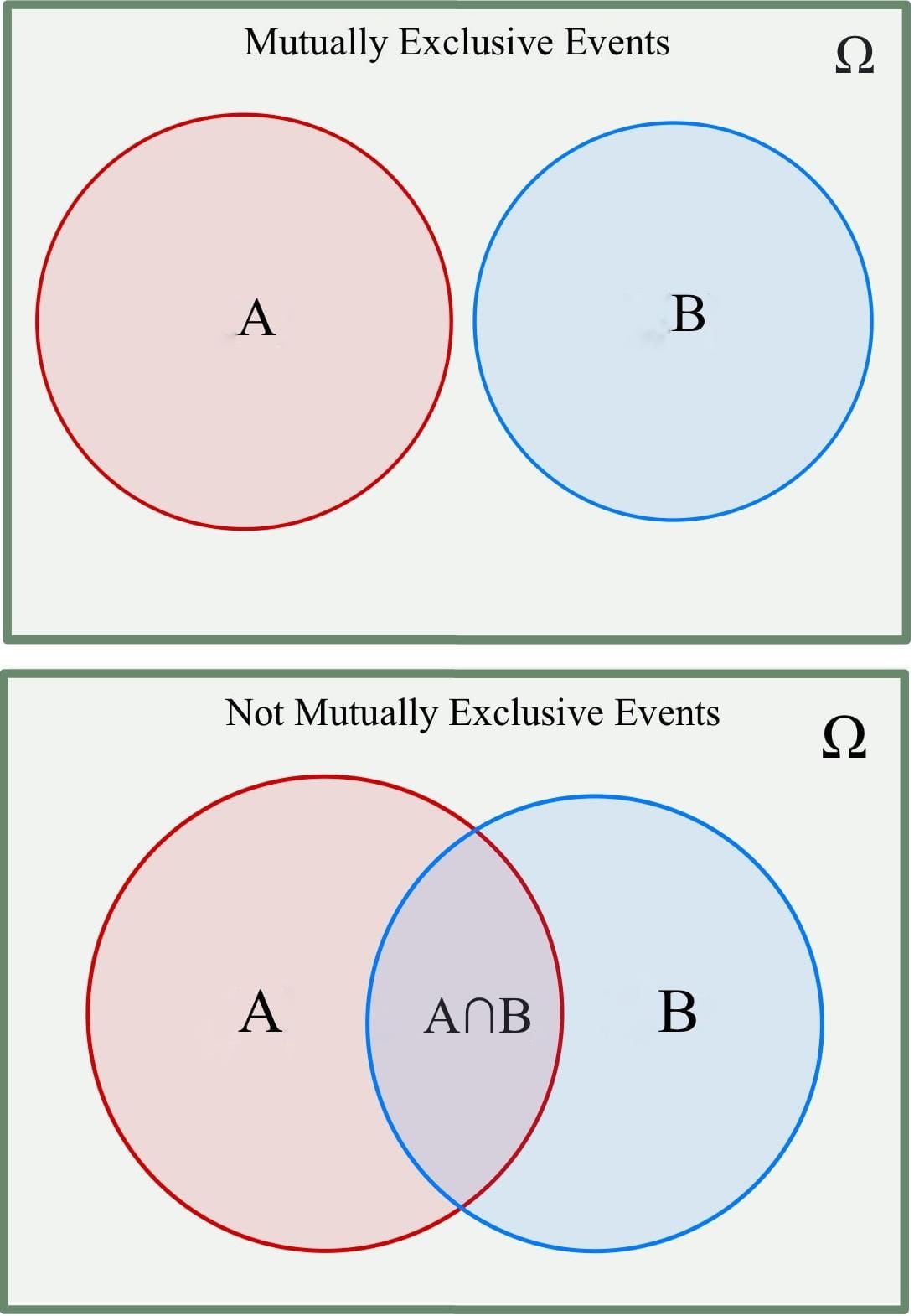
For events that cannot occur together, the probability of either occurring is the sum of their probabilities. For events that can overlap, adding them double-counts the overlap, which must be subtracted.
For independent events, the probability of both occurring is the product of their probabilities. Independence means that one occurring does not change the probability of the other, and assuming it wrongly is among the most consequential errors in applied probability.
Conditional probability is the probability of one event given that another has occurred, and it is generally different from the unconditional probability and from the reverse conditional.
Kolmogorov set out the axioms in 1933, placing the subject on a rigorous foundation over two centuries after its practical development.

The mathematics developed from gambling problems, which is unusual for a field of such generality.
Gerolamo Cardano wrote on games of chance in the sixteenth century, and his work was published posthumously in 1663.
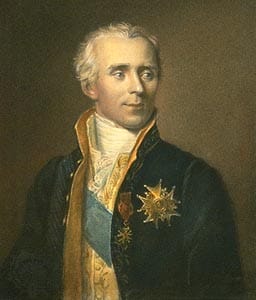
The correspondence between Blaise Pascal and Pierre de Fermat in 1654, concerning how to divide stakes in an interrupted game, is generally taken as the field's foundation.

Christiaan Huygens published the first book on the subject in 1657 and introduced expected value, the average outcome weighted by probability.
Jacob Bernoulli proved the law of large numbers, establishing that observed frequency converges on the underlying probability as trials increase, which connects the mathematics to the world.
The subject's application widened to insurance, actuarial work, statistical mechanics and eventually to almost every quantitative field.
Two interpretations coexist and the disagreement is substantive rather than semantic.
The frequentist interpretation holds that a probability is the long-run relative frequency of an outcome in repeated trials. On this account a probability applies to a repeatable procedure and not to a single unrepeatable event.
The Bayesian interpretation holds that a probability is a degree of belief, updated as evidence arrives. On this account it is meaningful to assign a probability to a one-off event, which the frequentist interpretation cannot.
The practical difference appears in statistical method. Frequentist inference asks how likely the data would be if a hypothesis were true; Bayesian inference asks how likely the hypothesis is given the data, and requires a prior belief to be stated.
Both are used, and the choice is often determined by the problem rather than by conviction.
Probability is unusual among mathematical subjects in that trained intuition is frequently wrong, and the failures are systematic enough to have been catalogued.
The conjunction fallacy: people judge a specific detailed scenario more probable than a general one that includes it, which is impossible, since adding a condition cannot increase probability.
Base rate neglect: people ignore how common something is when assessing evidence for it. A test that is ninety nine per cent accurate for a condition affecting one person in ten thousand produces far more false positives than true ones, and this is routinely misjudged by patients and clinicians alike.
The gambler's fallacy: believing that independent events compensate, so that a run of one outcome makes the other more likely. A fair coin has no memory.
The birthday problem: in a group of twenty three people, the probability that two share a birthday exceeds one half, which almost everyone underestimates.
The Monty Hall problem, treated in its own capsule, produces confident wrong answers from mathematically trained people.
Confusion of conditional probabilities: the probability of evidence given guilt is not the probability of guilt given evidence, and conflating them is common enough in court to have been named the prosecutor's fallacy.
The general lesson is that probability requires calculation rather than intuition, and that the confident feeling of an obvious answer is a poor guide.
Insurance and actuarial work price risk by expected loss.
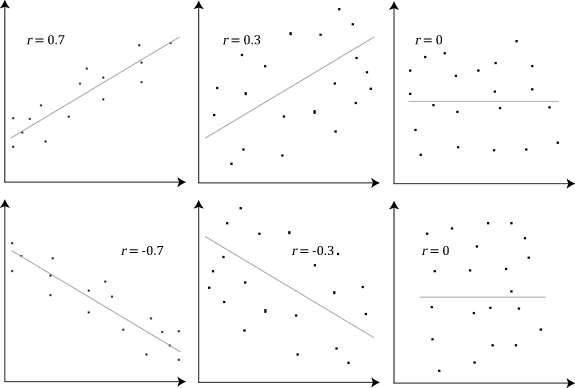
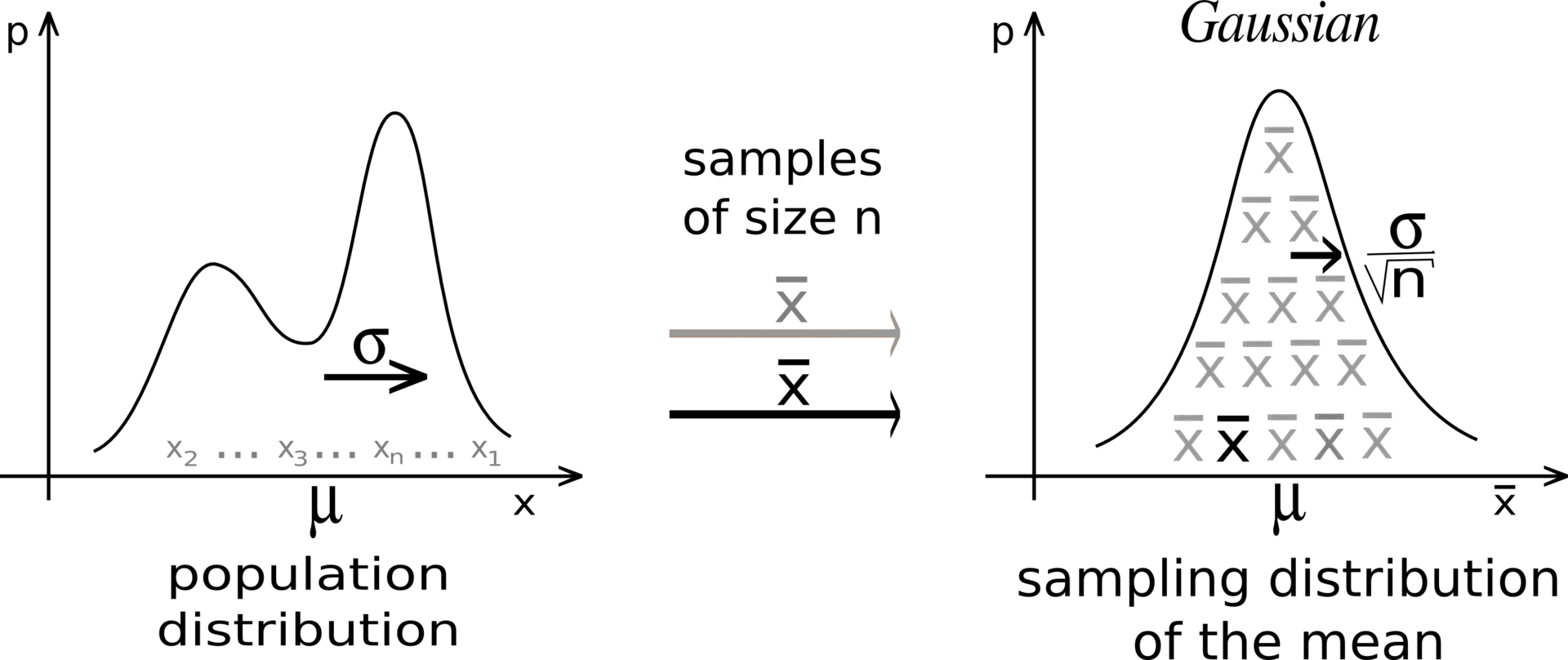
Statistical inference, described in the sampling and correlation capsules, rests on it entirely.
Physics uses it fundamentally rather than as an approximation, since quantum mechanics gives probabilities for outcomes rather than definite predictions.
Machine learning is largely applied probability, with models estimating the likelihood of outcomes given inputs.
Medicine uses it for diagnosis, screening and prognosis, and communicating it to patients is a recognised difficulty that the numeracy capsule addresses.
Cryptography, weather forecasting, finance and reliability engineering all depend on it.
Probability is the only rigorous framework for reasoning about uncertainty, and almost every decision of consequence is made under uncertainty.
Its persistent counterintuitiveness is also its most practical lesson. A subject in which the rules are simple and the intuitions are reliably wrong is one where the discipline of working it out is worth more than confidence.