Originalism is the view that a constitution should be interpreted according to what it meant when it was adopted, and that its meaning does not change unless the text is amended. It became the dominant conservative approach to American constitutional interpretation from the 1980s, and it is opposed by those who argue that a document of the eighteenth century cannot govern the twenty-first without interpretive development.
Early formulations focused on the intentions of the framers. Criticism pushed the theory toward original public meaning: not what the drafters privately intended, which is unknowable and often conflicting, but what the words would have conveyed to a reasonably informed member of the public at the time of ratification. Antonin Scalia, the theory's most effective advocate, put the case in these terms and made the approach central to a generation of American jurisprudence.
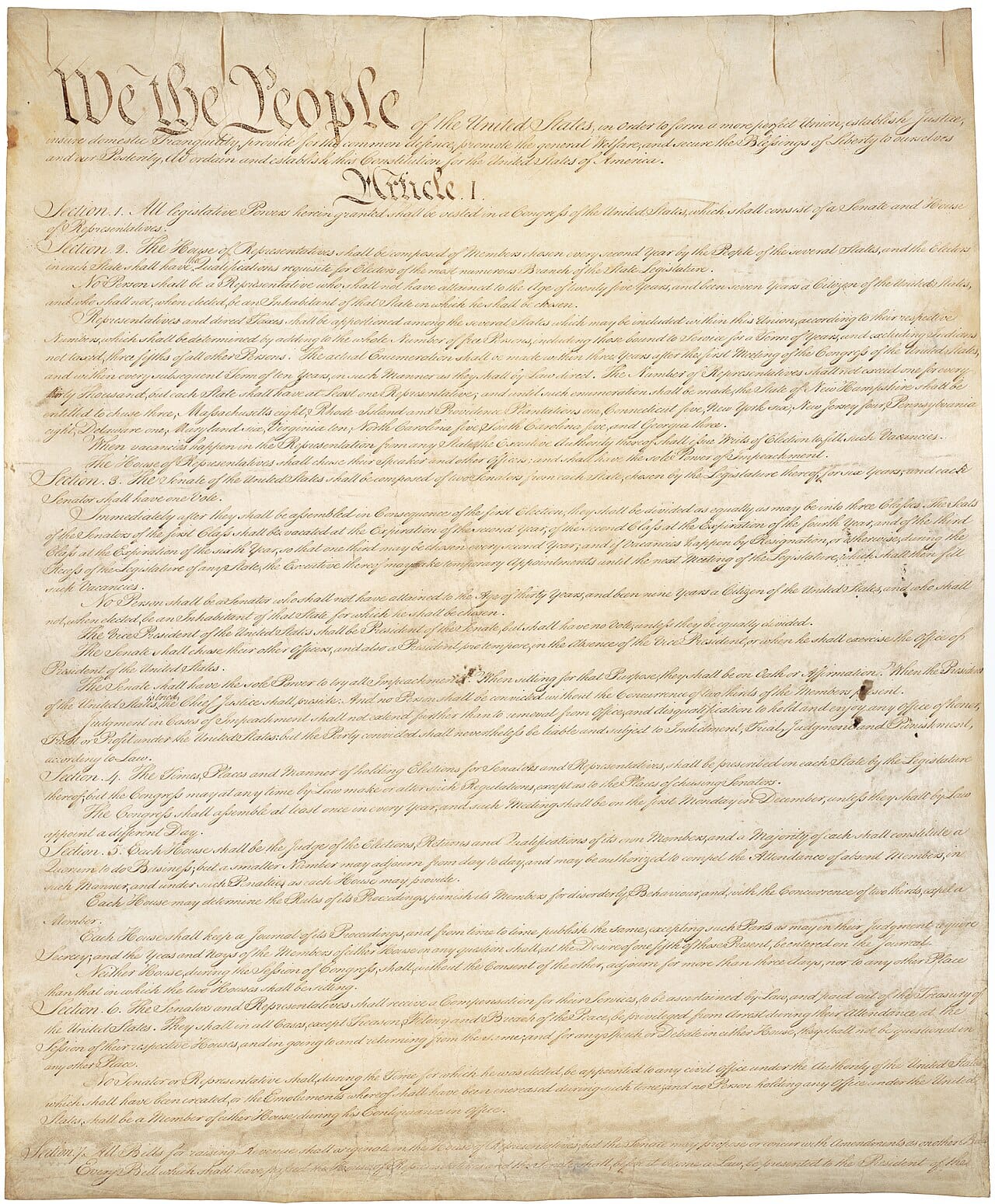
The case rests mainly on democratic legitimacy and constraint. A constitution derives its authority from having been ratified by the people; if judges may update its meaning, they are exercising a power the people never delegated, and constitutional law becomes whatever a majority of a court prefers. Article Five provides a procedure for change, and the existence of that procedure implies that change should proceed through it.
Originalists also argue the method is more determinate than the alternatives. A judge asked what the text meant in 1791 is answering a historical question with evidence that can be examined and contested; a judge asked what the text should mean today is answering a moral question with no such discipline.
The history is often indeterminate. Critics argue that the founding generation disagreed among themselves, that evidence is thin on many questions, and that judges without historical training reach the conclusions they favour, a practice critics call law office history. Professional historians have frequently disputed the accounts given in judicial opinions.
Consequences the theory struggles with. The most-cited difficulty is Brown v. Board of Education, since the Congress that adopted the Fourteenth Amendment also segregated the schools of the District of Columbia. Originalists have offered answers, arguing that the amendment's public meaning was broader than its authors' expected applications, but critics regard the manoeuvre as showing the method bends to reach acceptable results.
Living constitutionalism. The main rival holds that broad phrases such as due process, equal protection, and cruel and unusual punishment were written as standards rather than rules, and were meant to be applied to circumstances the drafters could not foresee. On this view judicial development is what the text invites rather than a departure from it.
Selective application. Critics note that the approach is applied with more enthusiasm in some areas than others, and that judgments about which precedents to leave undisturbed reintroduce exactly the discretion originalism claims to remove.
Originalism is now sufficiently dominant in American practice that arguments are frequently framed in its terms even by those unpersuaded by it. That success has produced internal division: originalists disagree among themselves about the level of generality at which meaning should be fixed, and about what to do when the original meaning conflicts with long-settled precedent. Outside the United States the debate has less purchase, since most constitutions are more recent, more easily amended, or explicitly framed as living instruments.