A change in the sequence of an organism's DNA. Mutations are the ultimate source of all genetic variation, most have no effect, some cause disease, and a small minority are the raw material of evolution.
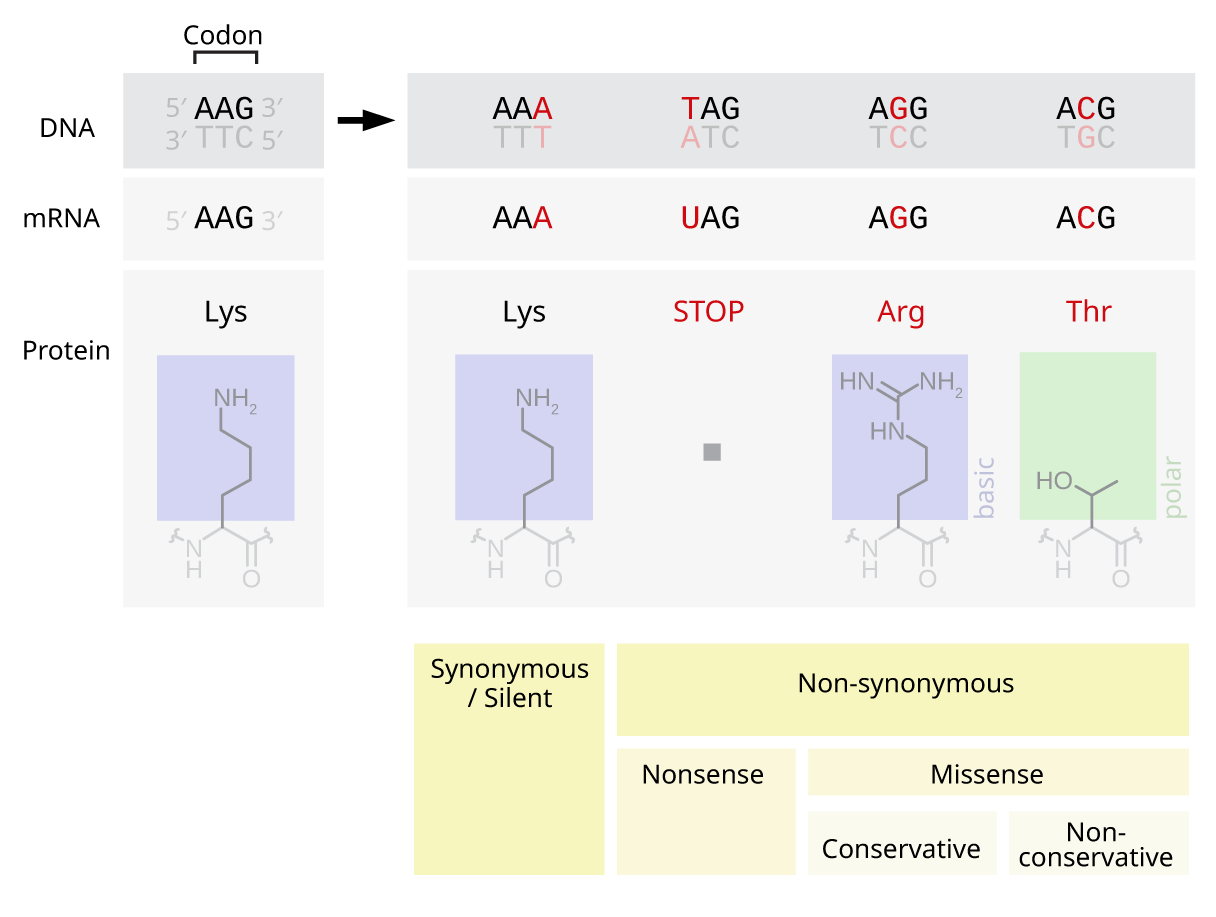
Point mutations change a single base. Their consequences vary enormously depending on position.
A silent mutation changes the DNA and not the protein, because the genetic code is redundant and several triplets specify the same amino acid.
A missense mutation substitutes one amino acid for another. The effect ranges from none to severe depending on where in the protein it falls and how different the substituted amino acid is.
A nonsense mutation creates a stop signal, truncating the protein, and is usually severe.
Insertions and deletions add or remove bases. If the number is not a multiple of three, the reading frame shifts and everything downstream is misread, which usually destroys the protein entirely.
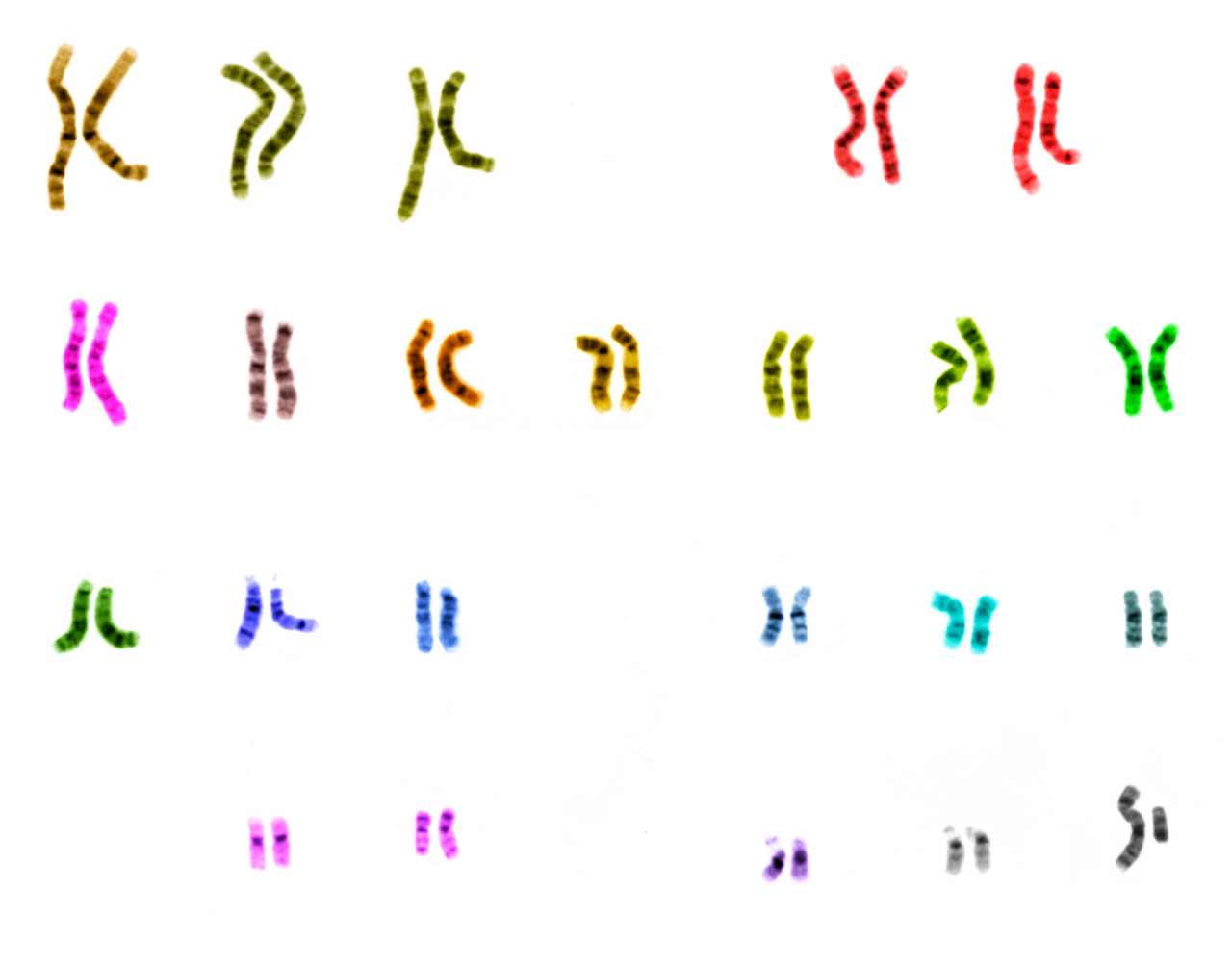
Larger changes include duplications, inversions, and translocations, treated in the chromosomes capsule. Whole-gene duplication is particularly important over evolutionary time, because a spare copy is free to accumulate changes while the original continues to function, which is a principal route to genuinely new genes.
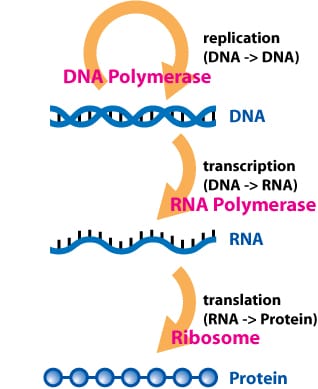
Replication errors occur because copying is not perfect. DNA polymerase makes mistakes at a low rate and proofreads much of what it gets wrong, and mismatch repair corrects most of the remainder. The combined error rate after repair is extremely low, roughly one error per hundred million to ten billion bases copied.
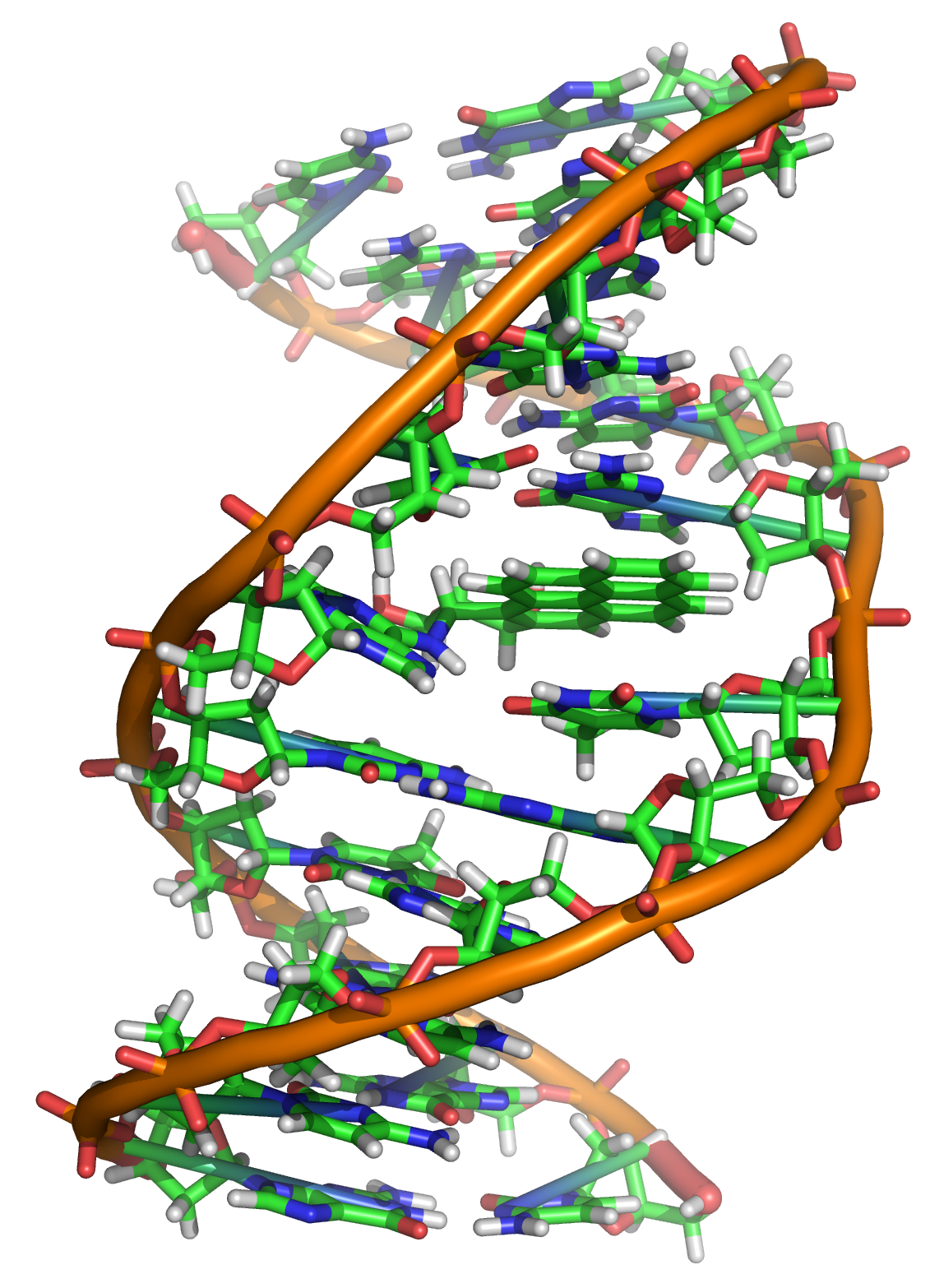
Chemical damage occurs constantly, independent of replication. Bases deaminate, lose their attachment to the backbone, or oxidise, and each cell suffers many thousands of such events per day. Almost all are repaired.
Radiation causes damage directly. Ultraviolet light fuses adjacent bases, which is the principal mechanism of skin cancer, and ionising radiation breaks strands.
Mutagens are chemicals that increase the rate, including those in tobacco smoke and various industrial compounds. The Ames test screens for them by measuring whether a substance raises the mutation rate in bacteria.
Errors in repair are themselves a source. Some repair pathways are error-prone, and a cell facing extensive damage will use them rather than fail to replicate.
The distinction determines what a mutation can affect.
Germline mutations occur in cells producing eggs or sperm and are transmitted to offspring, appearing in every cell of the resulting organism. Only these matter for inheritance and for evolution.
Somatic mutations occur in body cells and affect only that cell and its descendants. They are not inherited. They accumulate throughout life and are the basis of cancer, which arises when a lineage of cells accumulates mutations that release it from the controls on division.
Every adult carries a large number of somatic mutations, with different tissues accumulating them at different rates, and the great majority have no consequence.

Most mutations are neutral. They fall in regions without function, or they are silent, or they change something that does not matter. This is the observation behind the neutral theory of molecular evolution, treated in its own capsule.
Harmful mutations are the next largest category among those with any effect, because a change to a functioning system is far more likely to break it than improve it. Selection removes them, at a rate depending on how harmful they are and on population size.
Beneficial mutations are rare and are the reason adaptation occurs. Documented examples include the mutations conferring antibiotic resistance in bacteria, lactase persistence in adult humans in populations with a history of dairying, and the sickle cell variant, which causes disease in double dose and confers malaria resistance in single dose.
That last case is the standard illustration that beneficial and harmful are not properties of a mutation alone but of a mutation in an environment.
The human germline mutation rate is roughly one hundred to two hundred new mutations per individual, of which only a handful fall in protein-coding sequence.
Paternal age has a measurable effect, because sperm are produced by continuing cell division throughout life while eggs are largely formed before birth, so older fathers transmit more new mutations.
Mutation rates vary across the tree of life and are themselves subject to selection. Too high a rate destroys information faster than selection can remove the damage; too low a rate is expensive in repair machinery and limits adaptability. RNA viruses have very high rates, which is why influenza and coronaviruses evolve quickly enough to escape immunity and why some antiviral strategies work by pushing the rate higher still until the virus fails.
Mutation is the only source of new genetic variation. Recombination shuffles existing variants and selection sorts them, and neither creates anything new, so evolution has no material to work with without it.
It is simultaneously the mechanism of most genetic disease and of cancer, which is the central tension: the same process that makes adaptation possible makes the organism's own genome unreliable over a lifetime.