The account of chemical bonding in which electrons occupy orbitals belonging to the whole molecule rather than to individual bonds. It explains facts that the localised picture of shared pairs cannot, and it is the framework behind spectroscopy, colour and the electronic structure of solids.
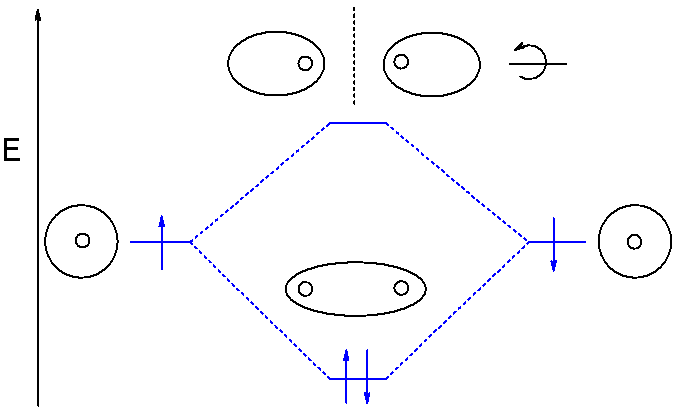
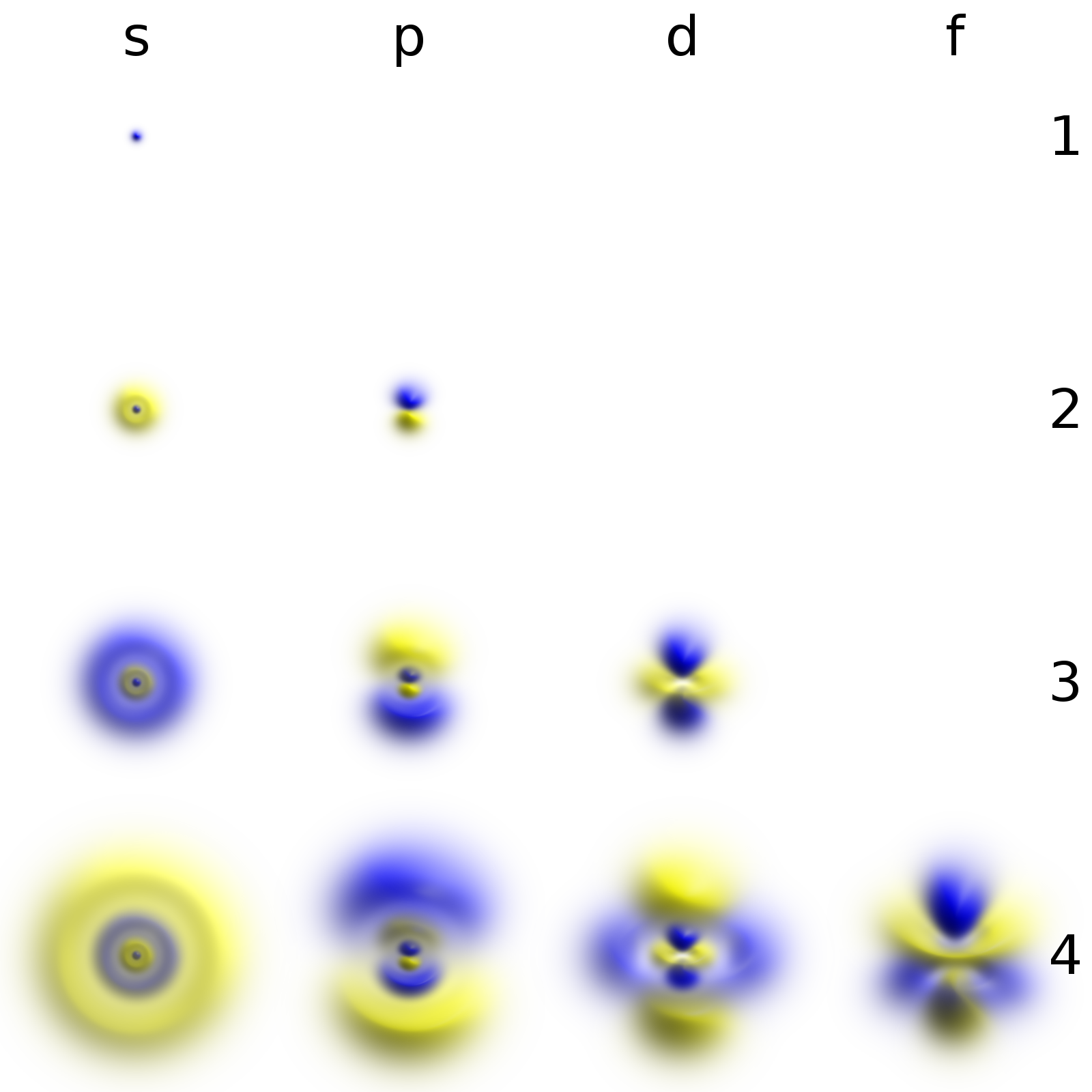
Atomic orbitals on different atoms are combined mathematically, in the approach known as linear combination of atomic orbitals. Combining two atomic orbitals produces two molecular orbitals: one lower in energy than either parent, the bonding orbital, and one higher, the antibonding orbital.
Electrons then fill these molecular orbitals from the bottom, obeying the Pauli principle and Hund's rule, exactly as electrons fill atomic orbitals in an atom.
Bond order is defined as half the difference between the number of electrons in bonding orbitals and the number in antibonding orbitals. It reproduces the familiar single, double and triple bonds and also allows values such as one half, which the shared-pair picture cannot express.
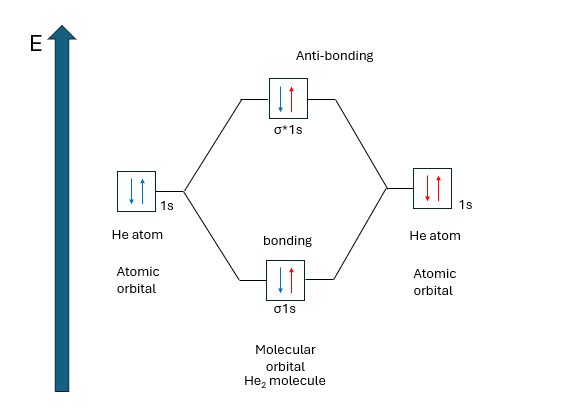
Why helium does not form a diatomic molecule. Four electrons fill both the bonding and the antibonding orbital, the bond order is zero, and there is no net bonding. The Lewis picture has no natural way to express this, and molecular orbital theory produces it directly.
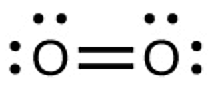
Why oxygen is paramagnetic. The Lewis structure of oxygen has a double bond and all electrons paired, and it therefore predicts no magnetism. Liquid oxygen is visibly attracted to a magnet. In the molecular orbital treatment, the last two electrons occupy two degenerate antibonding orbitals singly with parallel spins, exactly as Hund's rule requires, giving two unpaired electrons and a bond order of two. This is the standard demonstration that the theory is not merely an alternative formalism but a better description.
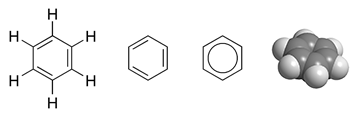
Why benzene behaves as it does. Rather than alternating single and double bonds, the electrons occupy orbitals extending around the ring. All six carbon to carbon bonds are identical in length, and the molecule is far more stable than the alternating structure predicts.
Why molecules absorb the light they do. The energy gap between the highest occupied and lowest unoccupied molecular orbital determines the wavelength absorbed, which makes the theory the basis of ultraviolet and visible spectroscopy and the explanation of colour in dyes and pigments.
Molecular orbital theory is often presented as having defeated valence bond theory, which is not accurate and is worth correcting.
Valence bond theory, developed by Linus Pauling and others, treats bonds as localised electron pairs between specific atoms, with hybridisation accounting for molecular geometry. It matches chemical intuition well, and the arrow-pushing that organic chemists use daily is its descendant.
The two approaches are different approximations to the same underlying quantum mechanics, and when each is extended sufficiently they converge. In practice they are used for different purposes: valence bond reasoning for structure and mechanism, molecular orbital reasoning for spectroscopy, magnetism, and anything involving delocalisation or excited states.
The theory was developed principally by Friedrich Hund and Robert Mulliken from the late 1920s, with John Lennard-Jones and Erich Hückel making key contributions. Mulliken received the Nobel Prize in Chemistry in 1966.
Extending the same construction from two atoms to an enormous number gives bands of closely spaced levels rather than discrete orbitals, which is the band theory treated in its own capsule. The continuity between a hydrogen molecule and a copper wire is a single idea applied at two scales.
Frontier orbital theory, which considers only the highest occupied and lowest unoccupied orbitals, predicts the course of many reactions and underlies the rules governing which cyclisations are allowed.
Modern computational chemistry, including density functional methods, works in an orbital framework, so essentially all molecular modelling is downstream of this picture.
Molecular orbital theory is the point at which chemistry became a quantitative consequence of quantum mechanics rather than a set of rules about valence. Its most persuasive credential is oxygen: a common substance whose most obvious magnetic property is predicted incorrectly by the picture taught first and correctly by this one.