The proposal that genetic differences accumulate at a roughly constant rate, so counting them dates the split between two lineages. It transformed how evolutionary history is reconstructed, its constancy was disputed from the beginning, and it currently disagrees with the fossil record in ways nobody has resolved.
Emile Zuckerkandl and Linus Pauling noticed around 1962 that the number of amino acid differences between the haemoglobin of two species was roughly proportional to how long ago they had diverged, as judged from fossils.

If that holds generally, then molecular differences are a clock. Calibrate the rate against a divergence with a good fossil date, and every other divergence can be dated from sequence alone.
The implications were large. Groups with poor fossil records, which is most groups, become datable. Divergences leaving no fossils at all become accessible. And relationships can be tested independently of morphology.
The theoretical justification came from Motoo Kimura's neutral theory in 1968.
Most mutations that reach fixation, on this account, are neutral: they neither help nor harm, and they spread by random drift rather than selection. The rate at which neutral mutations fix turns out to equal the rate at which they arise, independent of population size, which is a clean and surprising result.
If mutation rate per generation is roughly constant, the substitution rate should be too. That is the theoretical basis of the clock, and it means the clock's validity depends on the neutral theory being substantially correct.
The clock is not one clock and it does not run evenly. The departures are numerous and well documented.
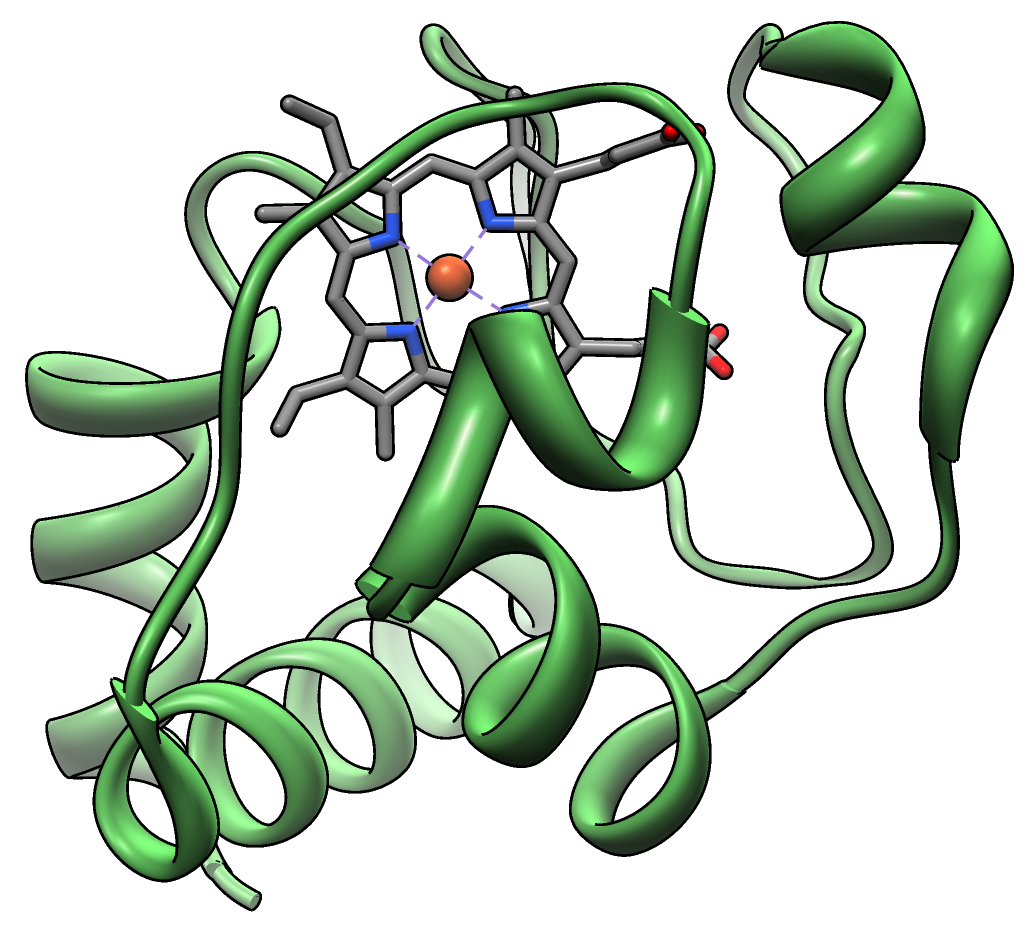
Different molecules run at different rates. Cytochrome c changes slowly because almost every position matters functionally; fibrinopeptides change quickly because almost none do. This is manageable, since each molecule can be calibrated separately.
Generation time varies. If mutations arise mainly during DNA replication in the germ line, species with short generations accumulate them faster per year. Rodents show higher substitution rates than primates, which fits.
Metabolic rate and body size correlate with substitution rate, plausibly through oxidative damage and through generation time.
DNA repair efficiency differs between lineages.
Selection intrudes. Where a gene is under positive selection or changing function, its rate departs sharply from any neutral expectation.
The response has been methodological rather than conceptual. Relaxed clock models allow the rate to vary across the tree, estimating it from the data with a prior on how much it can change between branches, and Bayesian methods now integrate multiple fossil calibrations with uncertainty attached to each. These are substantial improvements and they do not remove the underlying problem: the more the rate is allowed to vary, the more the answer depends on the calibrations and the priors rather than on the sequences.
The most consequential disagreement is between molecular dates and the fossil record, and it is systematic rather than random.
Molecular estimates consistently place divergences earlier than fossils do, sometimes by a wide margin.
Placental mammal orders are the standard case. Molecular clocks generally place their diversification well before the end-Cretaceous extinction; the fossil record shows them appearing after it. The difference bears directly on whether the extinction of the dinosaurs caused the mammal radiation or merely coincided with a radiation already under way.
Animal phyla show the same pattern relative to the Cambrian. Bird orders, flowering plants and several other groups do too.
Two readings compete. The fossil record is incomplete, and early members of a lineage are small, rare and unlikely to fossilise, so first appearances are minimum dates that systematically lag the true divergence. Or molecular clocks are biased toward older dates, through rate variation early in a radiation, through saturation of substitutions over long intervals, or through calibration priors that push estimates back.
Both are partly true and the field has not converged on how much of the gap each accounts for.
Despite the difficulties, the method has produced results that were unexpected and have held.
Humans and chimpanzees were shown to have diverged far more recently than the palaeoanthropology of the time allowed. Vincent Sarich and Allan Wilson argued in 1967 for around five million years against a prevailing figure of fifteen to thirty. They were attacked for it and were correct.
Whale relationships were resolved molecularly, placing them within the even-toed ungulates and closest to hippopotamuses, which morphology had not suggested and which fossil ankle bones later confirmed.
Human population history, including the timing of the migration out of Africa and of Neanderthal admixture, rests substantially on molecular dating.
Pathogen evolution uses the same machinery on much shorter timescales, and it works well there because sequences sampled at known dates provide direct calibration. Tracing the origin of an outbreak, or the emergence of a variant, is routine molecular clock analysis with an unusually good calibration.
That molecular differences accumulate over time is a fact. That they do so at a rate constant enough to date divergences reliably is the claim, and it is true to an approximation that varies by lineage, by molecule and by timescale.
The method works well over short intervals with dense sampling and direct calibration, and its uncertainty grows substantially at deep timescales, which is exactly where it is most often used and most needed.