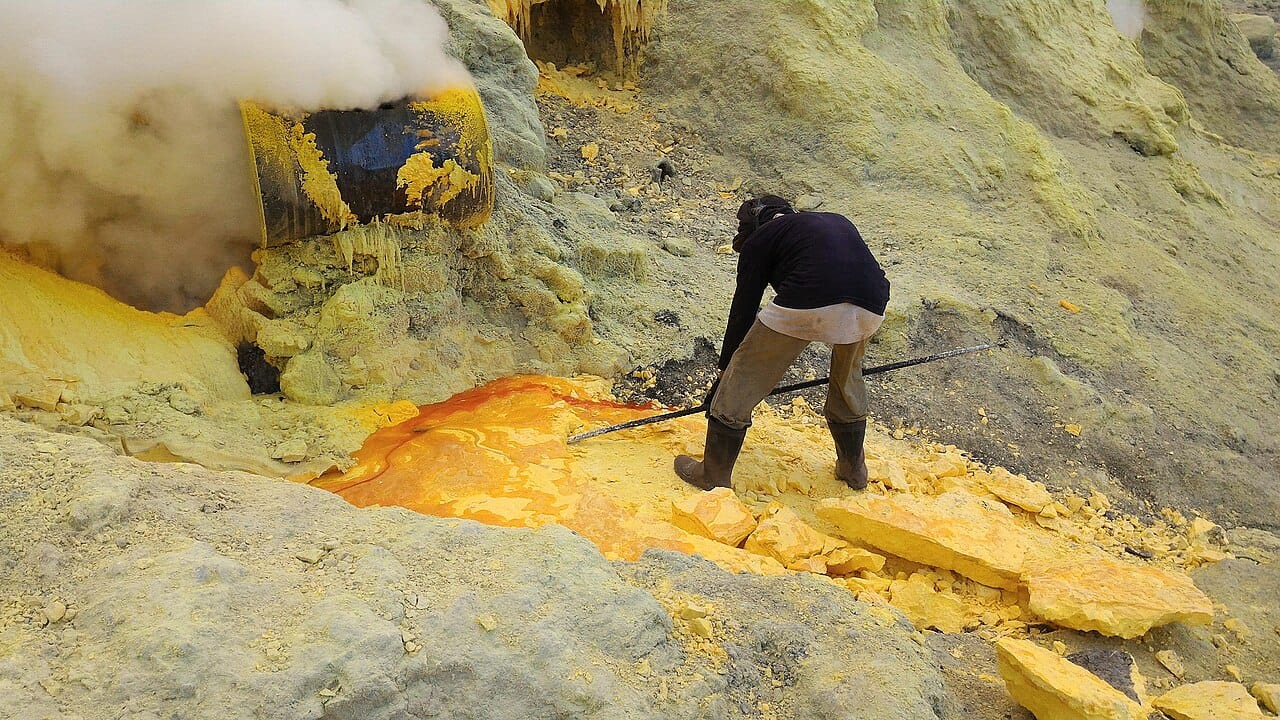
Extracting minerals from the ground. Every manufactured object contains material that was mined, the industry has been transformed by scale and mechanisation, and its environmental and human costs are among the largest of any economic activity.
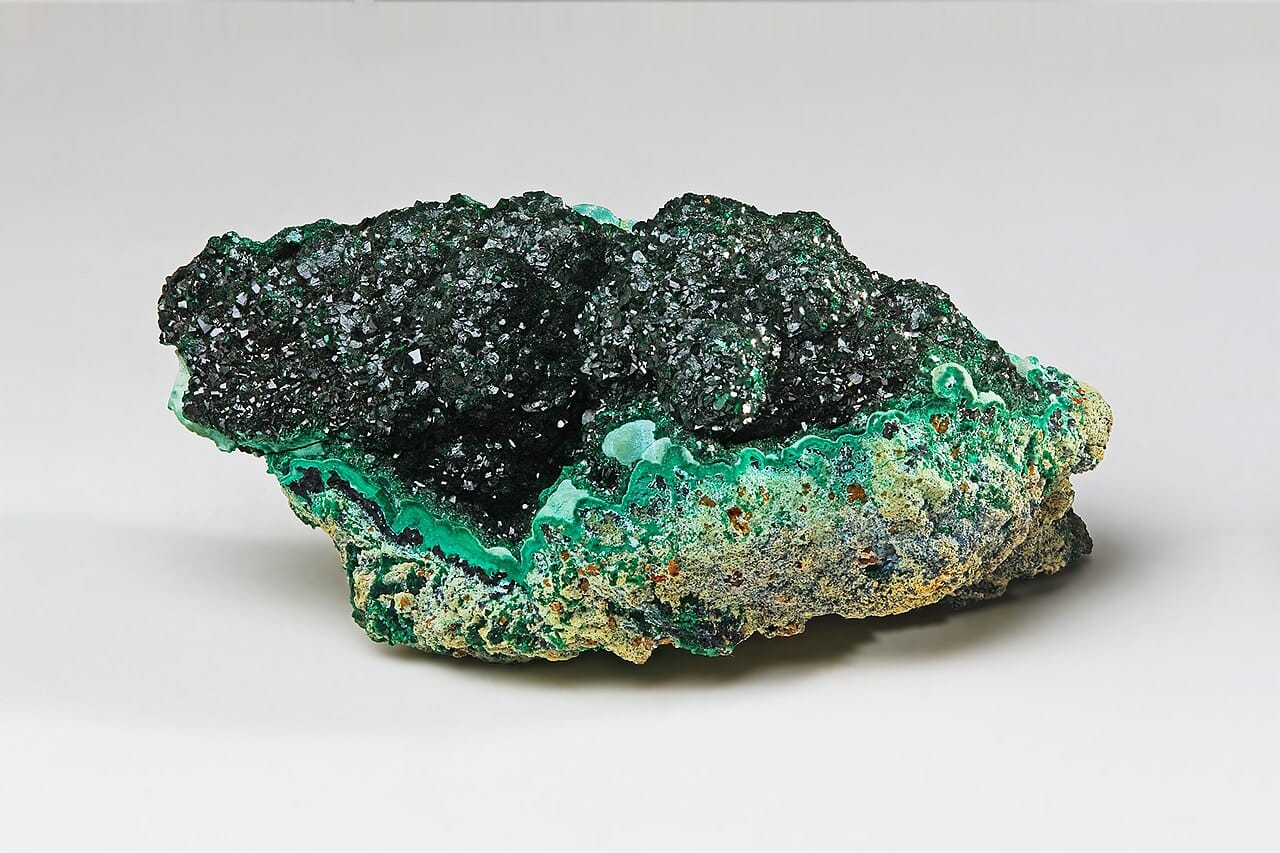
Almost every element is present throughout the crust at some concentration, and mining is only viable where geological processes have concentrated it far above that average.
Concentration occurs by identifiable mechanisms: hydrothermal fluids depositing metals in fractures, magmatic segregation, weathering leaving resistant minerals behind, and sedimentary accumulation.
A deposit becomes an ore body when the concentration, size and accessibility make extraction profitable, which means the definition depends on price and technology as well as on geology. Deposits uneconomic at one price become viable at another.
This is why the rock cycle capsule matters for exploration: knowing which processes concentrate a substance tells you which rocks to search.
Surface mining removes overburden to reach the deposit. Open pit mining works downward in benches and is used for large low-grade deposits including most copper. Strip mining removes overburden in strips and is used for near-horizontal seams including much coal. Placer mining recovers heavy minerals from sediment, historically by panning and sluicing.
Underground mining is used where the deposit is too deep for surface removal. Shafts and tunnels access the ore, and the method used depends on the shape of the deposit and the strength of the surrounding rock.
Solution mining dissolves the target in place and pumps the solution to the surface, which is used for salt, potash and increasingly for uranium and lithium.
Deep sea mining of metal-rich nodules is under development and unresolved, as the deep sea capsule describes.
The general trend has been toward surface mining of progressively lower-grade deposits at larger scale, because mechanisation made moving enormous volumes of rock cheap.
Ore as mined is mostly waste rock. Processing separates the valuable mineral, generally by crushing and then by physical or chemical separation.
Froth flotation, developed in the early twentieth century, made low-grade sulphide ores economic. Chemicals cause target mineral particles to attach to air bubbles and float while waste sinks, and it is the process that made modern copper production possible.
Smelting and refining then extract the metal, using the chemistry described in the electrolysis and steel capsules.
Tailings are the finely ground waste remaining after processing, stored behind dams in slurry form. Tailings dam failures are among the most destructive industrial accidents, and collapses in Brazil in 2015 and 2019 killed hundreds of people and contaminated river systems for hundreds of kilometres.
Flint mining is attested from the Neolithic, with shafts and galleries dug to reach seams of workable stone.
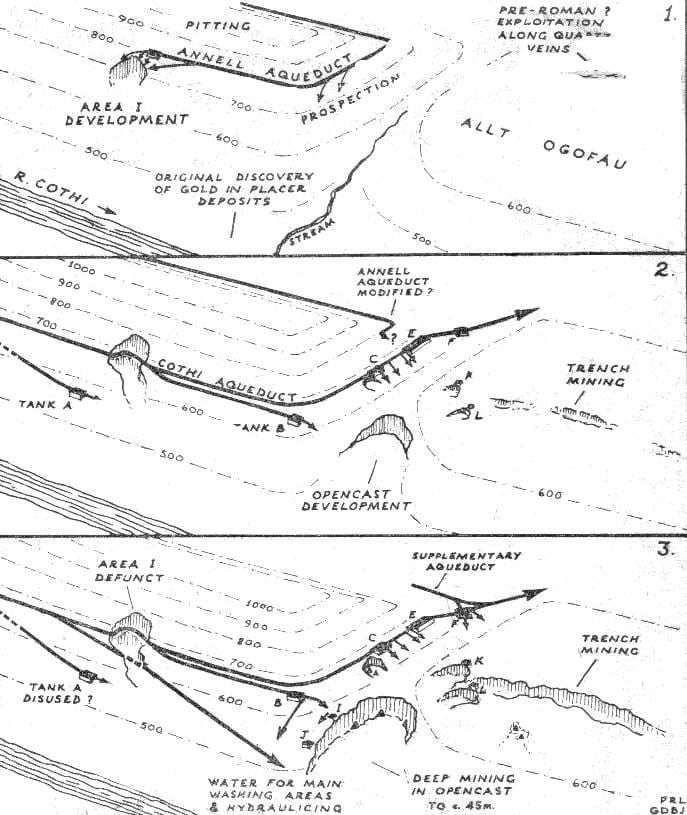
Metal extraction developed with metallurgy, and Roman mining operated at substantial scale, with aqueducts supplying water for hydraulic extraction and elaborate drainage systems, some using wheels to lift water from depth.

Georgius Agricola's De re metallica, published in 1556, described mining, ore processing and metallurgy in detail with extensive illustration, and remained the standard technical work for around two hundred years.
Steam pumping in the eighteenth century allowed mines to work below the water table, and the Newcomen engine was developed specifically for mine drainage, which is a case of a mining problem producing a technology that then transformed everything else.
Mechanisation through the twentieth century increased output per worker enormously and reduced employment correspondingly, which has had lasting social consequences in mining regions.
Environmental effects are substantial and well documented. Land disturbance, acid mine drainage where sulphide minerals oxidise and produce acidic runoff carrying dissolved metals, water consumption, and tailings storage are the principal issues.
Occupational risk has fallen greatly in industrialised mining and remains high in small-scale and informal operations. Respiratory disease from dust, including silicosis and coal workers' pneumoconiosis, is a persistent occupational cause of death.
Artisanal and small-scale mining employs many millions of people worldwide, frequently informally, and accounts for a substantial share of global gold production and of documented child labour and mercury exposure.
Resource concentration creates dependency. Economies heavily dependent on mineral exports have on average grown more slowly than comparable economies without them, a pattern discussed as the resource curse, with the proposed mechanisms including currency effects, revenue volatility and weakened institutional development.
The energy transition increases rather than reduces mineral demand. Batteries, wind turbines, solar panels and transmission all require substantially more copper, lithium, nickel and rare earth elements per unit of energy delivered than fossil systems, which means decarbonisation is a mining-intensive undertaking.
Mining supplies the material basis of everything manufactured, and no substitution removes that requirement, only shifts which minerals are needed.
The transition argument is the one most often missed. Reducing dependence on extracted fossil fuel requires a substantial increase in extraction of metals, which relocates the environmental and social costs rather than eliminating them, and that trade is a real question rather than a rhetorical one.