The study of valid inference: which conclusions follow from which premises, and why. It is the shared foundation of philosophy, mathematics and computing, and its central concern is form rather than content.
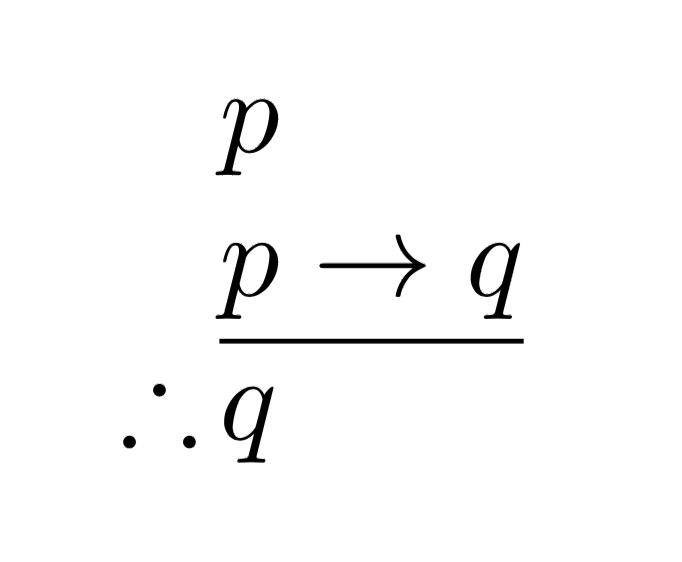
An argument is valid when the conclusion follows from the premises, meaning it is impossible for the premises to be true and the conclusion false.
Validity is about structure, not truth. An argument can be valid with false premises and a false conclusion, and an argument can have true premises and a true conclusion while being invalid, if the conclusion does not follow from them.
An argument is sound when it is valid and its premises are actually true. Soundness is what is generally wanted, and logic addresses the validity component, leaving the truth of premises to whatever discipline the subject matter belongs to.
This separation is the field's foundational move. By attending to form alone, the same analysis applies to any subject, which is what makes logic general.
Deductive inference guarantees its conclusion given the premises. Inductive inference makes its conclusion probable, and it is not deductively valid, which is the source of the problem of induction treated in its own capsule.
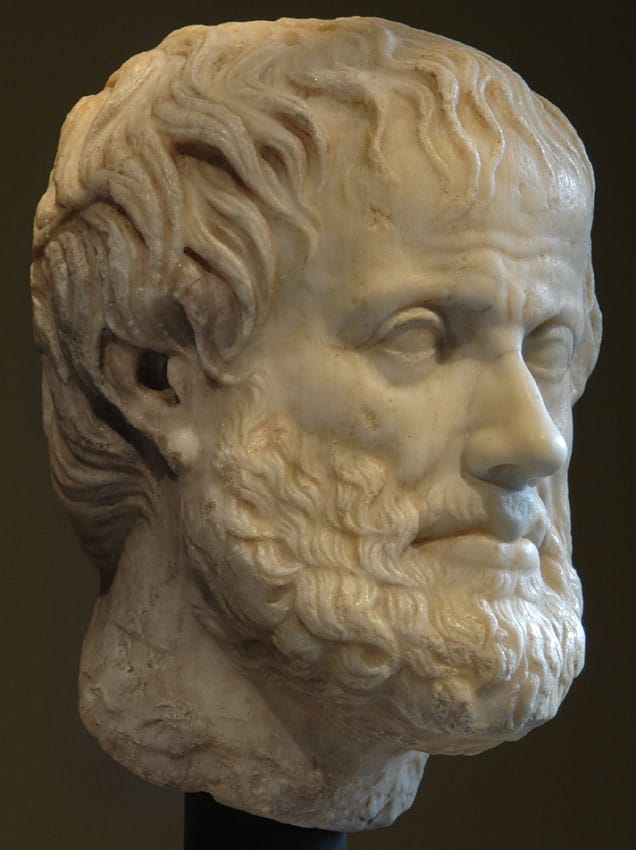
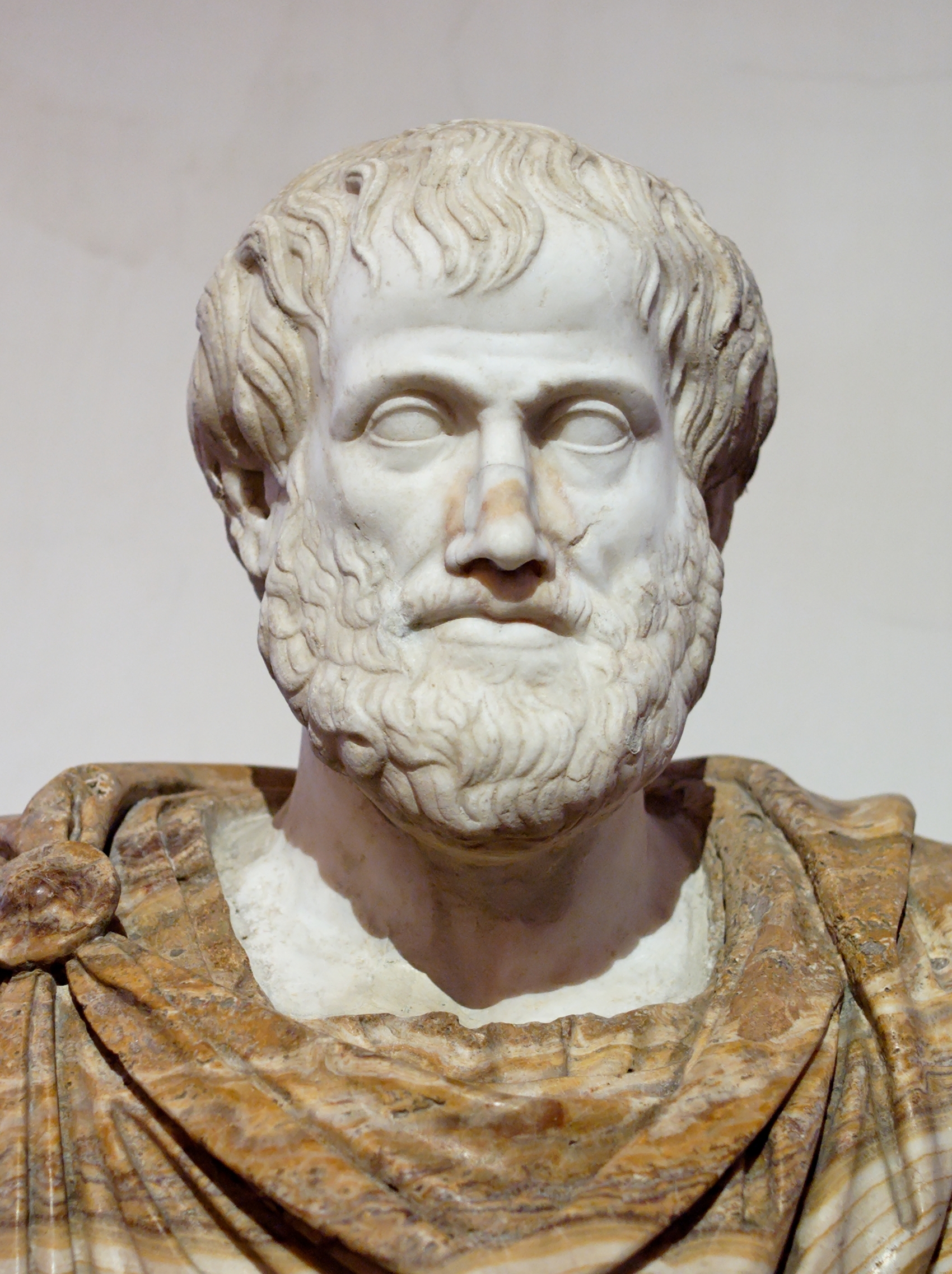
Aristotle produced the first systematic treatment in the fourth century BCE, and his work defined the field for over two thousand years.
The syllogism is an argument with two premises and a conclusion, each of a specific form. From all humans are mortal and Socrates is a human, it follows that Socrates is mortal.
Aristotle catalogued the valid forms and distinguished them from the invalid ones that resemble them, which is the essential work, since invalid forms are persuasive precisely because they look like valid ones.
Stoic logicians developed a different system concerning whole statements rather than terms, which is closer to modern propositional logic and was largely lost until rediscovered later.
Indian logical traditions developed independently and reached considerable sophistication, particularly in the Nyaya school, and Buddhist logicians produced systematic accounts of inference.
Medieval European logicians extended Aristotle substantially, and the assessment that little had been added to his work between antiquity and the nineteenth century, made by Kant, understates their contribution.

Syllogistic logic could not handle statements involving relations and multiple quantities. It cannot represent the inference that if every person loves some person, and love is not universal, then certain conclusions follow, because the internal structure is beyond its reach.
George Boole applied algebraic methods to logic in the 1840s and 1850s, treating logical operations like arithmetic ones, which is why the operations bearing his name underlie digital circuits.
Gottlob Frege produced the decisive advance in 1879, introducing quantifiers and variables and thereby creating what is now first-order predicate logic. It can express relations, multiple generality and mathematical statements, and it remains the standard system.
The consequences were immediate for mathematics. Frege, Bertrand Russell and others pursued the programme of deriving mathematics from logic, and while that programme did not succeed in its original form, the formal apparatus it produced became the foundation of mathematical logic.
Russell's paradox, concerning the set of all sets that do not contain themselves, showed Frege's system to be inconsistent, and Frege received the letter describing it as his second volume was going to press. Resolving it required restricting how sets may be formed, which is treated in the set theory capsule.
Gödel's incompleteness theorems, treated separately, then established that any consistent formal system strong enough for arithmetic contains true statements it cannot prove, which ended the hope of a complete formal foundation.
Mathematics rests on formal proof, and logic supplies the standard for what counts as one.
Computing is built on it directly. Boolean logic implements circuits, formal logic underlies programming language semantics, and automated theorem proving and formal verification are used to prove that critical software and hardware behave correctly rather than testing them and hoping.
Philosophy uses formal methods to analyse arguments and to construct systems for reasoning about necessity, obligation, time and knowledge, which are the modal logics.
Linguistics uses formal semantics to represent the meaning of natural language expressions.
Artificial intelligence has drawn on it throughout its history, first in systems reasoning explicitly from rules, and more recently in efforts to make statistical systems reason reliably, which remains an open problem.
Logic identifies what makes an argument work, which allows arguments to be evaluated independently of whether one agrees with the conclusion.
Its practical value is largely negative and considerable: recognising that a conclusion does not follow, even when the premises are true and the conclusion is agreeable, is a skill that most disagreements would benefit from and that the study of invalid forms is designed to produce.