Rights held by every person by virtue of being human, independently of citizenship, law or the consent of any government. The idea is old, its codification in international law is recent, and its enforcement remains its weakest element.
A human right is asserted to be universal, applying to everyone; inalienable, not forfeitable or transferable; and indivisible, in that the various rights support one another rather than being tradeable against each other.
The distinguishing feature is that the entitlement is not granted by a state. On this account a government that denies such a right is violating it rather than declining to confer it, which is what allows external criticism of a state's treatment of its own citizens.
That claim was historically radical. The prevailing principle of international relations after 1648 was that how a sovereign treated its own subjects was not the business of other states.
Magna Carta in 1215 bound a ruler to law, though its protections applied to a narrow class.
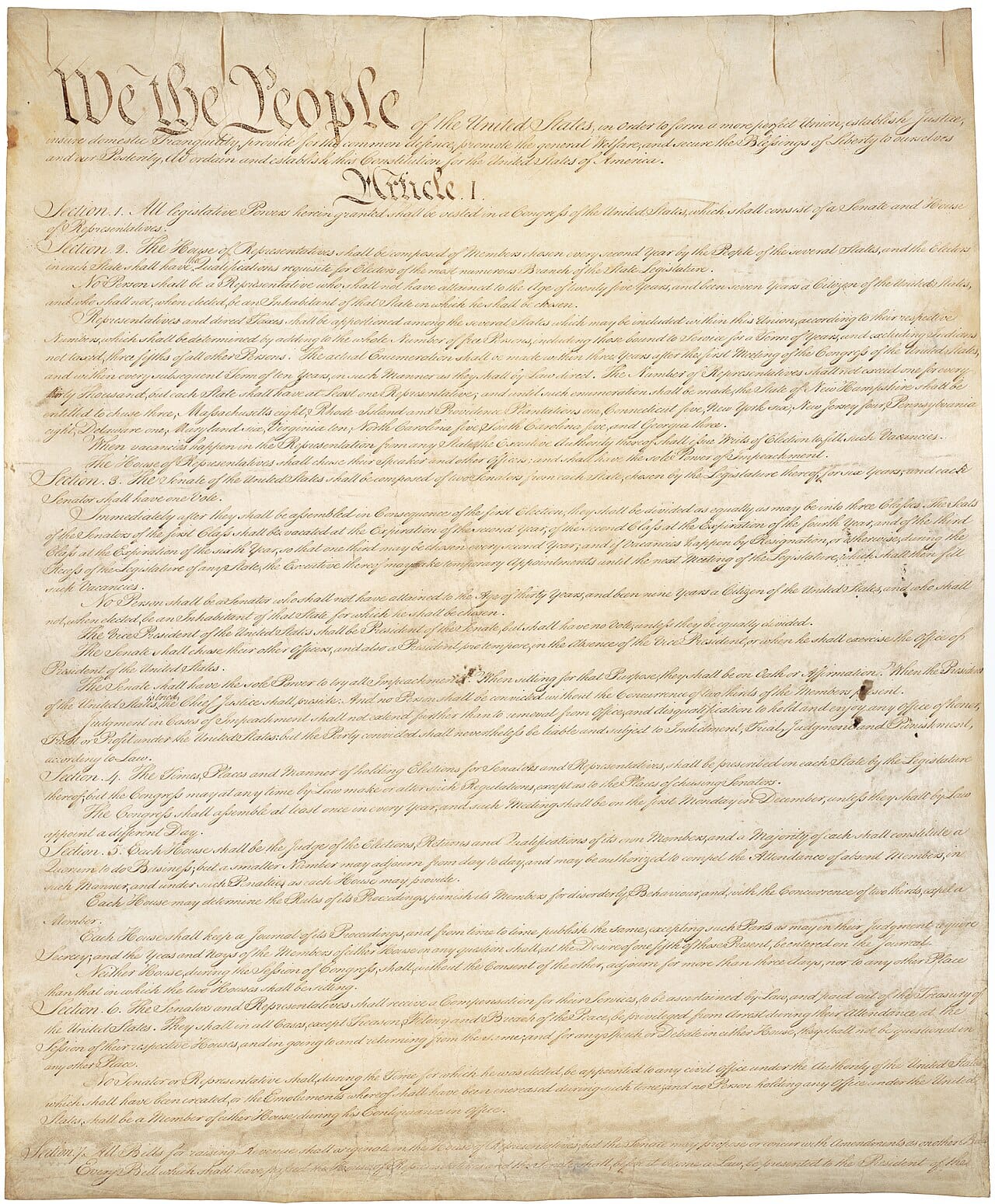
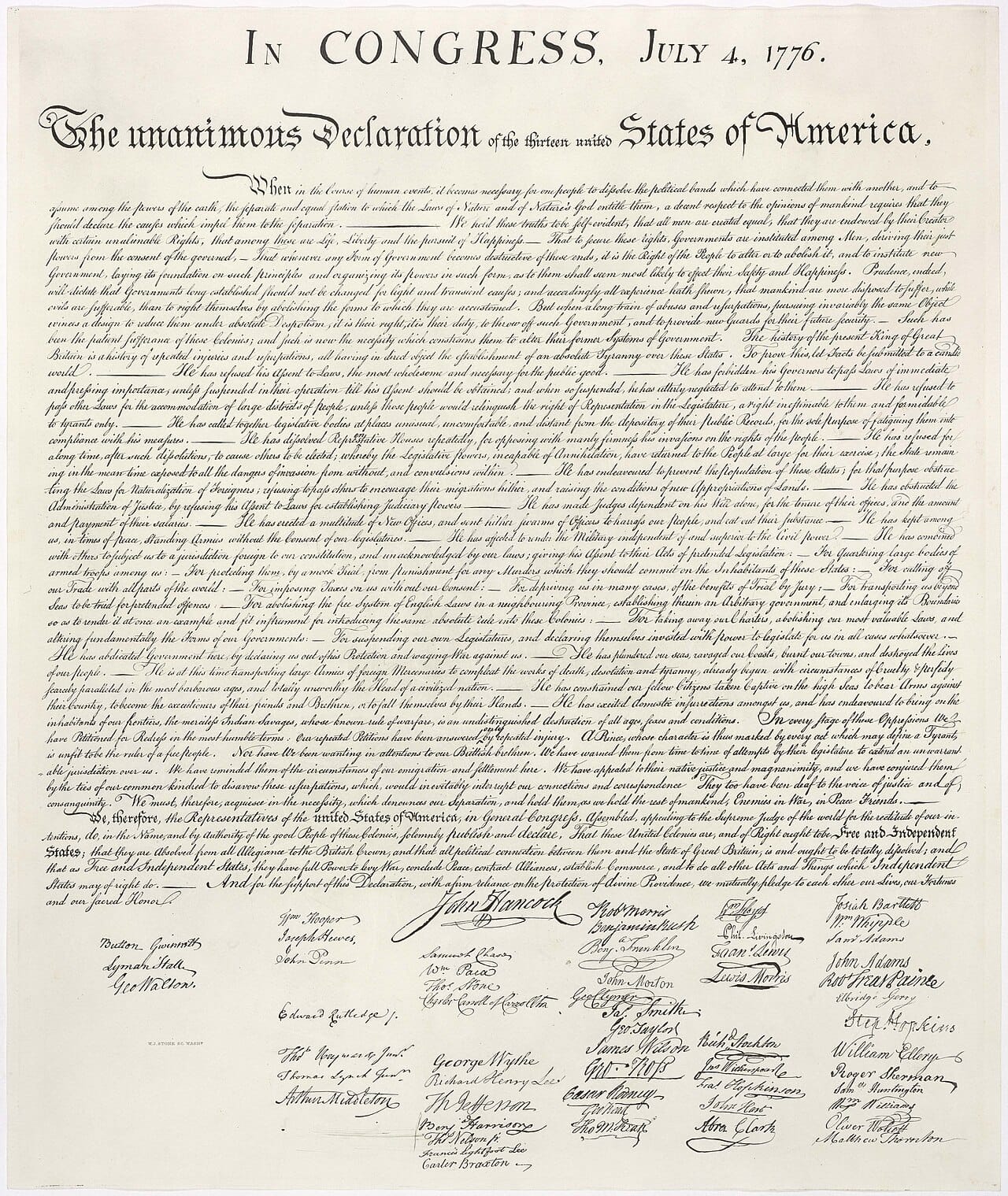
The English Bill of Rights of 1689, the American Declaration of Independence of 1776 and the French Declaration of the Rights of Man and of the Citizen of 1789 asserted rights in general terms.
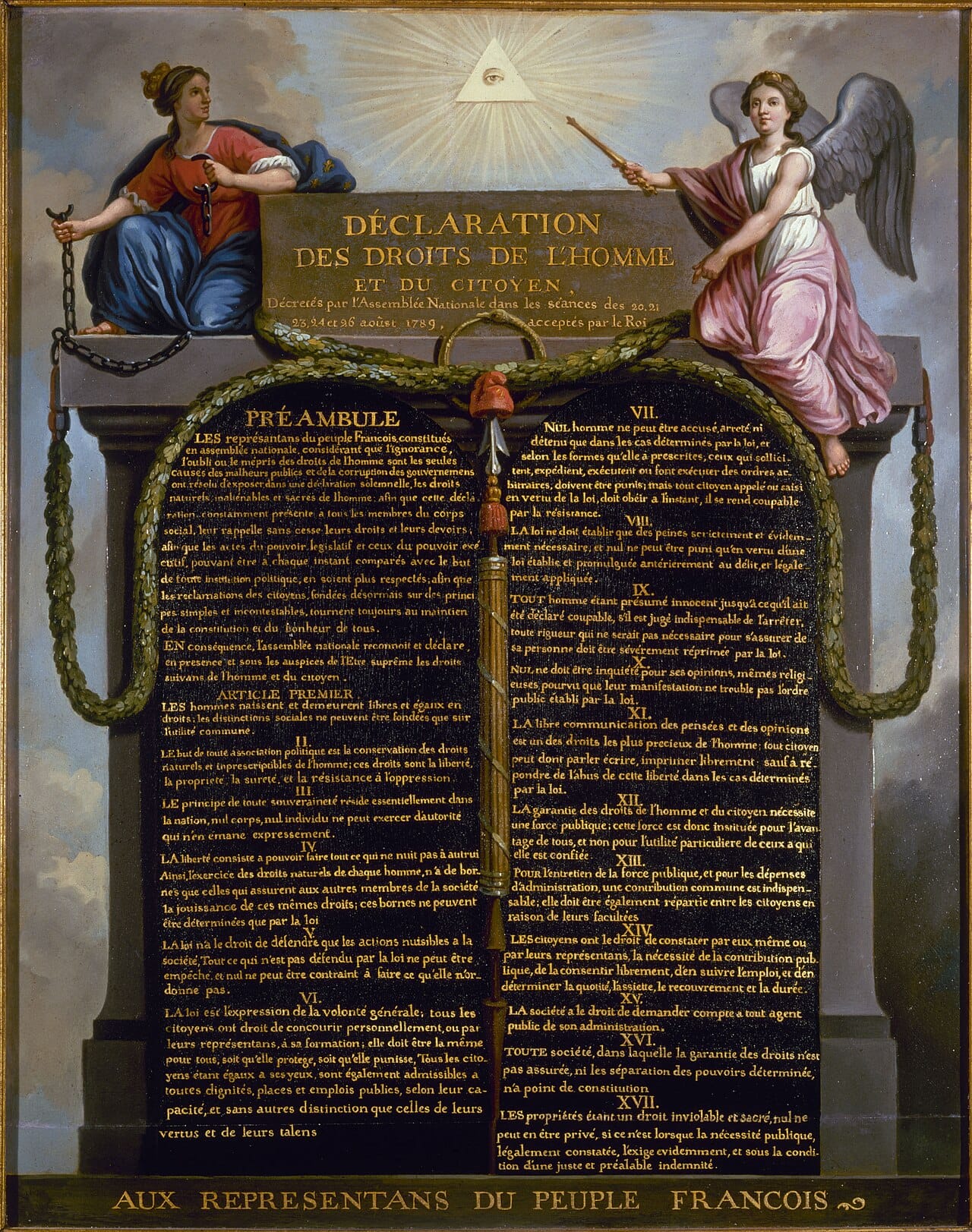
Each contains a gap between its language and its application that is part of the historical record rather than a later imposition. The American declaration proclaimed that all men are created equal in a society practising slavery. The French declaration excluded women, prompting Olympe de Gouges to publish a Declaration of the Rights of Woman in 1791; she was executed two years later.
Abolitionist, labour and suffrage movements through the nineteenth and twentieth centuries pressed the universal language against its restricted application, which is how the scope widened.
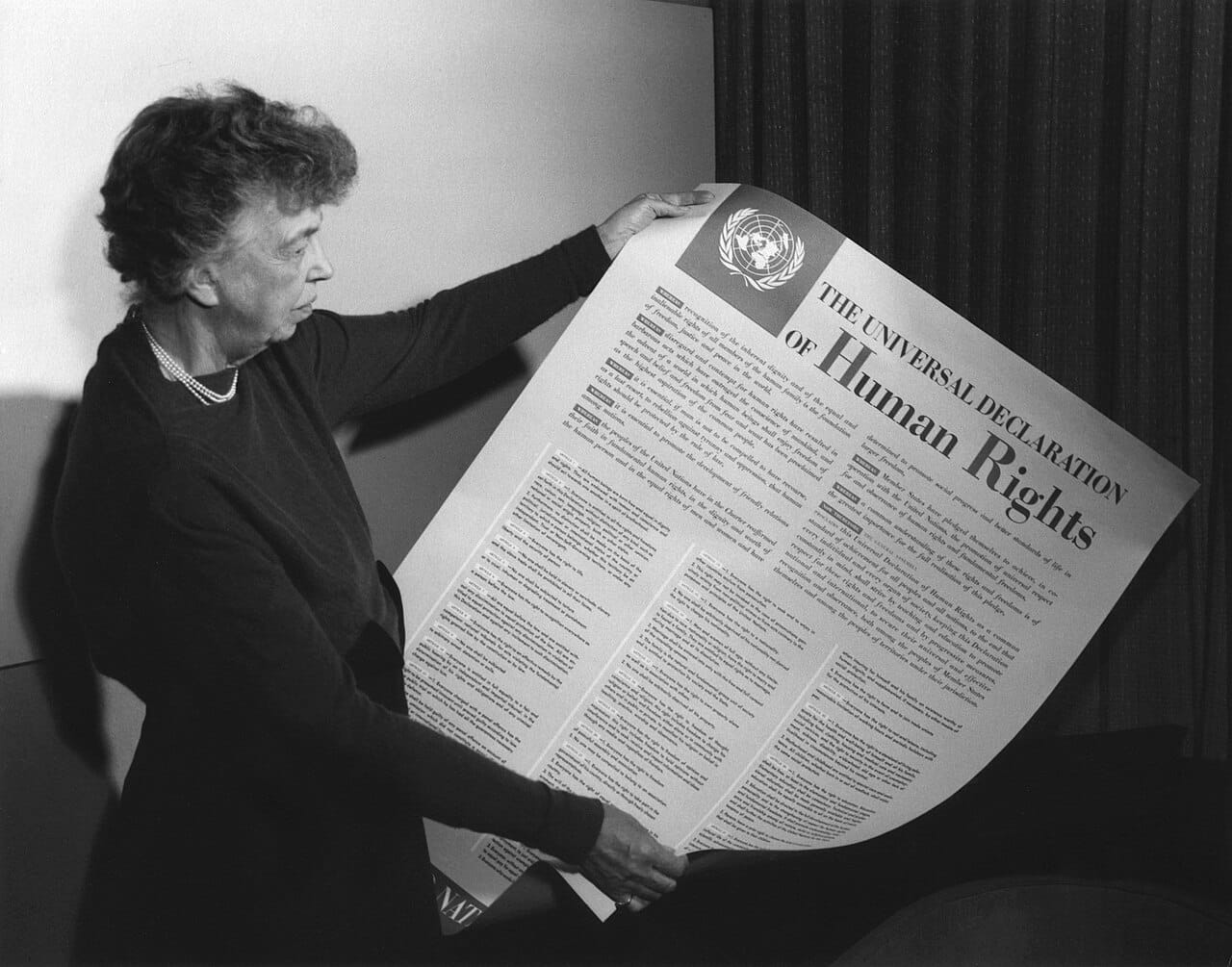
The Universal Declaration of Human Rights, adopted by the United Nations General Assembly in 1948, followed the Second World War and the establishment of what had been done during it.
It was drafted by a commission chaired by Eleanor Roosevelt, with contributions from members from several legal and philosophical traditions, and adopted without any state voting against, though eight abstained.
The Declaration is not itself binding. It was given legal form by two covenants opened for signature in 1966: one on civil and political rights, covering life, liberty, expression, fair trial and participation, and one on economic, social and cultural rights, covering work, education, health and an adequate standard of living.
The split into two covenants was political. Western states prioritised the first and Soviet bloc states the second, and separating them was the compromise that allowed both to proceed.
Later instruments address specific matters, including genocide, refugees, racial discrimination, discrimination against women, torture, the rights of children and the rights of persons with disabilities.
Regional systems, in Europe, the Americas and Africa, have courts with binding jurisdiction, and the European Court of Human Rights has the most developed case law.
Enforcement is the central weakness. International bodies depend substantially on state cooperation, and the states most likely to violate are least likely to accept scrutiny. Reporting, condemnation and sanction are the usual instruments, and their effect is uneven.
Universality is contested. The argument that the framework encodes particular liberal and individualist assumptions has been made both by governments seeking to deflect criticism and by scholars raising a genuine question about cultural specificity. The counter-argument is that the drafters came from several traditions and that objections to universality are most often raised by states rather than by the people whose rights are at issue.
Selectivity is a recurring criticism. Enforcement attention has correlated with geopolitical alignment, and the same conduct has produced different responses depending on the state involved, which damages the framework's claim to be applying a universal standard.
Which rights count is disputed. Whether economic and social entitlements are rights in the same sense as civil and political ones, given that they require resources rather than restraint, has been argued since the covenants were split.
The relationship with sovereignty remains unresolved. The doctrine of a responsibility to protect, adopted in 2005, holds that sovereignty carries obligations and that the international community may act when a state fails to protect its population, and its invocation has been contested in every case where it has arisen.
Human rights supply a vocabulary in which a person can make a claim against a state without appealing to that state's own law, which is the only mechanism available to those whose governments are the source of the harm.
Its record is mixed and it is not nothing. The framework has been used successfully in domestic courts, has supported campaigns that changed national law, and has established that how a government treats its own people is a legitimate subject of international attention, which was not accepted before 1945.